When it comes to referees, all of us are guilty of something. We assume we know the rules as well as they do. We don’t. We somehow assume they should see everything. They can’t. We beseech them after they’ve made an inconvenient decision, as if these appeals might lead to a change of mind. How often does that happen? In the Athletic Grounds on Saturday night. And when was the time before that?
Are any of these established truths likely to change our behaviour? Not so far.
We also make folksy assumptions about their behaviour. In hurling, for example, if there is a point between the teams with time up, the blithe expectation is the trailing team will be given one more chance to attack, even if that means time spilling over the top of the glass.
There is an expectation too that any opportunity to award a free to the team that needs an equalising point won’t be passed up. Everybody who follows a team will feel like they have been on both sides of those decisions. The perceived “fairness” of this practice is always shaped by our needs.
READ MORE


In close games that are hurtling towards full-time, the draw has always been seen as a safe house for refs. Through the generations, people have been brainwashed into characterising draws as “a fair result” though nobody stops to think what a nonsense that is.
Sometimes referees get it wrong, though not nearly as often as the hecklers. But what if it turned out that some of our suspicions were underpinned by data?
Two years ago, a superb study was published on “compensatory bias” among hurling referees. The project was led by John Considine, the UCC academic and former Cork hurler, alongside Peter Horgan from Croke Park, John Eakins and Peter Weir.
They analysed 75 hurling matches in the championship over three seasons between 2016 and 2018, taking into account almost 1,900 in-game decisions. The outcome of their research was fascinating.

“There are three findings that suggest that hurling referees might display a compensating tendency when it comes to the awarding of free shots,” wrote Considine. “First, the team behind on the scoreboard is statistically more likely to get the next free shot. Second, the further a team is behind on the scoreboard, the more likely they are to be awarded the next free shot. Third, the team that has been awarded less free shots is statistically more likely to be awarded the next free shot.
“Overall, there is approximately a 10 per cent difference between the free shots awarded to the team that is behind on the scoreboard and the team that is ahead on the scoreboard. Excluding the free shots awarded when teams are level makes this gap larger.”
[ Hurling’s full forwards have come full circle as the game evolvesOpens in new window ]
As you can imagine, this “compensatory behaviour” is not unique to Gaelic games. Tobias Moskowitz, a Yale academic, examined millions of decisions in baseball and found the bias favours the player behind in the count, whether that’s the pitcher or the batter. In a different context, this was precisely the pattern that was discovered in hurling.
In their paper, Considine et al also quoted studies of how technology had blunted previous biases in other sports. In cricket, a 2018 study showed video reviews had “diminished the traditional benefit of the doubt given to batsmen”.
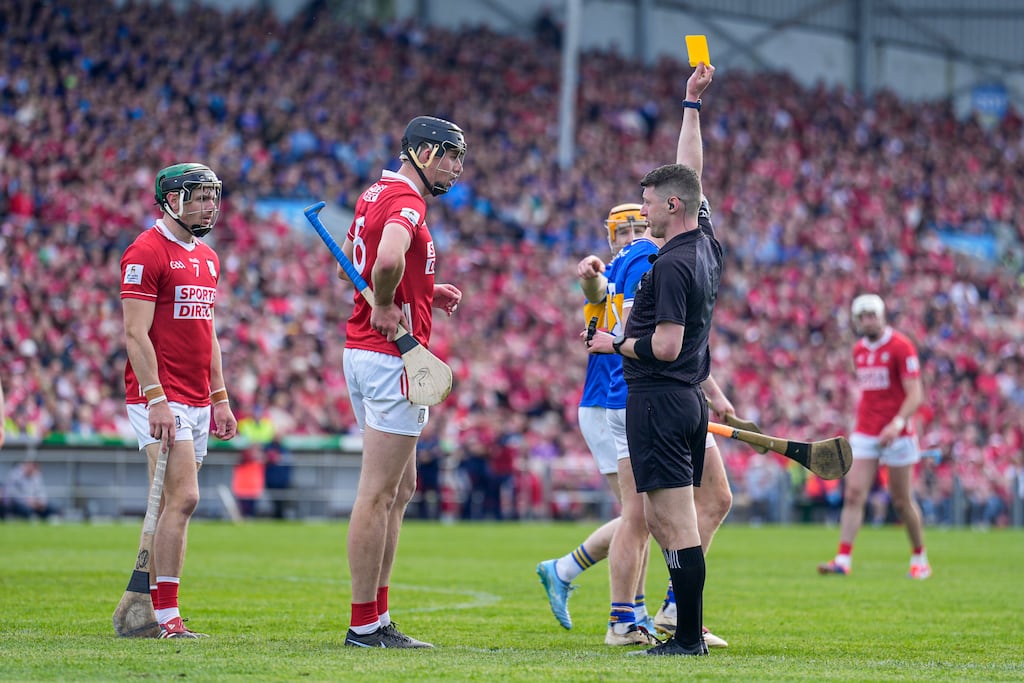
In rugby, a 2020 study of the Television Match Official, showed the number of yellow cards given to players from away teams had increased. In this case, the suggestion was that referees had been excessively conscious of hometown bias and had over-compensated in their decision-making.
But even though video footage doesn’t have an opinion, and it has no feelings, technology has not eliminated the need for interpretation. The pictures are not always black and white.
In soccer and rugby especially, video reviews have not resulted in a blanket consensus on borderline calls. Instead, they have inflamed more arguments and generated more condemnation of match officials, just from a different source.
So, the contentious decisions will never leave us. Referees will make errors of judgment. Sometimes, consciously or unconsciously, they will favour the team under pressure. Human nature will continue to intrude, silently, on what we – ludicrously – believe should be an emotionless and spotlessly impartial process. Fans, players and managers will be wrong too, when referees are not. That will never be settled.
All that can be done is to incentivise better behaviour by stamping on unacceptable behaviour. Contrary to the evidence of our prison system, punishment can work.
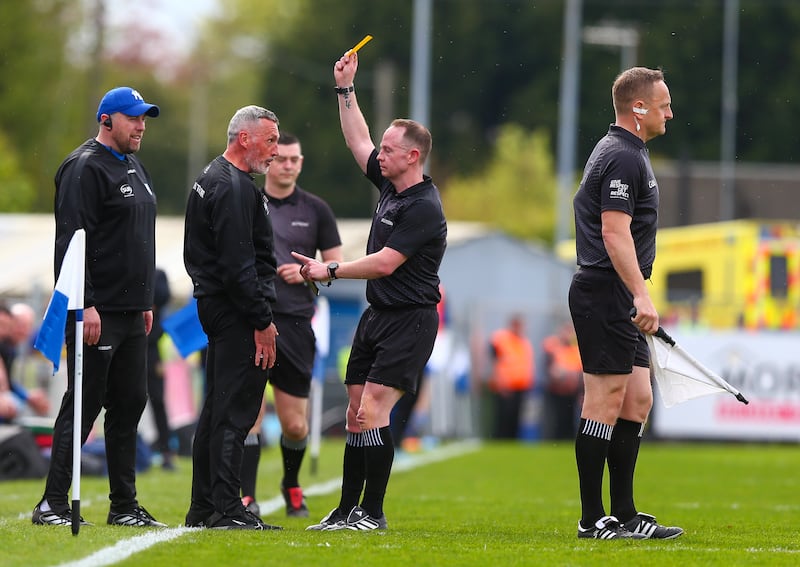
Over the last couple of years, the GAA has taken measures that have made a difference. Historically, rugby was the brand leader in decorum around match officials, but their standards have dropped alarmingly in the professional era, and referees now are getting live in-play feedback from players as if it were a thread on X.
When the new Gaelic football rules were introduced last year there were hugely-enhanced punishments for dissent and for delaying the taking of frees. Behaviours changed in a very short time because the punishments were costing teams scores and field position. Team managers who couldn’t have cared less about the welfare of match officials were concerned about their bottom line. Players are always made accountable to that.
Overall behaviour improved dramatically, partly because of the new rules around dissent and cynical play and partly because of how the game had sped up. The number of straight red cards in inter-county football dropped by 68 per cent year on year, yellow cards fell by 33 per cent and black cards by 31 per cent. All of that made life easier for referees: fewer toxic fouls, fewer contentious decisions, fewer complaints. It was easier to be wrong, which maybe made it easier to be right.
The hooter at half-time and full-time has been problematic in some ways, but at least it removed the capacity of referees to play God with time and dispense it to the needy. Compassionate draws fell into oblivion.
This year, hurling has started down that road. Dissent by players is now punishable by moving the ball forward 30 metres. In hurling, that can turn a harmless free in the full-back line into a scoring opportunity. Vigorous dissent from the sideline can result in a 20-metre free, a consequential punishment that could even lead to a goal. Liam Cahill was on the end of that rule in the opening round of the Munster championship, and Peter Queally the week after.
None of this will eliminate mistakes, “compensatory tendencies” or human nature. But what do we expect? Really?