A cut of €120 million in the amount the State spends supporting Ukraine and on humanitarian aid in Africa was proposed as the starting point in budget negotiations this autumn, internal documents show.
Department of Foreign Affairs secretary general Joe Hackett argued against any aid reduction, saying the Government had made “clear” commitments of ongoing support to Ukraine and that the war “shows no sign of ending”.
In an August 31st letter, he said the national budget for next year would have to account for obligations to Kyiv and other humanitarian crises in Gaza, the West Bank, Sudan and large parts of sub-Saharan Africa.
The letter to his counterpart in the Department of Public Expenditure, David Moloney, said the Government would face similar pressure in the coming year to support Ukraine and other parts of the world in need of help.
READ MORE



“We do not accept, therefore, that this funding should be deducted ... as the starting point [for 2027],” Hackett wrote in the letter, seen by The Irish Times.
The money under scrutiny included €95 million that had been set aside each year since 2023 to cover the Government’s “response to the war in Ukraine and its wider impact, especially on food security in Africa”, he told Moloney.
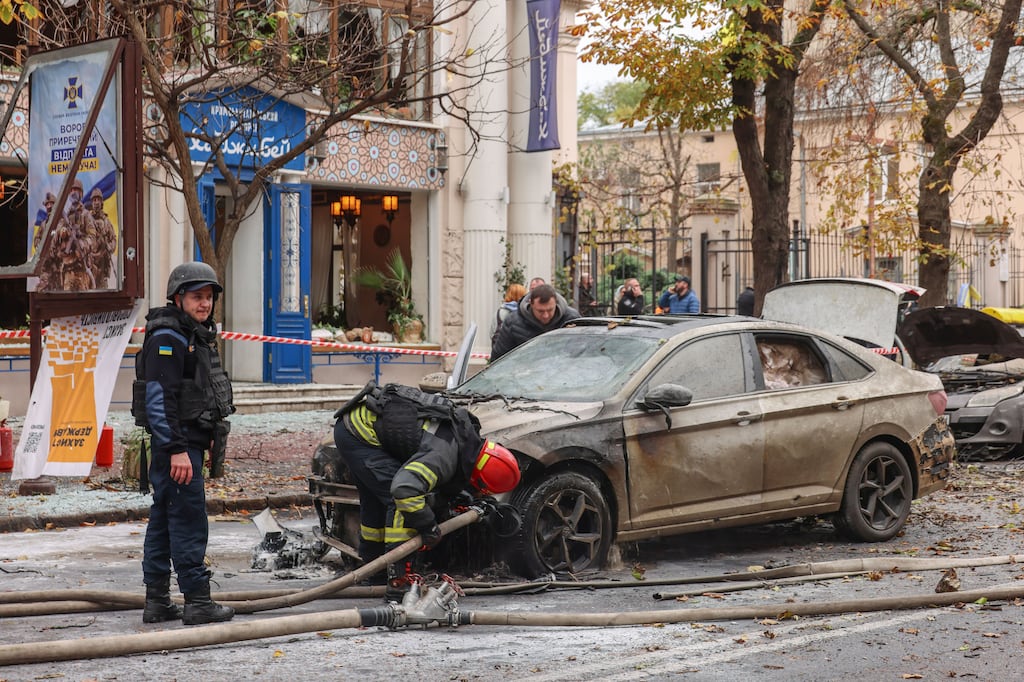
There was an additional €25 million Taoiseach Micheál Martin had committed last year to help Ukraine repair its battered energy infrastructure and keep the power on in the face of intense Russian bombing.
“I anticipate that provision for these needs will continue to be required in 2027. The war in Ukraine shows no sign of ending, and the Government has made clear a commitment to sustained humanitarian and recovery assistance,” Hackett said.
The correspondence warned the war in Iran was putting pressure on global energy and fertiliser supplies. This threatened to create a “serious food security crisis” across sub-Saharan Africa at a time when an expected “extreme” El Niño weather pattern would bring drought.
[ Department of Defence’s tight-fisted approach on Ukraine sends a poor messageOpens in new window ]
“Responses to these crises remain priorities for the Government,” Hackett wrote.
The senior official appealed for Ukraine support and humanitarian aid “to be funded on the same basis as in prior years”.
The correspondence was released on foot of a Freedom of Information request.
The final allocation of funds for 2027 saw the department’s budget for overseas development aid marginally increase, to €855 million.
Back and forth between departments is a standard part of the budget-making process. One senior Government source said negotiations this autumn had been tighter than usual, with public expenditure officials running the rule over every department’s core budgets in an effort to tap the brakes on increased spending.
In a July 24th letter, Moloney said plans to significantly “moderate” future increases would require departments to be more efficient and to prioritise spending to accommodate varying priorities.
[ ‘We’ll be out there’: The volunteers who patch up Ukraine after Russia strikesOpens in new window ]
The initial budget ceiling sketched out for the Department of Foreign Affairs was “significantly lower” than what it was spending this year, Hackett wrote in response, noting certain funding for Ukraine and emergency humanitarian aid had not been factored in.
Since Russia’s full-scale invasion of Ukraine in 2022, the State has contributed €670 million in direct aid to Kyiv, while at the same time taking part in EU-level efforts to ensure Ukraine’s defences remain funded, such as a €90 billion loan.
European Commission president Ursula von der Leyen on Wednesday proposed EU states collectively borrow a further €45 billion to loan to Ukraine, raising the money against the union’s common budget. The proposed loan would cover two-thirds of a large shortfall Ukraine is facing in its wartime budget for the coming year.