

“Everybody is sick,” a woman said at an entrance to the Bir Hassan Technical Institute in greater Beirut. Mattresses lined the floors of the corridors and classrooms in a series of buildings now sheltering thousands of people. The sound of chatter and coughing, laughter and despair mixed with the drum of the pouring rain outside.
Official figures say at least 1.1 million people are now displaced in Lebanon, which has a total population of about 5.8 million. As the Israeli military blows up Lebanese border villages, with officials announcing their intention to occupy southern Lebanon up to the Litani river, it is not clear when many of the displaced will be able to return home, even if there is a ceasefire.
“There’s a need across the board in general, and especially when it comes to people with disabilities,” said Nabil Barbir from Trócaire, which supports Lebanese organisations providing emergency assistance.
On March 8th, six days after the latest all-out war began, the World Health Organisation (WHO) said that of the 500-plus official shelters then open, only 12 were equipped to receive people with disabilities.
READ MORE


That same day, the Lebanese Union for People with Physical Disabilities (LUPD) called for “basic accessibility standards. These standards should include proper ramps, solutions for uneven surfaces, adequate door widths, and accessible bathrooms.”
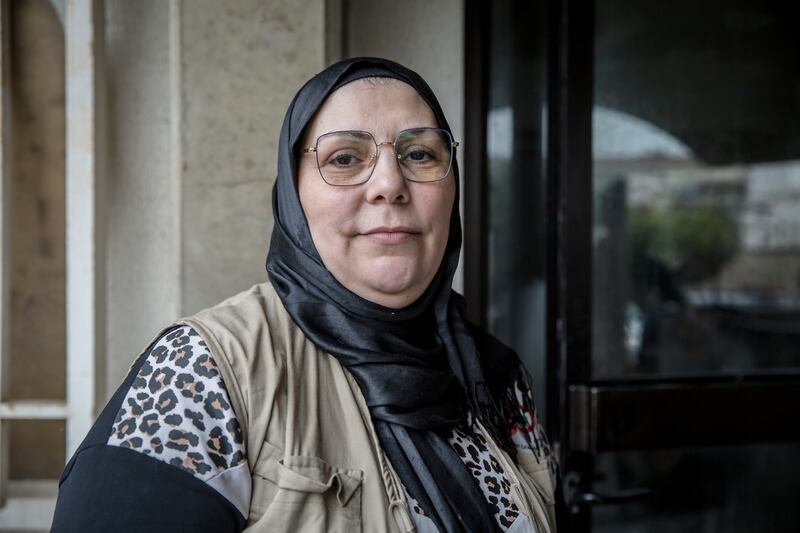
Nada Ozeir, emergency co-ordinator for LUPD, said even when aid workers visited shelters deemed accessible, they still found problems. Overall, the situation for those with disabilities in Lebanon is a “disaster”, she said.
Her organisation is representing them on both a macro level – with the Lebanese ministry of social affairs, the UN and other officials – and a micro level, including by contacting previous beneficiaries to see where they have ended up and what their needs are. It also runs a hotline, but funding is a challenge “because of the huge needs and the lack of resources from the government”.
Those with disabilities need everything from food and medical aid to assisted devices and financial aid for themselves and their families. The organisation has about half the funding it needs, said Ozeir, and is also hamstrung because many donors won’t let it shift spending from long-term projects to emergency spending. “We have 200 people with disabilities who need colostomy bags, urine bags, these specific medical aids no one is providing. A huge number need diapers.”
By the end of March, the WHO said there were at least 6,300 older people and almost 2,500 people with disabilities staying among more than 136,000 people across hundreds of collective shelters. Most of the disabilities were physical and mental, while many had hearing or visual impairments.
[ Day of pain in Lebanon: ‘They’re doing the same thing they did to Gaza’Opens in new window ]
Ozeir said two people with disabilities died in the previous few days in the Bir Hassan shelter alone, amid shortages of medication and transmission of infections.
She said many have opted not to leave their homes in the first place, despite being in dangerous areas regularly targeted by Israeli air strikes, because they had bad experiences during the 2024 all-out war. LUPD tries to help them too, and has been co-ordinating with UN agencies and the government to send containers of adult diapers for 65 elderly people in the evacuation zone in the previous days, she said.
Electricity across Lebanon has long been a challenge. In the Bir Hassan shelter, for example, the elevator was out of service. As Ozeir spoke, two separate people approached her to request walkers for relatives, one of whom said his father is not able to get to the bathroom.
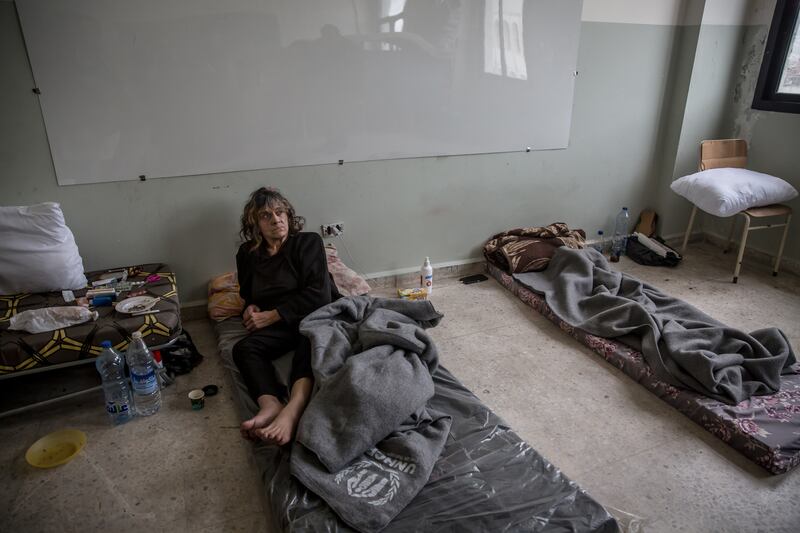
Some 15 per cent of Lebanon’s population has a disability, with this number growing because of the war wounded – 7,000 more from the last all-out war between September and November 2024, Ozeir said. Others say their disabilities are exacerbated by stress.
A divorced man in his 50s, who asked to go by his initials IK, was displaced from Borj El Barajneh in Beirut’s southern suburbs. He shares a section of a classroom with his mother.
Both have serious health challenges. IK has a back problem from emiplasia, he said – he needs constant painkillers. He said a doctor told him if they intervened there was a risk of total paralysis. Because he is also a carer for his mother, he could not risk being out of action.
His mother, Ibtisam, sleeps on the mattress beside his. In her seventies, she lost the ability to walk four months ago, after falling in the kitchen and breaking a hip, and remains in pain, IK said. After a procedure, she slept on the wrong side, preventing recovery. “If she could get up it would help me a lot because I’m sick too,” he said.
“Now my whole time is about taking care of my mom ... she needs someone to support her all the time,” said IK. “I’m her only son. My dad has other kids, he married again.”
When he gets sad or stressed, IK experiences a psychosomatic reaction where he cannot move his right hand and his face looks like he’s having a stroke, he said. With painkillers, IK has six hours at most when he can move around before he “crumples” again. His pharmacist is in Beirut’s southern suburbs, which are under evacuation warnings, so he is reliant on relatives who risk going there, or donations. But generally, “nobody will help me now. They can’t provide my medical needs,” he said.

Fatima Nasreddine (54), a divorced mother of three originally from eastern Lebanon, was displaced from Haret Hreik in Beirut’s southern suburbs. Seven years ago she had open heart surgery and has been on dialysis for five months. She is in a wheelchair – if she tries to walk she falls down immediately, she said. She also has a visual impairment in one eye. She needs another operation but is holding off.
In the shelter, Nasreddine sleeps in a corridor with countless others. “I need to have a private room as per doctor’s orders but it’s not happening,” she said. Being alone is important because of her lowered immune system, as well as to keep calm, her doctor says. On top of that, “I need heart medicine that I haven’t been able to find”.
At night, she cannot go to the bathroom because too many people sleep in the way – her wheelchair cannot fit past them “and I need someone to push me all the time”.
She described arriving at the shelter with her sister in their pyjamas, after spending a night on the street, when bombing heralded the start of the war. “They hit next to us, it was difficult,” she said.

Amena Meheddine (80) sat in a wheelchair wearing pink pyjamas. She was displaced from Zrariyeh, in the southern Saida district. She stays in the shelter with her only son, but he leaves for days at the time, because he is in the army. His wife and children stay with his wife’s family.
Meheddine has back pains, and pain in her hips, arms and head – she said it is a nerve issue. She said she used to walk alone before coming to the shelter. She thinks her condition has worsened due to stress. She is taking medication “but I still can’t move like I used to”.
Her son, who did not want to be named because of his job, said war and displacement “impacts elderly people more”. Before this, he was living with his family and his mother, all together, but that area is “regularly being struck”. It took the pair about 20 hours to reach the shelter after the war began, because the roads were so blocked with traffic.
“They started hitting missiles like crazy so we just left with our clothes on our backs, with nothing. The stress of the movement itself [was terrible] because of the fear, the waiting in the car.”
[ Sally Hayden: On the front line of Lebanon's war, medics count their deadOpens in new window ]
In the shelter, “the first few days there was nothing, we slept on the ground, there was barely a sheet to cover us,” Meheddine’s son said. He said cleanliness is a problem and food is limited – they buy most meals themselves.
He said his mother was given the wheelchair here because otherwise she could not reach the bathroom on time. “I’m in pain. I need medication, I’m not getting what I need,” Meheddine said.
If there is a ceasefire, they would “need to make sure that we have a house first before going back but if the house is there, then of course”, her son said.
“God willing, it will end soon,” he added. “We hope it ends tomorrow.”


