
In a temporary medical clinic in the Lebanese town of Wadi al-Zayni, Heba (42) sat slumped on a bench, waiting for a consultation. She has cancer and was getting chemotherapy in Nabatieh, a city 35km to the southeast, but can no longer travel there because it is under heavy Israeli bombardment. Her latest treatment was more than three weeks overdue.
Her home is packed with 20 people; displaced relatives who fled other areas to live with her and her four children.
“What can I do? They’d do the same for me. If there was war here, I’d go to them,” she said.
Hizbullah fired rockets towards Israel in the early hours of March 2nd, triggering the latest all-out war.
READ MORE


More than 1.1 million people in Lebanon are now displaced, the United Nations says: about one fifth of the total population.
At least 1,318 people have been killed by Israeli attacks, including 125 children and 53 healthcare workers, according to Lebanon’s health ministry. Ten Israeli soldiers and two civilians in northern Israel have been killed by Hizbullah, Israeli authorities say. Three Indonesian peacekeepers were killed this week, it is not clear yet by whom.
On Tuesday, Israel’s defence minister Israel Katz said the Israeli military plans to occupy the area south of the Litani river, which extends up to 30km inside Lebanese territory and includes the city of Tyre. Hundreds of thousands of people usually live in this area. Katz also said all Lebanese homes close to the border with Israel will be demolished, “in accordance with the Rafah and Beit Hanoun model in Gaza”.
Human rights organisations and lawyers say the forcible displacement of civilians is illegal under international law, while aid agencies, the United Nations and the Lebanese government have been outspoken about the humanitarian consequences.
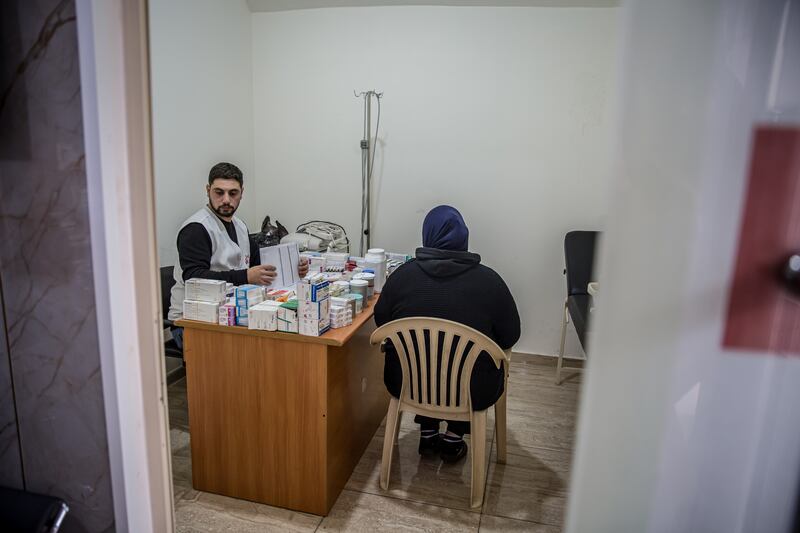
Some of those implications were on display in the mobile clinic set up by Médecins Sans Frontières (MSF) in Wadi al-Zayni, just above the city of Saida, about 34km north of the Litani river.
MSF brought a GP, a midwife, psychologist, pharmacist (nurse dispensary), social worker, health promoter and another nurse to see patients for a day. The clinics aim to address some urgent healthcare needs of the displaced and host communities.

Projects co-ordinator Hisham Newashi said they run three free clinics each day with hundreds of consultations across more than a dozen locations in the greater Saida area – including inside shelters. Some prior locations are now covered by mass Israeli evacuation orders: they don’t work in those areas for safety reasons.
Newashi said the war has put a huge burden on health, water and hygiene. Many host families are housing two or three other families. Some shelters have 700 people and six toilets, he said. MSF is working to increase water tap points and fixing piping systems.
With the mobile clinics, they visit each location every 10 days. The local municipality WhatsApp group informs people in the area the day before, so those in need can turn up.

Hayfaa el Hajj, a midwife supervisor with MSF, said she is seeing many women with UTIs or gynaecological issues. Many left home without changes of underwear or other belongings and have poor access to water. Displaced women have even spoken about not drinking enough water – which can cause an array of problems – because they do not have access to a toilet.
Hajj said the pregnant women she meets are “stressed”.
“When you’re in your village you have a plan, you have your doctor, you know where the local hospital is,” whereas the displaced often don’t even know where they will deliver.
She reassures patients as much as possible, telling them to stay calm and think positively for their baby’s sake, though no one knows how long this situation will last.
During one consultation, she said a woman received news that her family’s shop had been bombed. “She said ‘we’re now without work, what will we do?’”
A husband and pregnant wife were sitting in the waiting area. They have three children and another on the way. They fled their village close to Tyre, first living in a school, then renting a place to stay.
“I’m about to deliver,” said Fetun, the wife. It would cost about $400 in the local hospital. “I don’t know if I will be covered.”
Her husband, Emad, is unable to work after having three operations on his stomach. He was worried. “If there’s no milk for the kid I’ll give them water,” he said.
At home, they would have had other supports. Their village was “calm before, much better,” said Emad. “The Israelis might take it [now], who knows.”
Nearby was Lena (54), who has breast cancer andmanaged to receive chemotherapy recently. Her home is destroyed, causing anger which she believes has worsened her condition.
Her husband Fawzi (73) has a heart problem and needs an operation but they do not know how that is possible. As they waited for a consultation, Lena pulled out a plastic bag, believing she was about to vomit.
Ala (36) was displaced from Nabatieh – she described leaving in a rush the night the war started. Her son had a fever and his finger had swollen. “We need medical care. That is the most important thing we need,” Ala said.
Her mother Yasmin (69) was with her. “Nobody knows [about our house in Nabatieh], if it’s destroyed, if it’s fixed,” she said.
During the 2024 all-out war, the family went to Tripoli, a city in Lebanon’s north, but this time they decided to stay closer to home, in the hope that they can return soon. “Here we are near to our house,” Yasmin said. “Let the ceasefire begin and we’ll be the first people back.”
[ Sally Hayden in Lebanon: Medics count their dead and keep goingOpens in new window ]
[ Sally Hayden in Lebanon: Amid the rubble, locals count their deadOpens in new window ]