
Bodies were still arriving in Beirut’s Rafik Hariri University Hospital on Thursday afternoon, 24 hours after a wave of more than 100 Israeli air strikes killed hundreds of people across Lebanon.
Medics struggled to make space in the already full refrigerated truck as each body was offloaded from an ambulance.
Weeping relatives of the missing came and went after attempting to identify their loved one: many were unrecognisable.
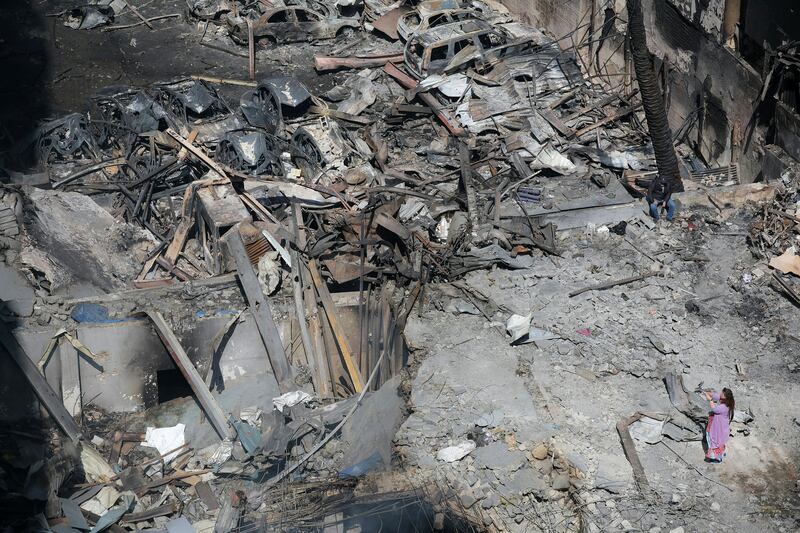
Apart from the hospital, The Irish Times visited four strike sites in Beirut on Thursday. At two, people were still believed to be under the rubble, though rescue workers admitted that it seemed unlikely anyone could be found alive at this stage.
READ MORE


Israel dubbed its mass bombings “Operation Eternal Darkness”, saying it was hitting Hizbullah “headquarters and military infrastructure”, but at the sites in Beirut, this reporter only saw evidence of civilian life.
Medical workers said the air strikes – almost all synchronised to hit within ten minutes of each other – could have been deliberately done with the aim of overwhelming emergency services.
Locals said they were carried out – in the middle of the day and in busy areas – to instil terror.
The death toll was higher than after the 2020 Beirut port blast, one of the biggest non-nuclear explosions in history. A prize-winning poet, journalists and medical workers were among those killed.
The wave of air strikes drew condemnation from Lebanese officials and international organisations.
“Israel has an appalling track record of carrying out unlawful attacks in Lebanon and displaying a callous disregard for civilian life, fuelled by the impunity Israeli officials feel they enjoy,” said Heba Morayef, Amnesty International’s director for the Middle East.
Lebanon’s health ministry put the toll from Wednesday’s attacks at 303, with more than 1,100 wounded, while Lebanon’s civil defence said at least 254 were killed and 1,165 wounded.
Staring at the toppled remains of a high-rise building in the Tallet al-Khayat neighbourhood, a man, who did not want to be named, said his aunt and uncle were killed on the seventh floor, and their son was still missing.
There was “nothing at all” that could be a legitimate target in the building, he said.
[ Hundreds killed as Israel launches strikes across LebanonOpens in new window ]
Mona Kobisa (70) said she was woken by the attack in Corniche el Mazraa, which broke all of the glass in her daughter’s house. “This is a terrorist attack by Israel,” she said.
At a site at Ain al Mraiseh, 10 victims were om the same family, according to locals and a Syrian relative, who did not want to be named because of fears around safety.
The man described leaving his construction job and running to what used to be his uncle’s house when someone shared news of the strike in their family WhatsApp group. He listed off the names of his uncle’s dead children. They had found six corpses so far, and four remained missing, he said.
Neighbour Omar Khorbatey (29) said he ran to help when he heard the explosions. He described removing the corpses of children – including a two-month-old baby – and two women, one of them Ethiopian. He said they discovered a man alive but “fully burned” and a woman who had suffocated. When it seemed like the building was going to fully collapse, he ran out again, but another man who had been assisting victims got stuck inside and died, he said.
“I think they don’t have any more targets, they’re doing the same thing they did to Gaza ... ethnically cleansing,” Khorbatey said of the Israeli military.
He pointed upwards: an Israeli drone was loudly buzzing overhead. “We have one thing that we want: to live in this country that’s ours, with freedom ... They want to get power by any means.”