
The decision of hurling’s Expert Advisory Group not to propose any of their experimental rule changes for further trials in next year’s National League or championship is not a surprise. In recent weeks the project had lacked critical momentum.
The decision to organise and then postpone interprovincial matches in Thurles at the end of November to showcase the experimental rules was the first red flag. It has since emerged that any recommendations for next year would need to reach Central Council by Saturday – a week before the interprovincial matches were originally scheduled to take place, and about three weeks before the Expert Advisory Group were due to produce their report.
It is clear that, unlike the rule changes conceived and parented by Jim Gavin’s Football Review Committee, Croke Park did not view this as an urgent matter. There was no nationwide clamour for reform. If football needed open heart surgery, hurling had a case of bad cholesterol and maybe a partially blocked artery; it might need a stent.
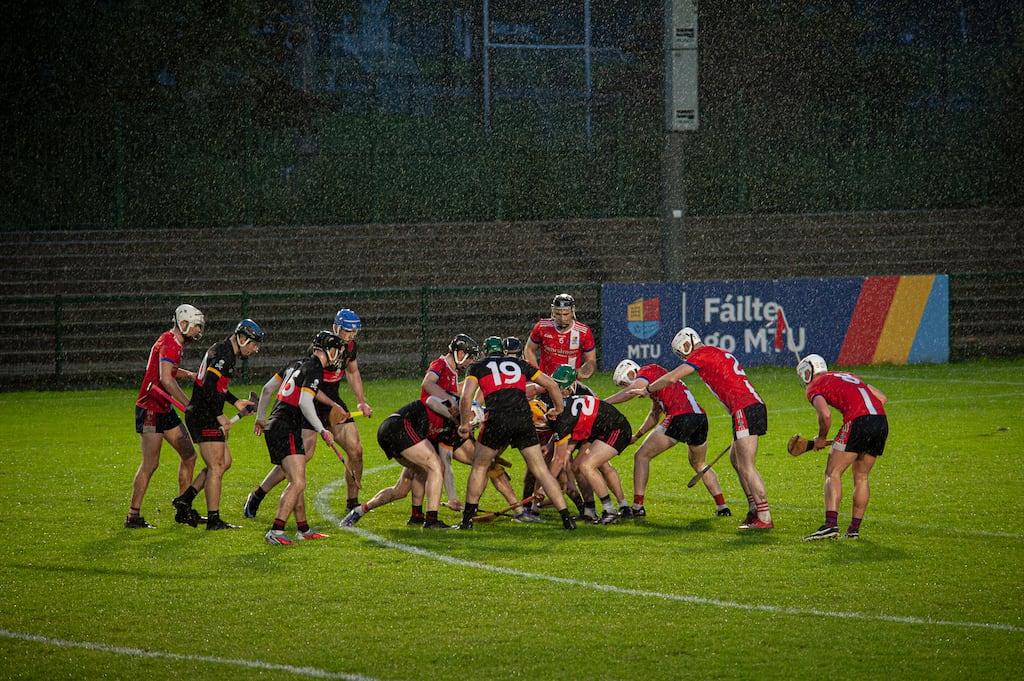
So far, the experimental rules have not been given a fair chance. The Higher Education Leagues, in which the rules were being trialled, have not yet concluded and the GAA’s Games Intelligence Unit have only harvested detailed data from 10 of the matches.
READ MORE


The Expert Advisory Group took the reasonable view that they were not sufficiently informed to make firm recommendations this weekend. They needed more time. The danger is that, without firm deadlines and evident enthusiasm from Croke Park, the project could drift towards oblivion.
Players and managers involved in the experimental games were invited to complete surveys and the feedback was broadly negative. The feedback from match officials, however, was more positive. The FRC’s rule changes experienced initial resistance too.
So, what did the limited data say? Over the three weeks of games analysed there was a 7 per cent reduction in rucks, while stoppages involving eight or more players congregated around the ball fell from more than five a game to fewer than three. Those numbers don’t reflect a dramatic shift in behaviour but it is the germ of a promising trend. Everybody wants fewer rucks.
On puckouts, there is a clear division between spectators – who generally speaking want to see a contest – and players and coaches, who, for obvious reasons, want to secure the ball. The experimental rule on puckouts is that the ball must cross the 45m line and three players from both teams must be standing between inside the 45m line but outside the 20m line when the puck-out is taken.
Third level teams at this time of the year have very little training time together, and coaches were unlikely to concoct puckout routines for rules that were not going to be in place for the Fitzgibbon Cup. Unsurprisingly, 86 per cent of puckouts were contested, which was precisely the kind of outcome the rule was designed to produce.
The Games Intelligence Unit benchmarked all their data against Division One B of this year’s National Hurling League and in terms of puckout stats that number compared to 55 per cent of puckouts being contested in that competition. That is a quantum difference.
It would be fascinating to see how the top intercounty coaches would deal with that condition on the puckout. It is inconceivable that they would simply accept driving the ball long and hoping to win a break. In the third level games, the team taking the puckout retained possession 49 per cent of the time. That number wouldn’t be acceptable to an elite team.

Arguably, the big-ticket item in the experimental rules is the handpass. During the summer the Expert Advisory Group canvassed widely for feedback about where the game is now and where it needs to go, across a range of stakeholders. A public survey generated more than 8,000 responses.
The only issue on which everyone could agree was that handpassing was hurling’s biggest problem. It was unanimous.
In the experimental rules there was a clampdown on foul throws, placing greater onus on players to create clear separation between the ball and the hand. But the big rule change was that a player receiving a handpass couldn’t make a handpass. The same experiment was tried in the 1995 National League, when the number of handpasses in the game was only a fraction of what it is now.
In the third level games, the number of handpasses fell by 42 per cent over three weeks, from more than 56 per game in week one to fewer than 33 in week three. In the five All-Ireland series games in this year’s championship there had been an average of 101 handpasses.
With that rule change, the emphasis on moving the ball more directly and creating more contests for possession is clear. Is that what the elite coaches and players want? Probably not. And the rest of us? Absolutely. Close to the heart of the game, that is where the stent must be inserted.
These experimental rules deserve a fair crack of the whip. That hasn’t happened yet.