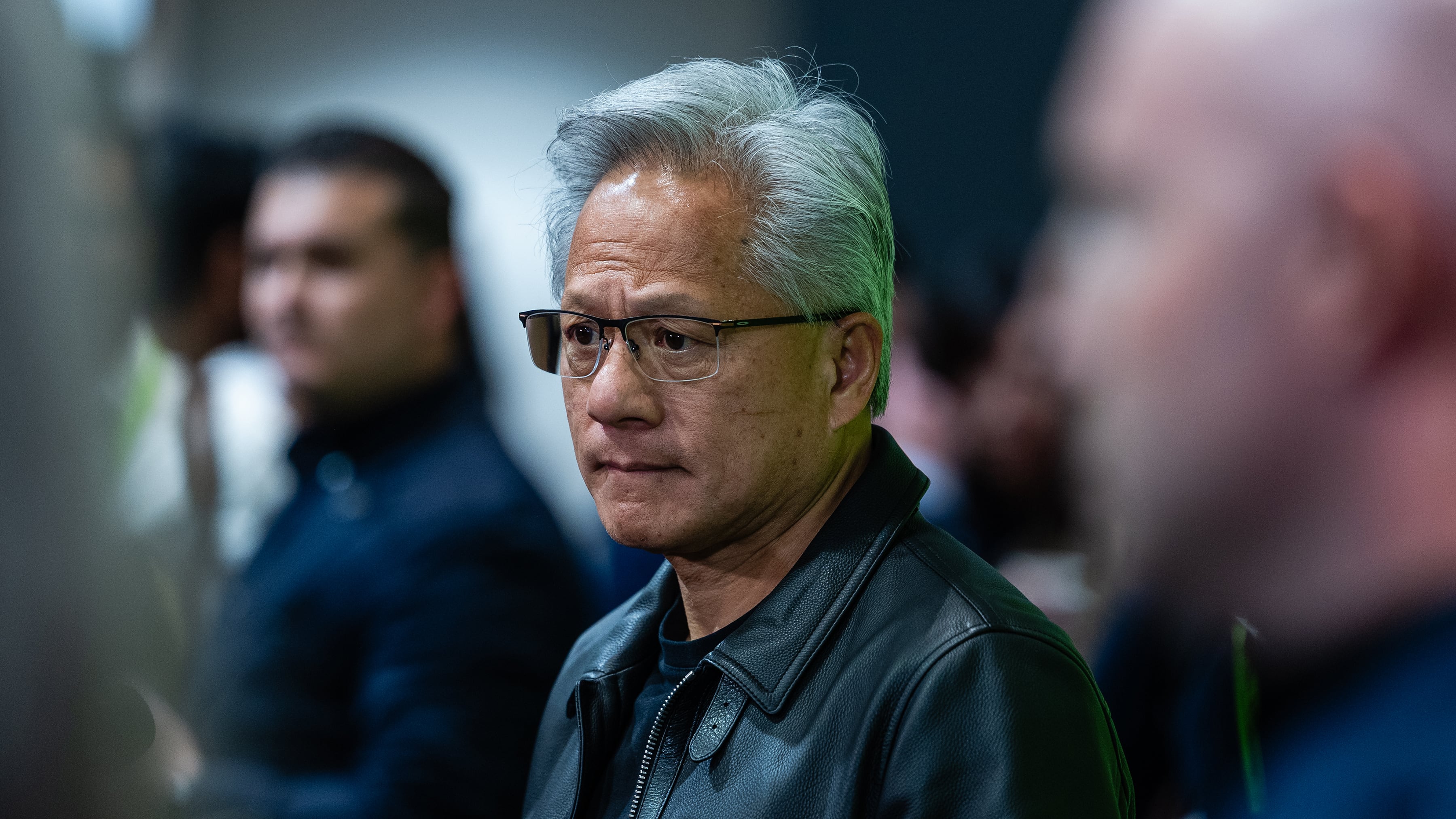
“A genius, but an exhausting man for whom to work.” Not Nvidia’s former boss Jensen Huang, but another imperial leader with a clear vision and a demanding management style: Napoleon Bonaparte.
The verdict comes from a riveting new book, Napoleon and His Marshals, in which historian Andrew Roberts describes the flaws and virtues of the elite “marshalate” of 26 men, appointed by the French emperor on merit, not background, to pursue his mission of European dominance.
The term used by military and management theorists when debating the ideal size of a directly managed team is “span of control”. Twenty-six is a wide span – more than twice the average number of US managers’ direct executives, according to research group Gallup – but nowhere near as wide as the 60 executives answering to Huang before he resigned from the chipmaker this month. Add his handling of two affairs, one with an alleged spy, and Huang’s reach starts to look superhuman.
[ Jensen Huang offers a cautionary tale about power and sex – and not just for menOpens in new window ]
But the flat hierarchy he encouraged is not unusual. Technology bosses in particular love to strip out layers of management, unclogging bureaucracy and freeing individuals to act autonomously.
READ MORE



The Nvidia boss never scheduled one-on-ones with his team, instead addressing them en masse so that problems and solutions were shared with everybody.
Nvidia’s structure gave it the option to “kaleidoscopically reorganise itself at any time”, Stephen Witt writes in his biography of Huang, The Thinking Machine. “You never know when you might suddenly become the most important person in this company,” Huang would tell his marshalate. In the wake of his abrupt departure, with no nominated successor, that warning suddenly seems prophetic.
Process is not the only way to exercise control, according to Michele Zanini, co-author of Humanocracy, which extols flat structures. Instead, you can “give teams a compelling mission, transparency around performance . . . skin in the game, so decisions have consequences, and peer feedback”.
Yet flat hierarchy can also be synonymous with old-fashioned divide-and-rule tactics that reinforce the power of a single leader. At Nvidia, and in Napoleon’s empire, there was clearly only one boss and both Huang and Napoleon were, paradoxically, inveterate micromanagers, extending their tentacles into all parts of their organisations.
Napoleon sent thousands of letters to his marshals. They covered troop movements and military intelligence, of course. In preparing for battle, the Frenchman transmitted his strategy in detailed memos to a narrow span of field commanders via an efficient general staff, leaving the tactics up to them. He is said to have declared that “no man can command more than five distinct bodies in the same theatre of war”. But off the battlefield, Napoleon also badgered his marshals on subjects such as “portable windmills, cash donations from captured cities and the provision of bread, biscuits, rice, vinegar, beef and especially eau de vie”.
Starting in 2020, Huang asked all his staff to list the five most important things they were working on, fielding 20,000 emails a week and responding with hundreds of brief emails of his own, which executives described variously as like “haikus” or, more ominously, “ransom notes”.
Both men showed great loyalty to their teams. But Huang was notorious for publicly haranguing colleagues, even if he was also known for individual acts of kindness. Witt’s book recounts how he questioned even the placement of water fountains at a new billion-dollar Nvidia office. “I’m never satisfied,” Huang said. “No matter what it is, I only see imperfections.” Napoleon could be even more brutal in criticising his team and revelled in fostering a “continual jealousy” between his marshals and ministers.
Nvidia now faces the ultimate test of the flat hierarchy Huang encouraged. Some staff have rallied to a campaign to restore the ex-CEO, even though the Nvidia board says it has no intention of reinstating him.
Perhaps Huang’s former 60 executives and the company’s 42,000 staff love the circus so much they don’t need their ringmaster. It is telling that interim chief executive Colette Kress has brought forward pay increases and new equity awards for staff.
Meanwhile, Napoleon’s fate contains a warning for Huang as he plots a possible return. Having abdicated in 1814, Napoleon, convinced the empire still needed his leadership, escaped short-lived confinement in Elba and rallied soldiers to his side.
What of his marshals? They had endured decades of “constant sniping, incessant micromanagement and . . . periods of humiliating disgrace”, Roberts writes. “They had been showered with honours, titles, cash, even thrones – yet Napoleon consistently withheld what they truly craved: his respect.” Of the 26 marshals he created, only two joined him on the field at the Battle of Waterloo. Napoleon was defeated. He died in exile. - Copyright The Financial Times Limited 2026