
Friday: Ten things we learned today
- US Secretary of State Marco Rubio reportedly told G7 members that the US expects the war to be over in between two and four weeks
- The US and Israel bombed several nuclear targets and steel facilities in Iran on Friday
- Iran’s foreign minister Seyed Abbas Araghchi has said on X that Iran will “exact heavy price” for attacks on energy infrastructure
- US president Donald Trump extended a pause on threats to bomb Iranian energy plants by 10 days
- US officials to meet Iranian counterparts soon, envoy says
- Israel’s military said early on Friday it had conducted a wave of strikes “in the heart of Tehran”
- EU energy ministers will hold an extraordinary videocall on Tuesday to discuss the impact of the Iran war on energy security and supply, a spokesperson said
- US can only say with certainty that it has destroyed one-third of Iranian missiles, sources told Reuters
- The UN human rights chief has urged the US to conclude its investigation into a fatal strike on a primary school in Iran at the start of the attacks last month
- Iran-linked hackers have publicly claimed the breach of FBI Director Kash Patel’s personal inbox
Key Reads
- On the front line of Lebanon’s war, medics count their dead and keep going
- ‘The rift is too deep’: Europe leaders are in no mood to help the US
- Marco Rubio says US expects to finish Iran war in ‘next couple of weeks’
- How many missiles does Iran have left?
- How Iran is seeking to cash in on controlling the Strait of Hormuz
- Analysis: Trump may send a further 10,000 troops to Middle East. Why?
They want to make a deal - Trump
Donald Trump has arrived in Miami, Florida and when asked for an update about the war he said: “They are being decimated. We are talking now, they want to make a deal. “Very simply,” he went on, “our military is the greatest in the world by far”. He also told the reporters that Iran had to open the Straits of Hormuz.
No increase in radiation following attack on nuclear facility
The Shahid Rezayee Nejad yellow cake production facility in Yazd province in Iran, also known as Ardakan, was attacked on Friday, Iran told the International Atomic Energy Agency.
There was no increase in off-site radiation levels reported, the UN nuclear watchdog said on X adding that it is looking into the report.
At least 13 Iranians including children reported dead in missile attack
At least 13 people have been killed in a missile attack in Kermanshah, western Iran, according to Iran’s semi-official news agencies Mehr and Tasnim.
The agencies said two children and four women died after the missile struck a residential area.
Tasnim, which has links to the Islamic Revolutionary Guard Corps (IRGC), says the fatalities were a result of two separate attacks in the city - the second of left dozens injured, the agencies reported.
France outlines limited aid package for sectors hit by war
France’s government has said it would provide a €70 million of aid to a limited number of sectors over a short period as it seeks to cushion the economy from the impact of the Iran war without straining public finances.
Any new spending must be offset by cuts elsewhere and there is no need to increase credits to different ministries or revise the 2026 budget, Finance Minister Roland Lescure said at a briefing in Paris this evening.
“My aim is to preserve growth while being careful with every euro spent,” he said. “We have put together a graduated, targeted, sector-specific response limited to April that can be adapted.”
The package includes €50 million fuel aid for small- and medium-sized road transport firms, €5 million for fisheries, and €14 million for farmers.
US officials to meet Iranian counterparts soon, envoy says
According to the news wires President Donald Trump’s special envoy Steve Witkoff has said the US is hopeful that there would be meetings with Iran this week.
US markets continue to slide ahead of weekend
The selloff in US stocks intensified this evening putting the S&P 500 Index on track for its longest stretch of losses in four years as the escalating hostilities in Iran deepened concern that higher oil prices will cripple the global economy.
The S&P 500 was down 1.6 per cent as of 3:05 p.m. in New York, (8.05pm Irish time) on course for its fifth straight weekly drop.
The retreat pushed the US benchmark to its lowest in more than seven months. The tech-heavy Nasdaq 100 Index slid 1.9 per cent, bringing its decline from its October peak to more than 10per cent, and entered what’s commonly defined as a correction. The Dow Jones Industrial Average was on track to close in correction territory as well as it tumbled 1.7per cent.
Brent crude oil prices jumped to $112 per barrel as the US and Israel bombed Iranian nuclear and steel facilities while Iran retaliated across the Persian Gulf. The attacks came hours after President Donald Trump moved back his deadline for Iran to agree to reopen the Strait of Hormuz or face attacks on its power infrastructure.
400 Hezbollah fighters killed in fighting so far - sources
More than 400 fighters from Hezbollah have been killed since the Lebanese armed group launched the opening salvoes of a new war with Israel on March 2nd, two sources familiar with Hezbollah’s count has said.
The figure was the first overall toll provided of Hezbollah fighters killed in Israel’s expanding air and ground campaign in Lebanon. The group has issued sporadic notices for a few individual fighters but has not provided an official overall toll.
Iran says it ‘will exact heavy price’ for attacks on energy infrastructure
Iran’s foreign minister Seyed Abbas Araghchi has said on X that Israel “has hit 2 of Iran’s largest steel factories, a power plant and civilian nuclear sites among other infrastructure” and added that “Israel claims it acted in coordination with the US.” He said the attack “contradicts POTUS extended deadline for diplomacy” and added that Iran will “exact HEAVY price.”
SIPTU calls for VAT decrease to be diverted to energy credits
The country’s largest trade union has called on the Government to delay the planned reduction in VAT for the hospitality sector and divert the projected cost to help low income households with targeted energy credits, writes Irish Times work correspondent Emmet Malone.
At a meeting of Siptu’s services division at Liberty hall in Dublin on Friday, divisional organiser said the 9 per cent rate for hospitality “represents a massive transfer of public wealth to often highly profitable businesses, while the workers who generate those profits remain trapped in a cycle of working poverty.
“It is a scandal that this Government continues to prioritise the margins of profitable businesses over the survival of the men and women who keep the services sector running. We are calling for an immediate halt to this tax break.
“The estimated €680 million this will cost the exchequer in a full year is money that belongs to the public. It should be used to provide direct relief to workers currently being crushed by the cost-of-living and energy crises.”
The VAT reduction is due to take effect on July 1st. Siptu economist, Michael Taft, said the Government should “stop the VAT tax break and instead use that funding to introduce a targeted electricity credit, which would provide vital financial support for low to average-income households”.

Minister says Ireland will has sufficient fuel for April
The supply of fuel in Ireland is “not an issue” at present and it is expected to be “steady” during April, Minister for Energy Darragh O’Brien has said.
He has been in contact with the National Oil Reserve Agency (NORA) and other agencies and “they’ve confirmed to me that supply and reserves are in place.”
O’Brien added: “Our supply through the month of April is steady but it is something that we are going to have to continue to watch.”
He also said there will be requirements to reduce energy demand in “a practical way” and “many households are already responding looking at how they can reduce their use of energy”.
O’Brien said there are “no immediate concerns” on the supply of fuel to the aviation sector while adding: “No one knows exactly how this conflict is going to play out.
“We all earnestly want an immediate de-escalation but even at that if the war was to stop tomorrow – and from a humanitarian perspective we obviously want that to happen – there is still going to be further issues with regard to pricing”.
He said this is because “a lot of the supply that Europe has received through the Strait of Hormuz has actually been before the conflict itself started.
“That is something that we are watching, dealing with colleagues in Europe as well from that to ensure that we have the supplies of oil and of gas that we actually require.”
O’Brien said the situation reinforces “what we’re doing already which is accelerating the delivery of renewables.”
He said he was satisfied that the excise cuts on petrol and diesel brought in this week are being passed on at forecourts though the Government will be monitoring this.
O’Brien said the government intervened with a cost-of-living package in a “considered and targeted way” and “we’ve also retained the ability to respond again should we need to.”
He was speaking at the turned of the sod for a road project in Swords, Co Dublin including bus lanes and cycle tracks that are ultimately aimed at integrating with planned Metrolink rail line stops.
US and Israel bomb Iran nuclear facilities
The US and Israel bombed several nuclear targets and steel facilities in Iran on Friday, as Tehran continued to launch strikes across the Persian Gulf and rebuffed President Donald Trump’s increasingly insistent demands to end the conflict.
Airstrikes on Friday targeted a heavy water research reactor that’s part of Iran’s Arak nuclear complex and a yellow cake production plant in Yazd province, as well as two of the country’s biggest steelmakers, according to Iranian state media reports.
Tehran fired numerous drones and missiles at Gulf neighbors, damaging two ports in Kuwait and prompting missile alerts in Doha, while warning of retaliation against steel plants across the Gulf and Israel. Saudi Arabian authorities reported intercepting numerous drones and missiles aimed at the capital Riyadh.
Israeli Defence Minister Israel Katz also said the country’s military would escalate its assault on the Islamic Republic in response to the targeting of civilians.
The attacks came after Trump pushed back his deadline for Iran to agree to reopen the Strait of Hormuz or face strikes on its power plants.
The 10-day extension was his second since Saturday’s threat to destroy the infrastructure in the absence of Tehran reopening the critical waterway, a chokepoint that’s become increasingly urgent with global energy and commodity shortages mounting.
Brent crude rose almost 3 per cent to about $111 a barrel on Friday, extending its climb this year to 82 per cent. The conflict has caused fuel shortages and fears of stagflation across major and emerging market economies.
Iran has rejected a 15-point list of ceasefire terms delivered by the Trump administration via intermediaries in Pakistan, and has countered with five conditions of its own — including maintaining sovereignty over the Strait of Hormuz.

US expects war to end in weeks
US Secretary of State Marco Rubio has reportedly told members of the G7 that the United States expects the war to be over in between two and four weeks.
Rubio has arrived in France for the meeting of the seven leading industrial nations.
He is also reported to have told G7 leaders that the US feels it can achieve all its goals in Iran without using ground troops.
Speaking to reporters after landing in Paris, Rubio said the world must resist any attempts by Iran to toll the Strait of Hormuz for shipping.
He said countries around the world have a “lot at stake” if the Strait of Hormuz is tolled and it would be a “danger to the world”.
White House awaits Iranian response
Iran’s response to a US peace proposal aimed at ending the war in the Middle East is expected later on Friday, according to a source briefed on the matter. US president Donald Trump and top White House officials have been told via interlocutors that Iran’s counter-proposal would likely arrive later on Friday, Reuters have reported.
The war, which began when the US and Israel attacked Iran on February 28, has spread across the Middle East.
Iran had been reviewing a 15 point proposal, sent via Pakistan, that included demands ranging from dismantling Iran’s nuclear program to curbing its missile development and effectively handing over control of the Strait of Hormuz, according to sources and reports.
An Iranian official told Reuters on Thursday that senior officials had reviewed the proposal and felt it served only US and Israeli interests. But the official said diplomacy had not ended - Reuters
European intelligence agencies believe Russia is supplying drones to Iran
Intelligence agencies in Europe believe Russia is in the final stages of preparing to supply drones to Iran for use in its war with the US and Israel, according to a senior European official.
Russia has already been providing intelligence with Tehran to help it target US forces in the region, the official said, but the upcoming delivery of explosive-laden drones would mark the first evidence of lethal support since the start of the war.
The official, who spoke on condition of anonymity, declined to provide details on the scale of any deliveries, but confirmed an article by the Financial Times that said “western intelligence reports” found Russia was close to completing a phased shipment of drones, medicine and food to Iran.
Iranian and Russian officials began secretly discussing drone deliveries days after Israel and the US attacked Tehran in late February, the news website said, citing officials briefed on the intelligence. It said drone deliveries could be completed by the middle of next week.
Responding to the claim of Moscow sending drones to Iran, Kremlin spokesperson Dmitry Peskov was quoted as saying: “There are a lot of fakes going around right now. One thing is true – we are continuing our dialogue with the Iranian leadership.”
Russia and Iran signed a strategic partnership agreement last year and Moscow has sent more than 13 tonnes of medicine to Iran through Azerbaijan. - The Guardian
EU energy ministers to hold meeting next week
European Union countries’ energy ministers will hold an extraordinary videocall on Tuesday to discuss the impact of the Iran war on European energy security and supply, a spokesperson for Cyprus’ EU presidency said on Friday.
Cyprus holds the EU’s rotating presidency and chairs meetings of EU countries. - The Guardian
G7 foreign ministers call for immediate stop to attacks on civilians
The foreign ministers of the G7 group of nations called on Friday for an immediate stop to attacks against civilians and civilian infrastructure in the Iran war.
In a joint statement agreed on the second day of a G7 meeting in France - this year’s host country - the ministers said they had underscored the importance of minimising the impact of the conflict on regional partners, civilian populations and critical infrastructure.
“We focused on the value of diverse partnerships, coordination, and supporting initiatives, including to mitigate global economic shocks such as disruptions to economic, energy, fertiliser and commercial supply chains, which have direct impacts on our citizens,” they said in the statement.
The ministers also reiterated the need to restore safe and toll-free freedom of navigation in the Strait of Hormuz.
The G7 members are the United States, Britain, Canada, France, Germany, Italy and Japan, along with the European Union.
US secretary of state Marco Rubio is among the leaders at today’s meeting.
Rubio earlier told reporters it was in the “interest” of the G7 to help the US reopen the strait of Hormuz. But in a combative statement, he said he was not “interested” in making the US allies “happy”.
Rubio said: “I don’t work for France or Germany or Japan. I get along with all of them on a personal level and we work with those governments very carefully. But the people I’m interested in making happy are the people of the United States. I work for them.” - Reuters
Iran-linked hackers claim breach of Kash Patel’s emails

Iran-linked hackers have publicly claimed the breach of FBI Director Kash Patel’s personal inbox, publishing photographs of the director and his purported resume to the internet.
On their website, the hacker group Handala Hack Team said Patel “will now find his name among the list of successfully hacked victims”.
A sample of the material uploaded by the hackers appears to show a mix of personal and work correspondence dating between 2010 and 2019.
An official from the US Department of Justice said the material appeared to be authentic.
Handala, a pro-Palestinian hacking group with links to Iran, has claimed credit for a number of recent cyber attacks including one which impacted Stryker employees in Ireland earlier this month. - Reuters
EU economy at risk of stagflation due to war
The European Union economy is at risk of stagflation as a result of the surge in energy prices caused by the Iran war, European Economic Commissioner Valdis Dombrovskis said on Friday.
“The outlook is clouded by profound uncertainty, but it is clear that we are at the risk of a stagflationary shock, that is to say, a situation where a slower growth coincides with a higher inflation,” Dombrovskis told a press conference after a meeting of EU finance ministers on the energy price surge.
“This is the case even if the disruptions in energy supplies were to be relatively short-lived. In such a scenario, our analysis suggests that the EU growth in 2026 could be around 0.4 percentage points lower than projected in our autumn economic forecast, and inflation could be up to one percentage point higher,” he said.
Last November, the Commission forecast EU economic growth at 1.4 per cent in 2026 and 1.5 per cent in 2027. The euro zone economy was seen growing 1.2 per cent in 2026 and 1.4 per cent in 2027. The Commission forecast euro zone inflation of around 2 per cent in 2026.
“If disruptions prove more substantial and longer lasting, the negative consequences for growth would be even greater. Growth could be up to 0.6 percentage points lower in both 2026 and 2027,” Dombrovskis said. - Reuters
Iran footballers hold schoolbags in tribute to girls killed in attack
Iran’s men’s national football team wore black armbands and held schoolbags as their anthem played ahead of a match in Turkey on Friday.
A team official said it was a protest over the killing of schoolgirls on the first day of the war.
Iran were playing a friendly against Nigeria in the resort town of Belek ahead of the World Cup in the United States, Mexico and Canada where their participation is in doubt over the conflict.
The men lined up holding pink and purple bags with ribbons on them – a reference to the attack on the Shajareh Tayyebeh School which Tehran says killed more than 175 people including children and teachers on the first day of joint US-Israeli strikes.
“The players are holding the school bags close to their heart in remembrance of the 165 girls the Americans killed in an Iranian school,” a media official for the Iranian team told Reuters.
US military investigators believe it is likely US forces were responsible but have not yet reached a final conclusion or completed their investigation.
UN high commissioner for human rights Volker Turk earlier today urged the US to conclude its investigation and publish the findings. - Reuters
Any deal with Iran ‘must ensure Strait of Hormuz is never again used as tool of war’
Gulf Arab states are telling the US that any deal with Tehran should do more than end the war, and must permanently curb Iran’s missile and drone capabilities and ensure global energy supplies are never again “weaponised”, four Gulf sources said.
US president Donald Trump has extended his deadline for Iran to reopen the Strait of Hormuz, which carries about 20 per cent of global oil and liquefied natural gas supplies, or face the destruction of its energy plants.
But the big question confronting Gulf policymakers is no longer how the Iran war ends, but what kind of regional order follows, the four sources with knowledge of the matter said.
Any agreement must rewrite the rules of engagement by providing guarantees that the Strait of Hormuz is never again used as a tool of war and Gulf states must be written into the architecture of what comes next, they say.
“The real challenge is not persuading Iran to stop the war, but ensuring the Gulf is not left exposed to the same dynamics that made it possible in the first place,” Ebtessam Al-Kerbi, president of the Emirates Policy Centre, said. - Reuters
Some petrol pumps in the UK are witnessing “temporary shortages” amid tight supply linked to the conflict in the Middle East, the boss of Asda has warned as the price of petrol jumped above £1.50 per litre (about €1.73) for the first time in almost two years.
The UK’s second largest fuel retailer stressed that elevated demand from customers has led to a small number of local “spikes”, but issues are not nationwide.
Fuel Industry UK, which represents the fuel sector, said the supply of petrol and diesel is “stable”.
Allan Leighton, executive chairman of Asda, also rejected accusations that petrol sellers might be “profiteering” from higher pricing in recent weeks. - Press Association
Huge Iranian missile fragments scattered across West Bank and Israel

Across Israel and the occupied West Bank, massive chunks of Iranian ballistic missiles have slammed to the earth after being shot out of the sky by Israeli air defence systems.
Near the Palestinian city of Nablus, a young girl posed with a missile fragment that smashed into an olive tree grove. In an Israeli school in a West Bank settlement, children climbed on a huge metal missile case that fell in their playground.
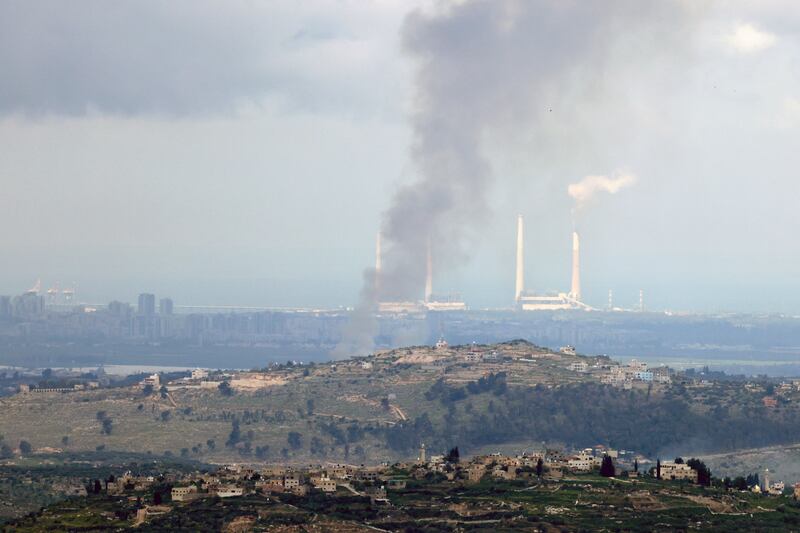
Nearly a month after Israel and the US launched their joint war on Iran, Israelis and Palestinians have become used to frequent official warnings to stay away from missile fragments, which could contain unexploded ordnance or toxic materials.
“These objects may appear harmless at first glance, but can pose a risk of explosion and shrapnel,” Israel’s national ambulance service said on Friday. - Reuters
‘Escalation’ in Middle East possible in coming days - Tusk
There are reasons to believe there could be an escalation in the conflict in the Middle East in the coming days, Polish Prime Minister Donald Tusk said on Friday.
“I have reasons to believe, also based on information we’ve received from our allies, that stabilisation is unlikely in the coming days. On the contrary, a new escalation may occur,” Tusk told reporters. - Reuters
‘No safe place for people to go’ - Lebanon latest

Earlier we reported on the fact that more than 370,000 children have been forced from their homes in Lebanon in just three weeks, according to UN officials.
Israel has launched heavy air strikes and a ground assault on Lebanon in parallel with the war in Iran, after Lebanon’s Iran-backed Hezbollah militia fired into Israel in solidarity with Tehran on March 2nd.
Israeli forces have told Lebanese people to leave their homes in around 15 per cent of the country including the entire south.
Unicef’s country representative Marcoluigi Corsi said the scale of displacement was “staggering”, with 19,000 children uprooted daily, many for the second or third time since previous escalations just 15 months ago.
“The mental and emotional exhaustion weighing on the children of Lebanon is just devastating,” Corsi said remotely from Beirut. “There is no safe place for people to go.” - Reuters
US Republicans ‘know this war is going badly’
It is not just Democrats in Congress who fear that Donald Trump’s war in Iran is going sideways, Michelle Goldberg writes in The New York Times today.
After a classified Pentagon briefing on Wednesday, Republican lawmakers on the House Armed Services Committee appeared shaken.
“We will not sacrifice American lives for the same failed foreign policies,” said Nancy Mace, warning about the possibility of US troops in Iran. The committee chair, Mike Rogers, complained that members aren’t getting nearly enough information about war plans. Troop movements, he said, should be “thoughtful and deliberate”. The implication was that they might not be.
“This is the first week where I have felt that there’s been really any resistance to this war from Republicans,” Jason Crow, a combat veteran and Democratic member of the committee, said. His colleagues’ public comments, he suggested, only hint at the depth of their anxiety. In closed meetings, he said, they express many concerns “that they’re unwilling to show publicly”.
The big question now is if a US ground invasion is imminent.
Read her full opinion piece here.

The Trump administration has said it aims to weaken Iran’s military by sinking its navy, destroying its missile and drone capability and ensuring that the Islamic Republic never has a nuclear weapon.
The US military’s central command has said its operation, known officially as “Epic Fury”, is on schedule or even ahead of plans laid out prior to the February 28th start of the US and Israeli war on Iran. US strikes have hit more than 10,000 Iranian military targets as of Wednesday and, according to central command, have sunk 92 per cent of the Iranian navy’s large vessels.
Still, central command has declined to state precisely how much of Iran’s missile or drone capability has been destroyed.
One source said part of the problem is determining how many Iranian missiles were stockpiled in underground bunkers before the war started. The US has not disclosed its estimate of the size of Iran’s pre-war missile stockpile.
Estimates range from 2,500 by Israel’s military to around 6,000 according to some analysts. – Reuters
US has destroyed only one-third of Iranian missiles
The United States can only determine with certainty that it has destroyed about a third of Iran’s vast missile arsenal as the US and Israeli war on the country nears its one-month mark, according to five people familiar with the US intelligence.
The status of around another third is less clear but bombings likely damaged, destroyed or buried those missiles in underground tunnels and bunkers, four of the sources said. The sources spoke on condition of anonymity given the sensitive nature of the information.
One of the sources said the intelligence was similar for Iran’s drone capability, saying there was some degree of certainty about a third having been destroyed. The assessment, which has not been previously reported, shows that while most of Iran’s missiles are either destroyed or inaccessible, Tehran still has a significant missile inventory and may be able to recover some buried or damaged missiles once fighting stops.
The intelligence stands in contrast to Trump’s public remarks on Thursday that Iran had “very few rockets left”. He also appeared to acknowledge the threat from remaining Iranian missiles and drones to any future US operations to safeguard the economically vital Strait of Hormuz.
Reuters has reported that he is weighing whether to escalate the conflict by deploying US troops to Iranian shores along the strait. “The problem with the straits is this: let’s say we do a great job. We say we got 99 per cent [of their missiles]. One per cent is unacceptable, because One per cent is a missile going into the hull of a ship that cost a billion dollars,” Trump said at a televised cabinet meeting on Thursday.
The Pentagon and White House did not immediately respond to requests for comment. – Reuters
Ukraine’s foreign minister Andrii Sybiha on Friday said he saw scope to draw China into peace efforts to end his country’s war with Russia.
“We have the situation in the Middle East so it is important not to lose the global attention on the Ukrainian case, because everything is interlinked,” Sybiha told Reuters in an interview on the sidelines of the G7 foreign ministers meeting in France.
Kyiv is hoping to bolster support in its war against Russia, which is now in its fifth year, as the US-Israeli conflict with Iran raises uncertainty over whether Washington will restrict its military supplies. – Reuters
Germany says Putin hopes to use Iran war as distraction from Ukraine
German foreign minister Johann Wadephul on Friday accused Russia of helping Iran identify potential strike targets, saying president Vladimir Putin was hoping to use the Iran war as a distraction from his attack on Ukraine.
Speaking to reporters at a G7 meeting in France, Wadephul also said he had spoken to US secretary of state Marcio Rubio to outline Germany’s position that it was willing to help play a role in the Strait of Hormuz after hostilities end.
“Putin cynically hopes that the escalation in the Middle East will divert our attention from his crimes in Ukraine,” Wadephul said.
“This calculation must not succeed. We see very clearly how closely the two conflicts are intertwined. Russia is evidently supporting Iran with information about potential targets.” – Reuters
Sinn Féin TD defends party stance on fuel cuts
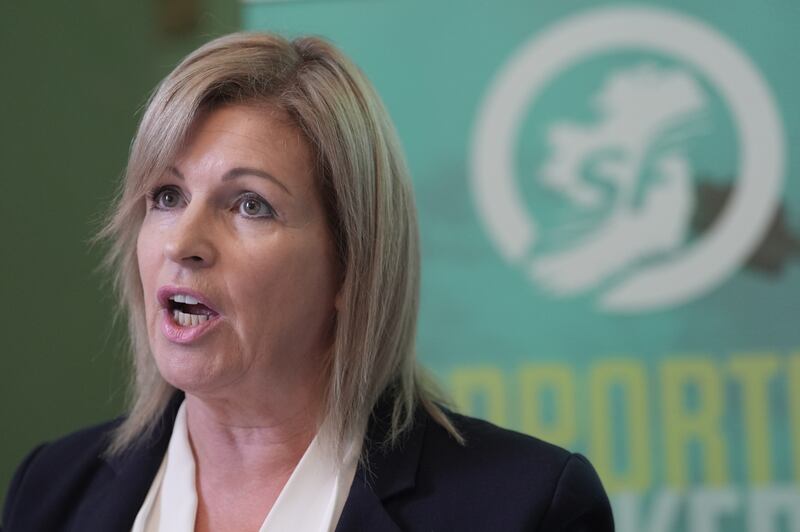
Sinn Féin TD Rose Conway-Walsh has defended her party’s decision to vote against the fuel price measures in the Dáil this week.
Conway-Walsh said the Government should have reduced fuel excise duty by the maximum amount allowed under EU and Irish law “which would have been 25 cent on diesel and petrol”.
Speaking on RTÉ Radio’s Today with David McCullagh, she also criticised “the lack of any support” to address the cost of home heating oil.
The Mayo TD said her party voted against the Government “because somebody had to reflect the anger that was out there and the disappointment that people had”.
Earlier this week the Government unveiled a €250 million package of support for households and businesses impacted by soaring energy costs.
The Dáil voted on Tuesday night by 118 votes to 39 for excise rates to be reduced by 15 cent per litre on petrol; 20 cent per litre on diesel; and 3 cent per litre on marked gas oil.
The House rejected by 88 to 69 a Sinn Féin amendment for the maximum excise cut possible on diesel and petrol and the removal of excise entirely from home heating oil.
The cuts on motor fuels will be in effect until May 31st.
Stocks continue to slide as Trump fails to calm markets
Global stock markets dropped again on Friday after Donald Trump’s extension of a deadline for Iran to reopen the Strait of Hormuz failed to calm oil prices or government bonds.
The US president’s postponement of the deadline on Thursday, after which he said Iran will face attacks on its energy infrastructure, came just after Wall Street stocks closed out their biggest one-day fall since the war began.
Markets appeared sceptical about the chances of a deal being struck between the two sides, however, with oil prices rising once again on Friday and government bonds sliding.
The pan-European STOXX 600 index tumbled 1.4 per cent after sliding 1.1 per cent on Thursday. Germany’s DAX index was 1.7 per cent lower. MSCI’s index of Asian shares, excluding Japan, fell 0.7 per cent overnight. – Reuters
Ukraine close to finalising security deals

Ukraine is close to finalising several security deals, including with the UAE and Qatar, to help them tackle Iranian attacks, its foreign minister said on Friday, adding that Kyiv believed Moscow was also providing intelligence and weaponry to Tehran.
With US-mediated peace talks to end the war stalled, Andrii Sybiha told Reuters in an interview on the sidelines of the G7 summit in France that China could play an important role in future negotiations given its influence on Moscow.
Sybiha said he had received an invitation to visit Beijing and hoped to do so in the short term. – Reuters
War in Iran prompts Asian leaders to mend ties
The war in Iran has prompted a partial rapprochement between the Philippines and China, which have been in an increasingly fractious standoff over a territorial dispute in the South China Sea, Denis Staunton writes.
Philippine president Ferdinand Marcos has led a turn away from China since taking office, deepening military co-operation with the United States by giving American forces access to more bases and allowing them to deploy missile systems.
Most Asian countries rely on imported oil and gas, none more so than the Philippines, which this week granted Marcos emergency powers to suspend excise taxes in an effort to blunt the impact of price increases.
Marcos said this week that in view of the impact of the war in Iran, he was open to resuming discussions with China about the joint development of an oil and gas project in a disputed area of the South China Sea.
Read our China Correspondent’s full report here.
Germany is not pursuing any direct agreements with Iran on allowing its ships to pass through the Strait of Hormuz, a government spokesman said on Friday.
“I believe the arrangement that China, and also India, has found for some ships stems from direct agreements with the Iranian regime,” he said in Berlin.
“The German government is not currently pursuing this type of agreement. Therefore, we are waiting until the military situation allows passage again.” – Reuters
Iran will pay ‘heavy price’ – Katz
Israeli defence minister Israel Katz said Iran will pay “heavy and increasing” prices for targeting Israeli citizens.
Katz said strikes on Iran will escalate and expand to additional targets. – Reuters
Saudi Arabia ‘urging US to keep up Iran attacks’
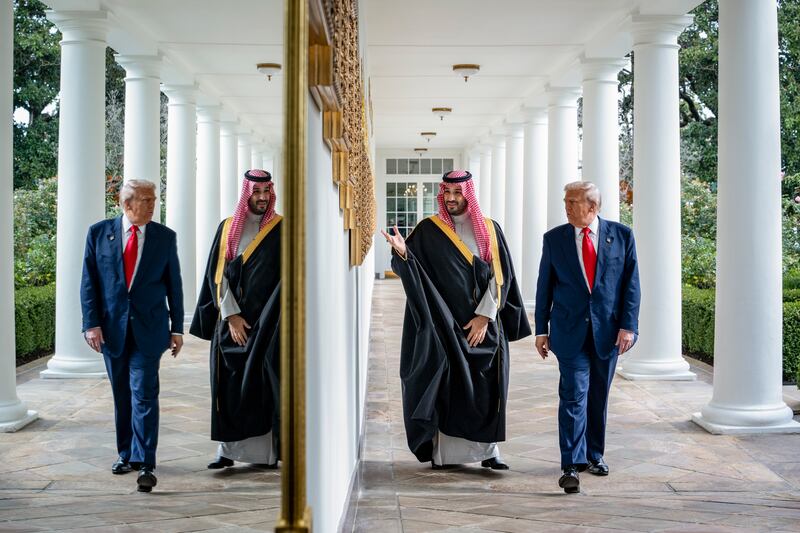
Saudi Arabia has urged the US to intensify attacks on Iran, a Saudi intelligence source has confirmed, while it is weighing a decision on whether to join the fight directly.
The Saudi source confirmed reporting in the New York Times, which said the kingdom’s de facto leader, crown prince Mohammed bin Salman, has urged Donald Trump not to cut short his war against Iran, and that the US-Israeli campaign represented a “historic opportunity” to remake the Middle East.
The intelligence source said Riyadh was not just calling for the military campaign to be continued, but to be intensified.
Trump appeared to confirm the report about the crown prince’s role, telling journalists on Tuesday: “Yeah, he’s a warrior. He’s fighting with us.”
There are no reports of active Saudi military involvement in the nearly four-week-old war so far, but a Saudi political analyst said the kingdom was likely to take that step if current peace efforts led by Pakistan failed. – The Guardian
EU ministers seek united strategy on energy price crisis
European Union finance ministers will on Friday seek to co-ordinate their response to the energy price surge due to the Iran war, ensuring the measures aid the vulnerable and move Europe further away from fossil fuels, while keeping the fiscal cost and demand in check.
Oil and gas prices have spiked since the US-Israeli strikes on Iran began on February 28th, creating a price shock similar to the energy crisis Europe went through after Russia invaded Ukraine in 2022, even as EU countries are now getting a lot more energy from renewable sources.
“EU-level co-ordination is essential to prevent market fragmentation and leverage economies of scale, thereby reducing the overall need for intervention,” the European Commission said in a note preparing the ministers’ discussions.
But because European governments don’t know how long the disruption to oil and gas shipments through the Strait of Hormuz will last, they are cautious about launching fiscally costly policies that might soon be unnecessary but will be hard to roll back.
EU finance ministers have invited the head of the International Energy Agency, Fatih Birol, to brief them on the latest developments.
“Short-term measures to provide relief to consumers (households and industries) could be considered,” the commission said.
“However, a key lesson from the 2022-2023 energy crisis is that many of these measures were broad and untargeted, leading to inefficiencies and very large fiscal costs.” – Reuters
More than 370,000 children displaced in Lebanon

More than 370,000 children have been forced from their homes in Lebanon amid Israel’s offensive against Hizbullah, with at least 121 children killed and 399 injured, Unicef’s representative in Lebanon, Marcoluigi Corsi, said on Friday.
Millions of people in Lebanon and Iran have been displaced since the start of the war. – Reuters
Transit through Hormuz will face ‘harsh measures’ – Iran
Iran’s Islamic Revolutionary Guard Corps (IRGC) said on Friday that shipping “to and from ports of allies and supporters of the Israeli-American enemies” is prohibited through any corridor or to any destination, Iranian state media reported.

The IRGC added that the Strait of Hormuz is closed and any transit through the waterway will face “harsh measures”.
Three container ships of various nationalities were turned back from the Strait of Hormuz after warnings from the IRGC revolutionary guards’s navy, according to reports. – Reuters
Oil prices rise again
Oil prices rose by about 2 per cent on Friday to more than $110 (€95) a barrel.
Gas prices in Europe were also buoyed by low storage levels.
“Storage levels in the EU have dropped to 28 per cent and fears are growing that it will become difficult to reach EU storage targets ahead of the next heating season,” analysts at trading group Mind Energy said.
The European Commission on Thursday urged EU governments to start refilling gas storage caverns as soon as possible to prepare for next winter, EU diplomats said. – Reuters
More from the UN Human Rights Council debate in Geneva this morning:
High Commissioner for Human Rights Volker Turk implored all sides to end their attacks and return to talks.
“US and Israeli attacks have increasingly struck densely populated residential areas and destroyed civilian infrastructure,” he said.
“Homes, medical facilities, schools, courts, transport networks and energy installations have been hit across all 31 provinces of the country.
“The targeting of nuclear facilities is reckless beyond comprehension. These attacks raise serious concerns over compliance with international humanitarian and human rights law.”
Read Turk’s full speech here.
Starmer says Iran and Ukraine wars could reshape global order

British prime minister Keir Starmer said the Iran and Ukraine wars could have “huge implications” for the future and could reshape the global order.
“How they end and on what terms could well define us for a generation,” Starmer told Sky News.
“And that’s why it’s really important that we approach this with our values and principles. That’s what we’ve applied in Ukraine, and that’s what we’ve applied in Iran. And, certainly, we’re working with others to de-escalate the situation in Iran.”
British foreign secretary Yvette Cooper is in France today for the meeting of G7 foreign ministers in Vaux-de-Cernay, near Paris, where she is expected to speak with US secretary of state Marco Rubio.
On top of the agenda is the conflict in the Middle East, with reports suggesting Rubio will ask ministers for help reopening the Strait of Hormuz.
In comments ahead of the summit, Cooper said Iran “cannot hold the global economy hostage”, adding that she wants to see a “swift resolution” to the Middle East crisis. She also expressed “deep concern” over Russia’s ties with Iran “that have been longstanding in terms of shared capabilities”.
- The Guardian
Message from the Editor

Iran’s Revolutionary Guards are urging civilians in the region to leave areas where US forces are stationed, according to Iranian media. – Reuters
UN urges US to conclude investigation into deadly Iran school strike

The UN human rights chief has urged the United States to conclude its investigation into a fatal strike on a primary school in Iran at the start of US-Israeli attacks last month and publish the findings.
“Senior US officials have said the strike is under investigation. I call for that process to be concluded as soon as possible, and for its findings to be made public,” Volker Turk told the UN Human Rights Council in Geneva during an urgent debate called by Iran.
“There must be justice for the terrible harm done,” he said.
Some 175 people, many of them children, were killed in the strike. – Reuters
US troops using citizens as human shields, says Iranian foreign minister
Local people in Gulf states are being used as human shields, the Iranian foreign minister has said, according to the semi-official Tasnim News Agency.
“From outset of this war, US soldiers fled military bases in GCC [Gulf Cooperation Council] to hide in hotels and offices. They use GCC citizens as human shield.
“Hotels in US deny bookings to officers who may endanger customers. GCC hotels should do same.” Abbas Araghchi said in a post on his X account on Thursday. – The Guardian
US and Iran plan to meet soon in Pakistan, says German minister
Germany’s foreign minister said the US and Iran have had indirect negotiations and representatives from both sides plan to meet shortly in Pakistan.
“Based on my information there have been indirect contacts, and preparations have been made to meet directly. That would be very soon in Pakistan, apparently,” Johann Wadephul told Deutschlandfunk radio on Friday. – Reuters
European Central Bank ‘should not rush to raise rates’
The European Central Bank (ECB) should not rush to raise rates in response to surging energy costs, as its “baseline” outlook remains intact and there is no sign yet that inflation is becoming entrenched, Cypriot central bank chief Christodoulos Patsalides said.
With energy prices surging, euro zone inflation is set to breach the ECB’s 2 per cent target as early as this month, prompting policymakers to debate whether to raise interest rates to head off second-round effects.
Patsalides, who sits on the ECB’s rate-setting governing council, said he would not hesitate to raise rates if he saw evidence that inflation was getting entrenched in the 21-nation bloc, but added there was no such evidence yet.
“We don’t have sufficient information to make a decision as to whether this should be looked through or whether we should be making a decision on interest rates,” Patsalides said in an interview. “I would not rush into any decision.” – Reuters

The United Nations Human Rights Council will this morning hold an urgent debate on “the aerial attack on Shajareh Tayyebeh Girl’s School in Minab, Iran, as a grave breach of international humanitarian law and international human rights”.
The debate, which will be broadcast here, is due to begin in Geneva shortly (8am Irish time).
An ongoing military investigation determined that the United States was responsible for a deadly Tomahawk missile strike on an Iranian elementary school.
Trump had initially blamed Iran for the strike.
Some 175 people, many of them children, were killed.
More on those Israeli strikes on Iran:
Israel’s military said it carried out strikes on targets in Tehran early on Friday, according to AFP.
A brief military statement said Israeli forces “completed a wide-scale wave of strikes targeting infrastructure of the Iranian terror regime in the heart of Tehran”.
The military said in a separate statement that it had also struck “ballistic missiles and aerial defence systems production sites across Iran”. It reported hitting missile launchers and storage sites in western Iran, as well as missile production sites in the capital. – The Guardian
How many missiles does Iran have left?
Iran has maintained large and dispersed stockpiles of weapons for scenarios exactly like this, experts say.
“Around 1,400 missiles have been confirmed launched, though the exact types are muddier in terms of quantity,” says Ryan Bohl, a senior Middle East and North Africa analyst at the risk intelligence company Rane.
“It can be said that a significant portion of their arsenal has been deployed and/or destroyed.”
Read the full story here.

The war has killed more than 1,900 people in Iran and nearly 1,100 in Lebanon to date. Eighteen people have died in Israel, while three Israeli soldiers have also been killed in Lebanon.
Thirteen US military members have died, as well as a number of civilians on land and sea in the Gulf region. Millions of people in Lebanon and Iran have been displaced. – AP
Israel strikes ‘in the heart of Tehran’

Israel’s military said early on Friday it had conducted a wave of strikes “in the heart of Tehran”, while smoke was seen billowing in the Beirut skyline.
Israel has moved thousands of troops across the border into Lebanon, where Israeli officials said they want to take control of the entire area south of the Litani river – some 30km north of the border.
Iranian media reported on Friday that a Thai-flagged cargo ship that came under attack from Iran in the Strait of Hormuz and was abandoned by its crew has run aground. – AP
Efforts to reopen Strait of Hormuz
The United Arab Emirates (UAE) has told allies it would participate in a multinational maritime taskforce intended to reopen the Strait of Hormuz as it lobbies to form a coalition to ensure shipping can is pass through the vital waterway, the Financial Times is reporting.
The newspaper says the UAE told the US and other western states it would take part, according to three people familiar with the situation, two of whom said Abu Dhabi would deploy its own navy.
The move reflects the country’s hardened stance towards Iran as it bears the brunt of Tehran’s retaliation to war from the US and Israel, it says. The report could not be immediately verified.
It also says the UAE is working on a UN Security Council resolution with Bahrain to provide any future taskforce with a mandate, but Russia and China could oppose the move, one of the people said.
Gulf states are concerned that Iran could seek to maintain control even if the war ends, the report says. There is a growing conviction among some Gulf states and the Trump administration that there is no easy means to reopen the blocked strait without naval escorts. – The Guardian
At his press conference at the White House earlier, Donald Trump took another swipe at Nato, the UK and Australia for not being more involved in his war on Iran.
Trump said: “[British prime minister Keir Starmer] did something that was shocking: he didn’t want to help us. And maybe in particular that country, you know, the longest bond, the longest ally.
“Australia, too, Australia was not great. I was a little surprised by Australia. I wouldn’t say anybody was great, other than the five countries in the Middle East. We never really had very much support.” – The Guardian
Oil prices fall
Oil fell as Donald Trump again pushed back a deadline for striking Iran’s energy, offering the market near-term respite while prolonging uncertainty over the course of the war well into April.
Global benchmark Brent shed as much as 2.7 per cent to near $105 (€91) a barrel, before paring losses, while West Texas Intermediate was near $93 (€80).
Brent crude is on pace for a record monthly gain in March, as the war between the US, Israel and Iran rocked the oil-rich Middle East. With Tehran forcing the near-complete closure of the Strait of Hormuz, the conflict has severely restricted flows of energy that are vital to the global economy.
Trump’s move “takes some near-term heat out of the market, but risks still lean to the upside”, said Ewa Manthey, commodities strategist at ING Groep NV.
With about eight million barrels a day of supply already offline, and a much larger volume of flows through the Gulf still vulnerable, “the geopolitical premium is unlikely to fade meaningfully,” she said.
While there was a roughly 60 per cent probability of the war finishing by the end of this month, there were 40 per cent odds of a longer conflict, possibly through June, according to Macquarie Group analysts. The latter scenario could drive oil to $200 (€174) a barrel, they wrote in a note. – Bloomberg
Israeli strike hits Beirut suburbs
Lebanese media said an Israeli strike hit Beirut’s southern suburbs early on Friday. Several explosions were heard from the Hizbullah stronghold and smoke was billowing from the area after the raid, Agence France-Presse reported.
Israel has previously issued sweeping evacuation warnings for the area but provided no specific warning in advance of Friday’s strike. It was unclear if there were any casualties.
Israel has sent ground troops into south Lebanon in a push to establish what it calls a “defensive buffer” zone, and Hizbullah said its fighters kept up its attacks on troops there early on Friday.

Trump extends deadline for Iran
US president Donald Trump has extended his deadline for Iran to open the Strait of Hormuz by 10 days to April 6th after saying talks are “going very well”.
The president made the statement on Thursday in a social media post, saying: “As per Iranian government request, please let this statement serve to represent that I am pausing the period of Energy Plant destruction by 10 Days to Monday, April 6, 2026, at 8 PM, Eastern Time,” Trump said on his Truth Social platform.
“Talks are ongoing and, despite erroneous statements to the contrary by the Fake News Media, and others, they are going very well.”
Later Trump told Fox News: “I gave them a 10-day period, they asked for seven.”
He also continued to declare victory in the war, adding: “In a certain sense, we have already won.”
The extension allows more time for talks, as well as for the US to amass additional forces in the region. These already include Marine Expeditionary Units and soldiers from the US army’s 82nd Airborne Division, according to people familiar with the matter.
Separately, the Wall Street Journal said the Pentagon is looking at sending up to 10,000 extra ground troops.
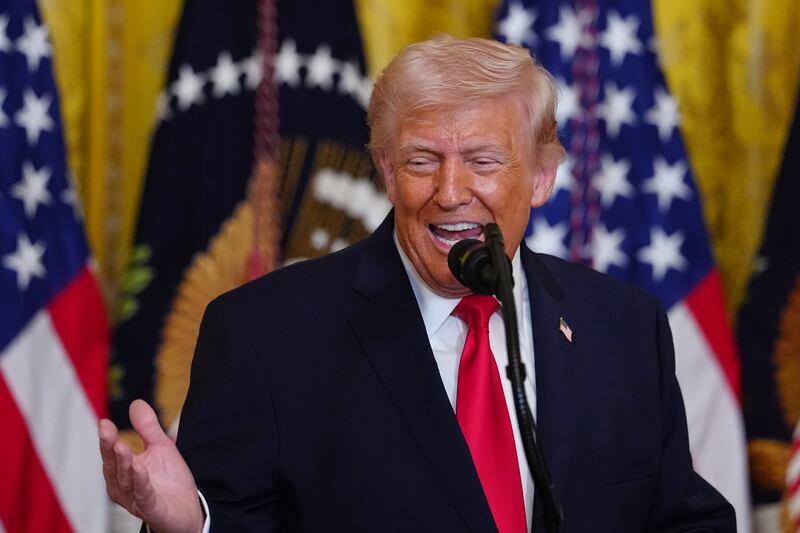
Earlier, the US president had urged Iranian leaders to negotiate an end to the near-month-long war or face further assassinations of senior officials amid intensified action by the US and Israel.
That threat came as Israel said it had had “blown up and eliminated” the Revolutionary Guards’ naval commander, Alireza Tangsiri, and several senior officers in a strike on the Iranian port of Bandar Abbas.
Heavy strikes by Israeli or US warplanes were also reported around Isfahan, home to a major Iranian airbase and other military sites, as well as one of the nuclear sites bombed by the US during the 12-day war in June.
Iran has strenuously denied it is “begging to make a deal”, as Trump claimed, and continued its retaliatory strikes across a swathe of the Middle East on Thursday.
Loud explosions were reported in Tel Aviv, the central Israeli city of Modi’in and Jerusalem throughout the day as Israel’s air defences worked to bring down incoming missiles. In the Gulf, Iranian attacks were also intercepted.


