
When I last worked in Paris in 2009, I used to commute by bicycle from Belleville in the city’s northeast to a summer job on the central Rue Saint-Denis.
The French capital has transformed since then under the ambitious outgoing Socialist Party mayor Anne Hidalgo, who pedestrianised long stretches of the city and vowed in the face of furious opposition to make Paris the “world capital of cycling”.
With residents set to vote for a new mayor on Sunday, I set out to recreate my cycling commute to see how much has changed in 17 years, and to get the views of Parisians along the way.
I started in my old haunt of Belleville. The neighbourhood’s main thoroughfares remained as I remembered: bustling, diverse, shabby in parts. I didn’t spot the street vendors who used to scent the roads with corn cob braziers made from shopping trolleys.
READ MORE
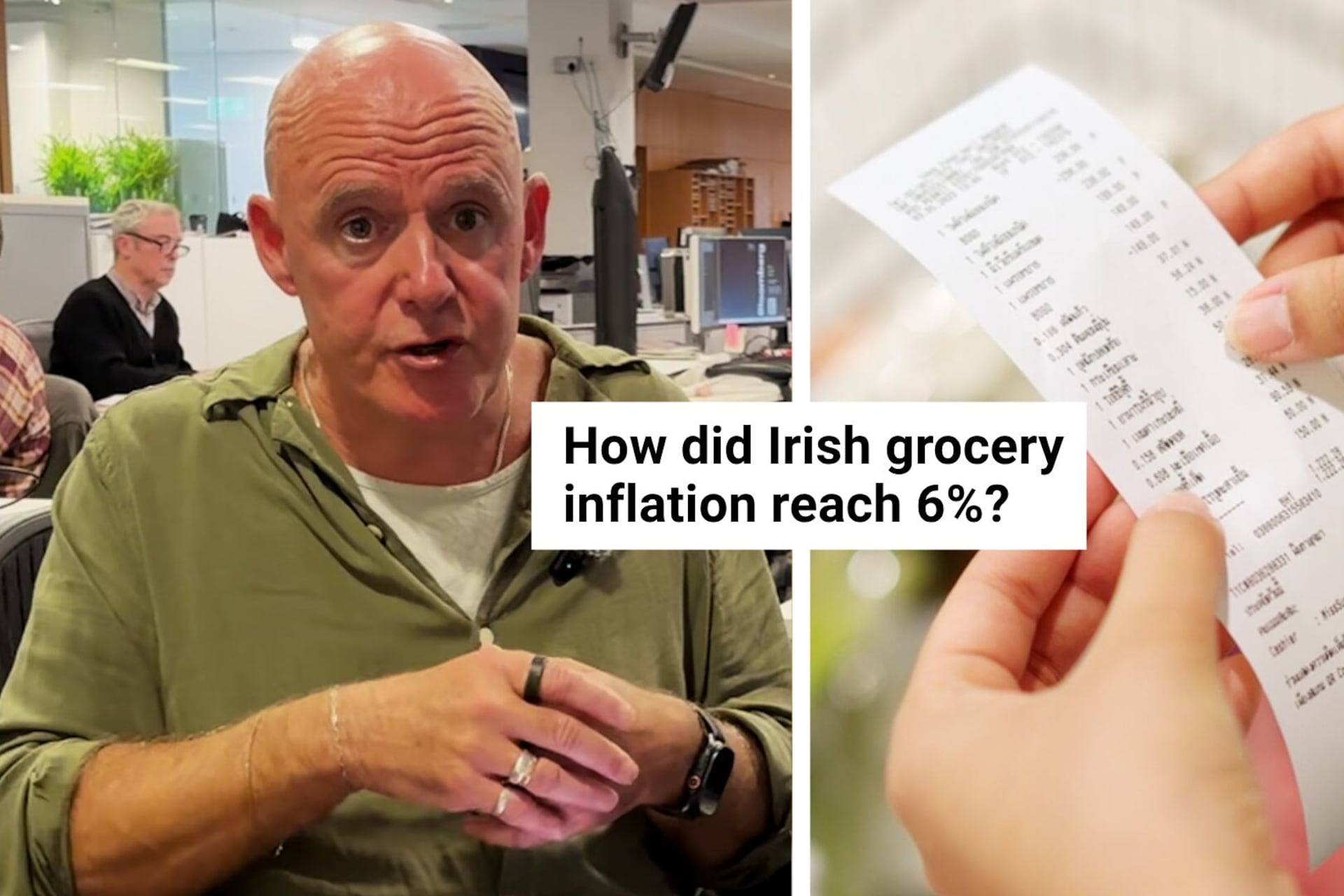


There were signs of gentrification on the quieter backstreets. There is now an Airbnb “Parisian studio” in the building where I once rented a garret room, according to a marker on Google Maps.
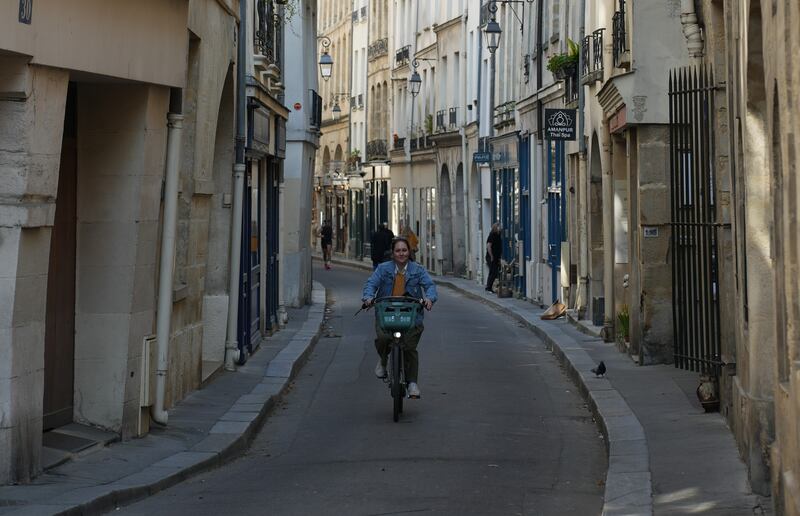
The rental platform was still a San Francisco start-up in 2009. Since then it rightly or wrongly became a byword for rising housing costs in Paris that have seen the average rent per square metre double and the cost of buying rise almost 70 per cent in 17 years.
The cost-of-living problem is at the core of many Parisian complaints: while the city may be more liveable now, fewer can afford to enjoy it.
The Vélib public bicycle rental scheme, in its infancy in 2009, has evolved to now include electric as well as traditional bicycles, both €3 an hour. I opted for a €10 24-hour electric bike pass.
I ran into my first pedestrianised road after 350 metres. Rue Jules Ferry has been blocked to traffic with ageing concrete barriers.
Hidalgo seized the opportunity of the 2020 Covid-19 lockdowns to pedestrianise long stretches of Paris, in changes that later became permanent. On one side of Rue Jules Ferry there now blooms a community garden, children’s play area and baby changing room. It’s a rare spot of green in a largely concrete neighbourhood. Posters at the entrance laying out the park rules bear the signature of Hidalgo, sometimes dubbed the “Queen Mayor” for the uncompromising way in which she pushed through her plans.
The next stretch of my cycle route has changed little. Passing over bone-jarring cobbles on the narrow Rue du Faubourg-du-Temple, cyclists are squashed among two lanes of traffic, with pedestrians confined to crowded pavements along a busy strip of clothes shops and halal butchers.
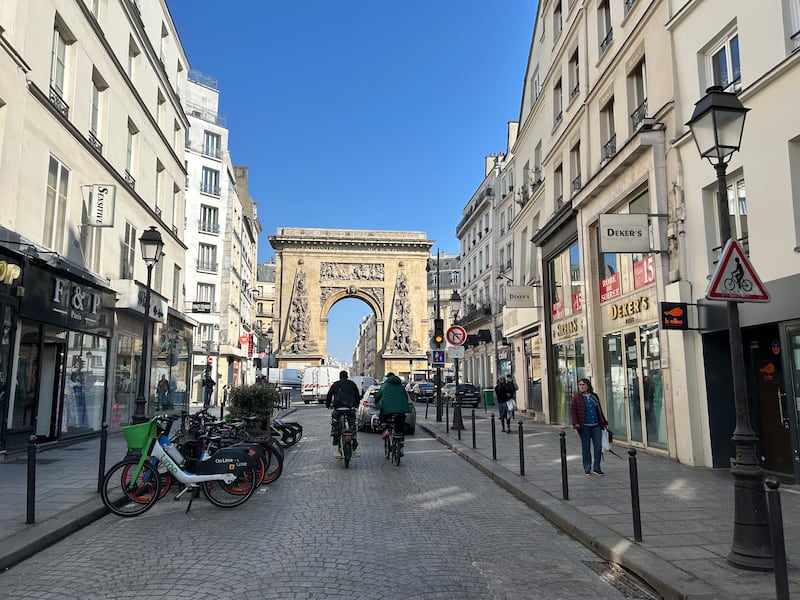
Yet further along, the road has been transformed. Signs on each side forbid all but bikes, buses, and taxis from proceeding further (trucks can make deliveries, subject to restrictions). Buggies passed easily along the widened pavements, and my bicycle now glided smoothly over tarmac.
Huge road lettering announced a “velorue”. The city now has 1,678km of bike-friendly routes, made up of both bike-only paths and lanes shared with buses and taxis. It’s an increase from 700km in 2013.
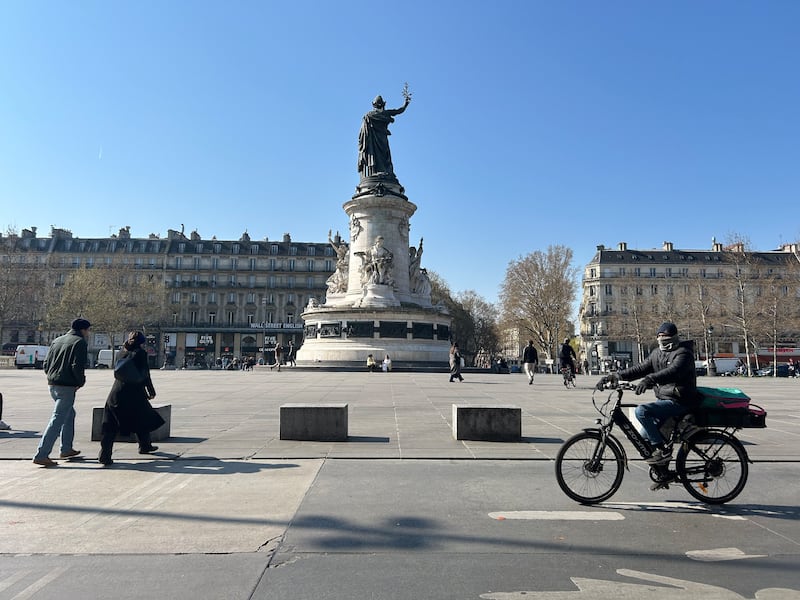
I soon began to spot one of the city’s most dramatic transformations as, framed between the buildings at the end of the street, the Monument to the Republic came into view.
Back in 2009, pulling out of Rue du Faubourg-du-Temple on to Place de la République was a terrifying leap into a maelstrom of traffic. The iconic statue of Marianne, personification of the French republic, was the centre point of a complex six-lane traffic roundabout where seven different roads converged. I used to white-knuckle it to my turn-off on to Boulevard Saint-Martin, scarcely glancing at the monument in the square’s centre.
The square’s renovation has progressed in stages since it began under the previous mayor, Socialist Bertrand Delanoë.
After the first phase was unveiled in 2013, Parisians took the pedestrianisation to heart as though it had never been otherwise. The Marianne statue became the spontaneous rally point for the “Je suis Charlie” demonstration after the shootings at satirical magazine Charlie Hebdo in 2015, and for successive vigils and protests since.
Today it is a vast open square, home to a cafe, a skate park, a summer water play area for children, and rows of trees. Private car traffic is largely confined to one side.
Nevertheless, it was on this square that I got a sense of the mixed opinions about Hidalgo. Waiting at a bus stop was Pierre Tissot (80), who had travelled into the capital from his home in Saint-Denis beyond the Parisian northern suburbs. Household car ownership rates in the city are 34 per cent and falling; in “greater Paris”, including Saint-Denis, they are twice that.
Tissot deems the square, and the city in general, as now “much worse”.
“I can’t say anything good about Hidalgo. She was a pushy upstart. She indebted the city, she made terrible aesthetic changes, the traffic became chaos,” Tissot complained.
“I can’t take my car into Paris any more. It takes too long and it’s too difficult.”
Beneath the statue of Marianne, Sam (30), was holding his toddler’s hands as she learned to walk. He pointed out that many metro stations are accessible only via stairs.
“It’s great for the environment, it’s nice for pedestrians, but this is a big city that’s hard to get around. Not everyone can take public transport,” he said.
“What about disabled people? We have to think of parents, and grandparents.”
One fan of the changes was Julien Boissy (26), a resident of the central second arrondissement who was reading a book in a nearby park.
“Paris is now a more humane and liveable city,” he said. “Some people are very attached to their cars, and they want parking places. But [this opposition] also comes from dogmatism, and party politics.”
For the final stretch of my route along Boulevard Saint-Martin, I could follow a bike-only lane inaugurated for the 2024 Paris Olympics.
My destination on Rue Saint-Denis now sits within a limited traffic zone that covers much of central Paris. Private traffic is banned from driving through it; cars can only begin or end journeys there. Pedestrians now dominate the roads, roaming unconfined to the pavements, with few vehicles passing along streets paved with whorls of flat cobblestones.
Rachida Dati, a conservative former minister and long-time foe of Hidalgo in local Parisian politics, has pledged to scrap the limited traffic zone if elected mayor on Sunday.
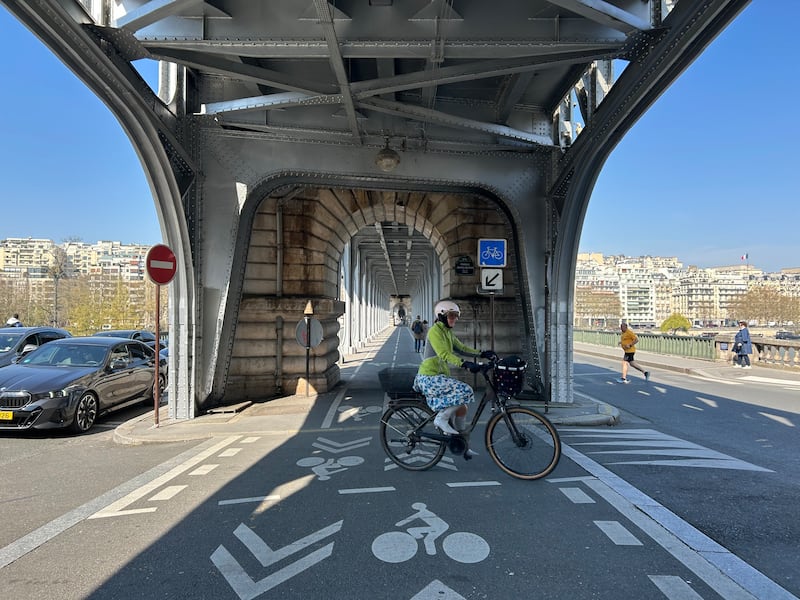
However, she has promised to keep many of the changes put in place under Hidalgo, even promising to improve cycling routes and green areas. The disruptive roadworks are done and now many of the changes, especially the pedestrianisation of long stretches along the Seine, have been accepted as a non-negotiable improvement by Parisians. The norm has shifted.
The profound changes in the Paris cityscape have been oddly absent in the mayoral campaign. This week’s final debate focused on law and order, street cleanliness, economic inequality and an abuse scandal in schools.
Hidalgo’s former deputy Emmanuel Grégoire, the Socialist candidate and currently the front-runner in the mayoral contest, has not sought to associate himself with his boss’s record in office, whether for tactical reasons or due to a reported falling-out between the two.
Mazen Issa Allache, taking a cigarette break from his job on Place de la République, offered a measured view of it all.
“Hidalgo is a true Parisian. She worked hard for Paris. She did some things I didn’t like, but managing a city like Paris is not easy,” he said.
“Some people benefited from her policies and some didn’t. The criticisms come from the latter.”
[ Naomi O'Leary: Hardliners gain ground in French local electionsOpens in new window ]