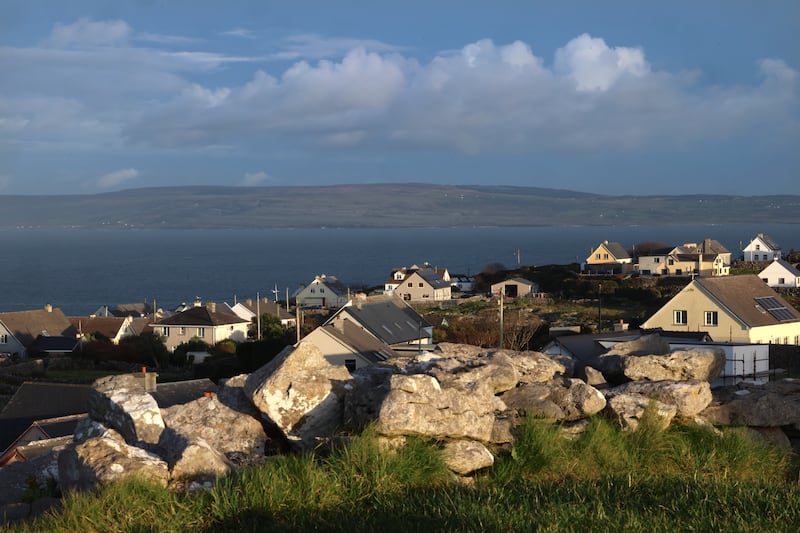
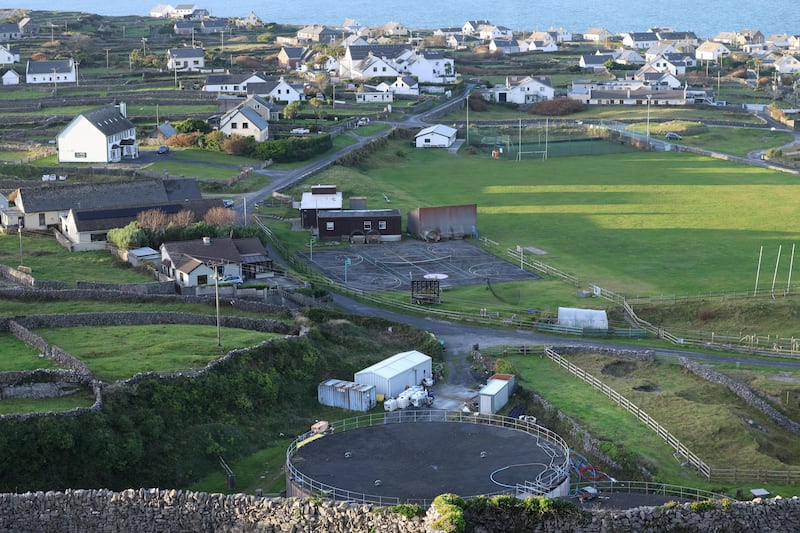
Inis Oírr, the smallest of the Aran Islands off the Co Galway coast, sits at Ireland’s Atlantic frontier.
Given its surroundings, it might seem like the least likely place in the world for water shortages, but it’s a problem for the island and its small population.
John McDonagh says water shortages on Inis Oírr have been ongoing for about a decade.
“We’ve been promised long-term solutions for the last 10 or 15 years. There was supposed to be a new reservoir built. That was shelved. They’re talking about a new reservoir again but there doesn’t seem to be any movement on it,” he says.
READ MORE



McDonagh is the chairman of Comhar Caomhán Teoranta, the island’s co-op, and also operates Café Úna near the pier. Summer restrictions on the public water supply used to be more severe, he says.
They used to start at 8pm and finish at 7am with a further two-hour disruption every afternoon from 2pm to 4pm but in the most recent years restrictions were confined to 11pm-6am.
McDonagh says the restrictions had a big impact on hotels and bars including Ostán Inis Oírr, Tigh Ruairí and Tigh Ned, which need water during the restriction times for dishwashers and ice machines.
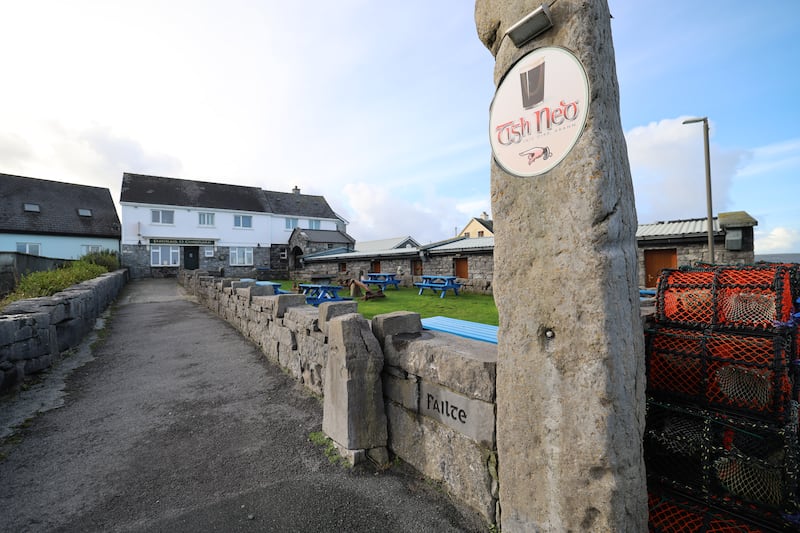
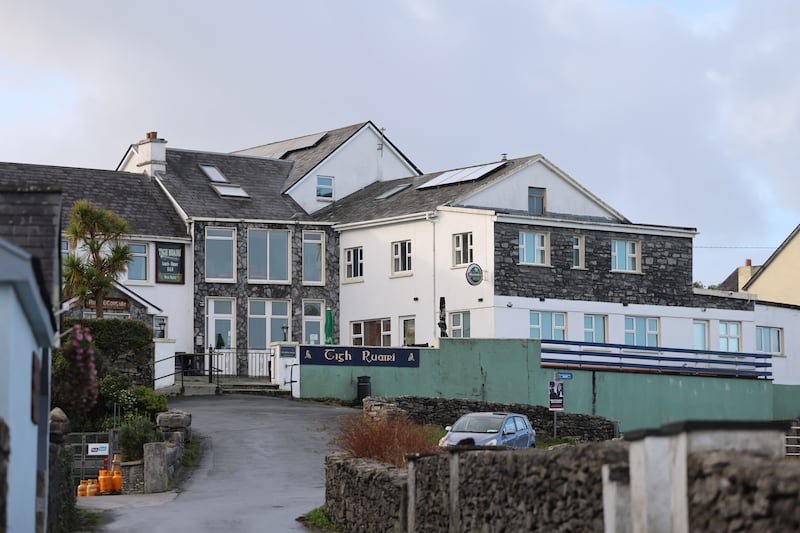
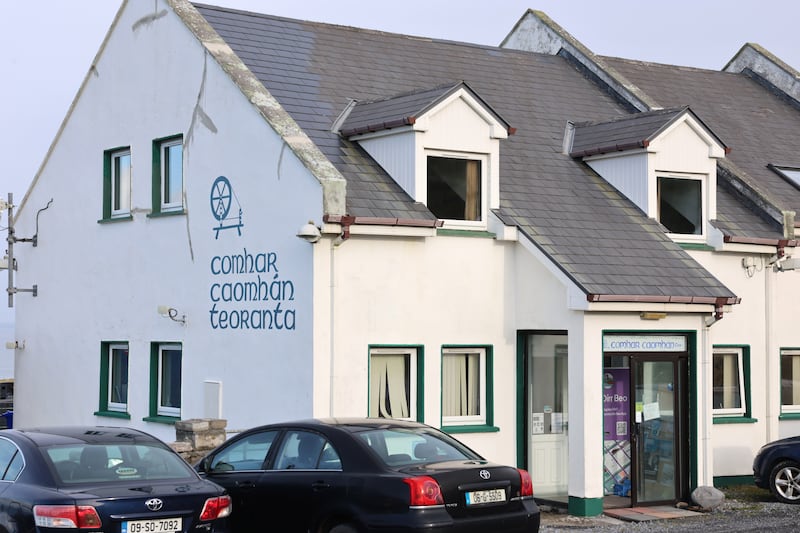
A lack of water storage capacity on the island and a surge in demand during peak season are to blame, McDonagh says.
“During the height of the summer, you get 2,000-2,500 day-trippers per day coming in. Every one of them will go to the toilet, at least once, and so that’s 5,000 gallons of water minimum just flushed down the toilet,” he says.
[ How Inis Oírr inspired the fictional island in The Truth Must Dazzle GraduallyOpens in new window ]
“You have all the holiday homes. They [visitors] will have a shower in the morning when they get up. They’ll go to the beach, and they’ll have a shower when they come back. And they might go to the beach in the afternoon again, and they’ll have another shower – that’s a huge drain [on water supplies].”.
In an effort to address the problem, university researchers are planning a project to harvest rainwater to help ease annual water shortages on Inis Oírr that cause disruption to businesses and cost the State hundreds of thousands of euro every summer.
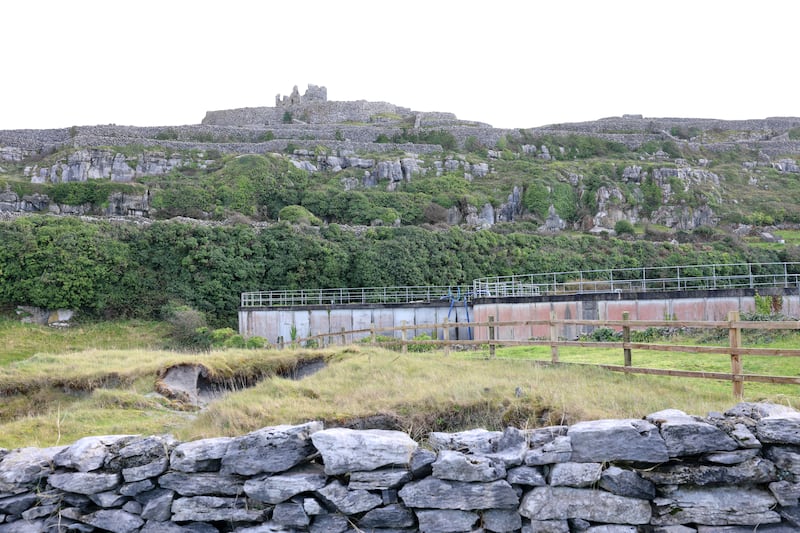
The system of harvesting rainwater for grey water usage – including in washing machines, dishwashers and showers – will be trialled next year.
The findings of the Co Galway pilot project by researchers at Technological University Dublin “will inform future investment for all islands”, a spokesperson for Uisce Éireann says, adding that the project is still in its infancy.
It comes as the State water utility confirmed in response to a Freedom of Information request that it spent almost €525,000 to tanker water to Inis Oírr during this summer’s drought on the island.
[ From the Archive: Summer droughts take toll on Inis OírrOpens in new window ]
The cost covered shipping tanks of water from the mainland at Ros a’ Mhíl Harbour in south Connemara to supplement public water supply on the offshore Gaeltacht island.
Uisce Éireann confirmed it tankered 20,384 cubic metres of treated drinking water to Inis Oírr between June 5th and August 26th of this yearat a cost of €426,448, plus 23 per cent VAT of €98,083.
“This water was potable upon delivery to Inis Oírr. However, Uisce Éireann advised customers taking water from the tankers to boil the water before drinking, as an additional safety measure, as per HSE advice,” says Mark Higgins, communications adviser at Uisce Éireann.

On several occasions earlier this year, Uisce Éireann issued public appeals to residents on the Aran Islands to conserve water.
In August, night-time restrictions were introduced for a week on the middle, least populated island, Inis Meáin, after a burst water main worsened the water shortage problem.
Night-time restrictions on the largest of the three Aran Islands, Inis Mór (5pm-9am), and on Inis Oírr (11pm-6am), remained in place for several weeks, including during peak tourism months of July and August.
Leo O’Shea of Uisce Éireann says the restrictions are necessary to ensure full, continuous daytime supply on all three islands.
He says that in September, while visitor numbers had reduced, rainfall levels on the islands had not recovered at the same rate as the mainland, and “treated water supplies of all three islands have not yet recovered to normal levels”.
The restrictions on Inis Oírr were lifted on September 21st but islanders know they will be imposed again next year.
Despite all three islands experiencing low levels of water, Inis Oírr was the only one of the islands that Uisce Éireann ferried water to.
This year’s cost was slightly less than the almost €600,000 paid to tanker water to Inis Oírr in 2024 but Uisce Éireann has incurred a similar outlay every year for several years.
The island has just shy of 350 residents, according to the 2022 Census, but its population swells with tourists during peak season, including day-trippers from Ros a’ Mhíl and Doolin.
Toma Flaherty, owner of Ostán Inis Oírr, says water shortages have disrupted the business since she arrived there 22 years ago.

She says there is no problem now, in November, because there are “no crowds” but it was a “huge issue” in summer during peak season.
Flaherty says guests have often inquired about why the water restrictions haven’t been sorted.
“It [impacts] tourists, and then after that it’s the linen and the kitchen – the whole lot needs water,” she says.
“It’s essential. Some years are better than others. Restrictions could start in May, other years it could start in June, depending on the weather.
“They did try to solve it, but that didn’t work out so they keep bringing water by tankers every day. It would be great if they came up with a long-term solution,” says Flaherty.
Galway West TD John Connolly says Uisce Éireann should have a capital investment plan to resolve the issue.
“It’s not plausible that a community can be left in such peril without an adequate supply of water. I think [Uisce Éireann] have to redouble their efforts to find a long-term solution,” he says.
The Fianna Fáil backbencher wonders about the “sustainability of the solution” in the short term of tankering water daily to the island during summer months.
“We have modern technology now and methods of accessing water that previous generations didn’t have,” Connolly says. “Despite the challenges presented, you cannot underestimate the importance of getting a long-term solution that provides a consistent supply of water into the future.”
According to Uisce Éireann, the TUD rainwater harvesting project for Inis Oírr “is at an early stage” but the company insists it has taken other measures to improve the long-term water supply for the island.
It said that works were completed this year on the island’s existing water source and “automating the process to enable additional raw water to the water treatment plant”.
“These upgrade works reduced the need for tankering by approximately two months this summer,” Uisce Éireann’s Mark Higgins says.
Another upgrade of the treatment plant next year is geared towards “optimising the plant” but the topography of the island, and its natural assets, have hindered the long-term solution, the company says.
“Groundwater investigations were completed in 2025 and 2026, which highlighted that groundwater sourcing is not technically feasible on the island,” says Higgins.
“Increased raw water storage is also being investigated; however, the land is commonage and a Special Area of Conservation. These works bring environmental and planning constraints. Uisce Éireann continues to work with the planning and environmental teams to review options.”