A list of the best books is never simply a judgment about literature. It also reflects the authors who compiled it; together with the period pertaining to their choices and their understanding of what literature should represent.
The recent Irish Times survey of the 50 finest Irish-language books of the century is no exception. In giving a little analysis of the survey in this piece today, it is worth noting that the Ó Pheann go Pár series published in Tuesday’s Scéal in The Irish Times in recent weeks has been examining the health and wealth of different genres in Irish-language contemporary literature. As the series is due to conclude, it is opportune to look at what added insight the survey now adds to that debate.
Last month’s survey’s first achievement is in its very existence; something that is critical to the visibility of Irish-language literature in the larger English-medium discourse in Ireland. The exercise ratifies a similar survey last year, in the Irish-language monthly review Comhar. Within a list of the 25 top books of the century, the same three books featured at the top, give or take a place; and all but one of The Irish Times top 10 had already appeared there too. It is certainly reassuring that there is broad agreement between the separate bodies of the current canonical standing of these texts, and both publications should be commended for undertaking the work.
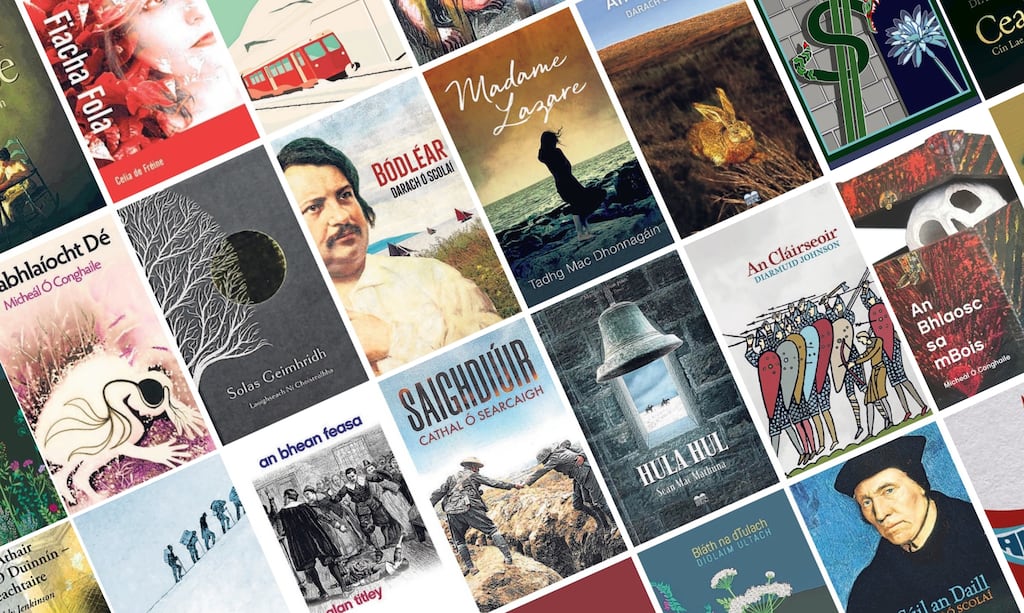
At the summit of both lists stands Tadhg Mac Dhonnagáin’s excellent Madame Lazare; a novel about a family, a secret and a language that slips away. Its place is very easy to defend, and I would concur wholeheartedly with the survey’s view. What is harder to explain, and more interesting, is the shape of the list as a whole; for four of its first five titles were published in the past five years.
READ MORE


The Irish Times 2026 list leans further toward the present than the 2025 list in Comhar. The most newly published books gained ground between the two lists, while older volumes slipped back. Set alongside The Irish Times English-language survey of March 2025, there is, however, a much clearer contrast. In that list, roughly a quarter of the 100 titles belonged to the current decade, but with the larger quantity belonging to the decade before that. In the Irish-language list, about 40 per cent of the total comes from the range of the past five years.
- The 100 best Irish books of the 21st century: No 100 to No 51
- The 100 best Irish books of the 21st century: No 50 to No 26
- The 100 best Irish books of the 21st century: No 25 to No 1
Could it therefore be argued that perhaps the quality of Irish-language literature is improving since the pandemic? And that the conditions for producing and reading such literature have also improved as more books are being published, and there are then more opportunities for writers and a larger potential readership? I am unsure. It becomes a challenge to try to distinguish between a literature potentially experiencing a purple patch and a group of panellists who are focusing on their reading of the most recent publications.
Either way, the historical novel is certainly to the forefront of the panel’s thoughts. The fact that all four leading novels as Gaeilge are set in times past cannot be viewed as an accident. Historical fiction in Irish might not be viewed as nostalgia but perhaps a form of recovery.
While the English-language list ably tackles the psychological scars of the Troubles (Milkman, Trespasses), the Irish-language list showcases the trend of revisiting and reframing key historical periods. In terms of “history”, neither list can be accused of viewing Irish writing through a narrow lens of insular or rural peasantry. The English list contains globally recognised titles centred upon modern urban friction (Sally Rooney, Paul Murray); while the Irish-language list also displays an impressively international, outward-looking landscape in its historical fiction.
Historical novelists as Gaeilge seem to utilise historical themes to comment on contemporary autonomy, as they also attempt to unearth and re-examine the Irish past. Each of these four books returns to a time when the language carried a different weight, whether in a Gaelic world in collision with the English crown, in Europe’s wars, or in a family’s silences. These novels demonstrate that the modern Irish language can bear the full range of history’s experience. That is the genre’s real strength: the novelists must reimagine the language itself, giving it a voice for periods when it was spoken without self-consciousness.
Their ambition is significant and does, and should, require considerable research threaded very lightly through the story narrative. The authors involved are all genuine researchers – de Brún, Mac Cóil, Mac Dhonnagáin and Ó Scolaí – and three of the four belong to a particular breed of publisher-author; a very successful hybrid in the Irish-language scene, who seem to have a particular feel for both what the readership may wish to read and, quite simply, what will sell in the small market in publishing terms.
However, there is a subtle risk involved. A literature that finds its confidence chiefly in the past may be postponing the harder question of whether it can do the same for the present. That seems to indicate a fragility within the genre.
We can understand from this that attention can move on in a larger-language literature in terms of time and volume; and what remains is something that has been well-accepted by readers who may never have known the authors in question. The literature in lesser-used languages cannot always move on in the same way.
A few exceptional years of publication can dominate a decade simply because there is less critical mass to begin with, and the canon is drawn up or recognised before the sifting has done its work. A canon needs time to forget or move on, and this list has had very little time to do that with the works in question.
We should note what else the Irish-language list rewards. Many of the books explore history, exile, memory and the inheritance of the Irish language. These are understandable preoccupations for a literature that has spent generations confronting the possibility of its own disappearance. The themes are often handled with both considerable ambition and sensitivity.
The English-language survey, which focused exclusively on novels and short stories, showed a particular preference for literary fiction and structural experimentation. The list was dominated by high-concept literary fiction such as Milkman by Anna Burns, written in stream-of-consciousness style without proper names; and Solar Bones by Mike McCormack, written entirely as a single, unbroken sentence.
Avant-garde, structurally ambitious prose can also be seen in the highly complex structural framework that Mac Dhonnagáin created expertly in Madame Lazare using layers of themes of memory, old age and shifting linguistic identities. The novella, micro-fiction, and historical/political fiction of the recent past are all in play in both the Irish- and English-language lists.
[ The first Irish-language book to top the bestseller listOpens in new window ]
What the list leaves out is as telling as what it includes. Irish literature across both tongues seems to show a particular, gatekeeping bias against commercial and genre fiction. Emma Donoghue’s Room, a psychological thriller with literary merit, ranked high in the English list but traditional sci-fi, high fantasy and strict speculative subgenres were notably scarce in either list.
Drama for the stage, the book written for the child or the adult beginner, the poem spoken aloud, and translated works: these are some of the other genres that can transmit to wider audiences, and there are no examples contained within the Irish-language list. Arguably the Irish-language literature’s strongest historical form is poetry; yet it is ranked well below the novel; a genre which in some ways is fragile, given the over-reliance on the historical format. The authors, meanwhile, remain mostly male, even though the voices most visibly renewing the literature are increasingly female.
Where the lists in the canon of the combined literatures struggle is in translation for transmission. Irish-language authors such as Biddy Jenkinson, Mícheál Ó Conghaile and Liam Mac Cóil (who each secured four mentions in the top 50) are widely acclaimed in the Irish language; yet they remain virtually anonymous to the vast majority of exclusively English-language readers in Ireland. In that way, the modern canon is very segregated; unless a text as Gaeilge receives an immediate, high-profile translation, which is exceptionally rare, it is kept under lock and key.
Irish-language literature has not always been blessed with universal high standards in cover design – both imagery and typography. While the list was not designed to highlight such a quality in isolation, the work of publishing houses such as Leabhar Breac and Éabhlóid to improve this standard can be recognised a little better.
So none of this commentary above is designed to suggest that the recent list is flawed or erroneous. It simply confirms that viewing such a list as provisional is something which is perfectly logical. It also needs to be revisited, not in one year but in 10 years, when what is simply in vogue in the present has faded a little. The 50 books selected should be done so not only by their literary importance, but also by their ability to attract new readers and encourage people to engage with the language in print.
[ The 50 best Irish-language books of the century so farOpens in new window ]
Irish literature needs great books, but it also needs readers willing to discover such books and writers encouraged to create more. Whether a literature can be measured by its published output, by quantity sold or by the new readers it enthuses are not questions that any list can easily settle. Perhaps that is the strongest reason to keep both the list and the conversation open in the future.
Liam Mac Amhlaigh is an academic and critic who has published extensively on Irish-language literature and lexicography.