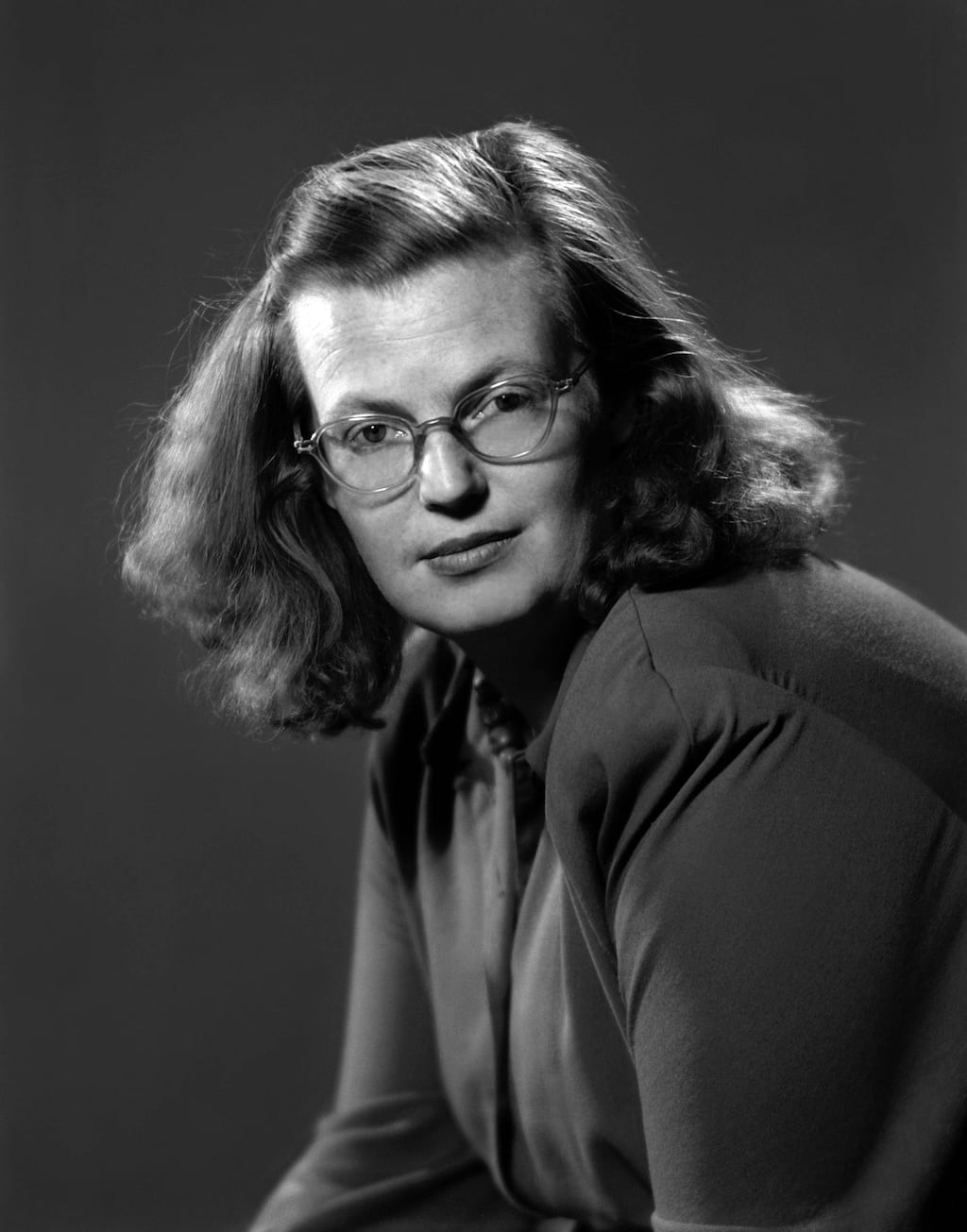
I discovered Shirley Jackson fortuitously. On a mission to procure a copy of Dodie Smith’s I Capture the Castle I became muddled and left the bookstore with We Have Always Lived in the Castle instead. I could easily have bought The Man in the High Castle and life would have taken a different turn.
We Have Always Lived in the Castle has a delightfully devilish child narrator, Merricat Blackwood. She remains one of my favourite characters in literature. If I had a cat, I’d definitely name it Merricat. (Full disclosure, hell will freeze over before Jan Carson acquires a cat.)
Merricat’s family have been poisoned. Perhaps by her sister. Perhaps not. The Blackwood girls are now eking out a fey and lonesome existence in a crumbling mansion on a hill. Houses loom large in Jackson’s work. A bunch of grim-faced locals radiate disapproval from the village below. So far, so grown-up fairytale.
We Have Always Lived in the Castle is the book I wish I could write. It’s Gothic yet funny; playful and sinister. It passes stern judgment on society without compromising the narrative. The novel has an uncanny aesthetic, effortlessly and uncomfortably occupying that sweet spot between reality and magic which I’ve spent most of my writing life reaching for.
READ MORE


Jackson’s voice is unique and assured, her sentences a glorious mix of utilitarian sparsity and the baroque. And she’s funny – viciously so. I was barely two paragraphs into my first Shirley Jackson when I knew I’d found a lifelong friend. In the last 15 years I’ve read everything she put pen to. No one has had more of an impact upon my own work.
Shirley Jackson was born in California in 1916. She spent much of her adulthood in New England, where her husband, the writer and critic Stanley Hyman, taught at Bennington College, Vermont. She had four children who pop up in subtle and more explicit ways throughout her work. Jackson clearly adored them, yet domestic responsibilities were a constant distraction from her work.
Nevertheless, she managed to publish dozens of short stories, six novels, several children’s books and two hilarious memoirs on motherhood. She died young, aged 48. Posthumous collections of her incomplete and unpublished works reveal a writer whose imagination was cruelly nipped in the bud, though her body of work is still substantial and diverse.
Last year I reread all Jackson’s writings in chronological order, alongside Barbara Pym’s. It quickly transpired that those following my reading adventures were much more familiar with Pym than Jackson. Several had never heard of her.
I suspect the issue lies with Jackson herself. There are so many incarnations of the woman that she is difficult to pin down. Sometimes writers working across multiple genres and themes fail to achieve the recognition they might enjoy if they had committed to running in one lane. I’m thinking of writers like Michel Faber and Ireland’s own Brian Moore, who developed subsets of readers for their different types of work.
Jackson’s writing is similarly wide-ranging – encompassing everything from domestic memoir to horror – though there are some constant themes in her work. A darkly comic tone persists throughout alongside a fascination with psychology, female experiences and the paranormal. The otherworldly is central to The Haunting of Hill House and more subtly present in the “pseudo-apocalyptic” novel The Sundial and many of her short stories.
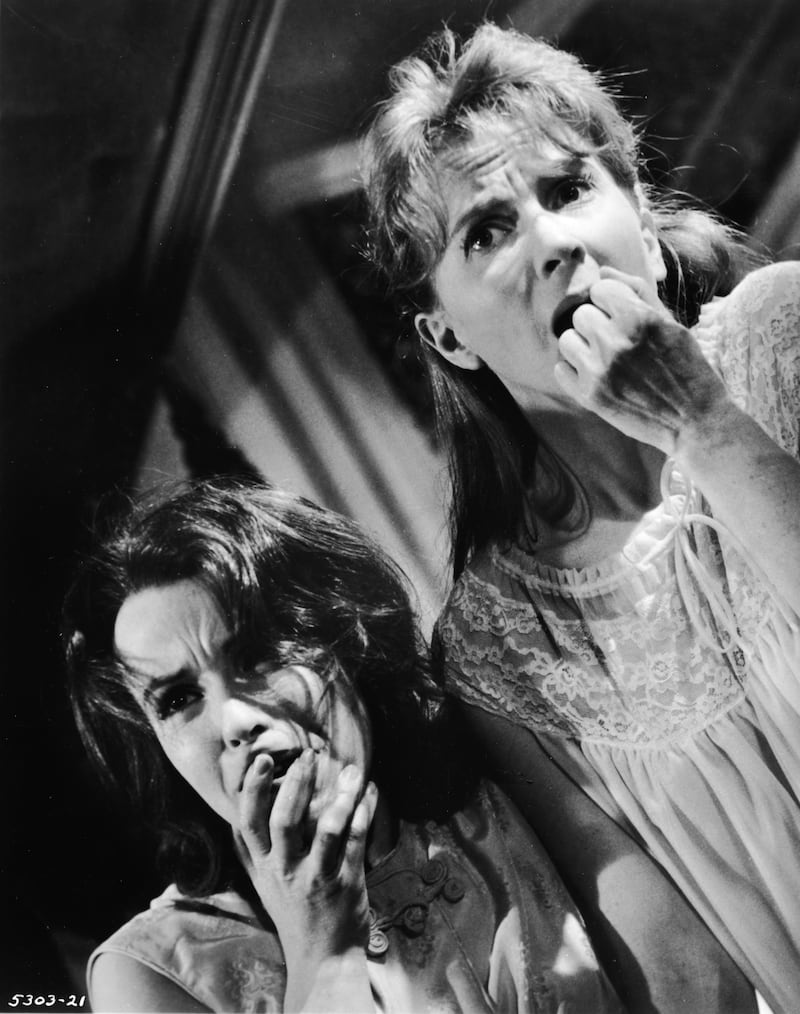
The New York Times Book Review once wrote: “Shirley Jackson knew better than any writer since Hawthorne the value of haunted things.” Jackson tends to be associated with creepy writing. I’d argue that her work is much more nuanced. She writes stories which defy categorisation. As a person, she’s equally hard to define.
There’s Jackson the frazzled matriarch. Jackson the devoted yet frequently exasperated wife, whose husband’s ego and roving eye often proved difficult to live with. Jackson the talented and successful writer, and also Jackson, struggling – even after several books – to find publishers for her stories. Jackson the self-confessed “amateur witch”. Jackson the consummate host; rumour has it she once snogged Dylan Thomas during a boozy shindig. (I choose to believe this rumour is true.) Sadly, there’s also Jackson late in life, laid low by ill health and agoraphobia, virtually a recluse.
In her 1954 novel, The Bird’s Nest, Jackson chronicles the experience of a young woman experiencing a psychiatric breakdown, “becoming two people, then three, then four”. Doppelgänger, split personalities and cases of mistaken identity are a common theme.
In my favourite of her stories, Louisa, Please Come Home, a runaway returns home expecting to be warmly received by the parents who’ve spent years searching for her. They don’t recognise their own daughter. Louisa is forced to leave again. It’s a chilling example of Jackson’s fascination with how women are seen and see themselves.
I’d suggest her own experiences are explored within her fictional allegories, perhaps more explicitly than in her non-fiction. In Jackson’s memoirs – originally written as entertaining magazine articles – the tone is light and funny, more given to hyperbole than dissecting the deeper frustrations of marriage, female identity and motherhood.
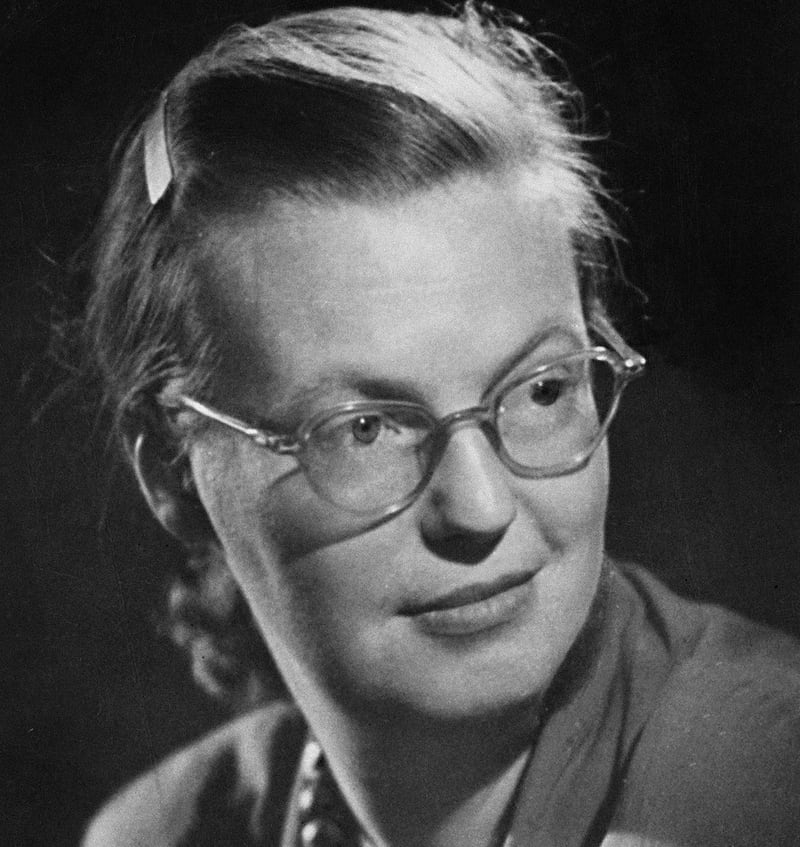
Jackson was an outlier. She became a successful writer at a time when it was virtually unheard of for women to maintain both a career and family. She was forced to be many things to many people and, at times, the pressure showed. It’s apparent in the way her female characters fluctuate between self-confidence and existential crisis or threat. Natalie in Hangsaman speaks for many of Jackson’s women, and perhaps Jackson herself, when she says: “I may be in danger every moment of my life… but I am strong within myself.”
Ruth Franklin, in her biography A Rather Haunted Life, does a miraculous job of condensing Jackson’s richly various existence into 500 pages. It’s a fascinating, wide-ranging read; one of my favourite literary biographies.
I’d also recommend The Letters of Shirley Jackson edited by her son, Laurence Jackson Hyman. Her correspondence gives a real sense of how Jackson saw herself. She’s a maelstrom of extremely relatable contradictions: sometimes confident, sometimes racked with self-doubt and, in her fiction, always determined to confront the brutal, unpalatable truths.
[ Séamas O’Reilly on best graphic novels of 2026 so farOpens in new window ]
Jackson’s fiction constantly resisted the simplistic, favouring stories which weren’t always easy for agents to place and occasionally at odds with the delicate sensibilities of mid-century readers. Infamously, The Lottery, a story about a village which hosts an annual human sacrifice, garnered the most complaints of any story published by The New Yorker. Jackson remained – at least outwardly – nonplussed. “If you don’t like my peaches, don’t shake my tree,” she wrote in response to hate mail from a Mrs White.
Sometimes I wish I had more of Jackson’s tenacity. I love her story My Recollections of S.B. Fairchild, in which she recounts a version of her epic, years-long battle with a department store that refused to issue a refund. Here, and in other real-life tales included in Life Among the Savages and Raising Demons, Jackson displays the kind of ferocious energy which helped her navigate the pitfalls of the publishing world. I read Shirley Jackson and aspire to be more formidable.
At other times I read her for reassurance. I take comfort in her creative process, the way she managed to carve out writing time while juggling childcare, health issues and the endless public posturing associated with promoting a book. Jackson understood that writing doesn’t only happen at the desk. “A writer is always writing, seeing everything through a thin mist of words.”
[ A trivial comedy for serious YA readers, and more summer page-turners for teensOpens in new window ]
Like Jackson, my life is hectic and over-full. It’s heartening to be reminded that good writing can still emerge from the margins of a busy life. Jackson continually drew inspiration from the everyday moments of her existence. On multiple occasions the children, her neighbours and friends, provided the impetus for an observational piece or short story. Jackson was the queen of repurposing found material. Her antennae were always up and searching for the next story idea.
She wrote a lot. Not all her work is brilliant, but when she lands a story – which she frequently does – the end result is sublime. The notion of writing prolifically, racking up failures alongside successes, is unfashionable in the contemporary publishing world, which seems to assume writers can produce best-selling, prize-winning books biennially.
I’m a prolific and occasionally mediocre writer. Shirley Jackson’s excess gives me hope and a model to shape my practice on. There’s a no-nonsense practicality to the way she viewed her job. Agatha Christie, another literary hero of mine, had the same sensibility. Jackson never sentimentalised her profession. Writing gave her immense pleasure but she also wrote to pay the bills, at times compensating for her husband’s inability to earn from his words.
She routinely gave the best of herself to her sharpest stories, yet could also fire off quick, throwaway pieces on commission if times were tough financially. I think about Jackson every December when the tax bill’s imminent and I find myself scrambling for whatever paid work I can find.
Jackson wasn’t a pristine or sedate writer. She was never free to set aside everyday life and abandon herself to her craft. She was a grafter, a dreamer and a lifelong wearer of multiple hats. This is largely why I love her. This, and her furious, fabulous prose.
I will never be a pristine writer but the realisation that Shirley Jackson could write something as incomparably perfect as the opening of Hill House while spinning so many plates, helps me feel a little less daunted by the crockery I’m currently keeping up in the air.


