
Transmission Protection Instrument (TPI) sounds like a piece of high-tech equipment you’re hoping someone is developing in a lab somewhere to protect us from the next pandemic.
Instead, TPI is a financial backstop created by the European Central Bank (ECB) four years ago and is designed to come to the rescue of euro zone governments, if their borrowing costs suddenly soar for no good reason, by allowing the bank to step in and buy their bonds on the market.
It’s never been used. But its very existence – and that of a similar tool, with another catchy name, Outright Monetary Transactions, developed at the height of the European debt crisis – has helped avoid the recent spike in French government borrowing costs leading to contagion across the euro area.
But if there were any lingering hopes in Paris that Frankfurt would deploy the crisis instrument to help Emmanuel Macron and his prime minister, Sébastien Lecornu, with their mounting budget and debt problems, ECB chief economist Philip Lane killed them off this week.
READ MORE


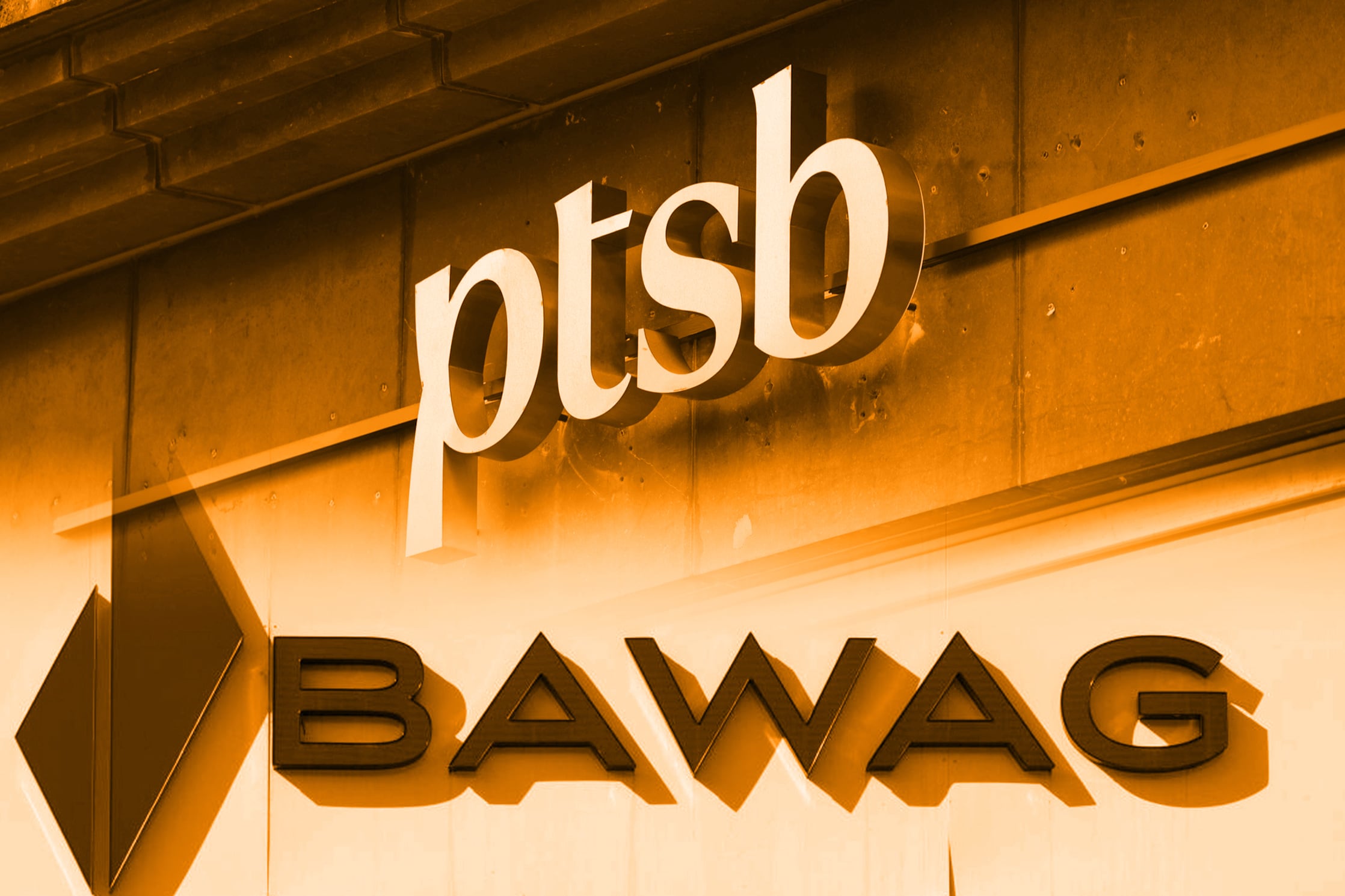
“What the bond market adjustment for the French bonds has signalled is there is uncertainty about the French fiscal outlook,” Lane said in an interview with Bloomberg Television on Thursday. “Where this needs to be fixed is in Paris.”
The market interest rate – or yield – on France’s 10-year bonds has surged by 40 per cent over the past year and was hovering around 4.85 per cent on Friday. This increase is twice the pace recorded by German government bunds, the euro zone benchmark, as markets expect ECB rate hikes to curb inflation.
The difference – or spread – between the yields on the bonds of the two largest economies in the single currency region has blown out over the period to as much as 1.74 percentage points in late October, the widest since the height of the euro zone debt crisis in 2011.

How AI is already transforming the travel industry
By contrast, the spread between Ireland and Germany is at present less than 0.12 of a percentage point – the lowest since the end of the Celtic Tiger days in 2007.
The spread had peaked at more than 11 points a decade and a half ago when Ireland was locked out of global markets and investors were demanding a yield of more than 14 per cent to buy its debt from those dumping and fleeing. Today, only Dutch yields are hugging Germany’s more closely.
The improving market perception of Ireland’s creditworthiness has also been reflected, albeit with some delay, in the assessments of the ratings agencies. Having fallen to junk status (at Moody’s) during the financial crisis, Ireland has since steadily climbed the ratings ladder and is now rated as high as one notch – at S&P Global – below the AAA club where Germany and the Netherlands are members.
The improvement, as we know, has been fuelled in no small way by the State’s love-in with Big Tech and Big Pharma, which have driven economic growth and delivered tens of billions of euro in windfall corporation taxes over the past decade as general government spending soared 75 per cent, according to the Central Statistics Office, to €133.8 billion in 2025.
Corporation tax receipts are on track to top €34 billion this year, according to Budget 2027 forecasts, up 4.5 times the €7.5 billion collected in 2016.
The artificial intelligence (AI) investment boom has increasingly become a driver of the global and Irish economies, with hyperscalers – Microsoft, Google, Amazon, Meta and Oracle – spending eye-watering sums on data centres and computing infrastructure, increasingly fuelled by debt.
With consumer sentiment subdued in many major economies and governments constrained in their ability to boost demand, the world economy is now precariously balanced “on one leg”, International Monetary Fund chief Kristalina Georgieva said on Monday.
Few places have as much skin in the AI game as Ireland. Goodbody economist Dermot O’Leary estimated in a report this week that AI and data-centre capital investment accounted for about 20 per cent of the increase in nominal Irish modified domestic demand – the Government’s preferred measure of the underlying economy – in the 12 months to the end of June.
The Central Bank of Ireland warned on Thursday that an “acute” risk of a slump in AI-related stocks, amid already “stretched valuations”, poses a particular threat to multinational tech investment and tax revenue here.
“A shock to AI valuations or a shock to AI companies’ investment plans could simultaneously reduce MNE [multinational enterprise] investment, corporation tax revenues and private wealth while also weakening growth and employment,” said Mark Cassidy, director of financial stability, as the bank published its semi-annual financial stability review.
The failure of the market buzz around Anthropic’s stock market debut on Thursday – as the AI group behind the Claude chatbot saw its market value soar as much as 39 per cent to top $2 trillion (€1.8 trillion) – to boost Wall Street in general may be ominous.
The Nasdaq Composite index and S&P 500 fell more than 2 per cent on the day, amid wider concerns that AI valuations have peaked and growing doubts over whether the sector’s enormous investment would translate into meaningful profits. They have slumped 14 per cent and 8.5 per cent, respectively, from all-time highs in early October.
Anthropic had fallen sharply from its highs by Friday morning and was as low as 3 per cent above its IPO price.
Of the four other major AI-related flotations in the past two years, including Elon Musk’s SpaceX, SK Hynix, Cerebras Systems and CoreWeave, only CoreWeave’s debut coincided with a fall in the Nasdaq. And that was down to its late-March 2025 launch coming amid mounting market anxiety over Donald Trump’s impending Liberation Day tariffs, announced days later.
France’s recent woes are a reminder that bond market confidence can turn quickly when investors begin to question a government’s fiscal position.
The National Treasury Management Agency (NTMA) estimated in July that the interest bill on the national debt was on track to double to about €6 billion by the early 2030s.
This will result from the agency refinancing, at higher rates, debt raised when global borrowing costs were at ultra-low levels in the past – and the fact that government debt is poised to rise from €210 billion at the end of last year to “close to” €250 billion over the period.
It also assumes no major shock to the tax base in the meantime – or Irish bond yields blowing out from their current tight range with Germany.
If that happens, Ireland can hardly expect the ECB to be any more willing to ride to its rescue than it is today to France’s.