For many Irish people living abroad, the idea of moving “home” lurks in the background of their minds. For some it’s a matter of when not if, for many it’s more of a maybe, someday, and for others it dangles like a cord on a train – pull in case of emergency.
And when the move does happen, the return is not always easy, says Sarah Curran, who returned from Dubai in 2025 after 11 years abroad – just one of about 30,000 Irish citizens who return to live in the State annually.
A qualified primary school teacher, Curran had thought she surely knew how to manage her feelings. She had specialised in training teachers and helping parents to deal with the social and emotional development of children at a school in Dubai. So she was surprised at the emotional toll she experienced after moving home.
“I was taken aback at how much I was feeling so deeply about being home – and not feeling at home.
READ MORE


“There were so many times where I was so overwhelmed and upset and down ... I didn’t know if I missed Dubai, but I didn’t feel I belonged yet.”
Curran had loved her life in Dubai with the benefits of a good salary and living conditions, exotic travel opportunities and a strong community of friends through the GAA. She also met her Co Wexford husband in the city.
But after getting married in 2024, they began to think about putting down roots and starting a family.
It was enduring the goodbye after Christmas 2024 that finally decided them. “We were driving to the airport. There’s always this heaviness that sets in ... my hubby turned to me and said, ‘That’s the last time we’re doing this’.
Just before she moved to Wexford in June last year, Curran was advising parents at her Dubai school about transitions and not having too many at once. “And there was me leaving the country, navigating career changes, trying to start a family, one after the other.”
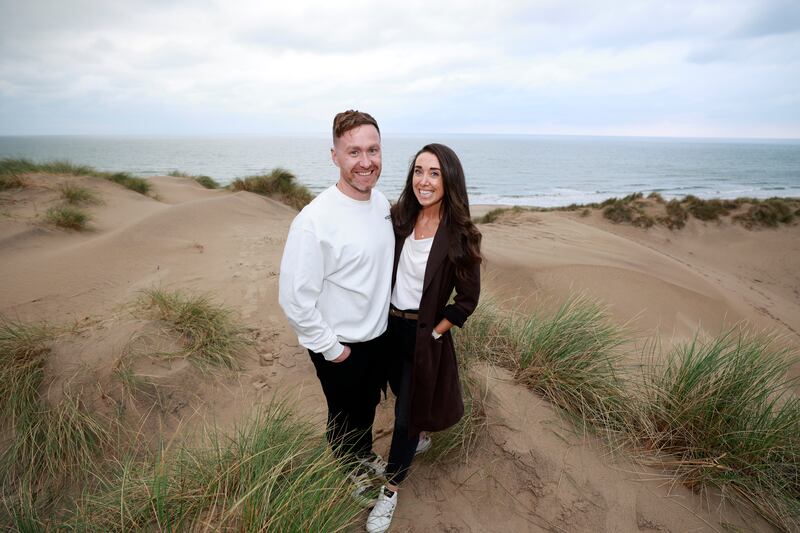
Work back home was “tricky” at times, with Curran getting a “bit of a feeling” in staff rooms of “oh you’re back” from Dubai when substitute teaching, and with her husband’s career experience not being fully recognised. Curran was then delighted to secure a wellbeing role at a higher education organisation.
Although seeing how things and people had changed was sometimes hard, she has lately had a “settled feeling” of being “more at home”.
She loves a random Tuesday catch-up and calling in to her parents for a cup of tea. “Those are the things that probably meant the most, the ones people don’t talk about.”
A total of 30,200 Irish citizens returned to live in the State in the year to the end of April, according to Central Statistics Office (CSO) figures, although numbers emigrating still outstrip returnees. A third of Irish abroad surveyed for Ireland’s Diaspora Strategy 2026-2030 said they intended to come home.
Facilitating an easier transition for emigrants returning home is one of the commitments of the State’s diaspora strategy, released this year. “Red tape affects everyone ... even people coming back in a very planned way,” says Sarah Owen of the Crosscare Irish Diaspora Support Project, which receives State funding to help vulnerable returnees.
“One of the main things people are often not aware of is that there isn’t an automatic entitlement to access supports [housing and social welfare], just on the basis of being an Irish citizen,” Owen explains. “For people who have been away for a long time, they might think ‘I’m Irish’, but we still need to show their connection and make a case [for habitual residency]. That can be quite jarring.” New habitual residency criteria were introduced for all the State’s social housing applicants in June this year.
‘The really nice feeling is to finally be able to take a breath ... And I feel like life can start again’
— Suzanne Byrne
Owen urges returnees to think of a move to Ireland differently from just “coming home”. “It is equally immigration,” she says. Returnees should think about the same issues as they had to when they first moved. “The housing piece is really important,” she stresses.
Not surprisingly, the largest pool of returnees to Ireland are from the UK. Despite its closeness and Common Travel Area (CTA) freedoms, the amount of administration involved and housing were two of the big issues encountered by Suzanne Byrne. She returned to south Dublin in August after 10 years in London.
[ Moving back to Ireland, so much is different and so much is still the sameOpens in new window ]
The science researcher had moved for a job in the UK after finishing her master’s. Her plan was to get some experience before returning. “And the whole two years turned into 10 years ... which happened so easily.”
Byrne met her English husband after two years, and his native London was where the pair were going to settle.
“I think Covid had a massive impact,” Byrne says of the turning point in her decision because, although she was close, “things can happen”. Her thoughts also moved to where she wanted to eventually raise a family. But there were also push factors, with her belief that London has changed since Brexit: “It’s not as safe a city as it used to be.”
The couple began working on their moving lists six months before returning. Yet the level of paperwork, information-gathering – “little things” – still took Byrne by surprise, she admits. From bank accounts and utilities to getting a PPS for her husband, finding an Irish GP – with the shock of having to pay for the doctor again, unlike in Britain – to timing leases, and Revenue requirements to document belongings.

For Byrne, finding a place to live in Dublin was the most difficult and time-consuming part, with an unexpected amount of “chasing” of places and agents. Her search was further limited by having a dog, something that is not an issue in England thanks to a rule-change. But her mother and sister were “phenomenal”, helping by viewing apartments on her behalf before she returned.
Now that she’s back, Dublin’s “diabolical” public transport is her main gripe, and she finds grocery prices “crazy”.
But there are many upsides. Byrne notices a positive change in how multicultural Dublin has become since she left. “I love that so many people who have not grown up in Ireland have moved here.” She feels living near others in a similar situation has helped them to settle. Her husband loves how strangers will chat to him in the coffee shop and pub: “You wouldn’t get this in London”. And he’s been enjoying the novelty of coastal life with sea swimming and saunas.
While the CTA meant a visa-free move for Byrne’s husband, for Irish returning with a non-EEA spouse, the situation is getting trickier. Immigration rule changes in June increased the three-year income threshold for such a returnee from €40,000 to €75,000, Owen explains. This change, and social housing tweaks, are having a “significant impact” particularly on the more vulnerable returnees that Owen deals with.
After four months back, with checklists and “so much more brain power”, Byrne reflects on how keeping a positive focus on the reasons for moving got her through: “Family, friends and the future.
“Being close to family outweighs it all. It’s great to be here for the big birthday, but it’s also the popping over to my sister for dinner or seeing friends for coffee on my lunchbreak.
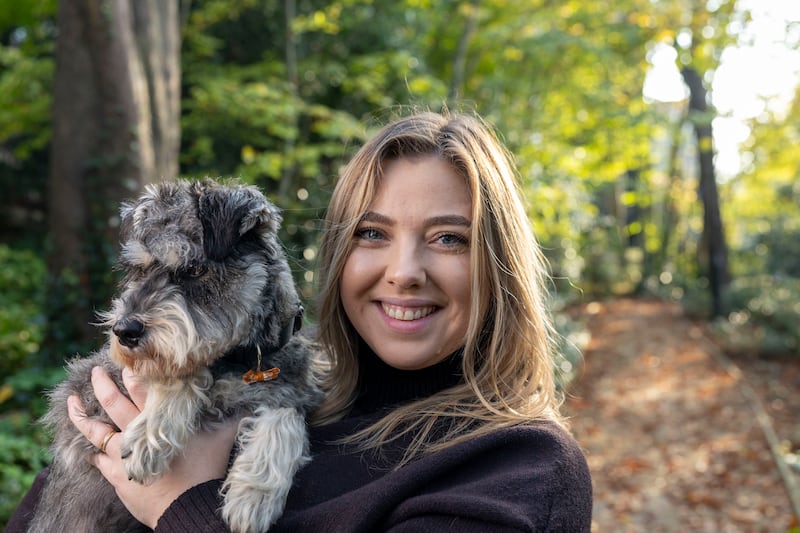
“The really nice feeling is to finally be able to take a breath ... And I feel like life can start again.”
Family was central to George Vial’s move after a quarter of a century in Kansas City. He had always talked about moving back to Donegal to work in the family fish business (C-Fish), helping his father to retire, “but it never seemed to be the right time”.
Vial had moved to the mid-west US city in 1998, after meeting an American woman at college in Galway. He explains how his job as a “nerd” of the wine and spirits world had meant a lot of travel to many of the best distilleries and vineyards around the world.
But during the pandemic, a few years after getting divorced, his decision to come back to Killybegs in 2022 was “cemented”.
The reverse culture shock didn’t lie in moving from the US to Ireland, but in moving from “big city metropolitan life back to rural life”, missing Kansas City’s multicultural food scene, and adjusting to the long travel distances of the winding roads of Donegal.
The difficulties of finding a house to buy also came as a big surprise to Vial – “even with a good job and good deposit ready to go”.
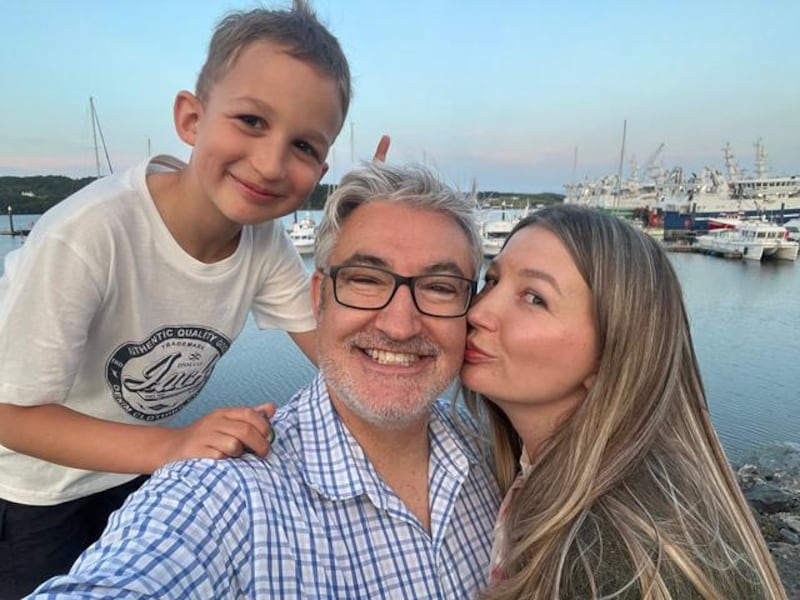
His accommodation needs had also changed, as he had met his now-wife, originally from Odesa. The pair eventually found a great “fixer-upper”, where they live with their young son.
After so many years in the US, Vial had to figure out basics such as paying taxes in Ireland. “I bought my first bag of coal when I was 47 ... nobody burns coal in the [US] mid-west,” he laughs.
Another task was sitting his Irish driving test, with a “ludicrous” wait of 19 months. Driving licences are a particular issue for returnees from the US, with which Ireland does not have a reciprocal licence agreement. “Those campaigning for change say it’s not happening quickly enough,” says Owen. Resolving this issue is part of the Programme for Government, with engagements ongoing between Irish authorities and individual US states.
One challenge Vial had prepared himself for was Donegal’s rain – a change from the Midwest’s distinct seasons. “You just have to force yourself to go out in the rain gear.” But he is still “blown away” by summer brightness until 11pm and Donegal’s natural beauty. And after living for decades a 13-hour drive from the sea, he loves the sea swimming on his doorstep.
Vial is also enjoying the feeling of having family to call on. And he has made some adjustments, including being more “flowery” and less “to the point” in his work emails. And although reintegrating into the community hasn’t been instant, after four years back home, he’s “getting there”.
Reverse culture shocks and periods of readjustment are common among returnees, Owen says. “People kind of forget that they’re re-emigrating ... they’ve changed, Ireland’s changed ... and coming back on a holiday is very different,” she says.
‘When I moved home I was still under the illusion that you could get a lovely four- or five-bedroom house for €300,000’
— Leanne Ryan
Leanne Ryan, who returned from Australia in 2024 after 10 years abroad, says: “Making the decision to move home was quite tough. It was about two years of ‘Oh, we’ll go home next year’. And then it was like ‘Oh God, we’re actually going home’.”
Like many of those planning to return, Ryan (35), from Co Clare, and the Irish partner she met in Melbourne, were leaving a sunny climate and enjoyable lifestyle behind. She had spent five years in Melbourne and Darwin, preceded by five years in New York.
“I had a great lifestyle. I was able to do as I pleased and go where I wanted. If we wanted to go away for a weekend, we could, whereas the expense of that here is twice the price,” she says.
The prices in Ireland were an “unexpected” aspect to her move. “Day-to-day” costs feel much more expensive, even though her pay is similar. Ryan finds herself watching the pennies and shopping in discount supermarkets, and is much slower to eat out. Car insurance quotes left her in “floods of years”, being quoted €3,500 due to a lack of Irish no-claims bonus.
But one of the biggest shocks for Ryan and her partner was trying to find a place to live. “When I moved home I was still under the illusion that you could get a lovely four- or five-bedroom house for €300,000, but that’s not the reality any more.” Ryan did eventually find a home to rent in Co Clare and a “dream job” in Shannon.
Her five-month-old baby, Mollie, is having a nap. “I don’t think I could have had kids abroad, I do think it takes a village,” Ryan says. The family support has been “amazing”, she adds, from babysitting to getting to reuse baby essentials. “If I need to pop out ... I just drop Mollie out to my Dad.”
She had watched from afar as her sister and friends went through life’s milestones: buying houses, getting married, having children. “I knew I wanted it, so I had to make the decision. Do I sacrifice some things to keep going, or do I [come home]?”
The first Christmas after she moved back, the years away hit “hard”. “I wasn’t as far along as a lot of my friends, I put a lot of pressure on myself.” But two years on, she can look back fondly on her decade abroad: “You can’t expect the best of both worlds.”