Iranian forces have launched a plan devised by Ayatollah Ali Khamenei and Iran’s top commanders to sow chaos across the Middle East, create upheaval in global markets and raise the stakes in the hope of pressuring the US and Israel to halt their attack.
A regime insider said the supreme leader – who was killed in the first wave of strikes on Tehran on Saturday – and his lieutenants began working on a “detailed” plan after Israel’s devastating 12-day war against the Islamic republic last June.
This plan included attacks on energy facilities and strikes that would cause disruptions to air travel in the region, he said.
“We had no choice but to escalate and start a big fire so everyone would see,” the regime insider said. “When our red lines were crossed in violation of all international laws, we could no longer adhere to the rules of the game.”
READ MORE


The plan has been implemented despite Khamenei’s death and that of at least half a dozen top Iranian military and intelligence officials, including the defence minister and head of the elite Revolutionary Guards, in the massive bombardment by the US and Israel.

Ayatollah Alireza Arafi, one of the members of a three-man interim leadership council announced hours after Khamenei’s death, said in a video message on Monday that “this war is going on gracefully with [Khamenei’s] designing”.
On Monday, as markets reopened after the weekend, the regime dramatically escalated its response by targeting energy facilities in the oil-rich Gulf, firing drones at a critical gas facility in Qatar and one of Saudi Arabia’s biggest refineries.
This caused Qatar, one of the world’s top suppliers of liquefied natural gas, to stop supplies. Oil and gas prices surged as shipping through the Strait of Hormuz, a narrow waterway through which about a fifth of the world’s energy and gas passes, slowed to a halt.
In the days since the US and Israel launched their war, Iranian drones have also struck hotels, airports and ports in countries including the United Arab Emirates, Kuwait, Iraq, Oman and Bahrain. It has launched barrages of missiles and drones at US bases across the region and is suspected to have struck a UK base in Cyprus.
“This will continue, and there will be further escalation,” the regime insider said. “What did they expect? If the head of the Islamic republic is targeted, do they think nothing will happen?”
Part of the regime’s approach has been to decentralise military decision-making to prevent its forces from being incapacitated by assassinations of top commanders, with Iranian foreign minister Abbas Araghchi suggesting Tehran’s forces were acting independently.
[ In maps: How war on Iran is spreading across Middle EastOpens in new window ]
“Our military units are now, in fact, independent and somewhat isolated, and they are acting based on general instructions given to them in advance,” he told Al Jazeera television network on Sunday.
The tactics reflect lessons from the war in June, when Iran was stunned by Israel’s depth of intelligence penetration and its ability to assassinate its top military commanders in the first hours of that conflict. This time it began rapidly retaliating after Khamenei and top defence officials were killed.
The regime insider said that during the June war, “command was coming from high up”. But “now, forces on the ground already know what they are supposed to do while still in total co-ordination with the command centre”.
The ferocious attacks are in response to what the Islamic republic sees as a fight for survival. During the June war, the regime limited its retaliation to striking Israel and one telegraphed assault on an American base in Qatar after the US bombed its nuclear sites, causing limited damage.
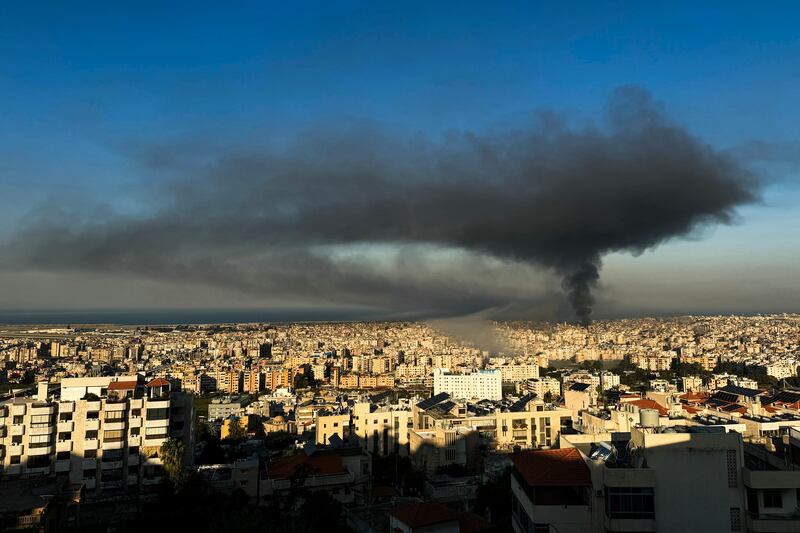
This time Iran is believed to have fired almost as many, if not more, drones and missiles at the UAE, the regional dominant trade and tourism hub, than Israel, killing three people.
Its proxies, which sat out the June war, have also joined the conflict. Hizbullah launched missiles at northern Israel, threatening a new war in Lebanon, while Iraqi militias targeted a US base in northern Iraq and claimed to have targeted Americans at the airport in Baghdad. Pro-Iranian supporters have also attempted to storm the Green Zone, which is home to western embassies in the Iraqi capital.
The widening regional conflict is what many feared was the worst-case scenario after Hamas’s October 7th, 2023, attack on Israel killed 1,200 people in the biggest single killing of Jews since the Holocaust.
While it triggered waves of conflict in Gaza, Lebanon, Yemen and between Israel and Iran, the Islamic republic sought to calibrate its involvement, calculating that keeping the fight away from its shores was the best way to ensure regime survival. But analysts say its calculus changed after the Israeli and US strikes in June.
Hamas’s leader Yahya Sinwar “wanted a regional war on October 7th, but his allies resisted it because they didn’t want it”, said Emile Hokayem at the International Institute for Strategic Studies. “Now we have America and Israel triggering that regional war, on their own terms.”

Most of Iran and its proxies’ projectiles have been intercepted by air defences. But underlining the chaotic nature of the spiralling conflict, the US military said on Monday that Kuwaiti air defences mistakenly shot down three American fighter jets.
The regime insider said the retaliation, including against targets such as Dubai hotels, “makes any location hosting Americans unsafe and no one will want to stay there”.
He added that Iran’s Gulf oil-rich neighbours would all now “face heightened investment risk”.
“Investors will tell them: you are close to Iran, and at any moment a missile could land in the middle of your country,” the insider said.
But in launching strikes against Gulf states that had sought to persuade US president Donald Trump to pursue diplomacy with Iran and had been de-escalating tensions with Tehran in recent years, the Islamic regime risks being further isolated and pushing its neighbours to support the US-Israeli war.
Some analysts have argued that far from a clearly defined plan, Iran’s response represents the regime’s recklessness.
Iran’s response was the “nightmarish” scenario many feared, said Burcu Ozcelik, a senior research fellow at Royal United Services Institute, the London-based think-tank. She added that Tehran’s aggressive rhetoric in the lead-up to the war had raised concerns that the regime would “be the irrational mad-man actor lashing out beyond control”.
The regime insider and some Iran experts believe Khamenei (86) expected to be killed and to die as a martyr – staying in his compound in Tehran with members of his family despite the looming threat of an attack.
That meant putting in measures to ensure that the regime could continue to project stability domestically and escalate its response to the US and Israeli attacks.
It is now the Revolutionary Guards overseeing military operations, with the forces led by major general Ahmad Vahidi, who replaced the force’s top commander after he was killed on Saturday.
“Iran, unlike the United States, has prepared itself for a long war,” Ali Larijani, Iran’s top security official, said on X on Monday.
The result is a spiralling conflict that threatens to pull in more countries – the UK on Sunday said it would allow the US to use its bases, including RAF Fairford in Gloucestershire and the joint UK-US military base of Diego Garcia in the Chagos Islands, to launch attacks on Iran.
“Whether it is the UK or regional countries, they could be joining something they have zero control over,” Hokayem said, “that has its own momentum, with no common understanding about the desired outcome, risk appetite and the day after”. – Copyright The Financial Times Limited 2026