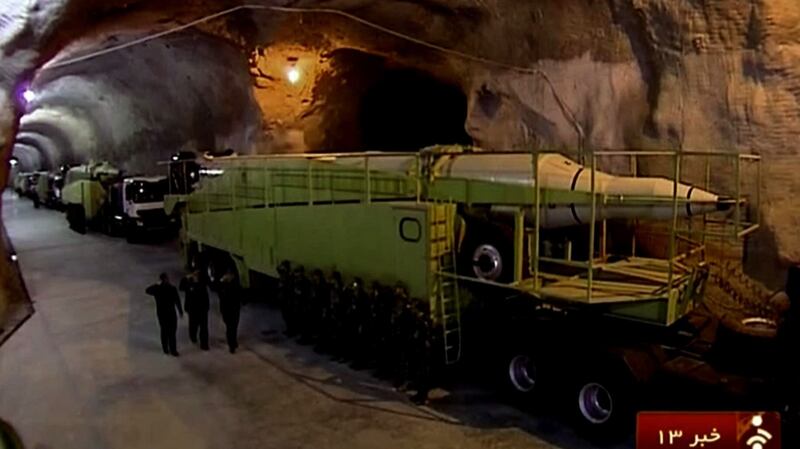
For 40 days, US and Israeli aircraft pounded the mountains around Yazd, trying to silence one of Iran’s most important military projects: a buried missile complex carved deep into the granite above the ancient desert city.
Yet, according to residents, the Iranian missiles kept firing regardless. “US and Israeli forces kept bombing those mountains,” says one resident of Yazd. “And Iran kept launching missiles until the final moments before the ceasefire.”
The resilience of Iran’s underground “missile cities” has become one of the most significant and contested questions in the aftermath of the US-Israeli bombardment earlier this year.
While US president Donald Trump has focused on the damage done to the facilities, to Iranian officials and some outside analysts the war has proved that the Islamic republic’s missile force can be suppressed – but not destroyed. Much of Tehran’s arsenal is ready again for the next confrontation.
READ MORE


That has helped Tehran maintain the core of its asymmetric strategy against the US and Israel, emboldening it to threaten shipping and energy infrastructure across the Gulf even after weeks of bombardment. In exchanges of fire with Israel and the US this week, Iran’s Revolutionary Guards launched multiple ballistic missile barrages.
A regime insider says the war – and the fate of the missile cities – has fundamentally reinforced the leadership’s belief that military power, rather than diplomacy, remains the ultimate guarantor of security.
“More than ever before, we have concluded that building trust is a meaningless strategy,” he says. “Only strength can serve as a deterrent, not arguments in international forums about our rights. The enemy must be convinced of our capabilities and must never be allowed to miscalculate again. Iran is demonstrating in practice that it is prepared to go further than its adversaries.”
He claims the Yazd missile complex extended roughly 500m into the surrounding granite mountains and that it remained operational throughout the conflict. Bombings have destroyed entrances to the missile cities, he says, but they have been reopened relatively quickly.
In his speech launching the war on February 28th, Trump said: “We’re going to destroy their missiles and raze their missile industry to the ground. It will be totally, again, obliterated.” Israel said in April that most Iranian launchers had been “taken out of operation”.
But US intelligence assessments reported in American media have suggest Iran still retains about 70 per cent of its mobile launchers and about 70 per cent of its prewar missile stockpile. They also indicate that Tehran has restored access to many of its missile sites, launchers and underground facilities, including positions along the Strait of Hormuz.
A senior western diplomat in Tehran says those estimates broadly align with his own. “We believe they have protected a significant portion of their arsenal and capability,” the diplomat says. “The entrances to some tunnels were bombed, but they could dig themselves out.”

Accounts from residents appear to back this up. “Often, only a few hours after a bombing, Iran would launch missiles from the same locations,” says one resident of Kermanshah province. “We couldn’t believe those facilities were surviving such intense attacks.”
Sam Lair, of the James Martin Center for Nonproliferation Studies, says views of the missile cities have evolved since the war, and depend on different interpretations of Iranian objectives and the analytical time frame.
During the most intense phase of the conflict, he notes, Iranian missile fire rates fell from high levels to a few dozen a day – a sign the US and Israeli suppression campaign had an effect.
“But if you think about this in kind of a broader timeline, then the missile cities have succeeded in preserving a large portion of the Iranian missile force,” he says.
“It is a strategy that preserves this asset for later rounds of conflict, but it assumes that you’re going to have later rounds of conflict ... with enough time and enough shovels, then you can dig your way out.”
And while the volume of missiles fired has ebbed and flowed, Iran has repeatedly shown that it is able to respond swiftly to US and Israeli strikes in like-for-like attacks, particularly using its short-range arsenal to hit energy facilities and other infrastructure in Gulf states.
Nicole Grajewski, an assistant professor at Sciences Po, says evidence from the conflict suggests Iran is restoring access to parts of the network far more rapidly than many expected.
“We only discovered that during the later stages of the war because there’d be persistent strikes on a certain base and then Iran would fire from there,” she says. “They’re excavating quite a bit from the bases, but even during the war.”
She says the repeated pattern of strikes followed by launches suggests either rapid excavation, repairs to launch equipment or the use of decoys.
“The rapid kind of turnaround on cleaning up the missile bases during the war, at least enough to lob some missiles and make it operational, was very impressive,” she says.
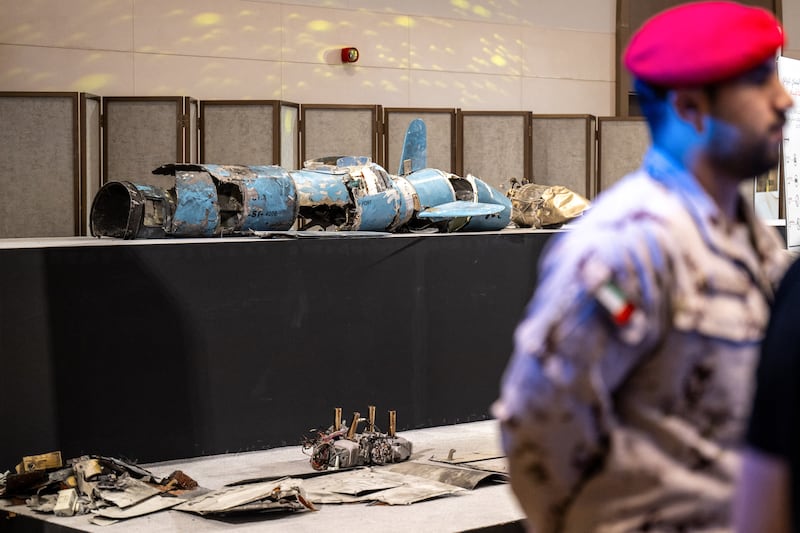
While acknowledging shortcomings in Iran’s missile strategy, she argues the force has performed better than many expected, particularly against targets in the Gulf.
“The missile strategy was a survival strategy,” she says. “The survivability aspect of it is important when we’re thinking about this in a long-term, strategic perspective, but not just the tactical and operational.”
The precise number of underground missile complexes remains unclear. Analysts estimate that Iran operates dozens of such facilities across the country, many buried deep inside mountainous terrain.
Their location has proved critical. Decker Eveleth, an associate research analyst at the Center for Naval Analyses, says facilities close to Iran’s western borders are more vulnerable because drones can loiter overhead and strike launchers as they emerge from tunnels. Sites deeper inside the country, however, are harder to suppress.
“The problem for the US and Israel has been that the things needed to pin down a lot of these bases require a lot of continuous operations,” he says.
A second person close to the Islamic regime argues the depth of many sites renders them largely immune to conventional aerial bombardment. He says some were not even used during the war because numerous other facilities remained operational.
“No bomber can do much against facilities buried more than 70m underground,” he says. “Watching B-52s drop multiple bunker-buster bombs on a single site looked terrifying. Yet, only a few hours later, missiles were being launched from the same location. They cannot be destroyed. Full stop!”

Iran has significant tunnelling experience, developed through decades of building metro systems and long tunnels through mountainous terrain. But Grajewski says Iran drew crucial lessons from North Korea after a visit by Amir Ali Hajizadeh, the former head of the missile force who was assassinated by Israel last year.
“He was also the head of the construction aspect of the missile force,” says Grajewski. “He went to North Korea, he saw their underground missile silos and he’s like: ‘This is great. We can actually defend ourselves and build these cities. You don’t necessarily need air defences’.”
Another factor is Tehran’s move, over the past two decades, to increasingly decentralise its missile programme to compensate for a weak air force and limited air-defence capabilities.
This has increased resilience and strengthened the position of the Revolutionary Guards, which oversee much of the missile programme. Analysts suggest the war is likely to reinforce that trend further.
“Today the guards are stronger than they were before the war,” says the second person close to the regime. “Their standing within the system has risen dramatically because they fought under extraordinary pressure and continued launching missiles until the final moment.” – Copyright The Financial Times Limited 2026