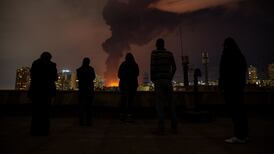
Why did the United States and Israel attack Iran?
Opportunity. Iran has been a bitter foe of the United States and Israel for decades: opposition to Washington was a driving impetus of the 1979 revolution that overthrew a pro-US government in Tehran and put its current theocratic system in power.
With the Iranian government facing public protests, weakened by the loss of allies and from prior strikes, Israel and the US seem to have seen an opportunity to try to end the regime that has been hostile to them for so long.
They struck on Saturday, reports suggest, because the US and Israel had intelligence that Iran’s supreme leader, Ayatollah Ali Khamenei, would be gathering that morning with senior military and intelligence figures at a compound in central Tehran. It was an opportunity to kill much of the leadership at once.
Iranian state television has since confirmed the deaths of Khamenei and a number of senior leaders.
READ MORE


Is the war legal?
Legal minds have been quick to challenge the legality of the attacks on Iran.
While most European leaders have been more measured, Spanish prime minister Pedro Sánchez described the attacks on Iran as “unjustified, dangerous and outside of international law”. US Democrats have described it as a “war of choice”.
Typically, wars are considered legal if they are done in self-defence, or if they are authorised by the Security Council of the United Nations.
US president Donald Trump has described the attacks on Iran as “major combat operations”, but has also used the word “war” while talking about the situation.
The difference matters in US law. The US constitution states that only Congress – not the president – has the power to declare or authorise war. Military actions that fall short of a full war can and have been authorised by successive US presidents.
Israel has described its attacks as “pre-emptive”, and the Trump administration has claimed that the US faced a threat from Iran’s nuclear programme and missile capabilities. Both countries have also been clear that they hope for a change in regime.
How has the killing of supreme leader, Ayatollah Khamenei, affected Iranian politics?
Iran is under an internet blackout and the broad picture of public reaction is difficult to ascertain.
The country is home to a vibrant protest movement that was deeply opposed to its violently oppressive regime. Khamenei’s death is a cause for celebration for some.
On the other hand, the ayatollah has now become a martyr, and his killing may make supporters more entrenched.
History warns that the last time the US was involved in removing an Iranian leader – the secular and democratically-elected Mohammad Mossadegh in 1953 – it sowed the seeds for the Islamic revolution.

Why is Iran attacking Gulf states?
Iran has informed the United Nations Security Council that it will be exercising “its right of self-defence”, and has said it considers any US assets in the region to be legitimate targets.
Bahrain, Saudi Arabia, Qatar, the United Arab Emirates (which includes Dubai and Abu Dhabi), Kuwait and Oman have all been struck by Iranian missiles or drones. US military bases, airports, ports and also commercial areas have been targeted.
Although the Gulf states have made clear they don’t approve of the attacks on Iran, they appear to be paying a price for long-standing military partnerships with Washington.
Gulf states are reluctant to be drawn into the fight. But the damage they have sustained is certain to damage their relations with Iran, and may force a rethink of their security strategy.
Are Irish citizens in the Middle East safe?
The Department of Foreign Affairs advises Irish citizens to avoid non-essential travel to Bahrain, Kuwait, Saudi Arabia, Qatar, the United Arab Emirates, and to exercise a high degree of caution towards Oman.
The strikes have shut airports and caused widespread closures of airspace across the Middle East. The Government has advised Irish citizens who are stuck to “shelter in place”.
Could the conflict spread further?
The Iranian regime funds and supports militias across the Middle East, from Hizbullah in Lebanon, to the Houthis in Yemen, to various groups in Iraq. It was also a supplier of drones used by Russia against Ukraine.
Iran’s retaliation has already hit a target within the European Union: a drone hit the United Kingdom’s Royal Air Force base of Akrotiri in Cyprus, and two more were intercepted. Paphos airport was evacuated and flights were cancelled in response.
With international environment already unstable, there is every chance for the conflict to evolve in unpredictable ways.
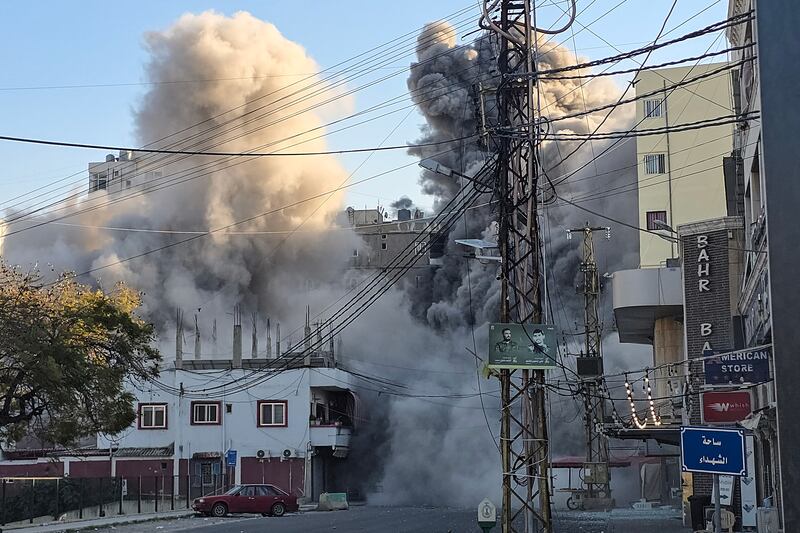
How have oil prices and markets been affected?
Iran has the power to disrupt shipping in the Strait of Hormuz, a strategic chokepoint in the Persian Gulf that is a key artery of the oil trade.
At least three ships have been attacked in the area, and Iran has warned vessels to avoid the waterway.
Oil and gas prices surged in response to the conflict. Shares sank, and the price of gold – considered a safe haven – rose.
The crucial question will be how long oil prices stay high and how high they go. That will determine whether they begin to drive up inflation in turn, causing a deeper economic impact.