
On the eve of Ramadan, Afghanistan’s Taliban rulers invoked the holy month’s spirit of “mercy and forgiveness” when they returned three captured Pakistani soldiers, gift bags in hand, to a delegation of Saudi intermediaries.
The prisoner release in mid-February was aimed at preserving a fragile ceasefire agreed between Islamabad and Kabul following fierce clashes in October.
But those hopes were dashed when fighting erupted between the neighbours, with the Islamist group’s fighters opening fire on border posts and Pakistani jets bombarding the Afghan capital Kabul and Taliban stronghold of Kandahar. Pakistan’s defence minister Khawaja Asif last week declared “open war” against the Taliban.
Pakistan previously nurtured the Taliban’s senior ranks, training and financing the Islamist group through its intelligence services and sheltering them during the 20-year Nato occupation of Afghanistan. But Islamabad now views its one-time proxy, whose return to power in 2021 was celebrated by Pakistani officials, as its chief security threat.
READ MORE


“Pakistan and the Taliban see the other as its biggest enemy,” said Iftikhar Firdous, founder of The Khorasan Diary, an Islamabad-based platform analysing militancy in the region. “This is a direct fight with the Taliban.”
The two countries have fallen out over the Taliban’s alleged offer of safe havens to Pakistani militants inside its territory where both share a porous border, as well as the supply of weapons and finance. The militants include Tehreek-e-Taliban (TTP) Pakistan and Baloch separatists.
Together, these groups made 2025 the deadliest year for Pakistani security forces in the past two decades, killing 1,229 personnel, according to the South Asia Terrorism Portal.

“The writing was on the wall since the Taliban took over, but Pakistan, in its euphoria, took some time to see that the Taliban are not their friends,” Firdous said. “It’s pretty clear Pakistan would like to see the government as a whole change.”
In mounting fears that Pakistan’s biggest rival India is gaining the upper hand, Asif has called the Taliban “a proxy of India” – a charge Delhi and Kabul deny.
Saudi Arabia, Qatar and Turkey have called on Islamabad and Kabul to help restore the ceasefire. But multiple rounds of talks in Doha, Istanbul and Riyadh since October have failed to keep the peace.
After a recent spate of tit-for-tat attacks, Pakistan on Sunday said 415 Afghan Taliban fighters and allied militants have been killed since Friday, a figure that could not be verified, and acknowledged that 12 Pakistani soldiers have died.
Kabul said its forces killed 55 Pakistani soldiers, a figure that could not be verified. It also said that 13 Afghan soldiers and dozens of civilians had died in the strikes.
Fighting continued on Monday. Hamdullah Fitrat, the Taliban’s deputy spokesperson, said on Sunday that Pakistan had conducted an “air incursion” over Bagram, the site of a former US airbase that president Donald Trump has sought to reclaim, without specifying if it was damaged. Pakistan has not commented on the Bagram operation.
For Islamabad, one imperative is keeping violence confined to its western periphery. Suicide bombers from the TTP and a faction of Isis have increasingly ventured into Pakistan’s cities, including in an attack on the capital last month that killed dozens.
The unrest has also obstructed Islamabad’s plans of reaping the mineral wealth in its western border regions.
Senior Pakistani military and political officials last week called the Taliban an “illegitimate system of government” rooted in repression and the perversion of Islam, and criticised its restrictions on women and girls.
For its part, the Taliban portrays Pakistan’s government as a military junta bent on destabilising Afghanistan and has even rallied some of its former opponents, such as former US-backed president Hamid Karzai, to the cause.
But Pakistan’s attacks strike at the heart of the group’s claim to power, said Ibraheem Bahiss, a Kabul-based senior analyst with Crisis Group.
“The one reason the Taliban have gained legitimacy is that they can claim to have finally brought security to Afghanistan when no one else could,” he said. “Pakistan is challenging that mantra with strikes on Kabul and Kandahar.”
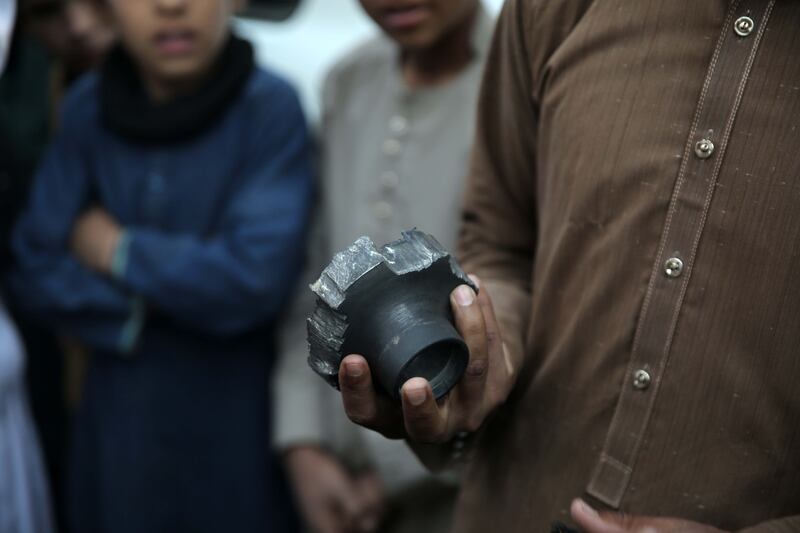
The Taliban has responded to Islamabad’s aggression by deploying drones and specialist “shock troopers” who are adept at besieging and overwhelming guard posts. “Pakistan will need to recalibrate – to not only counter the TTP but also the Taliban forces,” said Bahiss.
Kabul denies that any cross-border militant groups operate from its territory, a claim rejected by the international security. It has launched a crackdown against the IS-Khorasan Province militant group, which is seen as the biggest security threat to the Afghan Taliban rulers.
The UN Security Council’s analytical support and sanctions monitoring team in early February noted that the Taliban “continued to provide a permissive environment for a range of terrorist groups,” including the TTP, which they had previously said received “substantial logistical and organisational” support from Kabul and commanded at least 6,000 militants near the border with Pakistan.
Each Pakistani air strike pushes these militant groups closer together. On Friday, the TTP and other Islamist militants in Pakistan instructed their fighters to conduct “widespread attacks” to defend the Taliban.
“The risk of proxy violence is real and growing with every round of Pakistani military action,” said Elizabeth Threlkeld, director of the South Asia programme at the Stimson Center.
From 2007 to 2014, TTP militants unleashed a campaign of suicide bombings across Pakistan that killed 20,000 people, including in big cities like Karachi and Peshawar.
Today, these groups face Pakistan’s 600,000-strong army and a robust air force. The Taliban, by contrast, has no more than 200,000 fighters.
“Pakistan has got a fair amount of assets inside Afghanistan,” said Asif Durrani, Pakistan’s special envoy for Afghanistan until late 2024. “The details are up to the leadership, but they can wage intelligence-based operations from the ground or hit them from the skies.”
There was “no more room for diplomatic leverage with the Taliban”, he added, “only hard talk and kinetic actions”. – This article originally appeared in the Financial Times.


