
Michael Collins’s willingness to compromise was as crucial to achieving a free Ireland as his military exploits, broadcaster and historian David McCullagh has said.
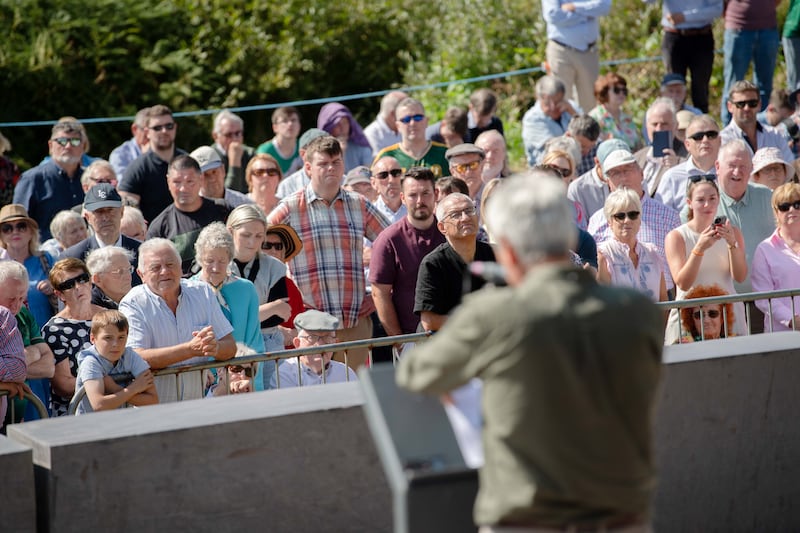
McCullagh, the author of critically acclaimed biographies about Éamon de Valera and John A Costello, spoke at the annual Michael Collins Commemoration in Béal na Bláth, Co Cork. He said it is often difficult to distinguish between “the actual Michael Collins of real life and the mythical Collins”.
The RTÉ presenter said many people’s image of Collins is the photograph of him in uniform at the funeral of Arthur Griffith. However, this focus on the military man can take away from other aspects of his complex career, particularly his role as a fundraiser for the Irish revolution.
McCullagh said Collins was ultimately a pragmatist. He had risen superbly to meet the challenges of the time, transitioning from a “military organiser, intelligence chief and financial mastermind into Collins the diplomat, the negotiator and the constitution maker”.
READ MORE


It was the pragmatist in Collins that led him to make three compromises. The first of these came when he agreed to a truce with the British in the summer of 1921. This was followed by him agreeing to engage in talks with the British and, ultimately, signing the Anglo-Irish Treaty on December 6th, 1921.
While Collins was a reluctant member of the negotiating team, protesting that he was “a simple soldier with no understanding of politics or diplomacy”, in reality he was intensely political with little concern for forms or symbols. He was focused on what was practical and achievable.
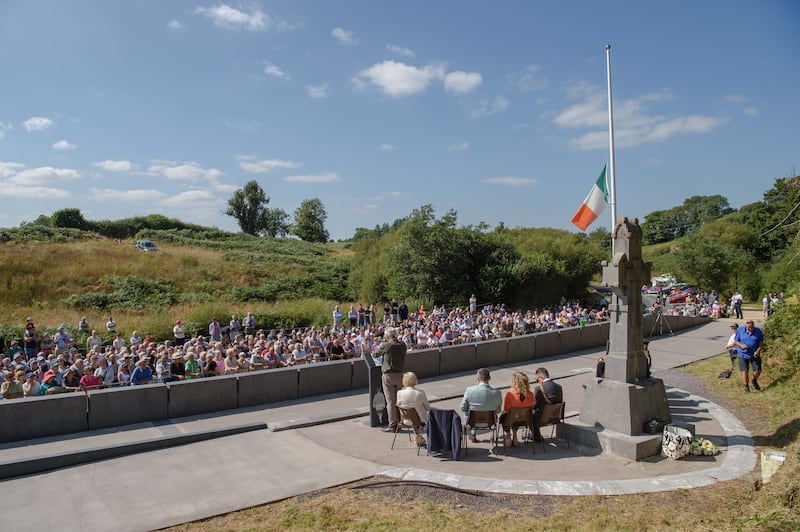
“During the treaty negotiations, Collins told the businessman and political activist James Douglas that he placed more importance on winning financial independence than on the position of the king, provided of course that the king had no actual power in Ireland,” McCullagh told the event, which marked Collins’s death in an anti-treaty IRA ambush on August 22nd, 1922.
“While others were focusing on symbols, Collins was focusing on practicalities – he was prepared to give way on symbolism to achieve greater independence in practice.”
While the British were insisting that the Irish Free State be a dominion that was part of the British Commonwealth, Collins recognised that such a demand would have little practical impact.
McCullagh added: “Collins recognised there was a difference between the position of the dominions in law and their position in practice. Legally, the dominions were subject to the crown and subordinate to the British parliament at Westminster. But in practice, they were to all intents and purposes independent.”
During the negotiations, Collins addressed this issue in a memorandum he submitted to the British. This stated that Ireland’s position under the Treaty should reflect “not . . . the present technical, legal status of the dominions, but . . . the real position they claim, and have in fact secured”.
It was not just the current position of the dominions he was envisaging, but rather their future position. He wrote words to this effect a number of months later, predicting they would eventually separate from Britain “by a process of natural evolution”. With this in mind, he added: “We should do well to have a little patience.”
His fellow cabinet members De Valera, Cathal Brugha and Austin Stack believed the treaty surrendered too much and they were willing to risk a return to war. McCullagh argued that Collins believed the potential evolution of dominion status to full independence was sufficient to merit signing the treaty.
He said there were other reasons Collins agreed to the treaty, including the belief that the Boundary Commission would deliver a huge slice of Northern Ireland to the new state and his view that in the event of a new war, Britain would take the shackles off and world opinion would back London.
Returning to Ireland’s dominion status, McCullagh said that while Winston Churchill and other British leaders believed the treaty would stand for all time, Collins saw things differently. More than anyone, he believed dominion status would evolve and offer opportunities to all the former colonies.
“His most famous expression of this idea came during the treaty debates, when he said: ‘In my opinion, it gives us freedom. Not the ultimate freedom that all nations desire and develop to, but the freedom to achieve it’.”
While Collins the soldier, intelligence chief and financial mastermind was crucial to the War of Independence, Collins the diplomat and negotiator was as crucial in shaping compromise. “We can draw from that what lessons we need for today,” said McCullagh.
Lord mayor of Cork, Cllr Damian Boylan, deputy county mayor Cllr Marie O’Sullivan, Lt Col Michael Parsons representing the Defence Forces, Insp Kevin Long of An Garda Síochána and Angus Collins O’Malley representing the Collins family were among the 400 strong attendance. Current Michael Collins Commemoration Committee Chairperson, former TG4 reporter, Grett O’Connor, the first woman to hold the position was also in attendance.
Ends


