Monday’s key events
- Some 650 fuel stations were still without petrol or diesel on Thursday afternoon, Fuels For Ireland chief Kevin McPartlan said
- Minister for Communications Patrick O’Donovan criticised the media coverage of the blockades
- The Government’s farmer and haulier support package worth €505 million was dismissed by some central figures in the recent protests as ‘not enough’
- Ireland’s motorway network was clear of fuel protests for the majority of the day but there was some disruption in the morning at various locations
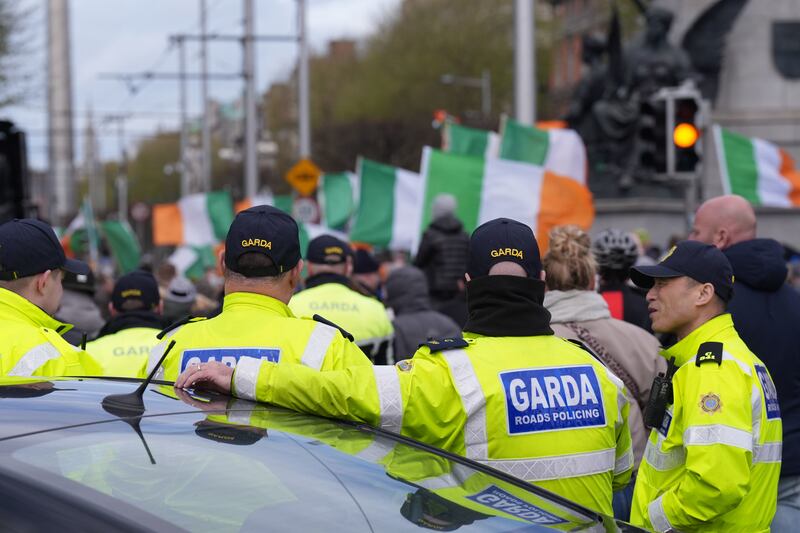
- Garda Commissioner Justin Kelly said he is ‘appalled’ by intimidation and threats directed at gardaí during the fuel protests
Best Reads
- How much will fuel cost after new measures kick in this week?
- Coalition’s worst week shows Ireland unprepared for economic deterioration
- How the fuel protests brought the country to a standstill
- Fuel protests reveal flawed relationship between farms, fertilisers and food
That concludes Monday’s live coverage of the fuel protests and their aftermath. We will back tomorrow with more breaking news and analysis on irishtimes.com.
O’Donovan’s media coverage comments ‘deeply disturbing’, says NUJ
The National Union of Journalists (NUJ) has described Minister for Media Patrick O’Donovan’s comments on media coverage of the fuel protests and his call for a Coimisiún na Meán of RTÉ’s reporting as “sinister and deeply disturbing”.
NUJ sssistant general secretary Séamus Dooley said the Minister had drawn a “false equivalence” in order to “justify interference in the editorial independent of the national public service broadcaster and licensed radio servicers”.
Earlier on Monday, O’Donovan criticised the media’s coverage of the blockades last week, suggesting an RTÉ report was used to encourage protesters to show up to Whitegate oil refinery in Co Cork.
The Minister said he was concerned about “balance” in some of the coverage, including some content posted online.
Dooley said the union is concerned about threats made against journalists by a small number of those associated with the protests.
“We would ask the Minister to respect the role of independent journalism,” he said.
“There’s no place for Trumpian ad hominem attacks on journalists and the Minister’s comments have caused genuine concern.”
Taoiseach warns against further blockades
As uncertainty remains over the potential return of fuel protests on Tuesday, Taoiseach Micheál Martin has warned blockading ports and roads would not be tolerated.
The comments come as some fuel protesters said there was a chance they would reinstate blockades and described the Governments €505 million package as “insulting”.
One of the lead fuel price protesters has said groups will continue targeting “major infrastructure” after an “insulting” package of measures was announced by the Government.
Earlier, James Geoghegan, a Co Westmeath farmer who was prominent in the O’Connell Street protests, said blockading Dublin “doesn’t really do much major harm”.
He said protesters would likely pick areas that have a bigger impact, such as “major infrastructure” because “this Government is not listening”.
Martin told a meeting of the Fianna Fáil parliamentary party on Monday that the fundamental right to travel could not be limited by any group.
However, it is understood a number of TDs and Senators called for a more conciliatory approach to what was described as decent people with genuine concerns about their ability to pay bills.

Fuel protests planned in North for Tuesday
In Northern Ireland, Trafficwatch NI has advised road users to allow extra travel time for their journeys on Tuesday in advance of planned fuel protests at various locations across the region.
It said public transport and school services are expected to operate as normal.
Multi-agency partners have met to discuss plans to minimise disruption as a series of planned fuel protests are due to take place tomorrow.
“The situation will continue to be closely monitored ... The PSNI is leading the operational response and will be on hand to support the emergency services in responding to those with urgent medical needs should disruption occur,” the service said on its website.
Man (20s) arrested after dangerous driving incident in Whitegate
A man in his 20s has been arrested in connection with an incident of dangerous driving in Whitegate, Co Cork, on Saturday.
An Garda Síochána said in a statement a tractor hauling a slurry tank approached a checkpoint which it failed to stop at.
Gardaí pursued the tractor which was “driving erratically” and endangering other road users by swerving into oncoming traffic in an effort to evade members of the force.
The tractor was subsequently stopped and the driver was arrested.
He has been charged with a series of road traffic offences and is due to appear before Midleton District Court on Thursday morning.
European Commission seeking input on energy costs proposal
Europe Correspondent Jack Power in Brussels writes: The European Commission is asking national governments for their views on an EU plan to give states extra leeway to temporarily subsidise some of the increased cost of fuel and fertiliser for industries most exposed to recent price increases.
The draft proposal by the EU’s executive arm is an effort by Brussels officials to keep governments broadly on the same page in their responses to the energy crisis.
The Irish Government has already announced multimillion euro schemes to help hauliers, farmers and agricultural businesses with the rising cost of fuel and more broadly cut tax on petrol and diesel.
The commission is proposing to ease state-aid restrictions to let governments subsidise the electricity costs of “energy-intensive industries”.
The commission has asked national capitals to suggest “further measures” they think should be considered at EU-level to help navigate the crisis.
The EU package is expected to be published next Wednesday. The commission hope to agree on the scope of the temporary relief by the end of this month.
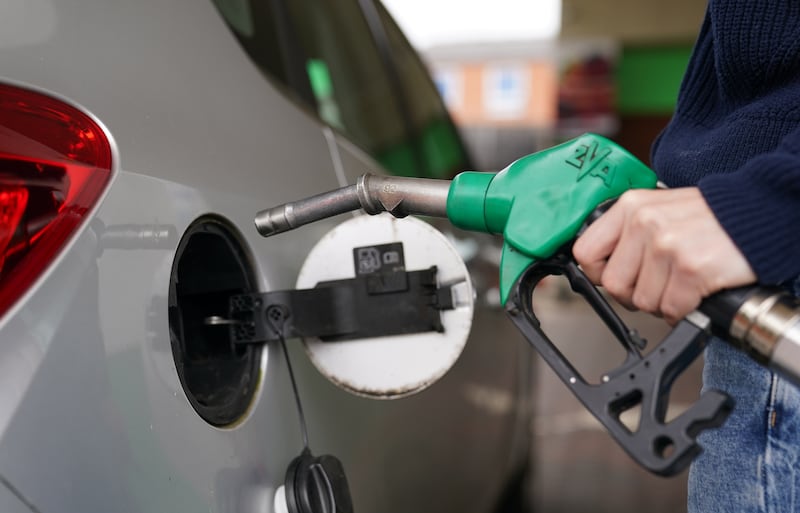
How much will fuel cost this week after new Government measures kick in?
The Government has been playing a high-stakes game of whack-a-mole with fuel prices since the start of the crises on February 28th but it seems inevitable it will end up losing.
While the latest 10 cent cut in excise duty, which comes into effect at midnight on Tuesday, will see costs to consumers fall in the days ahead, motorists will still be much worse off by the end of this week than they were just six weeks ago.
And, if the price of crude oil continues to climb sharply as it has done since US president Donald Trump announced plans to blockade the Straits of Hormuz over the weekend, then the tax cuts to Irish consumers will quickly be wiped out.
Read the full piece from Conor Pope.
Political Correspondent Ellen Coyne looks at the political fallout of the fuel protests and if the Government measures will placate the protesters.
Minister defends Government’s action on energy costs
Minister for Agriculture Martin Heydon defended the Government action on soaring energy costs caused by the Iran war as it faces a no-confidence motion on Tuesday.
Heydon acknowledged there was “frustration out there” and that people had been driven to protest because of “a really significant shock to their energy bills”.
Heydon said that a narrative had formed on social media that the Government “don’t understand” and were “not listening”, but he said they were “reacting in real-time” to the war in the Middle East.
“I would very much counter that, we are reacting in real-time, but as a Government, we absolutely listen and have to respond when an awful lot of people protest – protests and blockades are two different things,” he told RTÉ Radio.
“I absolutely, fundamentally respect and will passionately fight for people’s right to protest and tell me they disagree with me, but when people block critical infrastructure, that is different.”
Minister for Social Protection Dara Calleary and Heydon said the measures would have an influence on the budget in October. – PA
Minister for Transport Darragh O’Brien has approved an extension of a temporary derogation on some driving hours and rest period requirements for hauliers.
The extension will be for a period of eight days, applicable from today. The measures include:
- Extending daily driving hours from nine to 11 and increasing the weekly driving limit from 56 to 60 hours
- The weekly rest period for drivers has been reduced to 24 hours for each consecutive week of driving
- Removing the obligation for drivers to take a weekly rest period in any two consecutive weeks of work
The move is aimed at providing “some flexibility for drivers in these urgent and exceptional circumstances and support the full recovery of the national energy and food supply chain” following the disruption caused by the recent protests, the Department of Transport said in a statement.
“The transport of goods of all types within Ireland has been severely disrupted by blockades at ports, rolling protests, and closures across our road network,” O’Brien said.
“While we have restored access to ports and fuel infrastructure, the transport sector continues to be affected by the cumulative impact of the blockades.”
Irish Farmers Association responds to Government measures
The Irish Farmers Association (IFA) has said regular engagement on fuel costs will be needed going forward “to ensure the agri-sector is protected in these highly volatile times”.
In a statement on Monday afternoon, the IFA’s president Francie Gorman acknowledged the package of supports already announced by the Government but said “farmers and agri-contractors are under huge financial pressure”.
“The structure and roll-out of this scheme must happen quickly and the Department needs to ensure it is efficient and effective. The concern among farmers and agri-contractors now is that it will be overly bureaucratic and too slow,” he said.
Gorman said the decision not to apply the carbon tax increase which was due to come into effect in May “is the right one, but the whole tax is very unfair and punitive for farmers and rural Ireland.”
“The Government must do far more to address the frustration and anger in rural Ireland, particularly around the cost of doing business and over-regulation.”
Gorman also said, while the IFA will continue to “campaign vigorously”, “we must guard against our valid campaigns being used by people with other agendas”.
Oil tanker stuck for days off Irish coast leaves Galway
The oil tanker Thun Gemini, which was stuck for days in Galway Bay due to fuel capacity issues, has now left port after unloading and is off the coast of Cork, The Irish Times has learned.
Hugh Dooley writes: The Dutch-flagged tanker was carrying six million litres of fuel from Antwerp to the Port of Galway. It was due to dock on Friday, but was forced to sit waiting in Galway Bay until Sunday afternoon due to a lack of fuel capacity at the port.
A spokesman for the port confirmed the tanker completed its delivery at the Port of Galway.
As supply lines ground to a halt due to the fuel protests in recent days, the oil tanks in the port – into which it would have unloaded its fuel – were full.
Thun Gemini was carrying green and white diesel, for agricultural and general use respectively, as well as kerosene for home heating.
Open-source tracking data from marinetraffic.com shows the vessel has left the Port of Galway and is sailing back to Antwerp.
Due to the removal of the blockade in Galway by gardaí on Sunday morning, sufficient capacity for the tanker to unload became available, according to a fuel industry source.
The vehicular and home heating fuel carried by the tanker is likely to reach customers late on Monday.
Taoiseach Micheál Martin had previously aired concerns that the oil on board could be sold off elsewhere if the blockades prevented it from unloading.
People Before Profit share action programme for tackling energy costs

People Before Profit have unveiled their proposed actions to tackle rising energy costs.
The proposals include placing a €1.75 a litre price cap on petrol and diesel, a €1 cap on green diesel, a €1 a litre cap on home heating oil, the introduction of free public transport and a universal €500 energy credit funded by data centres.
The Government’s latest support package “goes nowhere near far enough to address the worsening cost of living crisis”, People Before Profit TD Paul Murphy said, calling the 10 cent a litre reduction in petrol and diesel “a slap in the face”.
What has happened so far on Monday?

Total of 650 fuel stations still dry across the country
The number of fuel stations still without petrol or diesel stands at around 650 across the country, as the industry works to restore supply, reports Hugh Dooley.
Kevin McPartlan, the chief executive of Fuels For Ireland told The Irish Times that the number of stations without fuel has reduced today, from 700 to 650 but that progress in restoring normal operations should hasten.
He said the fuel supply network is still operating at reduced efficiency on Monday: “Today, we have been operating at only about 60 per cent of normal efficiency across nationwide distribution because of broad traffic issues and enhanced security protocols slowing drivers’ entry to fuel infrastructure sites.”
Limitations on the number of hours drivers are permitted to conduct are understood to be clogging up the recovery efforts. Many of the drivers’ workable hours were used during delays, diversions, and long waiting times due to the fuel protests over the weekend.
A derogation on drivers’ hours is expected to be granted later in the afternoon, which would be “exceptionally helpful in speeding up recovery”, the industry group chief said.
Supply chain blockages which hit the national fuel distribution network during the blockades of ports and fuel depots are being ironed out now.
Transport Infrastructure Ireland is reporting no delays on the country’s motorways as of 3.07pm.
Independents face ‘big test’ over no-confidence motion
The vote of no confidence to be tabled against the Government is a “big test” for Independents who are part of the Coalition, a TD has said.
Sinn Féin is tabling the motion and the Social Democrats, Labour, People Before Profit and Independent Ireland have said they will back it.
It is unclear how several Independents who have supported the Fianna Fáil-Fine Gael coalition Government will vote.
People Before Profit TDs Richard Boyd Barrett and Paul Murphy said Government-supporting Independents will need to “decide which side they are on”.
“It’s a big test now, isn’t it?” Boyd Barrett said at a press conference held in Dublin about energy costs.
“Are the so-called Independents just Fianna Fáil and Fine Gael in disguise or are they actually representing the interests of ordinary people? So it’s a big test for them.
“We certainly believe that people out there who want action on the housing crisis, who feel Fianna Fáil and Fine Gael failed to deliver, should put maximum pressure on these so-called Independents to decide which side they are on.”
Murphy said Independent TD for Kerry Danny Healy-Rae needed to decide if he was “on the side of protesters or is he on the side of his brother, who is a Government Minister”.
“I think there is a real question for the Independents.
“I think the Independents have to recognise that if they vote confidence in this Government, they are likely to pay a very, very serious price at the next general election.”
‘O’Connell Street must not again be closed off in this fashion’
Steps must be taken to avoid a repeat of the disruption to Dublin city businesses, workers, emergency and medical services, and tourism during the fuel demonstrations, said business group Dublin Town.
Following the end of fuel protests, which “paralysed” parts of the city centre, Dublin Town chief executive Richard Guiney said demonstrations of a similar nature should be confined to an area that does not paralyse a large swathe of the city and where they could be better managed.
Guiney said although the organisation wholeheartedly accepts the right to peaceful protest, particularly in the capital city, what had transpired during the fuel protests on O’Connell Street – its premier artery – had been utterly unacceptable.

“While totally accepting the need and right to protest in the capital city, disrupting public transport and bringing its major thoroughfare to a halt for a protracted period of time is simply wrong.
“Business was impacted, public transport was disrupted and hospital appointments were missed. In other parts of the county, protesters minimised such disruption, but not in Dublin.
“Recent changes to traffic routes ensured that the closure of O’Connell Street effectively paralysed College Green, Henry Street, Middle Abbey Street and a huge area of the city centre.
“Three-quarters of its customer base use public transport to access the city centre, and O’Connell street feeds people to all kinds of businesses and public facilities.
“The protest led to a decline in footfall in the city centre during the Easter school holidays, as well as disrupting medical schedules in nearby hospitals and severely discommoding many commuters, shoppers and tourists.
“O’Connell Street must not again be closed off in this fashion.”
Gardaí to investigate ‘threats’ made to fuel truck drivers
Fuels for Ireland chief executive Kevin McPartlan told The Irish Times that “significant threats” were made to the drivers of fuel trucks during the protests over the weekend, writes Hugh Dooley.
He said some drivers were threatened on their way to relieve dry fuel stations, with threats made against their families and personal property.
Other drivers, he said, were recognised by members of the protests, with their families subsequently receiving harassment online.
McPartlan said a number of drivers made complaints to gardaí.
In response to a query, a Garda spokesperson declined to comment on the third-party statements but noted that Garda Commissioner Justin Kelly had earlier said the force is “aware that there has been intimidation of fuel tanker drivers, these are criminal offences, we will not tolerate this and we will investigate all such reports and prosecute suspects”.
“Offences such as threats to kill or cause serious harm carry sentences of up to 10 years,” he said in a statement over the weekend.
An Garda Síochána has also committed to investigate all complaints of threats it receives.
Minister criticises media coverage of blockades

Minister for Communications Patrick O’Donovan has criticised the media coverage of the blockades last week, and suggested an RTÉ report was used to encourage protesters to show up to Whitegate oil refinery, reports Ellen Coyne.
O’Donovan said he was concerned about “balance” in some of the coverage, including some of the content posted online.
“Ironically, it was being reported on RTÉ News on one particular evening that there was nobody at Whitegate, and it was almost like a flare went up – you know, ‘there’s nobody here at Whitegate at the moment, come on down.’ Of course, they started gathering and the rest is history,” O’Donovan told the Tipp Today programme on Tipp FM.
“One of the things that I will be doing is examining it as well from a media and coverage point of view. Particularly social media, and particularly from a balance point of view.”
He added that he didn’t see “too much” coverage of people who agreed with the protest but didn’t agree with the methods that were used.
“There was a lot of businesses that were at risk of going under because of the supply chain, I didn’t see too many of those people get air time. A lot of hospital appointments were missed. I didn’t hear too many doctors being asked how things were in particular hospitals.”
The Minister said he agreed that a lot of people protesting had genuine grievances. “Absolutely, sure some of them are my neighbours,” O’Donovan said.
He said it was “important to have a fuel protest, but what was not important was a fuel blockade” adding: “there was a place for anger and frustration”.
“But I don’t think that the place for anger and frustration was to deny chicken in Co Limerick meal, to deny cattle feed, to deny people hospital appointments, to deny people the right to the access to Dublin Airport,” O’Donovan said.
The Minister said people have a right to protest, “and sometimes I feel like protesting myself”, but he was against a situation where unelected demonstrators were telling pregnant women if they did or did not have the right to travel to a maternity hospital after their waters had broken”.
Social Democrats TD Sinead Gibney described O’Donovan’s interview as “jaw dropping” and “sinister.”
“This is a transparent, and frankly pathetic, attempt to defray blame for the government’s own botched approach, not just to the protests – but to the cost-of-living crisis, which has endured now for years,” she said.
“It is also a dangerous attempt by government to exert editorial control over the media in an attempt to muzzle it. A cornerstone of any strong democracy is a free media. Any attempt by the government to chip away at this will be fiercely resisted.”
Garda chief ‘appalled’ by threats made to gardaí
Garda Commissioner Justin Kelly has said he was “absolutely appalled” by intimidation and threats directed at members of the force over the course of the fuel protest and said he was resolved to bringing those involved to justice, Hugh Dooley reports.
In a letter to all personnel, he said they had “broken the illegal blockades” of important national infrastructure” and said it “meant that our emergency services, hospital and fuel supply network were able to continue to operate”.
Kelly described the recent fuel protests as an “unprecedented period” and raised concern over attempts to “threaten and intimidate gardaí who are engaged in their lawful work”.
“I am concerned to hear about attempts in person and online to threaten and intimidate gardaí who are engaged in their lawful work,” he said.
“I have viewed some of this online material myself and have been absolutely appalled by it. This will not be tolerated and will be fully investigated, with the aim of bringing those involved to justice.
Kelly credited gardaí for “working hard to deal with many challenging policing situations all across the country”.
He praised the uniformed members of the force for carrying out their duties with “great professionalism and dedication”, noting he understood many members were faced with “really difficult situations”.
Gardaí were operating under the force’s “exceptional event” status over the weekend to deal with the fuel protests. Members of the force due to have rest days or leave were activated to bolster Garda numbers.
Kelly thanked gardaí for responding to calls for additional personnel which he said were “needed to deal with this situation”.
“Again, I appreciate many of you made personal sacrifices to answer this call to duty,” he said, thanking the associations which represent gardaí for co-operating with management during “this unprecedented period”.
Kelly said Minister for Justice Jim O’Callaghan and Taoiseach Micheál Martin wished to thank gardaí for their work.
All motorways ‘now clear of protests’
Seán O’Neill of Transport Infrastructure Ireland has been in touch to say that it is “all clear of protests now across the motorway network”.
The M3 was the last one and is now fully operational.
What is the status of protest actions and disruption across the country?
The capital is clear of blockades and previous protests on the M50 and O’Connell Street were cleared on Sunday.
Some roads around Leinster House, including Kildare Street, are closed, with buses diverting on to Dawson Street.
Nationally, full road closures remain in place as fuel protests continue across the country, and Transport Infrastructure Ireland continue to warn drivers that “significant delays” remain likely across the country.
- On the M3/N3, a blockade has closed the southbound lanes between junction 11 at Kells, and junction 9 at Navan.
- In Sligo, there are reports of a go-slow fuel protest by trucks on the N4 main dual carriageway south of Sligo town.
- A slow moving convoy is now moving into the Tallaght area and is expected to soon reach the M50 interchange.
It is understood gardaí are responding and breaking up blockades as they appear on roads across the country.
TII said a previous disruption between Athy, junction 3, and Kilcullen, junction 2, on the M9, the main road from Waterford to Dublin, has been cleared. It noted, however, that “heavy congestion” remains in the area.
Similarly, protests have been cleared on the M1 and on the Naas Road, where a rolling blockage towards the Long Mile Road disrupted commuter traffic on Monday morning.
TII communications director Sean O’Neill told The Irish Times the “national picture has definitely been resolved significantly” but that there are still “some pockets of action locally”.
He said congestion on the N28 in Co Cork, caused by an earlier go-slow protest, is resolving itself, Hugh Dooley and Sarah Slater report.

Government measures have ‘failed workers’, says Siptu
Siptu general secretary John King has condemned what he said was the Government’s “abandonment” of low- and average-income households.
“The Government has again failed workers with the energy support measures, which are focused on providing a financial break to businesses and high earners,” King said.
“The Government is foregoing approximately half a billion euros through a range of tax reductions and supports for the haulage and farm contracting sectors. Despite the cost of these measures, they contain little to no relief for the vast majority of workers and households, who are left completely exposed to a cost-of-living crisis and mounting inflation.”
He called on the Government to present “an innovative and progressive package of direct measures for lower- and average-income households to offset the drastic impact of this economic crisis brought about by international events”.
He said the economy was facing an “economic storm not experienced in decades. The Government must act now.”
Trump’s Strait of Hormuz blockade threat could quickly erode excise cuts in Ireland
Although the cut in excise duty announced by the Government should see the price of fuel fall by 10 cent a litre, volatility on global markets could quickly wipe out any gains consumers make on Irish forecourts.
As of Monday morning, oil prices on global markets were surging after the US vowed to blockade all vessels passing through the Strait of Hormuz that called at Iran ports or were headed there.
Brent crude – widely considered the benchmark product when it comes to retail prices – rose by over 9.1 per cent to nearly $104 a barrel.
If crude jumps much further it could add between 7 and 10 cent on to the price of a litre of fuel in Ireland.
US forces will begin the blockade – which doesn’t apply to other ships risking passage through the contested waterway – from 10am New York time (3pm Irish time) today.
Message from the Editor

Germany moves to cut fuel prices by 17 cent
The fuel crisis is – obviously – not just an Irish problem and this morning the Germans have moved to ease the pressure on people there.
German chancellor Friedrich Merz’s coalition agreed on €1.6 billion in fuel-price relief to ease the impact of surging costs for German consumers as part of a broader package aimed at resetting Europe’s largest economy.
The centrepiece of the package is the reduction of a gasoline tax by 17 cents per litre over a period of two months, the German leader said Monday after party officials met over the weekend to reach an agreement.
“We cannot remove all uncertainties from world upheaval, that’s why this measure is limited,” Merz told reporters in Berlin.
The price on fuel in Ireland, by contrast, has been cut by between 25 and 30 cent while the total cost of the package here is over €700 million.
Protesters have not won, insists Minister
Minister for Social Protection Dara Calleary has said the protesters have not won as engagement had been ongoing with farming and transport representative groups on further support before the protests began on Tuesday.
Speaking on Raidió na Gaeltachta, he said that the two packages announced by the Government, worth a combined total of over €700 million, were among the largest in Europe.
He said the measures would have an influence on the Government’s budget in October.
Go-slow protest extends to Sligo town
There is another go slow fuel protest by trucks on the N4 main dual carriageway south of Sligo town which started at 7.30 this morning.
Trucks held up traffic in both directions causing traffic disruption at rush hour. Gardaí are on scene and directing traffic along alternative routes.
Rolling protests on Irish roads fluid and evolving
Sean O’Neill of Transport Infrastructure Ireland Sean O’Neill has urged motorway protesters to keep hard shoulders clear for emergency vehicles and highlighted how the rolling protests across the Irish road network are fluid and evolving.
Speaking on RTÉ Radio before 9am he said that “on the M1 southbound, there is congestion between junction 12 and junction 9, so that’s earlier at Drogheda and that’s a go slow, there are people protesting there.
“And then on the M3 we have a full closure now, which wasn’t fully closed earlier today and that is between Kells junction 11 southbound and junction N9 in Navan is fully closed in both directions.” He said there was “a go-slow movement” on the M7 leading on to the Long Mile Road this morning but it was cleared although not before it caused “significant congestion”.
He added that there was also a go slow on the N28 Cork to Ringaskiddy, “Anyone listening and people out on the network, we do ask that they keep the hard shoulder open. It’s for emergency vehicles and emergency trips. Whatever your actions are on the motorway network, please keep those open, because it’s just unacceptable. People need those it’s for emergency needs.”
He said people planning to use the roads could get live updates on traffic.tii.ie.
‘Nobody knows what the plan is’ – protester
A spokesman for the Dublin fuel protest has said that they “achieved something small” in €505 million worth of Government measures, but said he has “no control” over further protests.
Blockades at fuel depots and Ireland’s only oil refinery have been lifted, but traffic disruption continued in parts of the country due to some protests.
“Nobody knows what the plan is, that’s being straight out there,” said John Dallon, a Kildare farmer and agriculture contractor who was at the Dublin protest.
He said that he welcomed the reduction in green diesel, but the Government “should have done something” on kerosene.
“This protest is out of my hands, it escalated to somewhat so big, and I don’t know where it’s going to end, but it’s the Government’s fault,” he told Newstalk radio on Monday.
“We achieved something small, but this is something way bigger now, and I have no control over it, and that’s exactly where I’m coming from.
“It’s gone to the stage that it seems like, looking out there, that the people of the island of Ireland have no confidence in this Government any more.”

Independent Ireland backed blocking of critical infrastructure – Collins
Independent Ireland leader Michael Collins said that his party did support blockades of critical infrastructure, but did not call for them.
It comes after Taoiseach lMicheál Martin accused Opposition parties of supporting the blockades which had cut off access to the country’s only oil refinery as well as a number of ports.
The blockades, which were cleared over the weekend in a number of garda operations, had threatened to limit the capacity of emergency services, cancel home care visits and affect the supply of groceries as some ports warned that they could need to turn deliveries away.
“First and foremost, Independent Ireland did not call for any blockades, but we certainly did support them,” Collins told RTÉ’s Morning Ireland on Monday.
“As far as we’re concerned, if people are protesting peacefully, in a peaceful manner, I will always support it, for their very own welfare and the welfare of others. These are good, decent, honest, hardworking people – self-employed people who are going out of business and cannot continue the way things are.”
Processes connected to protests can be ‘improved’, McEntee says
Minister for Foreign Affairs Helen McEntee has suggested that processes at a senior Government level can be “improved,” after the Minister for Justice last week made a surprise announcement that the army were being called in to clear blockades, writes Ellen Coyne.
Early last Thursday morning, Minister for Justice Jim O’Callaghan announced that a formal request had been made to the Defence Forces to assist with policing the blockades which had cut off access to ports as well as the country’s only oil refinery.
The request to bring in the Army attracted some criticism, with some Opposition politicians claiming it had further aggravated protesters. Ultimately, while the Defence Forces offered some support they largely remained on “standby” with the majority of blockades and protests eventually being cleared by An Garda Siochana.
When asked if she had been consulted before the Minister for Justice announced he would be bringing in the army, McEntee twice declined to say and said she wasn’t going to “get into what is an internal Government process”.
“I think with any kind of situation like this, what’s clear is that we need to always make sure we’re doing things in a most seamless way. I will say that I think things at a senior level can be improved, and I think that for any type of situation like this, we need to reassess and we need to look at how processes were put in place,” McEntee told RTÉ Radio 1’s Morning Ireland on Monday.
“I’m not going to get into the details of our Government process, but what I’ll say is I think, for any type of scenario, we need to review afterwards and make sure that we have seamless engagement and that we have a seamless process at every step and at every level.”
Asked if she had any reservations about the request to call in the Defence Forces, McEntee said she was not going to question the request from the gardaí.
The Minister was speaking following the announcement at the weekend of a new half a billion euro package to help with the cost of fuel, which includes a delay in a planned increase of the carbon tax next month to October.
McEntee said that the Government would still spend money on retrofitting which had been planned to be funded by the revenue raised from the carbon tax increase, but that more exact levels of funding for such projects would be decided in Budget 2027.
Drivers intimidated and threatened, Fuels for Ireland says
The chief executive of Fuels For Ireland Kevin McPartlan has said fuel trucks are moving around the country following the lifting of blockades over the weekend but he warned that it could take 10 days before supplies return to normal levels and he called for secure access to supplies for his members following days of what he said were “intimidation and threats and insults to drivers”.
He said drivers had been identified and intimidated by protesters and family members had been contacted “when they’re sitting waiting to load. It’s really poor. I’m not suggesting that everybody involved in protests is involved in that stuff but there are [some] still doing that.”
He told Morning Ireland that the next key thing “is to make sure that the road network across the country is unhindered so we can actually get fuel to the people who need it.”
He said that in the long term, “what has happened over the last few days has kind of created a precedent that people could see these as targets for the future so I think they’re going to need to be conversations around the security of those sites and the way the State manages that security.”
Blockade on main motorway linking Waterford and Dublin cleared as M3 remains blocked
Transport Infrastructure Ireland (TII) has issued a notice that full road closures remain in place on a number of major Irish roads as fuel protests continue across the country, reports Hugh Dooley.
On the M3/N3, a blockade has closed the southbound lanes between junction 11 at Kells and junction 9 at Navan.
On the M9, the main road from Waterford to Dublin, TII say the disruption between Athy, junction 3, and Kilcullen, junction 2, has been cleared. It notes, however, that “heavy congestion” remains in the area.
Rosslare busy but cargo moving
Rosslare Port is open and busy but an Irish Rail spokeswoman has expressed confidence that the backlog will be cleared by the middle of the week.
“Today is expected to be an extremely busy day but [we]anticipate tomorrow we’ll be back to full normal operations. We’re just happy that the blockade has been lifted now and that our customers can get back to doing their business.”
It is worth noting that the rolling protests that are taking place around the country have made it a fast-moving situation so things could change as the day progresses. Transport Infrastructure Ireland will have live updates.
Traffic disruption ongoing around capital
There is a full road closure in place on the M3/N3 between J11 Kells and J9 Navan (N) southbound.
“Significant delays are likely to occur. Please use a different route for your journey,” Transport Infrastructure Ireland said.
There has also been congestion on the M50 Southbound: J10 – J13 and delays on routes around Dublin including N3 S, M4/N4 E, N7 E, M11/N11 N.
Bus Éireann has also warned of disruptions to its service with the partial blockade on the M3 motorway resulting in delays and diversions for Route 109X.
Here are some of the other cancellations and delays being reported by the bus company.
Route 101
09:00 Dublin to Drogheda – Cancelled
09:40 Dublin to Drogheda – Cancelled
Route 105
09:45 Navan Rd Stn to Drogheda – Cancelled
Route 109
08:15 Dublin to Dunshaughlin – Cancelled
10:25 Dunshaughlin to Dublin – Cancelled
Route 160
Delayed departures may be expected
Route 167
Delayed departures may be expected
Route 168
07:59 Annagassan to Dundalk – Cancelled
Route 354
09:30 The Clock Tower to Dunmore East – Cancelled
10:20 Dunmore East to The Clock Tower – Cancelled
Route NX
08:00 Navan to Dublin – Cancelled
08:40 Navan to Dublin – Cancelled
Route B1
Some scheduled trips cancelled, please check the TFI Live App
Sinn Féin accuses Government of demeaning and insulting Irish people
Sinn Féin finance spokesman Pearse Doherty has accused the Government of forcing people “to take to the streets” and he said it “made matters worse when they went from insulting people to demeaning them to threatening them with the army [and refusing] to talk to people and try and resolve this”.
He said that approach had seen “more and more people, ordinary people, fathers and mothers coming out and saying that they’ve had enough”.
He told Morning Ireland that “for many people, yes, it was about fuel, yes it was about petrol, diesel and home heating oil, but it was also about all of the other pressures that people are feeling, whether it’s energy costs, whether it’s in groceries, whether it’s rents that continue to go up.”
He said it was “basically a tipping point that the Government aren’t listening, that we needed something to happen in terms of a cost of living package and this was the Government’s second attempt at [it] this year and again they come up short and that’s why so many people are annoyed this morning.”
Doherty said the party’s motion of no confidence in the Government was to take “the voice of the Irish people into the Dáil this week. I will make it very clear that who I believe is unfit for Government is the Taoiseach, the Minister for Justice who threatened the Irish Army against Irish protesters and a Government who actually inflamed tensions during the week when what we needed was a Government to recognise the cost of living pressures that people are under, to listen to what Sinn Féin and others have been putting forward for nearly a month now in relation to what we needed to do to get fuel affordable for people to get on with their everyday lives.”
Routes in Kildare and Wicklow still impacted by protest
There are a number of routes affected by protests this morning in Kildare and west Wicklow.
The M9 is blocked off northbound at Junction 3 Athy and traffic is being diverted off to the old N9 up to Kilcullen in Kildare.
There are long queues heading into Kilcullen as a result.
The N81 in Wicklow is operating with a go-slow protest heading north from Hollywood in the Blessington direction with a large amount of tractors involved.
‘At least five days’ before fuel supplies return to normal
The chief executive of the convenience stores and news agents’ umbrella group – who also represents many of Ireland’s service stations – has said that it will be at least five days before all supplies are back to normal – assuming there are no more protests in the meantime.
“One of the big difficulties is that the oil companies themselves only have so many drivers and only have so many tankers and when you’ve created this this this difficulty, this vacuum in deliveries that has to be filled and it’s going to be filled by split loads,” Vincent Jennings told RTÉ’s Morning Ireland.
Split loads will see some service stations not getting the full loads they need but a half or even a one-third load just to keep them covered until the supply chains are fully restored.
“We would expect that most service stations would be receiving a delivery within the next two days ... We are in uncharted waters but you couldn’t imagine [supply issues] going beyond five or six days assuming that everything is back to normal as in that there are no further disruptions. That is a big assumption perhaps.”
He said that the crisis had had a huge emotional and financial impact on retailers.
“I think everybody’s being cared for apart from the businesses ... From the start of this whole problem and the allegations of gouging which thankfully the CCPC has said wasn’t the case. And then the threats. It’s not in our nature to actually say no to customers so when you don’t have a product that’s the real difficulty.
“It is the difficulty as well for the customer who has perhaps queued up and then they’re told there is no more and they don’t stay around, they move on to somewhere else and so any additional purchases that you would have been hoping [for] that doesn’t happen either so it has been difficult and there has been obviously a loss of sales.”
Motorway blockages on M1 and M3 ongoing
While most of the blockades have been lifted there are still protests ongoing on the M1 between junction 13 Dunleer and junction 11 Monasterboice. There is also a full closure of the M3 at junction 9 Navan in both directions and significant delays are likely on these routes.
Warning that ‘insulting’ measures won’t keep people off streets
One of the leading fuel price protesters has said groups will continue targeting “major infrastructure” after an “insulting” €505 million package of measures was announced by the Government, reports Ellen O’Riordan.
James Geoghegan, a Co Westmeath farmer, said O’Connell Street in Dublin may not be on the agenda again as blockading there “doesn’t really do much major harm”.
He said protesters will likely pick areas that have a bigger impact, such as “major infrastructure” because “this Government is not listening”.
A 2.4 cent reduction to a litre of green diesel was “nothing”, while 10 cent off a litre of petrol and regular diesel was “not enough”, he said.
John Dallon, another high-profile figure in the movement, said he did not think the Government’s measures would keep people off the streets.
The Co Kildare farmer, who was among a small group of protesters refused entry to a meeting with Ministers last Friday, said taking 2.4 cents a litre off green diesel was “an insult”.
“They were telling us they were going to come out with a ‘substantial’ package. That is not a substantial package,” he said.
“The public won’t accept that, I think. It will only set more fuel on the fire”.
Government to examine ‘latitude’ given to protesters
Taoiseach Micheál Martin on Sunday night denied the Government’s budget plans had gone out the window following the fuel measures although he did say there would be an impact on Budget 2027.
He also said there would be an examination of the “latitude” given to protests and blockades in the early part of last week.
And he added that the “full rigours of the law” would be applied in future in the event of similar protests that “try to deny the free movement of goods and services”.
Fuel industry representatives have said supplies of diesel and petrol are flowing again but availability at service stations left without fuel since late last week will take about 10 days to return to normal.
But there is better news for at least some commuters in Dublin city this morning
The Luas will be operating as normal.
And so too will all Dublin Bus services.
Many blockades lifted from national routes
Many of the fixed blockades along the motorway network, appear to have be lifted.
However, on Sunday evening slow-moving convoys were causing traffic disruption.
The most recent update from Transport Infrastructure Ireland on Sunday night said there were road closures in place on the M1, M8 and M11.
Public transport and fuel supplies restart as relief measures rolled out
While the fuel protests that blocked key infrastructure around the country have now ended and public transport in the capital is returning to normal following an almost weeklong blockade of Dublin’s O’Connell St, there will be some aftershocks as a new week dawns, not least a motion of no confidence in the Government which is likely on Tuesday.
Blockades at fuel depots in Cork, Limerick and Cork were stopped over the weekend, and O’Connell St will fully reopen this morning but rolling protests could slow traffic on a number of roads around the country over the day.
Just to catch you up, it was a busy Sunday on the political front, culminating in the announcement yesterday evening that the Government is to pay another half a billion euro in fuel supports after a week of protests and blockades led to severe diesel and petrol shortages.
The €505 million package, announced after a Cabinet meeting was larger than expected and involves an extension of and increase to excise duty cuts on petrol and diesel.
There will also be a delay to a planned rise in the carbon tax and multimillion euro schemes to support hauliers and agribusinesses.
Excise reductions announced last month are to be extended to July 31st, while there will be a further 10 cent reduction in the rate charged on a litre of petrol and diesel.
That takes the total cut in excise on petrol since the start of the crisis to 25 cent while the cut on diesel is slightly larger at 30 cent.
Increases to the carbon tax due to come into force next month, have been postponed until budget day, while there will be a reduction of 2.4 cent on the price of a litre of green diesel.
Key details of the support package
- Extend temporary excise cuts and reductions in oil levies, approved last night, from their original intended stop date of 31st May until the end of July
- There will be a further 10-cent reduction in excise duty on petrol and diesel and a further 2.4-cent reduction on marked gas oil or green diesel – effective from midnight on Tuesday and needing Oireachtas approval
- Carbon tax increases scheduled to take effect from May 1st until Budget day in October
- A new support scheme for truckers – open to licensed hauliers and certain other operators, including local link and school transport services, running until 1st March. Payments to smaller firms will be proportionately greater
- Payments under the trucker scheme, to be called the Road Transporters Support Scheme, will be made for April and May if the price of diesel exceeds €1.90 per litre in the month. The combined cost of the haulage scheme is €40 million


