

“A collector of people” was how Jeffrey Epstein was described in a fond birthday message from the former prime minister of Israel Ehud Barak and his wife in 2016, at a time when the financier had already been imprisoned for soliciting a child for prostitution.
“You gather the most extravagant, influential, bright thinkers, magicians, musicians, linguists, philosophers and mathematicians, the most affluent people in the world,” the couple wrote.
“All have one united characteristic in common ‘we are friends of Jeffrey’. It is like an ‘open sesame’ code of a friendship.”
That friendship circle contained a staggering array of rich and powerful people, many of whom remained on friendly terms with Epstein long after his 2008 conviction gave him the press moniker “billionaire paedophile”.
READ MORE


A new cache of roughly three million files released by the United States department of justice, amassed during investigations into Epstein for sex trafficking, reveals details of his relationships with the people he “collected”.
Friends and acquaintances ranged from top politicians to business magnates to royalty – connections Epstein then leveraged to do favours and gain further access. Examples of this include arranging a tour of Downing Street for Woody Allen and making an appointment for tea with the then-Prince Andrew at Buckingham Palace.
The documents include witness testimony, photographs and years of emails and messages to and from Epstein, seized during searches of his properties.
Inclusion in the files does not imply wrongdoing.
Epstein’s emails and messages show many of his powerful friends were untroubled by his conviction and treated his lascivious reputation with casual bonhomie.
“How is freedom feeling?” Peter Mandelson, who was then UK business secretary, wrote to Epstein shortly after his release from prison.
“She feels fresh, firm and creamy,” Epstein replied. Mandelson’s response was, “Naughty boy”.

Sex trafficking victims scrubbed from the files
One large group of people “collected” by Epstein is scrubbed from the files by anonymising black bars: the victims and suspected victims of his sex-trafficking operation.
Emails and messages suggest Epstein had people scouting for him in various countries – France, Morocco, Spain, and Sweden are mentioned – who would send him pictures of girls and young women he might be interested in inviting to the US. Messages often included their body measurements.
“Brown eyes or blue?” Epstein wrote back to a proposal of a model “from a small village” in 2017. Another email offers Epstein an introduction to a Paris-based model who was 17 at the time.
The files contain multiple discussions about organising green cards to allow travel to the US. In one email, Epstein orders a green card recipient to lose weight, to make the most of the “once in a lifetime opportunity”.
The criminal charges that were pending against Epstein at the time of his death in 2019 were summarised by the department of justice as relating to a “years-long scheme to recruit and entice minor girls into engaging in commercial sex acts”.
Victims “who typically ranged in age from 14 to 17 years old” were brought to his homes to give Epstein “massages” in exchange for money.
“Once the victims were alone with Epstein, the ‘massages’ became increasingly sexual,” according to the department. “In order to maintain a steady stream of underage girls to perform sexual acts, Epstein also directed others, including some of his victims, to recruit other minor girls.”
The files suggest that at one time, the FBI was investigating other people who were involved beyond Epstein and his former girlfriend and co-accused Ghislaine Maxwell, who was convicted of child sex trafficking in 2021.
What do the files say about Donald Trump?
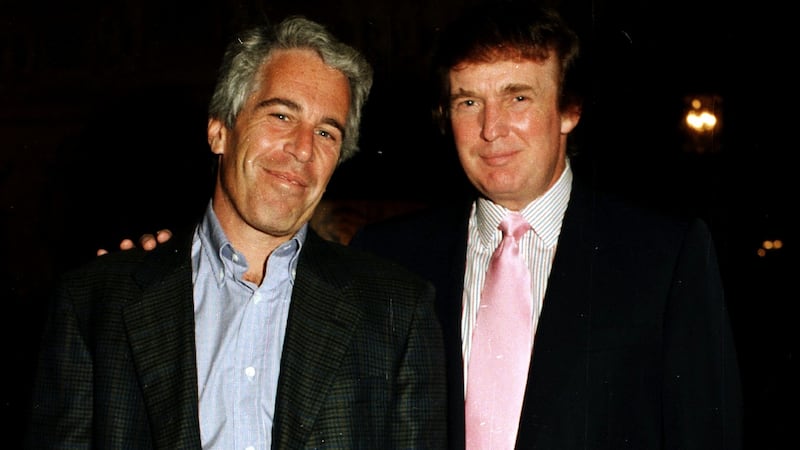
The Epstein files contain thousands of references to Donald Trump, as well as photographs of the now-US president at Epstein’s social events, confirming the two had a friendly relationship from the 1980s to the 2000s. (Trump told New York Magazine in 2002 that Epstein was a “terrific guy” who liked women “on the younger side”.)
Internal FBI communications name Trump as one of several prominent men that the agency has “salacious information” about. The US president was named by people who submitted unverified tips to the FBI, and his name appears in FBI notes and in transcripts of interviews with victims.
In a previously-released email in the cache, Epstein wrote that Trump “spent hours at my house” with a victim.
“Some of the documents contain untrue and sensationalist claims against President Trump that were submitted to the FBI right before the 2020 election,” the department of justice said of tips received by the FBI.
“The claims are unfounded and false, and if they have a shred of credibility, they certainly would have been weaponised against President Trump already.”
Trump denies wrongdoing. He says he has been “absolved” by the files and that the public should move on.
Trump said last year that his relationship with Epstein ended because the financier “stole people that worked for me”, including prominent accuser Virginia Giuffre, who worked at Mar-a-Lago as a minor. Giuffre died by suicide last year.
The files suggest Epstein kept a close eye on Trump as his political career grew. In a 2011 email, Epstein wrote that he planned to “call Trump”, but it is unclear whether contact was made.

Top businessmen from Branson to Musk contacted Epstein
“What day/night will be the wildest party on your island?” the billionaire Elon Musk asked Epstein in November, 2012. Epstein wrote to him to confirm “how many people will you be for the heli” to the island.
Epstein’s private Caribbean island, Little Saint James, was nicknamed “paedophile island” by locals who noticed teenagers being taken there.
Musk has said he never visited and the 2012 plans to visit appear to have fallen through.
In a 2013 email, Epstein’s assistant wrote that an appointment for lunch at Musk’s company Space X was “confirmed”.
Musk has written on his social media site X that he suspected emails would be used to “smear my name”, but encouraged people to focus on those who “committed serious crimes”.
Epstein wrote to business mogul Richard Branson in 2013 to thank him for his hospitality and PR advice. “Any time you’re in the area would love to see you. As long as you bring your harem!” Branson replied.
A spokesperson for the Branson-owned Virgin group has said the “harem” referred to adult women who accompanied Epstein on arrival to a business meeting. Branson “supports the right to justice” for Epstein’s victims and met him on only a few occasions, involving “group or business settings”, the spokesperson said.
One email that appears to have been drafted by Epstein alleges that Microsoft founder Bill Gates contracted a sexually transmitted disease from “Russian girls” and wanted to surreptitiously give medicine to treat his then-wife Melinda French Gates. In comments to Australian television, Gates said Epstein had apparently written this email “to himself”.
“The email is false,” Gates said. “I don’t know what his thinking was there. Was he trying to attack me in some way? Every minute I spent with him, I regret, and I apologise that I did that.” Melinda French Gates has said the reports have dredged up “painful times” in her former marriage and that she was “happy to be away from all the muck”.
Peter Mandelson and George Mitchell among politicians mentioned in files
The files have revealed a long friendship between Epstein and Peter Mandelson, the senior British Labour politician who served in the government of prime minister Gordon Brown and as British ambassador to the US until September 2025.
Bank records in the release suggest Epstein made three payments to accounts connected to Mandelson or his partner, Reinaldo Avila da Silva, totalling $75,000. Mandelson has said he has no recollection of receiving such funds and is unsure whether the documents are genuine. Mandelson described a payment of £10,000 to da Silva to fund an osteopathy course as “a lapse in our collective judgment”.
Emails appear to show Mandelson passing information to Epstein while he was in government. In 2009, he told Epstein he would lobby other members of the UK government to reduce a tax on bankers’ bonuses, and sent him an internal government report about raising funds, including by selling UK state assets.
A day before European governments announced a €500 billion deal to shore up the Euro currency, Mandelson messaged Epstein to say “sources tell me 500 b euro bailout” is almost complete.
British police have opened a criminal investigation into Mandelson for alleged misconduct in office. Mandelson has resigned from the Labour Party and the House of Lords, where he was a life peer, in response to the allegations. He has not responded to requests for comment.
Documents in the files record Epstein’s meetings or attempts to meet with top US Democrat politician George Mitchell between 2010 and 2013, after the financier had been convicted. The files also repeat an allegation that Giuffre was forced by Epstein to have sex with Mitchell, something that Mitchell has denied and said is due to mistaken identity.
“Senator Mitchell reiterates unequivocally that he never met, spoke with, or had any contact of any kind with Ms Giuffre or with any underage women,” a spokesman said. Mitchell, who had a central role in brokering the Belfast Agreement, has resigned from a charitable organisation and a sculpture of him has been removed from the front lawn of Queen’s University Belfast.
Emails show US commerce department secretary Howard Lutnick planned a visit to Epstein’s island in 2012 with his wife and children, contradicting a previous statement by Lutnick that he had decided in 2005 never to see Epstein again. A US commerce department spokesman said Lutnick has never been accused of any wrongdoing.
The files contain hundreds of messages that appear to have been exchanged between Epstein and a former top adviser to Trump, Steve Bannon, in 2018 and 2019 after Bannon had left his role in the White House.
Bannon was planning a film about Epstein and told him they needed to “push back on the lies” and “rebuild your image as philanthropist”.
The messages also discuss Bannon’s support for far-right movements in Europe, with Bannon telling Epstein he was “focused on raising money” for France’s Marine Le Pen and Italy’s Matteo Salvini shortly before the 2019 European Parliament elections. Bannon is not accused of wrongdoing and has not responded to requests for comment.

Scandal engulfs royalty
The files include a photograph of Andrew Mountbatten-Windsor, formerly Prince Andrew, crouched over a female figure who is lying on the floor. The then-prince also appeared to invite Epstein to meet at Buckingham Palace in 2010. “Come with whomever,” the prince wrote. Later that year, Epstein wrote to introduce Andrew to a female friend. “She 26, russian, clevere [sic] beautiful, trustworthy,” Epstein wrote.
The documents reveal years of contact between Epstein and Norway’s crown princess Mette-Marit, who is in line to become the country’s future queen.
Mette-Marit told Epstein she had looked up his record online in 2011. In emails sent in 2012, Mette-Marit wrote to Epstein that he was “soft hearted” and “such a sweetheart”, while Epstein consulted her about a “wife hunt” in Paris. The emails include discussions of plans to get together.
The release of the files have engulfed Norway’s royal family in controversy at a time when it is already under pressure, as Mette-Marit’s son from a previous relationship is currently on trial for rape.

Advice from Noam Chomsky, a Downing Street tour for Woody Allen
The prominent academic Noam Chomsky appears as a confidant to Epstein in the files, advising him in 2019 on how to defend himself against the “hysteria that has developed about abuse of women”. Chomsky consulted Epstein for financial advice and the two exchanged jokes and discussed meeting up. Chomsky has not responded to requests for comment.
The emails shed new light on the friendship between Epstein and Woody Allen, showing how Epstein worked to arrange tours of Downing Street and the White House for the director.
The emails suggest Epstein helped to smooth Allen’s daughter’s path into college and discussed helping young people land roles working on Allen’s films.
Allen’s wife Soon-Yi Previn sent Epstein supportive messages from 2016 to 2018, criticising a 15-year-old who was at the centre of a sexting scandal and saying the MeToo movement “has gone too far”.
Previn has not responded to requests for comment. Allen has previously said he had a neighbourly relationship with Epstein, as they lived close by in New York, and has denied any wrongdoing.
Epstein’s attempts to suppress the media
The files show how Epstein used his wealth and influence to try to launder his image after his 2008 conviction.
“how you could let your paper call me a pedophile.???!!!!” he wrote to a top media executive in 2016.
“I expect a public apology and a full retraction. . I have been a close friend of yours for years.”
Mentions of his name in the media were tracked with a Google Alert system, and Epstein directed lawyers to seek retractions and alterations to articles that displeased him, threatening legal action.
“The girls in question were not pre-pubescent,” read a legal letter to the editor of Tatler in 2011, describing the use of the word “paedophile” as a “vitriolic attack” on Epstein’s character.
One email celebrates the successful use of “bots” to remove critical articles from initial Google search results. Another proposes a plan to place favourable opinion pieces about Epstein in prominent newspapers.

Unanswered questions
One major unanswered question remains the source of Epstein’s wealth and how the college dropout who was fired from his job as a teacher ascended to such social heights.
Emails from Epstein suggest he used compromising information he had about people for leverage, and the files have renewed speculation about whether he had ties to intelligence agencies.
There are many files that have not been released, most notably abusive material of victims. Though vast, the published tranche of documents has not quelled demands for further disclosures from victims’ advocates, as well as questions about why more people have not been prosecuted.
“There’s a lot of correspondence. There’s a lot of emails. There’s a lot of photographs. There’s a lot of horrible photographs that appear to be taken by Mr Epstein or people around him,” US deputy attorney general Todd Blanche said this week.
“But that doesn’t allow us necessarily to prosecute somebody.”


