Wednesday: 10 things that happened today
- The US-Israel war on Iran entered its 12th day, with air strikes continuing across the Gulf
- US president Donald Trump said late on Wednesday that the US has “virtually destroyed Iran”
- International guarantees against further aggression and payment of reparations are needed to end the war, Iran’s president Masoud Pezeshkian said
- More than 850,000 people have been displaced as a result of the war spreading into Lebanon, with 634 killed in the country since March 2nd
- Israel’s defence minister said on Wednesday the joint offensive against Iran “will continue without any time limit”
- Iran-backed militia Hizbullah launched a joint missile strike with Iran against Israel on Wednesday, as the Israeli military said it was continuing strikes in Lebanon on Hizbullah infrastructure and a “large-scale wave of strikes” on the capital Beirut
- Iran warned of the cost of barrels of oil hitting $200, saying any vessel heading for the US, Israel or their partners, will be “a legitimate target”
- The UAE, Oman and Qatar all reported strikes on their territories on Wednesday, with the UAE confirming six deaths in its territory since the beginning of hostilities
- Healthcare systems in the Middle East are “under immense strain”, director general of the World Health Organisation Tedros Adhanom Ghebreyesus said
- A second Government-chartered flight landed back in Dublin Airport on Wednesday night with Irish citizens returning from the Gulf region
Key reads
- Iran war freezes Gaza reconstruction and exposes Hamas’s strategic dilemma
- Sally Hayden in Lebanon: Life inside Beirut’s expanding evacuation zone
- US at fault in strike on school in Iran, preliminary inquiry says
That concludes Wednesday’s live coverage of the ongoing conflict in the Middle East.
Check back tomorrow for more news updates and in-depth analysis in print and on irishtimes.com.
UAE confirms six deaths in country since start of Iranian attacks
The United Arab Emirates has confirmed six deaths in the country since the onset of the conflict in the Gulf region.
The country’s ministry of defence also confirmed “131 minor to moderate injuries” as a result of the strikes on its territory.
Oman’s civil defence is working on containing a fire in fuel tanks at the country’s Salalah port, Oman’s state news agency reported on Wednesday, after drones struck oil storage facilities at the port.
The state news agency, citing Oman’s civil defence, said that containing the fire “might take time”, without providing further details.
Earlier on Wednesday, Oman’s state TV said that drones struck fuel tanks in the port. Oman’s state news agency said, citing an energy ministry official, that there has been no disruption to the continuity of oil supplies or petroleum derivatives in the country. – Reuters

US has ‘virtually destroyed Iran’, says Trump
US president Donald Trump said on Wednesday night that “we won” the Iran war but that the United States will stay in the fight to finish the job.
“You never like to say too early you won. We won,” Trump told a campaign-style rally in Hebron, Kentucky. “In the first hour it was over.”
He said the United States had knocked out 58 Iranian naval ships.
Trump has seesawed on Iran, crediting the US military for significantly degrading Iran’s military but resisting a speedy end to the conflict.
“We don’t want to leave early do we?” Trump said. “We got to finish the job.”
He said the United States has “virtually destroyed Iran”. He seemed to signal that the United States would continue the fight for now.
“We don’t want to go back every two years,” he said. – Reuters
Condemning “heinous crimes and lethal aggression” from the US and Israel, Iran’s ambassador to the United Nations said more than 1,348 civilians have been killed and more than 17,000 injured since Washington and Tel Aviv launched their joint attack on February 28th.
More than 19,000 civilian sites – including 16,191 residential homes, 77 medical facilities, and 65 schools – have been damaged, Amir Saeid Iravani said. – The Guardian
Qatar’s ministry of defence has said it was targeted by nine Iranian missiles earlier today.
Eight of the projectiles were intercepted while one fell “in an uninhabited area”, the ministry said in a post on X.
UN security council approves resolution demanding Iran halts ‘egregious attacks’
The UN Security Council voted on Wednesday to approve a resolution demanding a halt to Iran’s “egregious attacks” on its Gulf neighbours.
“The international community is resolute in rejecting these Iranian attacks against sovereign countries that are threatening the stability of the peoples, especially in a region of strategic importance to global economy, energy, security, and security of global trade,” said Bahrain’s UN ambassador, Janal Alrowaiei.
The 13-0 vote in the UN’s most powerful body reflects Iran’s isolated position as it has aggressively responded to Israeli and US strikes. China and Russia – two Iranian allies – abstained from the vote, allowing it to be approved without using their veto to block it. – AP
The death toll in Lebanon from Israel’s attacks since March 2nd has risen to 634, according to data from the Lebanese government’s disaster risk management unit. – Reuters
Israel launches ‘large-scale wave of strikes’ on Lebanese capital
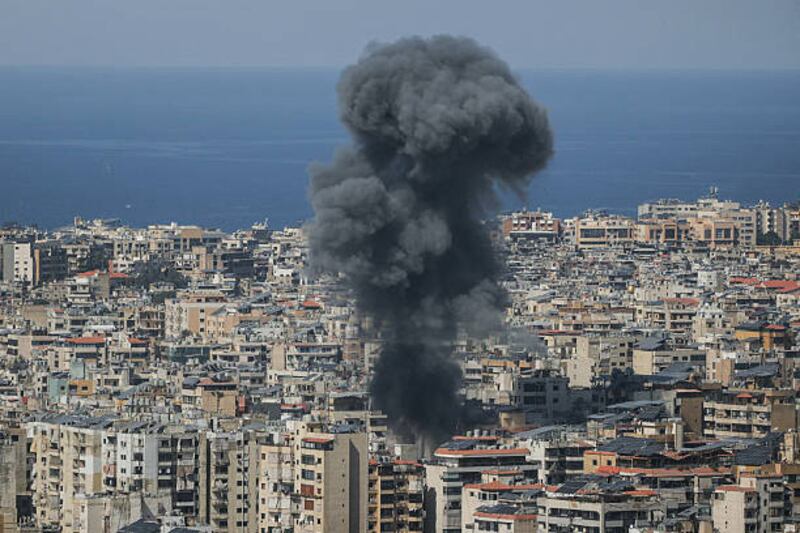
The Israeli military said on Wednesday night that it had begun a “large-scale wave of strikes” on Beirut’s suburbs after Hizbullah launched what the Israel Defense Forces said were “dozens” of rockets.
The IDF claimed the strikes targeted Hizbullah infrastructure in the Dahieh suburb of southern Beirut. – The Guardian
As a general reminder, the Department of Foreign Affairs latest travel advice around the conflict can be found on their website.
The department continues to advise citizens against any form of travel to Iran, Iraq, Israel and Lebanon.
It also advises against any non-essential travel to the UAE, Qatar, Saudi Arabia, Jordan, Bahrain and Kuwait.
Second Government-chartered flight from Gulf lands in Ireland
Minister for Foreign Affairs Helen McEntee has confirmed the second flight chartered by the Government to return citizens from the Gulf region has landed safely at Dublin Airport in the last half an hour.
“Our work to support Irish citizens in the Gulf continues,” McEntee said in a post in X which includes a phone number for the Government’s consular crisis team in the region.
Middle East health system ‘under immense strain’, says WHO boss
Healthcare systems in the Middle East are “under immense strain”, director general of the World Health Organisation (WHO) Tedros Adhanom Ghebreyesus.
Ghebreyesus said it has been reported that more 1,300 killed and 9,000 injured in Iran, at least 570 deaths and more than 1,400 injuries in Lebanon and a further 15 deaths and 2,142 injured in Israel since the conflict.
Earlier it was reported that the WHO had confirmed 18 attacks on healthcare centres in Iran. This has since grown to include 25 such facilities in Lebanon and two in Israel.
Numerous health facilities in the region have been forced to close, including “49 primary health care centres and five hospitals have shut down due to evacuation orders” in Lebanon, he said, adding, “access to medical services is severely restricted in the occupied Palestinian territories and Gaza”.
Earlier this evening, the UAE’s ministry of defence issued a statement saying it was dealing with incoming drones and missiles from Iran.
Guarantees and reparations needed to end war, says Iran’s president
Iran’s president Masoud Pezeshkian has said in a post on X he has spoken the leaders of Russia and Pakistan.
Pezeshkian said in the post the only way to end the war in recognise Iranian rights, for reparations to be paid and for firm international guarantees to be given against future aggression.
He also said he reaffirmed his country’s “commitment to peace in the region”.
Trump has previously stated the US will only accept Iran’s “unconditional surrender” to end the conflict.
More than 850,000 people displaced due to conflict in Lebanon
The UN refugee agency has said at least 759,000 people have been internally displaced in Lebanon, while more than 92,000 others have crossed into neighbouring Syria.
Elsewhere, Kuwait said its air defences downed eight Iranian drones and Saudi Arabia said it intercepted five heading toward the kingdom’s Shaybah oil field.
In Tehran and other cities, huge crowds took to the streets for funerals for senior Iranian commanders killed by US and Israeli air strikes since the beginning of the war 12 days ago. Mourners carried caskets and brandished flags and portraits of the late supreme leader, Ayatollah Ali Khamenei, who was killed in the first minute of the US-Israeli offensive, and his son and successor, Mojtaba.
Despite growing pressure for the US and Israel to consider reining back their joint offensive, decision-makers in both countries appeared to continuing the campaign for now.
Israel Katz, Israel’s defence minister, said on Wednesday the joint offensive against Iran “will continue without any time limit, as long as required, until we achieve all objectives and win the campaign”. – The Guardian
The Israel Defense Forces has said it is currently striking “additional infrastructure sites belonging to Hizbullah across Lebanon.”
Iranian women’s soccer squad member changes mind on Australia asylum
Australian police helped two more members of the Iranian women’s soccer delegation slip their minders to claim asylum, but one has changed her mind and decided to go back to Iran, the country’s interior minister said on Wednesday.
Concerns about the players’ safety upon their return home grew after Iranian state television labelled the team “wartime traitors” for refusing to sing the national anthem during a women’s Asian Cup match in Australia earlier this month.
Australian home affairs minister Tony Burke announced in parliament that 21-year-old striker Mohaddeseh Zolfi and support staffer Zahra Soltan Moshkehkar had accepted the government’s open offer of aid on Tuesday evening after five players from the team were granted asylum a day earlier.
But “one of the two who had made the decision to stay last night had spoken to some of the team-mates who had left, and had changed her mind”, Burke said, without specifying who had decided to return to Iran.
Read the full report.
Lebanon’s Hizbullah and Iran carried out a joint missile attack on northern Israel in what was the first co-ordinated attack since the start of the war, a senior Israeli defence official said on Wednesday. – Reuters
Middle East conflict straining global humanitarians operations, says UN chief
The United Nations aid chief warned on Wednesday that the conflict in the Middle East is straining humanitarian operations worldwide, disrupting supply chains and slowing the delivery of life-saving assistance to numerous crisis zones.
“We are in a moment of grave peril for the Middle East and, actually I believe, for the wider world,” Tom Fletcher, the UN aid chief said.
The US-Israeli war with Iran, which has expanded to Lebanon and dragged in Gulf countries, has convulsed global markets and disrupted supply chains, with airspace closures and the halt of shipping through the critical Strait of Hormuz.
Fletcher said aid supplies to Gaza and sub-Saharan Africa are being affected by the conflict, as humanitarian relief that needs to travel through the Strait of Hormuz or through airspace in the Gulf has been largely blocked or constrained.
Conflict-ridden Somalia, which is facing a major drought, and Sudan are among a number of countries facing dire humanitarian crises.
“These [constraints] will damage our humanitarian supply chains, reduce the humanitarian supplies we can get to people who need them, but they’ll also drive up energy costs and food costs across the region,” Fletcher said.
“This really is a perfect storm of factors right now, and I’m seriously worried,” he stated.
There is particular concern for aid supplies to sub-Saharan Africa, Fletcher said, which are being impacted by restricted movement through the Strait of Hormuz, with alternative routes slapped with rising freight costs.
Higher oil prices are making the UN’s aid deliveries by air more expensive, at a time when UN agencies and NGOs budgets are already facing major donor cuts, Fletcher said.
“We’ve just about put some money together to keep more of our UN humanitarian flights in the air, but they’ve suddenly, almost overnight, become much more expensive,” Fletcher said. – Reuters
‘We’re not finished yet’ in Iran, says Trump
US president Donald Trump earlier spoke to reporters briefly outside the White House. Asked what it will take for the war in Iran to end, he said: “More of the same. And we’ll see how that all comes out.
“They’ve lost their navy. They’ve lost their air force. They have no anti-aircraft apparatus at all. They have no radar. Their leaders are gone. And we could do a lot worse.”
He boasted that the US has hit Iran “harder than virtually any country in history has been hit”, before adding, “we’re not finished yet”. – The Guardian

Iran threatens retaliatory strikes if ports are attacked
Iran’s armed forces threatened on Wednesday to target regional ports if its own ports were attacked during the war, a spokesman said.
“If our ports and docks are threatened, all ports and docks in the region will be our legitimate targets,” Abolfazl Shekarchi said, according to state TV.
He warned that the armed forces “will carry out a heavier operation than what we have done so far” if Iranian ports were to come under attack.
“We call on the countries of the region to expel the Americans from their lands,” he added. – The Guardian
Trump on Wednesday said “I think they should” when asked if oil companies should be using the Strait of Hormuz, the narrow waterway crucial for shipping oil and liquefied natural gas.
Trump also told reporters at the White House that he was not worried about Iran-backed attacks on US soil. – Reuters
For more on the reported US strike on the Iranian school, listen back to today’s In The News podcast with Bernice Harrison.

A deadly strike on a girls primary school in Iran - who is to blame?
US responsible for missile strike on Iranian school that killed 175
An ongoing military investigation has determined that the United States is responsible for a deadly Tomahawk missile strike on an Iranian primary school, according to US officials and others familiar with the preliminary findings.
The February 28th strike on the Shajarah Tayyebeh school building was the result of a targeting mistake by the US military, which was conducting strikes on an adjacent Iranian base of which the school building was formerly a part, the preliminary investigation found.
Officers at US central command created the target co-ordinates for the strike using outdated data provided by the Defense Intelligence Agency, people briefed on the investigation said.
Officials emphasised that the findings are preliminary and that there are important unanswered questions about why the outdated information had not been double checked.
Striking a school full of children is sure to be recorded as one of the most devastating single military errors in recent decades. Iranian officials have said the death toll was at least 175 people, most of them children.
While the overall finding was largely expected – the United States is the only country involved in the conflict that uses Tomahawk missiles – it has already cast a shadow on the US military operation in Iran. – The New York Times
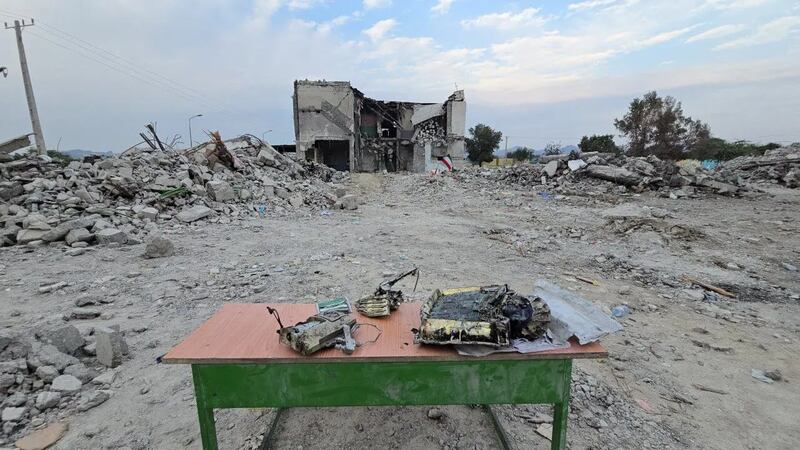
WHO confirms 18 attacks on health centres in Iran
The World Health Organisation said on Wednesday that it has verified 18 attacks on healthcare centres in Iran since the start of the war on February 28th, which has resulted in eight deaths among health workers.
“These attacks not only cost lives but deprive communities of care when they need it most. Health workers, patients and health facilities must always be protected under international humanitarian law,” the WHO said in a statement.
During the same period, 25 attacks on healthcare centres in Lebanon have resulted in 16 deaths and 29 injuries, the agency said.
The conflict has triggered a large-scale population movement, the WHO added.
It estimates more than 100,000 people in Iran have relocated, and up to 700,000 people in Lebanon have been internally displaced, many sheltering in crowded buildings with scarce access to clean water, sanitation and hygiene. – Reuters
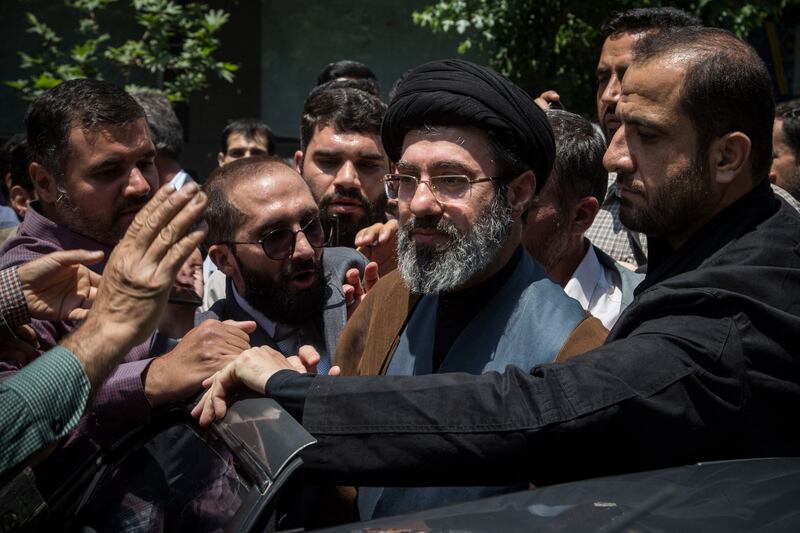
New Iranian supreme leader injured in attack that killed his father
Iran’s new supreme leader Ayatollah Mojtaba Khamenei was injured in the February 28th attack that killed six of his family members, including his father Ali Khamenei, Tehran’s ambassador to Cyprus has confirmed.
In an interview conducted at his embassy compound in Nicosia, Alireza Salarian elaborated on the circumstances in which Khamenei (56) was injured, saying he was lucky to survive the strike, which levelled the late ayatollah’s residence.
“He was also there and he was injured in that bombardment but I haven’t seen that reflected in the foreign news,” he said. “I have heard that he was injured in his legs and hand and arm ... I think he is in the hospital because he is injured.”
Explaining why the cleric had not appeared in public or made any statements since he succeeded his father as the country’s supreme leader on Sunday, he added: “I don’t think he is comfortable [in any condition] to give a speech.”
The attack occurred on the 10th day of the holy month of Ramadan, said the ambassador, and Ayatollah Ali Khamenei was at his residence with several members of his family, including Mojtaba’s wife, Zahra, and his teenage son, Mohammad Bagher, who were also killed in the attack.
Iranian media reports suggested that Ali Khamenei’s wife, Mansour, died three days after the aerial strike. – The Guardian
Iran has deployed about a dozen mines in the Strait of Hormuz, two sources familiar with the matter said, in a move likely to complicate the reopening of the narrow waterway, an important route for shipping oil and liquefied natural gas.
Exports of oil and liquefied natural gas (LNG) through the strategic chokepoint along Iran’s coast have effectively been halted by the war launched 12 days ago by the United States and Israel, helping to drive a surge in world energy prices.
Iran’s military command on Wednesday said the world should be prepared for oil to hit $200 a barrel.
One source said the locations of most of the mines are known but declined to say how the US planned to deal with them.
CNN first reported the mining of the strait on Tuesday.
Iran has long threatened to retaliate against any military attack by mining the strait. About a fifth of global oil and LNG normally passes through the strait, and Tehran’s ability to stop shipping through the channel gives it enormous leverage over the US and its allies.
Trump on Tuesday demanded that Iran immediately remove any mines deployed in the strait and he said that it would face unspecified military consequences if it failed to do so.
The US military has said it eliminated 16 Iranian mine-laying vessels on Tuesday. The US navy has so far declined to provide protective escorts to commercial ships through the strait. – Reuters
Afternoon recap: What’s happened so far today?
- The US and Israel have continued air strikes on Iran as the Tehran government warned its state security forces were ready with “fingers on the trigger” to confront any antigovernment protests.
- Iran has warned of oil prices soaring to as much as $200 a barrel because of the destabilisation of the Gulf region’s security.
- The International Energy Agency announced it will release 400 million barrels of oil from its emergency reserves in an attempt to reduce pressure on energy markets.
- The EU is to provide €100 million in humanitarian aid to Lebanon.
- The US military said it struck 16 Iranian mine-laying vessels near the Strait of Hormuz.
- A Government charter flight from Abu Dhabi, assisting Irish citizens in the region, left the UAE earlier today and will arrive in Dublin this afternoon.
- Iran’s sports minister has said there are “no circumstances” under which the country can now participate in this summer’s Fifa World Cup in North America.

European Commission president Ursula von der Leyen has that the EU will provide €100 million in humanitarian aid to Lebanon.
Her announcement comes after she had a call with Lebanese president Joseph Aoun.
The EU has already provided 40 tons of supplies to Lebanon and plans more humanitarian flights, she said.
She expressed the EU’s solidarity with the Middle East country and its people and welcomed the decision to ban all Hizbullah military activities.
“We must ensure a sovereign and stable Lebanon for its people,” she said in a post on X.
War will end ‘soon’, Trump says in interview
In a five-minute interview with Axios on Wednesday, US president Donald Trump said that the war with Iran will end “soon” because there is “practically nothing left to target”.
“Any time I want it to end, it will end,” Trump said.
Trump later said that the war “is going great”.
“The war is going great,” Trump said. “We are way ahead of the timetable. We have done more damage than we thought possible, even in the original six-week period.” – The Guardian
Tánaiste Simon Harris has welcomed the decision by the International Energy Agency (IEA) to release 400 million barrels of oil from its emergency reserves.
The 32 Member countries of the International Energy Agency have unanimously agreed to make the oil from their emergency reserves available to the market to address disruptions in oil markets stemming from the war in the Middle East.
The decision to take emergency collective action was made following an extraordinary meeting of IEA Member governments yesterday to assess market conditions amid the conflict in the Middle East and consider the options to address supply disruptions.
Speaking in Paris, the Tánaiste said: “I welcome this decision as it will help restore confidence; this action is intended to increase supply and underpin the market in the weeks ahead. It will also help provide confidence and reduce market volatility. Ireland will play its part in this policy response also.
“This policy response does not take away the need to monitor price closely in parts of the retail market, and Minister Burke has tasked the Competition and Consumer Protection Commission (CCPC) with looking at this.
“My officials are closely monitoring the situation and we will update our economic and fiscal projections in the coming weeks in our annual spring economic assessment (annual progress report).
“I will also discuss the situation further today in my meeting with my French counterpart, conscious that France currently holds the important G7 presidency.”
Four hundred million barrels of oil from emergency reserves released
The 32 Member countries of the International Energy Agency have unanimously agreed to make 400 million barrels of oil from their emergency reserves available to the market to address disruptions in oil markets stemming from the war in the Middle East.
The decision to take emergency collective action was made following an extraordinary meeting of IEA Member governments yesterday to assess market conditions amid the conflict in the Middle East and consider the options to address supply disruptions.
“The oil market challenges we are facing are unprecedented in scale, therefore I am very glad that IEA Member countries have responded with an emergency collective action of unprecedented size,” said IEA Executive director Fatih Birol.
“Oil markets are global so the response to major disruptions needs to be global too. Energy security is the founding mandate of the IEA, and I am pleased that IEA Members are showing strong solidarity in taking decisive action together.”
IEA members hold emergency stockpiles of over 1.2 billion barrels, with a further 600 million barrels of industry stocks held under government obligation. The co-ordinated stock release is the sixth in the history of the IEA, which was created in 1974. Previous collective actions were taken in 1991, 2005, 2011, and twice in 2022.
The conflict in the Middle East has impeded oil flows through the Strait of Hormuz, with export volumes of crude and refined products currently at less than 10 per cent of pre-conflict levels. This is forcing operators across the region to shut in or curtail a substantial amount of production.

New video evidence points to US strike on Iranian school
A newly emerged video appears to show a US air strike targeting a building at the Islamic Revolutionary Guard Corps (IRGC) naval base adjacent to the elementary school in Minab where Iranian state media says more than 160 pupils were killed on February 28th, CNN has reported.
The video, posted by the semi-official Iranian news agency Mehr News, is the first to show missiles striking the area and adds to a body of evidence that appears to contradict recent claims by Donald Trump casting blame on Iran, the report says.
In the footage, filmed from a nearby construction site, a munition consistent with an American BGM or UGM-109 Tomahawk Land Attack Missile (TLAM) is seen before it strikes a location inside the IRGC base.
The US navy operates Tomahawks, launching them from its surface ships and submarines. Israel does not operate the Tomahawk missile, according to experts. As the camera pans to the right, a huge plume of smoke is seen from the direction of the Shajareh Tayyiba elementary school in Minab. Dozens of people can be seen in the foreground running away from the strikes.
The Trump administration has not confirmed it was involved in the strike despite worldwide criticism including from Italy’s prime minister Giorgia Meloni who demanded accountability for the massacre.
Ex-Irish Times photographer recounts experience at Dubai International Airport
Former Irish Times photographer Eric Luke has recounted how he got caught up in an evacuation order at Dubai International Airport.
Luke was returning from a six week holidays where he was visiting his daughter in Australia.
He was due back on Sunday, March 1st, but his flight to Dubai was delayed until this week.
He spent eight and a half hours waiting in Dubai airport.
All the passengers were asked to evacuate the fifth floor of the airport, the biggest airport hub in the world, to a lower floor.
“They wanted to get everybody away from falling glass because the airport was hit before. They rushed everybody down,” he said.
Luke said he was impressed with how calm the staff at the airport were.
He arrived back into Dublin last night on an Emirates flight which took an hour and a half longer than scheduled because the pilots had to divert the aircraft away from the war zone.
He said he was one of the lucky ones as he had a pre-booked ticket home. Emirates was demanding up to €9,000 for a one-way ticket out of Dubai to Dublin which would have flown via Sydney, Los Angeles and Heathrow airport.
European countries warned not to return to Russian energy
Europe would be making a strategic blunder if it sought to blunt soaring energy prices with a return to Russian fossil fuels, European Commission president Ursula von der Leyen said on Wednesday.
“In the current crisis, some argue that we should abandon our long-term strategy and even go back to Russian fossil fuels. This would be a strategic blunder,” von der Leyen said in a speech in European Parliament as countries sought alternatives to energy from the Middle East as a result of the Iran war.
Von der Leyen said the EU was preparing options to lower energy prices, including the better use of power purchasing agreements, state aid measures and gas price subsidies or caps.
Iran may withdraw from the World Cup
Iran should withdraw from this summer’s World Cup, the country’s sports ministers has said.
Ahmad Donyamali said there were “no circumstances” in which Iran could participate in the tournament following the assassination of the country’s former supreme leader Ali Khamenei by the US-Israel coalition.
Iran are due to face New Zealand and Belgium in Los Angeles on June 15th and 21st and Egypt in Seattle on June 26th. The country has not officially pulled out yet.
Should Iran withdraw, Fifa would have two options. It could allow a three game group to go ahead.
Alternatively, Iran could be replaced by another Asian country. The most likely team is Iraq which qualified for a play-off against Bolivia or Suriname next month. Iraq might qualify even if they lose that play-off. If Iraq automatically qualify, the next most likely team to replace Iran is the United Arab Emirates (UAE).
Staff blamed for rogue X post which sent oil prices plummeting
Staff at the US department of energy were responsible for a post on energy secretary Chris Wright’s official X account on Tuesday that had incorrectly stated the US navy escorted an oil tanker through the Strait of Hormuz, according to a department spokesperson.
US energy secretary Chris Wright said on X that “The US navy successfully escorted an oil tanker through the Strait of Hormuz to ensure oil remains flowing to global markets.”
The announcement caused oil prices to plummet temporarily by nearly 20 per cent.
The post, which was quickly deleted, had raised hopes in the global oil industry of resumed oil and gas shipments through the crucial waterway, which has been effectively closed since Israeli and US strikes on Iran.
“A video clip was deleted from Secretary Wright’s official X account after it was determined to be incorrectly captioned by department of energy staff,” a department spokesperson told Reuters in an emailed statement.
“President Trump, Secretary Wright, and the rest of the president’s energy team are closely monitoring the situation, speaking with industry leaders, and having the US military draw up additional options to keep the Strait of Hormuz open, including the potential for our navy to escort tankers,” the spokesperson said.
The White House had clarified on Tuesday that the navy had not yet escorted any vessels through the strait. – Reuters
Iran warns of $200 a barrel oil
Iran will switch from “reciprocal hits” after attacks to continuous strikes on adversaries, and the US will not be able to control oil prices, the spokesperson for the Iranian military said on Wednesday.
“We won’t allow even one litre of oil to reach the US, Zionists and their partners. Any vessel or tanker bound to them will be a legitimate target,” Ebrahim Zolfaqari said.
“Get ready for the oil barrel to be at $200 because the oil price depends on the regional security which you have destabilised”. – Reuters
Meloni turns on Trump administration over Iran
One of US president Donald Trump’s staunchest allies, Italian prime minister Giorgia Meloni has criticised the US-Israeli war on Iran.
She said the war was “outside the scope of international law” and she called for accountability regarding the missile strike on a school in southern Iran which killed at least 170 children on the first day of the war.
Multiple sources have concluded that the schoolgirls died as a result of a US Tomahawk missile strike. The Trump administration has not admitted responsibility.
She said: “I express firm condemnation of the massacre of little girls that occurred at the Minab school in southern Iran, solidarity with the families of the young victims, and request that the responsibilities for this tragedy be quickly established.”
Her remarks to parliament came after repeated accusations from the opposition that her right-wing government had been too soft toward the United States.
Meloni – who has close ties with Trump – also said Iran must not be allowed to develop nuclear weapons, as that would end the international non-proliferation framework with “dramatic repercussions for global security”, leaving Italy and Europe exposed to a potential nuclear threat from Tehran.
Addressing parliament on the crisis, Meloni drew parallels between the Middle East conflict and Russia’s 2022 invasion of Ukraine, which she said triggered a broader global destabilisation.
“It is in this context of structural crisis in the international system, in which threats are becoming increasingly frightening and unilateral interventions outside the scope of international law are multiplying, that we must also place the American and Israeli intervention against the Iranian regime,” she told the Senate.
Taoiseach to announce Irish investment in the US
The Wall Street Journal is reporting that Taoiseach Micheál Martin will announce $6.1 billion (€5.26 billion) in Irish investment in the United States when he visits the White House next week.
The investments include $5 billion (€4.3 billion) over five years from sustainable paper-based packaging company Smurfit Westrock, $1 billion (€860 million) from Kingspan, an insulation and building solutions company and $100 million (€86 million) from nutrition company Glanbia.
“We are now at record levels of investment” in the US, Enterprise Ireland Jenny Melia, chief executive officer of Enterprise Ireland, the country’s trade and innovation agency.
Irish companies are also planning to announce next week that they are ramping up investments to support Amazon and other US data centre operators.
“World leaders used to come to the White House and walk away with billions in taxpayer-funded freebies,” White House spokesman Kush Desai is quoted as saying in the Wall Street Journal.
“Now they’re bringing trade and investment deals – because they know President Trump means business, and that America under his leadership is the hottest country in the world.”
Martin is likely to have a tricky time navigating the Iran war when he visits on St Patrick’s Day next Tuesday.
Spain’s official government gazette is reporting it has withdrawn the Spanish ambassador to Israel, Ana María Salomón Perez.
Spain has been among the most outspoken critics of Israeli foreign policy and joined with Ireland and Norway in recognising a Palestinian state.
The Government charter flight from Abu Dhabi, assisting Irish citizens in the Gulf region, has departed and will arrive in Dublin this afternoon.
There will be 217 on board, including 27 citizens of other EU member states accommodated under the EU civil protection mechanism – which has also benefited Irish citizens coming home from other parts of the Gulf, writes political correspondent Jack Horgan-Jones.
A Thai-flagged cargo vessel was struck near the Strait of Hormuz on Wednesday shortly after departing from the United Arab Emirates, the Royal Thai navy said, as regional tensions continue to disrupt one of the world’s most critical shipping lanes.
The ship, Mayuree Naree, a 30,000 deadweight-ton bulk carrier owned by Precious Shipping PCL, was attacked while transiting the strategic waterway.
Pictures shared by the Thai navy showed the ship billowing thick smoke from the rear section.
Oman’s navy has rescued 20 crew members – who abandoned ship and evacuated in a lifeboat – and brought them ashore in Khasab, said navy spokesman Paraj Ratanajaipan, adding that efforts under way to recover the remaining three. The attack remains under investigation.
Earlier on Wednesday, the UK navy said three ships were struck by suspected projectiles in the Strait of Hormuz and the Gulf, though it did not identify the ships.
The incident comes amid heightened instability in the region. Traffic through the Strait of Hormuz – a vital chokepoint for global energy exports – has slowed sharply since US and Israeli air strikes on Iran triggered retaliatory actions targeting shipping and regional infrastructure. – Bloomberg
Message from the Editor

Is the Strait of Hormuz another Gallipoli?
While many make the analogy with the ill-fated Iraq War in 2003, others have reached farther back for historical comparisons to the current conflict.
In 1915 a combined Allied force of British and French, including thousands of Irishmen, tried to seize Gallipoli from the Turks. Gallipoli, like the Strait of Hormuz, was a crucial chokepoint in world commerce overlooking the Dardanelles that controlled access to the Black Sea.
That ended in a debacle with thousands of Allied deaths and the resignation of the then first lord of the admiralty, Winston Churchill.
This article in the Economist is a reminder that the Strait of Hormuz is similar to Gallipoli. The advantage of terrain lies with the Iranians as it did with the Turks 111 years ago.
“Experts point to the cautionary tale of Britain’s failed campaign in the first World War to force open the Dardenelles, part of the passage between the Black Sea and the Mediterranean.
“Ottoman forces had laid down complex defences consisting of mines, fortresses and mobile artillery. The allies lost several ships trying to fight their way through from the sea. The Gallipoli landings to seize the passage by land turned into an even bloodier debacle.
“Iran, though pummelled from the air, also enjoys layered defences and forbidding terrain in the Strait of Hormuz, notes Jonathan Schroden of the Centre for Naval Analyses, another American think tank.”

Iran warns it will target US-Israeli banks in the Middle East
Iran will target economic and banking interests linked to the US and Israel in the region, after an attack on an Iranian bank, a spokesperson for Tehran’s Khatam al-Anbiya military command headquarters said on Wednesday.
An administrative building linked to Bank Sepah, one of the country’s largest public banks and with historical links to the military, was hit overnight in Tehran, according to the semi-official Mehr news agency.
“Following their failed campaign, the terrorist US army and cruel Zionist regime have targeted one of the country’s banks,” state media quoted Ebrahim Zolfaqari as saying.
“With this illegitimate and uncommon action, the enemy is forcing our hand to target economic centres and banks linked to the US and Zionist regime in the region.”
The spokesperson warned people of the region to stay 1,000m away from banks. – Reuters
Oil reserves may be released to calm markets
The International Energy Agency reportedly plans to release as much as 400 million barrels of oil from its strategic reserves, as it seeks to reduce pressure on energy prices as a result of the Iran war.
The IEA is proposing to release between 300 and 400 million barrels, Bloomberg News reported citing unnamed sources. While the size of the release has not been finalised, it would be the largest such release in the agency’s history. A formal announcement could come as soon as later today.
Brent Crude, the European benchmark, climbed 4.7 per cent to $91.93 at 9.38am on Wednesday.
Trump administration taken aback by Iranian response
This New York Times analysis lays out how the Trump administration miscalculated the Iranian response to the joint attacks on the country by the US and Israel. You can read it here.
Four injured near Dubai International Airport
Dubai International Airport briefly halted operations on Wednesday after drones smashed down at the facility, resulting in four injuries at the world’s busiest international hub.
Dubai’s media office said two drones fell in the vicinity of the airport, resulting in minor injuries to two Ghanaian nationals and one Bangladeshi national, and moderate injuries to one Indian national, according to a social media post. Air traffic is operating as normal, it added.
Emirates aircraft coming into Dubai on Wednesday morning were in a holding pattern as they awaited permission to land, according to data from Flightradar24. Take-offs were also briefly paused, the service showed.
The world’s largest international carrier, Emirates is operating a reduced flight schedule to about 100 destinations in more than 50 countries. That’s significantly lower than the number of destinations the airline typically serves, and the frequency of flights remains restricted.
Emirates has said it will be able to resume full operations in coming days. At the same time, aircraft have been forced into longer approaches as the military intercepts missiles and drones. on at least four different occasions over the past week, airliners have had to circle near Dubai as missile alerts rang around the city.
Will Trump chicken out?
After barely a week, public support for Trump’s Iran war is at the same level it was for the Vietnam War in late 1967 following more than 11,000 American deaths. There is no US tolerance today for even a few dozen casualties. Taco – “Trump always chickens out” – is thus a question of when, Edward Luce writes.
Three vessels hit by missiles in the Middle East
The UK’s navy said three vessels were hit with suspected projectiles in the Strait of Hormuz and the Gulf on Wednesday, as the conflict in the region continues to menace shipping.
The targets, none of which were identified, include a cargo ship in the Strait of Hormuz off Oman, container vessel west of Ras Al-Khaimah and a bulk carrier northwest of Dubai, the UK Maritime Trade Operations Centre said. The cargo ship reported a fire on board and the crew are evacuating, it added.
Traffic through the Strait of Hormuz, a key chokepoint for energy exports, has virtually ground to a halt since the US and Israel launched air strikes on the Islamic Republic last month, prompting Iran to retaliate with attacks on shipping and elsewhere in the region.
The near-standstill has forced some of the biggest Gulf producers to lower oil output as storage tanks start to fill. – Bloomberg
Spanish PM shrugs off Trump trade warning
Spanish prime minister Pedro Sánchez dismissed concerns over US president Donald Trump’s threats to cut trade off trade ties with Spain.
In an interview with Spanish website eldiario.es, the Spanish premier said he was not worried about possible reprisals by the US.
Sánchez’s comments come as Spain has come under attack from Trump over its refusal to let US armed forces use military bases for strikes against Iran. The US president said he had asked the Treasury secretary to cut off all dealings with Spain.
Trump didn’t explain how he planned to cut off trade with Spain, which could prove difficult since the US has a trading relationship with the broader European Union.
Later, he suggested he had the power to impose a full embargo on goods from the country, though didn’t indicate explicitly that he planned to do so.
In the El Diario interview, Sánchez added that being a member of the EU offers assurances against Trump’s threats. Being an ally to the US “doesn’t mean saying yes to everything”, he said. – Bloomberg
Two drones came down in the vicinity of Dubai airport on Wednesday, injuring four people, Dubai’s media office said. Air traffic is operating as normal.
Where is the new supreme leader of Iran?
Mojtaba Khamenei, who succeeded his father as Iran’s supreme leader, has not been seen from or heard since he assumed the position three days ago.
According to the New York Times, it is likely he was badly wounded in the initial US-Israel attacks on February 28th.
Get rid of the ‘idiot king’ Donald Trump
Only the midterms can save the United States from the “idiot king” Donald Trump, Michael McDowell writes in his weekly column.
The US and Israel traded air strikes with Iran across the Middle East on Wednesday as the besieged Tehran government warned its state security forces were ready with “fingers on the trigger” to confront any antigovernment protests.
Following an exchange of some of the heaviest bombardments in the region yet on Tuesday, the combatants renewed their attacks on opposing targets in Israel, Lebanon and the Gulf as the war stretched into its 12th day.
The conflict has effectively blocked vital shipping lanes through the Strait of Hormuz, halting the flow of a fifth of the world’s fossil energy supplies from the petroleum-rich Gulf. After a major surge in crude oil prices on Monday, global energy prices have tumbled and stock markets rebounded as investors bet that US president Donald Trump would seek to end the war soon.
Adding to market optimism, the International Energy Agency has proposed the largest release of oil reserves in its history to further stabilise crude prices, the Wall Street Journal reported on Tuesday, citing officials familiar with the matter.
Nevertheless, Iran’s Islamic Revolutionary Guard Corps vowed to block oil shipments from the Gulf unless US and Israeli attacks ceased. And air strikes between the two sides showed no immediate sign of abatement.
A cargo vessel was hit by an unknown projectile in the Strait of Hormuz, resulting in a fire on-board and prompting the crew to evacuate and request assistance, according to the UK Maritime Trade Operations.
The maritime body also said it had received a report of a separate incident off the UAE coast, with the master of a container vessel reporting it sustained damage from a suspected but unknown projectile.
The White House on Tuesday reiterated Trump’s threat to hit Iran hard over moves by Tehran to stop the flow of energy supplies through the Strait of Hormuz. The US central command said 16 Iranian mine-laying vessels had been “eliminated” near the strait on Tuesday.
Millions of Israelis were repeatedly driven into bomb shelters overnight as the military warned Iran had launched missiles toward Israel, a sign that Tehran retains the capacity to strike Israel after nearly two weeks of hostilities.
The sound of explosions from air defences intercepting the rockets punctuated the predawn darkness as air raid sirens blared and Israelis scrambled to safe rooms and shelters. There was no immediate word of whether any of the missiles reached the ground.
Iran’s armed forces spokesman Abolfazl Shekarchi on Wednesday urged regional countries and fellow Muslims to indicate “US-Zionist hiding places” to maximise the precision and impact of Iranian strikes, while minimising harm to civilians, who he said are “used as human shields”, according to Defapress, a news outlet affiliated with the military.
Shekarchi also said that Iran will respond to recent US-Israeli strikes in residential areas.
The latest attacks from Iran roughly coincided with a new Israeli barrage on Beirut aimed at rooting out the Iran-backed group Hizbullah, which has fired into Israel from Lebanon in solidarity with the Tehran government.
Large-scale rallies have been held in Iran in support of its newly named supreme leader, Mojtaba Khamenei, a hardliner chosen to succeed his father, who was killed on the war’s first day. A funeral procession for high-level Iranian military commanders killed early in the war will be held in Tehran on Wednesday from 10am.
Many Iranians want change and some openly celebrated the death of the elder Khamenei, weeks after his security forces killed thousands of people to put down antigovernment protests.
But there has been little sign of protest during the war, and Iran moved to clamp down further on internal dissent days after Trump exhorted Iranian citizens to seize an opportunity afforded by US and Israeli attacks to rise up and overthrow their government.
Fearing a revival of antigovernment demonstrations, Iran’s police chief Ahmadreza Radan warned that “anyone taking into streets at the enemy’s request will be confronted as an enemy not protester”.
“All our security forces have their fingers on the trigger,” Radan told state television.
Iran also arrested dozens of people, including a foreign national, accused of spying for the country’s “enemies,” the intelligence ministry said on Tuesday.
More than 1,300 Iranian civilians have been killed since the US and Israeli air strikes began on February 28th, according to Iran’s UN ambassador, Amir Saeid Iravani. He said nearly 8,000 homes have been destroyed, along with 1,600 “commercial and service centres” and dozens of medical, educational and energy-supply facilities.
Scores have also been killed in Israeli attacks on Lebanon, while Iranian strikes on Israel have killed at least 11 people. In addition to seven US soldiers killed in the conflict, the Pentagon on Tuesday estimated about 140 American troops have been wounded. – Reuters

US strikes 16 Iranian mine-laying vessels
Overnight, the US military said it struck 16 Iranian mine-laying vessels near the Strait of Hormuz, one of the world’s most important passageways for oil.
Tanker traffic through the strait is largely paused because of concerns they could be hit by drones or missiles, resulting in soaring oil prices across the world.
It is not clear if Iran has deployed any naval mines since the US-Israeli strikes began on February 28th, but Iran’s ability to potentially block the strait of Hormuz with mines has long been a concern for the United States.
US president Donald Trump has said the destruction of Iran’s navy is among the core objectives of the US military campaign.
The US believes Iran was preparing to mine the strait but had not begun the operation, according to a US official.
The preparations prompted the White House to order the strikes on Iran’s mine-laying capabilities. Along with ships, US forces were also targeting mine-storage facilities, Dan Caine, chair of the joint chiefs of staff, said on Tuesday. – New York Times
There have been US strikes on 16 Iranian mine-laying vessels near the Strait of Hormuz overnight, while Iran has said it launched missile attacks on the US bases of Al Udeid in Qatar, Camp Arifjan in Kuwait and Harir in Iraq.
The UN Security Council is due to vote later today on competing draft resolutions over the war in Iran and its impact across the region.
We will bring you the latest as it happens here.


