

Main points
- Oil prices remained over the psychologically important $100 a barrel level on Monday after US president Donald Trump said Iran’s response to a US peace proposal was ‘unacceptable’
- Oil prices, which had eased last week on hopes a permanent peace deal was close, rose after Trump’s comments
- Ten weeks after US and Israel attacked Iran, oil prices are around 50 per cent higher, largely due the conflict paralyzing shipping in the Strait of Hormuz
- Britain has sanctioned 12 individuals linked to Iran, accusing them of involvement in hostile activity including plotting attacks
- EU foreign ministers agreed on Monday to issue new sanctions targeting some Israeli settlers in the occupied West Bank
- Trump is expected in Beijing on Wednesday and is set to ask China to use its influence to push Iran to make a deal
Key Reads
- Iran’s response to end war with US ‘totally unacceptable’, says Trump
- David McWilliams: Iran war is an hostage situation - with UAE the hostage
- John FitzGerald: How high can oil prices go?
- When a ‘pause’ becomes an ending: Trump tries to end Iran war
Two Israeli soldiers sentenced to military prison for desecrating Christian statue in Lebanon
Two soldiers photographed desecrating a Christian statue in southern Lebanon were sentenced to military prison, the Israel Defense Forces (IDF) said.
The soldier who was photographed sticking a cigarette in the mouth of a statue of Mary, was sentenced to 21 days of military prison, the Associated Press reports.
The soldier who photographed the incident was sentenced to 14 days, according to the IDF.
“The IDF views the incident with great severity and respects freedom of religion and worship, as well as holy sites and religious symbols of all religions and communities,” the IDF said in a statement.
The sentencing comes after soldiers who participated in hacking down a crucifix in southern Lebanon also received time in military prison, according to the Associated Press.
Trump says he hopes to get ‘a lot’ out of China summit
Ahead of travelling to China tomorrow, Trump said that he hopes to get “a lot” out of his meeting with Xi Jinping.
The president noted that he had a “great relationship” with Xi, and said there had been no ships from Iran to China, despite the country’s reliance on Iranian oil. - Guardian
Iran ceasefire is ‘on life support’, says Trump

Trump noted that the ongoing ceasefire with Iran was “on life support”, while answering questions from reporters in the Oval Office.
“It’s unbelievably weak,” he said “after reading that piece of garbage” – referring to Tehran’s latest peace proposal.
“I would say the ceasefire is on massive life support, where the doctor walks in and says, ‘sir, your loved one has approximately a one per cent chance of living’,” Trump added.
Trump also said Tehran’s latest peace proposal did not include a guarantee to not have a nuclear weapon.
“They just can’t get there. So they agree with us and then they take it back,” he said. - Guardian
Zelenskiy grateful to UAE that agreements are being implemented
President Volodymyr Zelenskiy discussed with the United Arab Emirates president Sheikh Mohammed bin Zayed Al Nahyan UAE’s assistance in bringing Ukrainians back from Russian captivity and the war in Iran.
Since the start of the wake of the Iran war, Ukraine has offered its battle-tested expertise in countering drones to the UAE and a handful of other Middle Eastern countries. Kyiv and the UAE struck a 10-year defence cooperation deal.
“I was glad to hear that Ukrainian expertise is truly helping to build reliable protection for lives. We discussed continuing this work,” Zelenskiy said on X.
“I am grateful to the UAE that our agreements are being implemented on the basis of reciprocity and that Ukraine is also receiving the support it needs, including in the energy sector,” Zelenskiy added. - Reuters
UK issues 12 new sanctions
The UK has issued 12 new sanctions targeting Iranians accused of planning attacks in Britain on behalf of Iran.
In an update to the official sanctions list on Monday, the foreign office imposed travel bans and asset freezes on nine people for carrying out “hostile activity” in the UK and elsewhere.
Foreign secretary Yvette Cooper said Monday’s announcement “directly targets organisations and individuals who threaten security on UK streets and stability in the Middle East”.
She added: “Criminal proxies backed by parts of the Iranian regime who threaten security int he UK and Europe will not be tolerated, nor will illicit finance networks.”
Another three sanctions were issued on entities including the Zindashti Network, sanctioned last year by the EU and said to be connected to Iran’s Ministry of Intelligence and Security.
According to the EU, the Zindashti Network has “carried out numerous acts of transnational repression” for the Iranian government, including kidnappings and assassinations of critics of the Tehran regime. - PA
Trump calls Iran’s response a ‘stupid proposal’
President Donald Trump called Iran’s response to a US peace proposal a “stupid proposal” on Monday, after calling it unacceptable a day earlier.
Trump’s swift rejection of Iran’s response has fueled concerns that the 10-week-old conflict will drag on and continue to paralyse shipping through the Strait of Hormuz. - Reuters
Lithuania should send up to 40 soldiers and personnel to aid the United States in the Strait of Hormuz, the Baltic country’s state defence council, which is chaired by the president, said in a proposal to parliament on Monday. - Reuters
‘74 people killed by Israeli strikes’ in last three days in Lebanon

Lebanon’s president has urged the United States to put pressure on Israel to cease fire and stop home demolitions in south Lebanon, the presidency said, as the death toll from Israeli attacks rose.
Lebanon’s health ministry said 74 people had been killed by Israeli strikes in the last three days despite a truce announced last month in fighting between Iran-backed Lebanese group Hizbullah and the Israeli military, a spokesperson said.
Tehran said it had demanded security for Lebanon as part of a proposal for ending the wider war with the US and reopening the Strait of Hormuz.
US president Donald Trump has rejected Iran’s proposal. - Reuters
EU to agree economic sanctions on extremist Israeli settlers
The European Union has agreed to place economic sanctions on several extremist Israeli settlers, for the first time in almost two years.
A meeting of the union’s 27 foreign ministers in Brussels approved a package of sanctions blacklisting a number of individual settlers behind violent attacks in occupied Palestinian territories.
Speaking earlier, Minister for Foreign Affairs Helen McEntee said there had been a “very clear shift” among governments in recent weeks towards taking action against Israel.
Senior officials in Brussels are drawing up a set of possible options to curb trade on goods coming from illegal Israeli settlements, which it is understood includes proposing an outright EU-wide ban, steep tariffs, or import quotas.
Our Europe Correspondent, Jack Power, has the full story here.
Trump’s rejection of Tehran’s response to the US’s peace proposal caused a jump in Brent crude, the international benchmark for oil prices, by as much as 4 per cent on Monday to $105.50 (€89) a barrel, before easing back slightly.
Turkey’s foreign minister to visit Qatar for talks on the war
Turkey’s foreign minister, Hakan Fidan, will visit Qatar later today for talks on the war’s impact on the region and efforts to ensure navigational safety in the strait of Hormuz is resumed, a Turkish diplomatic source told the Reuters news agency.
Turkey, which neighbours Iran, has been in close contact with the US, Iran and mediator Pakistan since the start of the conflict. It has condemned the US and Israel for launching the war, widely seen to have been done illegally, but also criticised Iran’s counter strikes on Gulf states.
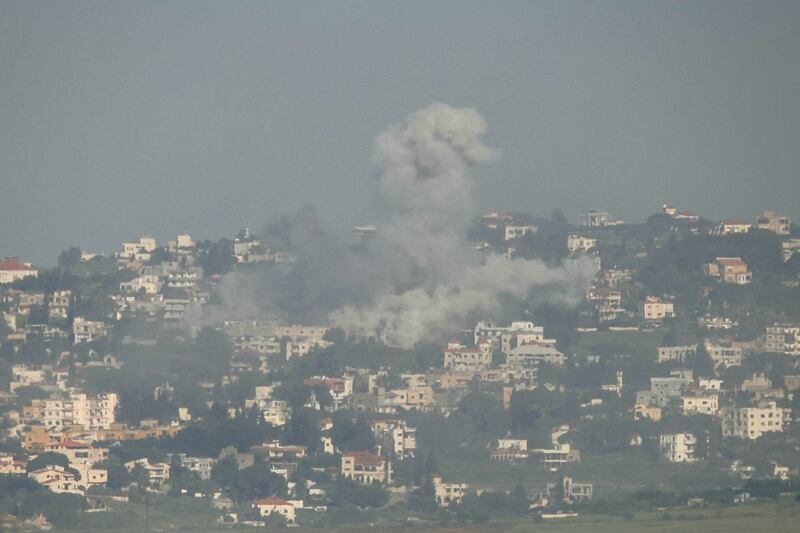
Two killed in further Israeli attacks on Lebanon despite ceasefire
Two people were killed and five others injured in an Israeli airstrike on the southern Lebanese town of Abba on Monday morning, according to Lebanon’s state-run national news agency (NNA).
The NNA also reported that Israeli warplanes launched a series of airstrikes this morning on the towns of Yahmar al-Shaqif and Kfar Tebnit, and shellilng on the towns of Yahmar Arnoun, Nabatieh al-Fawqa and Mayfadoun.
Despite a US brokered ceasefire agreement, Israel and Hizbullah have continued with their attacks, accusing each other of violations.
Add us as a preferred source in Google search

UK and France to host meeting to discuss plans to restore trade flows
The UK and France will host a multinational meeting of defence ministers involving 40 countries on Tuesday to discuss military plans to restore trade flows through the Strait of Hormuz, the British defence ministry said.
The UK’s defence secretary John Healey and his French counterpart Catherine Vautrin will co-chair the meeting.
“When I co-chair this meeting of nations from around the world, our job will be to make sure we are not just talking, we are ready to act. That is why I have directed HMS Dragon to the Middle East, so Britain is in position to support this mission the moment it is needed,” Healey said.
“This government will not stand by when instability drives up costs for British families and businesses”.
The UK has already announced the deployment of HMS Dragon to the region so the destroyer can play a role in a multinational mission should the conditions allow after the US-Israel war on Iran is over.
On Sunday, Iran threatened to strike British and French warships in the strait if they try to help reopen the strategic waterway.
French President Emmanuel Macron subsequently clarified that France had “never envisaged” a naval deployment but rather a security mission that would be done in coordination with Tehran.
Iran describes its proposal to end war with US as legitimate and generous
Iran’s proposal to end war with the US and reopen the Strait of Hormuz was legitimate and generous, Foreign Ministry Spokesperson Esmaeil Baghaei said on Monday.
“Our demand is legitimate: demanding an end to the war, lifting the (US) blockade and piracy, and releasing Iranian assets that have been unjustly frozen in banks due to US pressure,” Baghaei said.
“Safe passage through the Strait of Hormuz and establishing security in the region and Lebanon were other demands of Iran, which are considered a generous and responsible offer for regional security.”
The US parameters for nuclear talks reportedly included a moratorium on Iranian nuclear enrichment for up to 20 years; the transfer overseas, possibly to the US, of Iran’s stockpile of highly enriched uranium (HEU), which could be used to make nuclear warheads; and the dismantling of Iranian nuclear facilities.
According to the Wall Street Journal, the Iranian counter-proposal suggested a shorter moratorium, the export of part of the HEU stockpile and the dilution of the rest, and refusal to accept the dismantling of facilities.
Message from the Editor

Recent days have seen the biggest flare-ups in fighting in and around the strait since a ceasefire began.
On Sunday, the United Arab Emirates said it had intercepted two drones coming from Iran, while Qatar condemned a drone attack that hit a cargo ship coming from Abu Dhabi in its waters. Kuwait said its air defences had dealt with hostile drones that entered its airspace.
Clashes have also continued in southern Lebanon between Israel and Hizbullah, despite a US-brokered ceasefire announced in April.
Trump travels to Beijing this week to meet Xi Jinping
Donald Trump is expected to arrive in Beijing on Wednesday. With mounting pressure to draw a line under the war and the global energy crisis it has ignited, Iran is among the topics Trump and Chinese president Xi Jinping are set to discuss.
Trump has been leaning on China to use its influence to push Tehran to make a deal with Washington.
Addressing whether combat operations against Iran were over, Trump said in remarks aired on Sunday: “They are defeated, but that doesn’t mean they’re done.”
Israeli prime minister Binyamin Netanyahu said the war was not over because there was “more work to be done” to remove enriched uranium from Iran, dismantle enrichment sites and address Iran’s proxies and ballistic missile capabilities.
The best way to remove the enriched uranium would be through diplomacy, Netanyahu said in an interview that aired Sunday on CBS News’ “60 Minutes”. But he did not rule out removing it by force.
Iranian president Masoud Pezeshkian said in a social media post that Iran would “never bow down to the enemy” and would “defend national interests with strength”. - Reuters
Oil prices rise as US-Iran stalemate continues
Oil prices jumped more than $4 (€3.40) a barrel on Monday following news of the continued stalemate that leaves the narrow Strait of Hormuz largely closed.
Before the war began on February 28th, the waterway carried a fifth of the world’s oil and liquefied natural gas flows, and it has emerged as one of the central pressure points in the war.
“The oil market continues to trade like a geopolitical headline machine, with prices swinging sharply based on every comment, rejection, or warning coming from Washington and Tehran,” said Priyanka Sachdeva, senior market analyst at Phillip Nova.
While traffic through the Strait of Hormuz is at a trickle compared to before the war, shipping data on Kpler and LSEG showed three tankers laden with crude exited the waterway last week, with trackers switched off to avoid Iranian attack.
Surveys show the war is unpopular with US voters facing sharply higher gasoline prices less than six months before nationwide elections that will determine whether Donald Trump’s Republican party retains control of Congress. - Reuters
Trump rejects ‘totally unacceptable’ Iran response
President Donald Trump’s swift rejection of Iran’s response to a US peace proposal sent oil prices surging on Monday amid concerns the 10-week-old conflict will drag on, keeping shipping through the Strait of Hormuz paralysed.
Days after the US floated an offer in the hopes of re-opening negotiations, Iran on Sunday released a response focused on ending the war on all fronts, especially Lebanon, where US ally Israel is fighting Iran-backed Hizbullah militants.
Tehran also included a demand for compensation for war damage and emphasised Iranian sovereignty over the Strait of Hormuz, Iranian state TV said.
It also called on the US to end its naval blockade, guarantee no further attacks, lift sanctions and end a US ban on Iranian oil sales, the semi-official Tasnim news agency said.
Within hours, Trump dismissed Iran’s proposal with a post on social media.
“I don’t like it — TOTALLY UNACCEPTABLE,” Trump wrote on Truth Social, without giving further detail. The US had proposed an end to fighting before starting talks on more contentious issues, including Iran’s nuclear programme. - Reuters


