What happened today: Wednesday
- Iran promised retaliatory strikes “in the coming hours” following an Israeli attack co-ordinated with the Trump administration on the world’s largest gasfield, the offshore South Pars site, which it shares with Qatar
- Iran listed an array of prominent regional oil and gas targets belonging to Saudi Arabia, the UAE and Qatar, which it said were now “direct and legitimate targets”
- The US-Israel war on Iran has entered its third week with at least 2,000 deaths reported
- US president Donald Trump appeared to suggest the US could “finish off” Iran and leave its allies to secure the key Strait of Hormuz shipping route through which some 20 per cent of the world’s fuel supplies usually travel
- The death toll is Lebanon rose to at least 968 since the start of Israel’s attacks against Hizbullah two weeks ago, with hundreds of thousands displaced
- Israeli forces and Hizbullah engaged in intense clashes on the ground in southern Lebanon as Israel continues the invasion of its neighbouring country
- Iran’s president Masoud Pezeshkian earlier confirmed the country’s intelligence minister Esmail Khatib was killed in an Israeli strike
Key Reads
- Sally Hayden in Beirut: South Lebanon at risk of being cut off as Israeli forces strike bridges
- Three weeks into the Middle East war, who is winning?
- Which key Iranian figures have been killed in US-Israeli strikes?
That concludes Wednesday’s live coverage of the ongoing conflict in the Middle East.
Thank you for staying with us. Come back tomorrow for the latest news and in-depth analysis on irishtimes.com.
Israel attacking northern Iran ‘for first time’
Israel has said it has begun striking targets northern Iran for the first time since the war began on February 28th.
The announcement was made in a brief post on Telegram by the Israel Defence Forces with no further details. – The Guardian
Gulf oil and gas sites now ‘legitimate targets’, says Iran
Mark Weiss in Jerusalem reports: Iran’s official Fars news agency described the strike on Asaluyeh as a shift from limited confrontation to what it called a full-scale economic war. “It will not go unanswered,” Fars quoted military-linked sources as saying, adding that Iran’s response would target infrastructure previously considered safe.
Iran listed an array of prominent regional oil and gas targets belonging to Saudi Arabia, the UAE and Qatar, which it said were now “direct and legitimate targets” and should be evacuated at once before it struck them in the coming hours.
Global oil and gas prices rose sharply after the attacks, which according to Israeli media reports were carried out by Israel in co-ordination with Washington. Neither country acknowledged immediate responsibility.
Read the full story.
South Lebanon at risk of being cut off as Israeli forces strike bridges
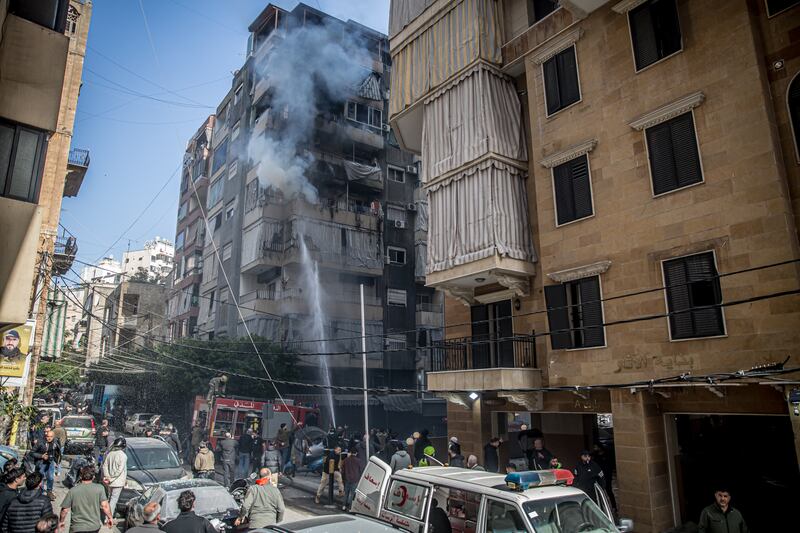
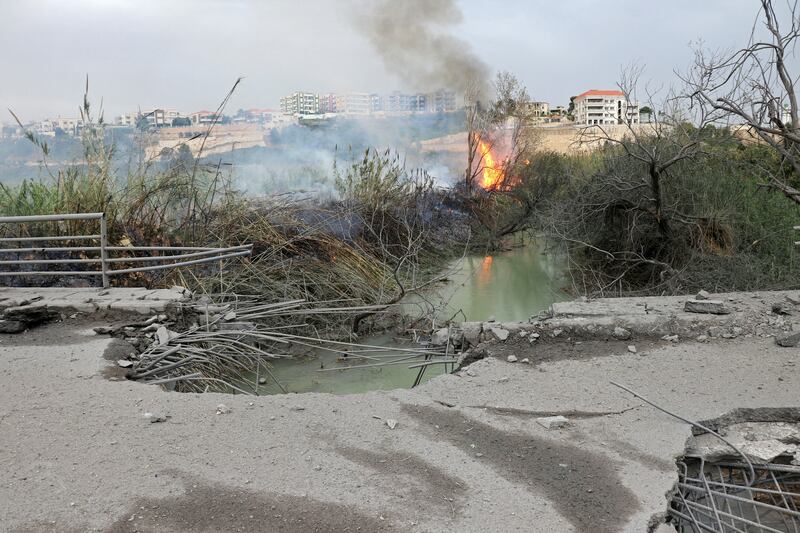
Sally Hayden in Beirut reports: Parts of south Lebanon are at risk of being cut off from the rest of the country after Israeli forces began striking bridges across the Litani river on Wednesday.
The announcement of the strikes came less than 14 hours after the Israeli military issued an evacuation warning for the southern city of Tyre, ordering residents to move about 18km north, prompting confusion and panic.
An Israeli military account on X posted – without evidence – that the bridges were “being used by Hizbullah operatives and commanders” and were used “to transport thousands of weapons, including rockets and launchers”. Another bridge was targeted last Friday.
Israel launched its offensive against Hizbullah after it opened fire on March 2nd to avenge the killing of Iran’s supreme leader at the start of the US-Israeli war on Iran.
More than one million people are registered as displaced across Lebanon, which has a population of roughly 5.8 million. At least 14 per cent of the country’s territory is under evacuation orders – blanket warnings that lawyers say are likely illegal under international law, which prohibits the forced displacement of a civilian population except under certain conditions or temporarily.
Aid workers estimated that about 150,000 people remained south of the Litani river before the evacuation warning for Tyre and the attacks on the bridges. Some had chosen to stay due to a belief that nowhere in the country is safe: a feeling exacerbated by the latest wave of air strikes on central Beirut.
Read the full story.
Saudi Arabia continues to face ballistic missile attacks targeting its capital, Riyadh.
Over the past two hours, the Saudi defence ministry said it intercepted and destroyed two waves of missiles aimed at the city on Wednesday, without specifying the source of the launches.
In each instance, four ballistic missiles were intercepted, with debris falling across different areas of the capital, including near a refinery south of Riyadh. Four residents were injured when debris from one interception struck a residential site. – The New York Times
Attack on South Pars gasfield marks further escalation of conflict
Israel struck Iran’s giant South Pars gasfield on Wednesday, marking a major escalation of the war.
The attack on the Pars site in the Gulf, which Iran shares with Qatar and constitutes the world’s largest natural gasfield, prompted Tehran to warn neighbouring states their energy infrastructure could be targeted “within hours” and triggered furious rebukes from Qatar and other nations in the region.
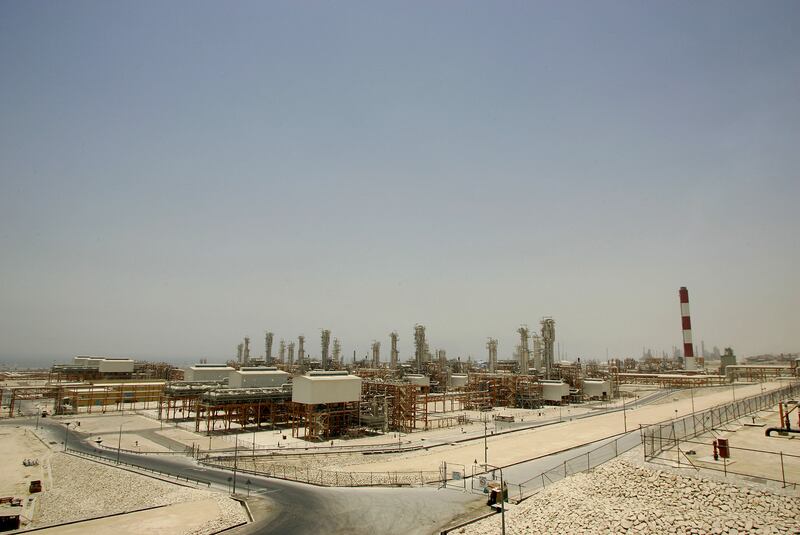
Located off the coast of the southern Bushehr province, the field holds an estimated 51tn cu metres of in situ gas, accounting for about 70 per cent of Iran’s domestic supply and a vast portion of Qatar’s exports.
Qatar’s foreign ministry spokesman, Majed al-Ansari, described the targeting of the gasfield – an extension of Qatar’s North Field – as a “dangerous and irresponsible step”. In a rare rebuke, the United Arab Emirates also condemned the attack, calling the strike a “dangerous escalation”.
“Targeting energy infrastructure poses a direct threat to global energy security ... It also entails serious environmental repercussions and exposes civilians, maritime security, and vital civilian and industrial facilities to direct risks,” the UAE’s foreign ministry said in a statement.
Israel’s strike against South Pars was co-ordinated with and approved by the Trump administration, the American news website Axios reported, citing two senior Israeli officials. The report said a US defence official also confirmed the claim.
In a statement shared by Iran’s semi-official Tasnim news agency on Wednesday, Iranian authorities said five facilities in Saudi Arabia, the UAE and Qatar “will be targeted in the coming hours”.
The US-Israeli war on Iran has now entered its third week, with at least 2,000 people reported killed and no clear end in sight. – The Guardian
In a post on his Truth Social network on Wednesday, US president Donald Trump appeared to suggest that the US could “finish off” Iran and then leave responsibility for securing the Strait of Hormuz to allied countries that depend on it, a familiar nod to his long-standing complaints about burden-sharing.
“I wonder what would happen if we ‘finished off’ what’s left of the Iranian Terror State, and let the Countries that use it, we don’t, be responsible for the so called ‘Straight?’” Trump said. “That would get some of our non-responsive ‘Allies’ in gear, and fast!!!” – The Guardian
Qatar’s interior ministry said on Wednesday that civil defence personnel are dealing with a fire in the Ras Laffan area after an Iranian attack.
Iran earlier issued an evacuation warning for several oil facilities across Saudi Arabia, the UAE, and Qatar, including the Ras Laffan refinery, saying they would be targeted by strikes “in the coming hours”, Iranian state media reported.
The Ras Laffan complex is the country’s main gas facility.
State-owned operator of the site QatarEnergy said in a post on X that the area had been “the subject of missile attacks”.
“Emergency response teams were deployed immediately to contain the resulting fires, as extensive damage has been caused. All personnel have been accounted for and no casualties have been reported at this time.” – Additional reporting: Reuters
Government to consider cutting excise duties in response to rising fuel and oil costs
Parliamentary Correspondent Marie O’Halloran reports: The Government will consider cutting excise duties in response to the surge in fuel and oil costs, Minister for Justice Jim O’Callaghan has said.
However, he told Sinn Féin leader Mary Lou McDonald that any such measures that are ultimately introduced would be targeted at “individuals who need them the most”.
He said there would not be a “knee jerk” response to a deadline from Sinn Féin or others but a considered and “united Government” response. He would not say “when measures are going to be introduced by the Irish Government”.
McDonald claimed, during their exchange in the Dáil on Wednesday, that the Government “dithers and delays” while prices “have spun out of control” because of the US-Israeli war against Iran.
The Sinn Féin leader said “people are under massive pressure right here and right now, but the Taoiseach says that it’s too early to act.” She added: “My God, I’ve never heard anything quite so detached or disconnected.”
Highlighting the dramatic increase in prices, she said “petrol is hitting €2 a litre, diesel hitting €2.17 a litre, home heating oil close to €900 for half a fill – unaffordable, crushing prices.”
Read the full story.
Israel searching homes in southern Lebanon
Israel has more than doubled the number of troops along its border with Lebanon since March 1st and they are searching homes in southern Lebanese villages that the military has ordered evacuated, a senior Israeli commander said on Wednesday.
As Israeli warplanes pound Beirut in operations against Hizbullah that have become the deadliest spillover of the US-Israeli war on Iran, heavy smoke could be seen rising from villages in southern Lebanon as troops fired artillery across the border.
Hundreds of thousands of Lebanese have fled southern Lebanon since Israel ordered people to clear the area south of the Litani river, viewed by Israel as a stronghold of Iran-backed Hizbullah. The group has been firing rockets toward Israel since joining the war in support of Iran on March 2nd.
“The plan is to make sure that Hizbullah does not have military infrastructure,” said the commander, whose name was withheld by the Israeli military on security grounds.
Speaking to Reuters in Eilon, an Israeli town 4km from the border, the commander, who is responsible for infantry warfare in Lebanon, declined to say how many troops Israel had now deployed in the area.
Describing the military’s fortifications inside Lebanon as “defensive positions”, he said troops were searching “the villages to see if Hizbullah hid weapons or communications centres”.
Asked if that included searching houses that residents had fled following Israeli orders, the commander said: “In some of the cases they hid their weapons in houses. We have no choice but to make sure that house is not a military installation.”
Hizbullah has publicly denied using civilian infrastructure to store weapons. It accuses Israel of destroying homes to prevent Lebanese from returning, something Israel denies. Many villages in southern Lebanon have been completely destroyed.
Two Israeli soldiers have been killed since the start of operations in southern Lebanon, the Israeli military says.
At least 968 people in Lebanon have been killed since the start of Israel’s attacks, Lebanese authorities say.
Hizbullah has not provided regular updates on deaths among its fighters. On Monday, a Hizbullah official told Reuters that at least 46 had been killed so far. – Reuters
Richard Boyd Barrett hits out at Taoiseach over White House meeting Trump
Parliamentary Correspondent Marie O’Halloran reports: People Before Profit leader Richard Boyd Barrett hit out at the Taoiseach’s approach to his White House meeting US president Donald Trump.
He said there was “not a single word of criticism of the flagrant murderous breaches of international law in which Trump and Israel are engaged”.
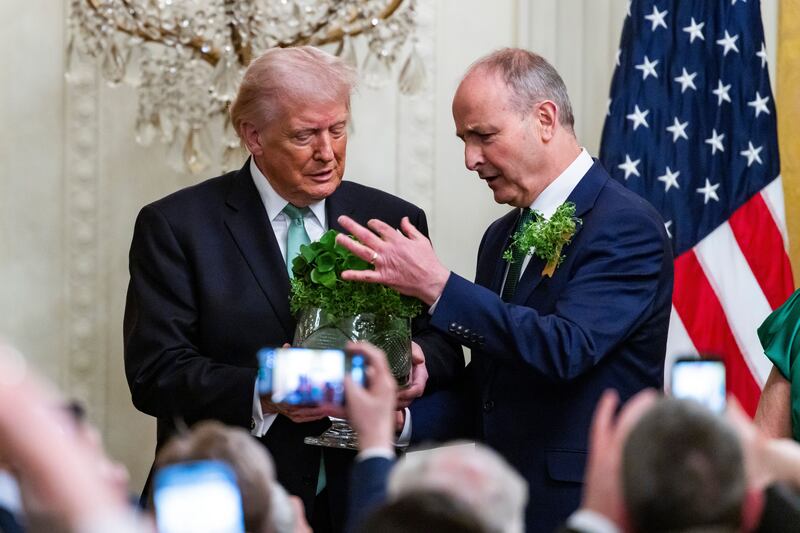
Micheál Martin “handed him a bowl of shamrock and celebrated our national day with this warmonger when he is a Taoiseach who repeatedly claims that this country is committed to international law”.
The Dún Laoghaire TD said since the war started more than 3,000 Iranian people have been killed including 160 school girls. In Lebanon “900 people have been murdered by the Israelis” and almost 800,000 have been displaced.
“There are real fears now we are going to see a repeat of the genocidal horrors that we have seen in Gaza for the last two years happening in southern Lebanon.”
He added that “every single working person in this country and across the world is now paying a direct economic price” for the war.
Minister for Justice Jim O’Callaghan said “what the Taoiseach did yesterday in the White House was extremely important from Ireland and Europe’s point of view”.
There “was a real benefit that the Taoiseach was out there as the leader of a European country that is not a member of Nato but he was able to emphasise the importance Ireland places on the rules-based system and the international order.”
He added: “The Taoiseach has to deal with the circumstances with which he is faced. Obviously if you were Taoiseach you wouldn’t have gone to the US.”
“There is a real benefit in the Taoiseach going there and being able to speak out frankly, more so than any other international leaders who have been there recently have done,” the Minister added.
Boyd Barrett said “I certainly wouldn’t stand beside a warmonger like Trump, who’s ripping up the international legal rule book to pursue a bloody and murderous war against Iran.”
He said “our Taoiseach can’t even bring himself to condemn this even when it’s imposing an economic cost on every single person in this country and across the world”.
He pointed out that on March 15th “four US troop carriers went through Shannon”, in one day. He asked if the Minister believed they were “not involved in the bloody carnage that Trump and the Israelis are inflicting across the Middle East right now”.
In relation to Shannon Airport, O’Callaghan said the Boyd Barrett’s “charge against the Irish Government is incorrect. It is at times like this that our neutrality stands to us, and the fact that we are not a member of Nato stands to us.”
Wednesday recap: Seven things that happened today

- Iran has threatened attacks on the energy infrastructure of neighbouring Gulf states “in the coming hours” following US-Israeli strikes on the offshore South Pars natural gasfield, the world’s largest.
- The death of Iran’s intelligence minister Esmail Khatib in an Israeli strike was confirmed by the country’s president Masoud Pezeshkian.
- More than 960 people have been killed in Lebanon and at least 2,400 others wounded since the escalation in conflict between Israel and Hizbullah stemming from the US-Israel attack on Iran two weeks ago.
- Iran launched strikes at Israel and other Gulf countries on Wednesday morning, including the UAE, Qatar and Dubai.
- Israel and Hizbullah have engaged in intense ground battles in multiple strategic locations in south Lebanon amid Israel’s ongoing invasion of its neighbour.
- The US military said it targeted sites along Iran’s coastline near the Strait of Hormuz with “bunker buster” bombs because Iran’s anti-ship missiles pose a risk to international shipping.
- Austria is to temporarily trim a tax on petrol and diesel fuel by 5 euro cents a litre and limit fuel retailers’ margins to counter the effect of oil prices driven up by the Iran war.
Killers of Iranian security chief will ‘have to pay for it’, says Khamenei
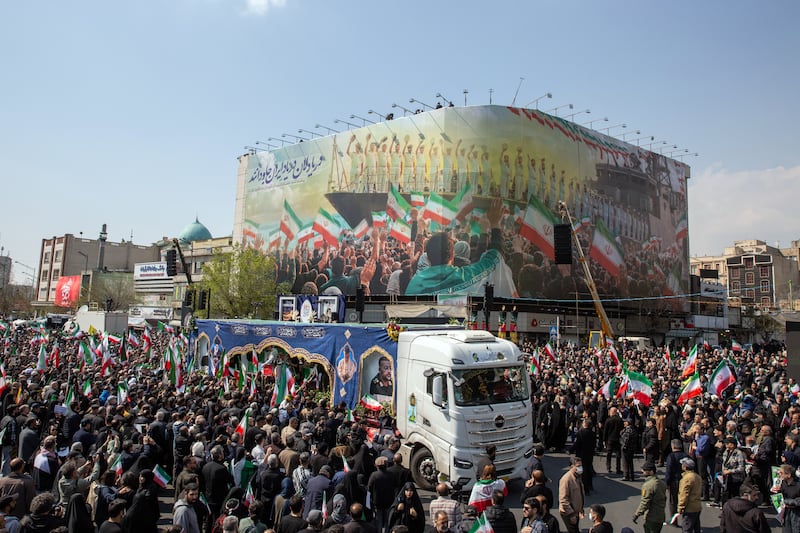
Iran’s new supreme leader Ayatollah Mojtaba Khamenei said Wednesday in a written message that the killers of security chief Ali Larijani, who died in an Israeli strike, “will have to pay for it”.
“Without a doubt, the assassination of such a figure attests to his importance and to the hatred that the enemies of Islam harbour toward him,” Mojtaba Khamenei said, in a message published on his official Telegram channel on the day of Larijani’s funeral in Tehran.
“Every drop of spilled blood comes at a price, and the criminal murderers of these martyrs will soon have to pay it,” added Mojtaba Khamenei, who has yet to appear in public after taking office following the killing of his father, ex-supreme leader Ali Khamenei at the start of the war. – The Guardian
The New York Times reports that more than 960 people have now been killed in Lebanon and at least 2,400 others wounded in the two weeks since war erupted between Israel and Hizbullah, according to Lebanon’s health ministry.
At least 110 children are among the dead, the ministry said.
Additionally, the Unicef mission in Lebanon said earlier on Wednesday that 334 children are among those injured since fighting ramped up.
Martin ‘utterly sidelined’ during White House visit, says Bacik
Parliamentary Correspondent Marie O’Halloran reports: Labour Party leader Ivana Bacik criticised Taoiseach Micheál Martin for sitting “silent” and “utterly sidelined” during the White House ceremony on St Patrick’s Day while “US president Trump ranted and raved about Europe, Nato, wind farms, Keir Starmer, immigration and much more”.
Speaking in the Dáil she said “it is deeply disappointing that the Taoiseach did not push back harder against Trump’s delusional ramblings, in particular to condemn Trump’s illegal war on Iran”.
Minister for Justice Jim O’Callaghan said however that “any fair-minded person looking at the events in the White House yesterday would recognise that the Taoiseach did an excellent job in extremely challenging circumstances”.
In a dig at the Labour leader he said if she had been there “she would have dealt with it completely differently and more effectively on behalf of the Irish people, but of course we know what would have happened had she been the Taoiseach because she had made the decision in advance of the visit that the Taoiseach should not go there.”
“Had the Labour Party been in government, there would have been no engagement in respect of the United States of America.”
O’Callaghan said the Taoiseach delivered “a very important message”.
It was “an extremely difficult time in terms of the relationship between the United States and Europe.
“I thought it was a real advantage for the Taoiseach to be there yesterday, as the leader of a European country that is not a member of Nato.
“I think he did Ireland and Europe proud in terms of setting out the values of Europe and indeed in setting back some of the rhetoric of President Trump, which as everyone can appreciate can be difficult at times.”
Message from the Editor

UAE condemns targeting of Pars gasfield
UAE condemns targeting of South Pars gasfield, after Iran blames US and Israel
The UAE condemned the targeting on Wednesday of Iranian facilities in a gasfield shared with Qatar, calling the attack attributed by Iran to the US and Israel a “dangerous escalation” in a rare rebuke.
“The United Arab Emirates affirmed that targeting energy facilities linked to the South Pars gasfield in the Islamic Republic of Iran, which is an extension of the North Field in the sisterly State of Qatar, constitutes a dangerous escalation,” the foreign ministry said in a statement.
“Targeting energy infrastructure poses a direct threat to global energy security ... It also entails serious environmental repercussions and exposes civilians, maritime security, and vital civilian and industrial facilities to direct risks,” it added. – The Guardian
Neighbouring energy facilities to be targeted ‘in coming hours’, says Tehran
Iran’s Pars gasfield was hit on Wednesday in the first reported strikes on Iranian energy infrastructure in the Gulf during the US-Israeli war, a major escalation that prompted Tehran to warn its neighbours that their energy installations would be targeted “in the coming hours”.
Pars is the Iranian sector of the world’s largest natural gas deposit, which Iran shares with Qatar across the Gulf. Iran’s Fars news agency reported that gas tanks and parts of a refinery had been hit, workers had been evacuated to a safe location and emergency crews were trying to put out a fire.
The attack was widely reported in Israeli media to have been carried out by Israel with US consent. The Israeli military did not immediately respond to requests for comment.
Qatar, a close US ally which hosts the largest US airbase in the region, called it an Israeli attack without mentioning any U.S. role. The Qatari foreign ministry spokesperson called it a “dangerous and irresponsible” escalation that put global energy security at risk.
Iran’s Revolutionary Guards told Saudi Arabia, the UAE and Qatar to evacuate several energy facilities. – Reuters
Israeli and Hizbullah forces engage in ground clashes in Lebanon
Israel and Hizbullah are engaged in intense ground clashes in at least three strategic areas in south Lebanon as Israel continues to push on with its ground invasion of its neighbour, according to a Lebanese security source and residents of the affected towns.
Much of the fighting was concentrated around the strategic hilltop city of Khiam, with the Israel Defense Forces carrying out an air and artillery campaign against Hizbullah fighters dug into the city. Fighting escalated there after days of clashes, with a Hizbullah spokesperson acknowledging there were “heightened clashes” on the eastern and northern outskirts of the city.
As fighting continued in Khiam, Israeli troops attempted to push into border towns in the central and western sectors of south Lebanon. A resident of the Aita al-Chaab border village said fighting was intense between Israeli soldiers and Hizbullah fighters there.
A Lebanese security source said that the village was one of a number of border towns that was the site of heavy fighting as Israel tried to infiltrate southern Lebanon through a number of points along the shared border. There, they had been met with resistance by members of Hizbullah.
The fighting came as Israel amassed troops along the border, bringing four brigades and columns of tanks in advance of an expanded ground invasion of south Lebanon. The Israeli military said that already it had started a “limited ground operation,” as the political echelon discussed expanding the campaign. – The Guardian
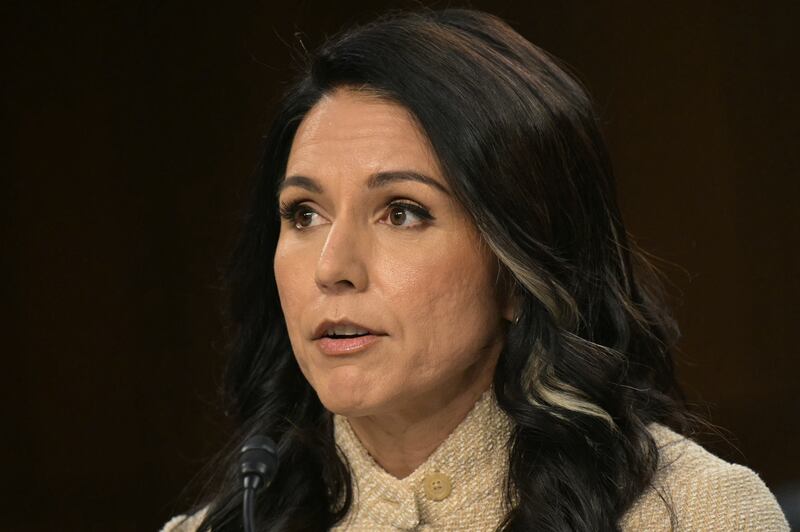
Tulsi Gabbard, the US director of national intelligence, said Iran’s government has suffered heavy blows in the US-Israeli military campaign but that it remains “intact”.
The US intelligence community “assesses the regime in Iran to be intact but largely degraded due to attacks on its leadership and military capabilities,” she told a US Senate hearing.
She said that if Iran’s leadership survived the war it would begin a years-long effort to rebuild its missile and drone programmes. – The Guardian
Iran’s president confirms intelligence minister Esmail Khatib was killed
Iran’s president, Masoud Pezeshkian, has confirmed that the country’s intelligence minister, Esmail Khatib, has been killed.
Israeli defence minister, Israel Katz, said earlier today that Khatib was killed in a strike overnight.
“The cowardly assassination of my dear colleagues Esmail Khatib, Ali Larijani, and Aziz Nasirzadeh, along with some of their family members and accompanying team, has left us heartbroken,” Pezeshkian said in a post on X, mentioning the secretary of Iran’s supreme national security council and defence minister who were killed in previous Israeli attacks.
Lack of plan for Hormuz Strait closure ‘frustrating’, UK finance minister says
The lack of a plan from the US and Israel to deal with the partial closure of the Strait of Hormuz by Iran was “frustrating”, Britain’s Chancellor Rachel Reeves has said.
“It is frustrating that there doesn’t seem to be a plan for what to do now after the very predictable closure of the Strait of Hormuz,” Ms Reeves told an event alongside Spanish Economy Minister Carlos Cuerpo.
Thousands of Iranians attend funeral of Iran’s supreme national security council secretary
Thousands of Iranians are attending a funeral ceremony held for Iran’s supreme national security council secretary Ali Larijani and Basij commander Gholam Reza Soleimani in Tehran.
Large crowds are at the ceremony, which also honoured 84 Iranian navy personnel who lost their lives in the US-Israeli attacks.
US-Israeli strikes hit Iranian gas facility in Bushehr province
US and Israeli strikes have hit Iran’s offshore South Pars natural gasfield in the southern Bushehr province, Iranian state media reported.
South Pars, the world’s largest natural gasfield, is shared between Iran and Qatar in the Gulf.
It was not immediately clear if Israel or the US had carried out the attack and neither have commented on the reported strikes. If confirmed it would mark a significant escalation of US and Israeli attacks against Iranian energy infrastructure.
US president Donald Trump has issued a statement on his Truth Social app, musing what would happen to the Strait of Hormuz if the US “finished off” what’s left of Iran.
European countries including the UK have pushed back on Trump’s demands to help reopen the strait by force after Iran shut down the majority of shipping through the critical trade route.
“I wonder what would happen if we “finished off” what’s left of the Iranian Terror State, and let the Countries that use it, we don’t, be responsible for the so called “Straight?” That would get some of our non-responsive “Allies” in gear, and fast!!!”, Trump wrote in the post.
Swedish citizen executed in Iran
A Swedish citizen was executed in Iran on Wednesday, Sweden’s foreign minister said in a statement.
The person, who was not named in the statement, was arrested in Iran in June of last year and Sweden has repeatedly raised the case with Iranian officials, Sweden’s foreign minister Maria Malmer Stenergard said.
“The death penalty is an inhumane, cruel and irreversible punishment. Sweden, together with the rest of the EU, condemns its application in all circumstances,” Stenergard said.
The legal proceedings leading up to the execution did not meet the standards of due process, she added.
Iranian women’s soccer team returns to Iran
The Iranian women’s soccer team crossed the Turkish border into Iran on Wednesday to complete a fraught return journey from Australia, after five members withdrew asylum claims they had lodged there.
Australia had granted humanitarian visas to six players and one support staff member after they sought asylum, saying they feared possible persecution if they returned to Iran.
Concerns over their safety surfaced when several players failed to sing the national anthem at a women’s Asian Cup match earlier this month after the United States and Israel launched the war against Iran.
Iranian state television had labelled them “wartime traitors”.
The team, which flew into Istanbul on Tuesday, took a flight to Igdir in eastern Turkey on Wednesday morning. They went through passport control at the Gurbulak border gate before crossing over into Iran.
The team’s Asian Cup campaign began just as the US and Israel launched strikes on Iran, killing Supreme Leader Ayatollah Ali Khamenei.
They were eliminated from the tournament more than a week ago.
Five of those who had sought asylum in Australia subsequently changed their minds and decided to return home, with Australian media reporting the latest withdrawal on Monday. Two players are still in Australia.

Which key Iranian figures have been killed in US-Israeli strikes?
Since February 28th, US-Israeli strikes on Iran have killed several senior political and military figures.
Below are some of the most prominent figures killed:
Supreme Leader Ayatollah Ali Khamenei, who as Iran’s Supreme Leader since 1989 built an iron grip over the Islamic Republic while entrenching hostility towards the US and Israel, was killed aged 86 in a US-Israeli air strike on his compound in Tehran on February 28th.
His more than three-decade rule was marked by the consolidation of power through the security apparatus, and the expansion of Iran’s regional influence, even as tensions over its nuclear programme repeatedly brought it into confrontation with the West.
Senior officials, including Ali Larijani, secretary of the Supreme National Security Council and a veteran power broker, was killed at 67 in a US-Israeli air strike in the Pardis area of Tehran on March 17th, along with his son and one of his deputies, Iranian media reported.
Ali Shamkhani, a close adviser to Khamenei and a key figure in Iran’s security and nuclear policymaking, was also killed in US-Israeli strikes on Tehran on February 28th.
Top military commanders, including Mohammad Pakpour, commander-in-chief of the Islamic Revolutionary Guard Corps, Iran’s most powerful military force, was killed in the February 28th strikes in Tehran, Iranian state media said.
Aziz Nasirzadeh, Iran’s defence minister and a career air force officer, was killed in the same wave of strikes targeting senior leadership in Tehran on February 28th.
Abdolrahim Mousavi, chief of staff of Iran’s armed forces, was also killed in the February 28th strikes during what Iranian media said was a meeting of senior leadership in Tehran.
Gholamreza Soleimani, commander of Iran’s Basij paramilitary force, was killed in US-Israeli strikes on March 17th, according to Iranian state media.
Beyond those named, multiple senior Islamic Revolutionary Guard Corps and army commanders and intelligence officials have been reported as killed in strikes, particularly during the initial February 28th attack that targeted a gathering of top leadership.
The Israeli military said it will soon begin attacking bridges across the Litani river in southern Lebanon as it once again ordered people to flee north.
Avichai Adraee, the Israeli army’s Arabic-language spokesperson, said the Israel Defense Forces (IDF) was carrying out the bombing to prevent Hizbullah from moving reinforcements and combat equipment to areas where Israeli forces are operating.
“To prevent the transfer of reinforcements and weapons, the IDF intends to attack crossings on the river,” he posted on X.
Israel says Iranian intelligence minister has been killed
Iranian intelligence minister Esmail Khatib was “eliminated” in a strike overnight, Israel’s defence minister Israel Katz has said.
There has been no confirmation from Iran regarding Khatib’s reported death.
Katz said he and Israeli prime minister Binyamin Netanyahu had authorised the military to kill any other senior Iranian official being targeted without the need for additional approval.
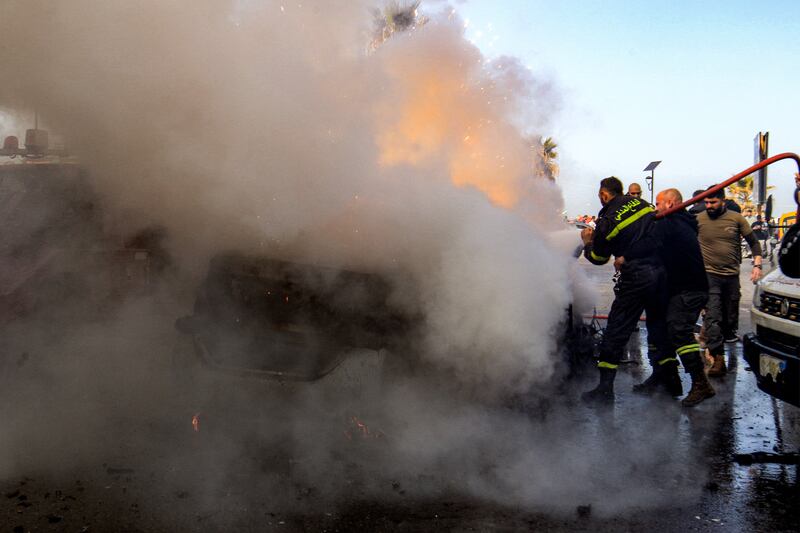
Lebanon war leaves equivalent of a classroom of children hurt or dead every day, says UN
War in Lebanon has wounded or killed the equivalent of one classroom of children daily and robbed the remainder of their sense of normalcy since it began two weeks ago, a top official of the UN children’s agency said.
According to Lebanese health ministry figures, at least 111 children have been killed and 334 wounded in Israeli strikes on Lebanon since March 2nd, when Lebanese armed group Hizbullah joined the regional war by firing into Israeli territory. That equals nearly 30 children a day.
“That’s a classroom of children every day since the beginning of the war that’s either killed or injured in Lebanon,” Unicef deputy executive director Ted Chaiban said.
Lebanon’s child deaths are among 1,200 children killed across the region in recent weeks – nearly 200 in Iran, four in Israel and one in Kuwait.
“They’ve paid a terrible price. And the first thing we’re calling for is a de-escalation, a political way forward to this war,” Chaiban told Reuters in Beirut.
Israel says it does not deliberately target civilians and that its warnings give civilians enough time to leave before strikes take place.
Nato deploys another US Patriot missile defence system to southern Turkey
Nato is deploying another US Patriot missile defence system to the southern Turkish province of Adana, where personnel from the US and other countries are located in the Incirlik Air Base, Turkey’s defence ministry said on Wednesday.
Turkey, which has Nato’s second-largest army and neighbours Iran, said last week the alliance had deployed a Patriot system to its southeastern Malatya province, near a Nato radar base, as part of steps to boost air defences against missile threats from the Iran war.
Adana hosts Turkey’s Incirlik Air Base, where personnel from the United States, Qatar, Spain and Poland are located, as well as Turkish troops.
“In addition to national-level measures taken to ensure the security of our airspace and our citizens, another Patriot system, commissioned by Allied Air Command in Ramstein/Germany, is being deployed in Adana, in addition to the existing Spanish Patriot system stationed there,” the ministry said at a weekly briefing.
Austria cuts petrol tax to counter war’s impact on prices
Austria will temporarily trim a tax on petrol and diesel fuel by 5 euro cents a litre and limit fuel retailers’ margins to counter the effect of oil prices driven up by the Iran war, the three-party ruling coalition said on Wednesday.
“We are reducing the petroleum tax and introducing measures to limit margins across the entire value chain. These specific measures will bring the price of diesel and petrol down by around 10 (euro) cents (12 cents) per litre,” Austrian chancellor Christian Stocker said in a statement.
The Israeli military has repeated its sweeping evacuation order for southern Lebanon, extending more than 40km from the Israeli border.
Avichai Adraee, the Israeli army’s Arabic-language spokesperson, ordered people to head north of the Zahrani river this morning before the Israel Defense Forces (IDF) began a bombing campaign against what he said were Hizbullah targets.
“The strikes are ongoing as the IDF is operating with considerable force in the area,” he said in a post on X.
“Therefore, for your safety, we reiterate our call for you to evacuate your homes immediately and head north of the Zahrani river.”
The Israeli military has already issued displacement orders for people south of the Litani river and Beirut’s southern suburbs. Nearly a million people in Lebanon have been internally displaced since the fighting began.
Israel confirms its tank fire hit UN Lebanon base on March 6th
Israel’s military has acknowledged its tank fire hit a UN position in southern Lebanon on March 6th, wounding Ghanaian peacekeepers.
Initial findings by an internal UN inquiry had suggested Israel was behind the attack, a western military source had told Reuters on Tuesday.
In a statement to Reuters, Israel’s military acknowledged its troops were behind the incident, but said they had responded to anti-tank missile fire from Hizbullah, which had moderately wounded two of its soldiers.
“A comprehensive investigation concluded in recent days determined that the fire that hit the Unifil personnel was mistakenly carried out by the IDF [Israel Defense Forces] troops that misidentified the Unifil troops as the source of the anti-tank fire moments earlier,” it said.
“The IDF regrets the incident and has conveyed its apologies through the appropriate channels to Ghana and the United Nations. The findings of the investigations have been disseminated within the IDF to prevent recurrence of similar incidents.”
Unreasonable to expect Lebanon to disarm Hizbullah as bombings continue, France says
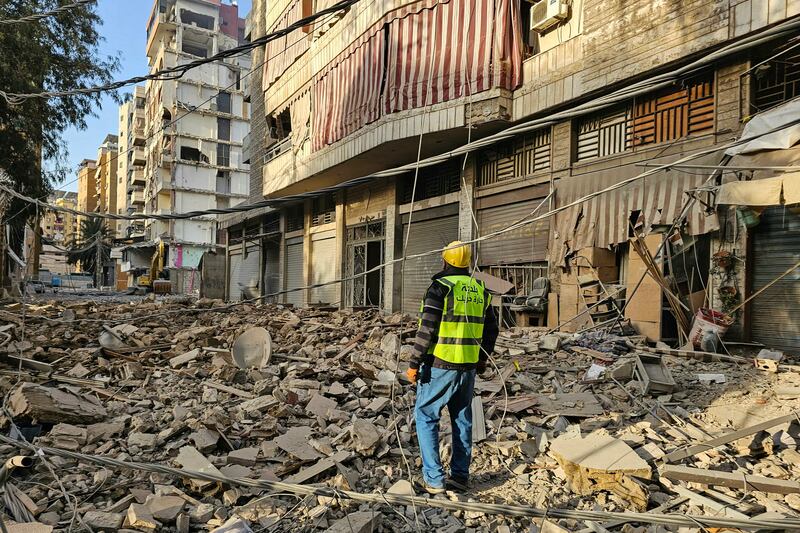
It would be unreasonable to expect Lebanon’s government to disarm Iran-backed Hizbullah while the country is being bombed by Israel, France’s special envoy for Lebanon said on Wednesday.
Only a negotiation would resolve the crisis, Jean-Yves Le Drian told France Info radio.
“Israel occupied Lebanon for a very long time and failed to eradicate Hizbullah’s military capacity. Therefore, they cannot now ask the Lebanese government to do that job in three days under bombardment,” he said.
Iran launches attack on airbase in UAE where Australian soldiers are stationed
Iran launched an attack on an airbase in the UAE where Australian soldiers are stationed, causing a fire that damaged medical and accommodation facilities, the Australian prime minister, Anthony Albanese, said.
An Iranian projectile hit a road just outside the Al Minhad base, which hosts more than 100 Australian military personnel.
Albanese confirmed that no Australian personnel were injured.
It was not clear if the projectile was a missile or drone strike, but Albanese said it started a fire that caused “minor damage” to an accommodation block and medical facility.
He could not confirm if Iran directly targeted the Al Minhad base while maintaining Australia was not at war.
“The Iranian regime is engaging in random attacks right across the region. We know that is the case,” he said.
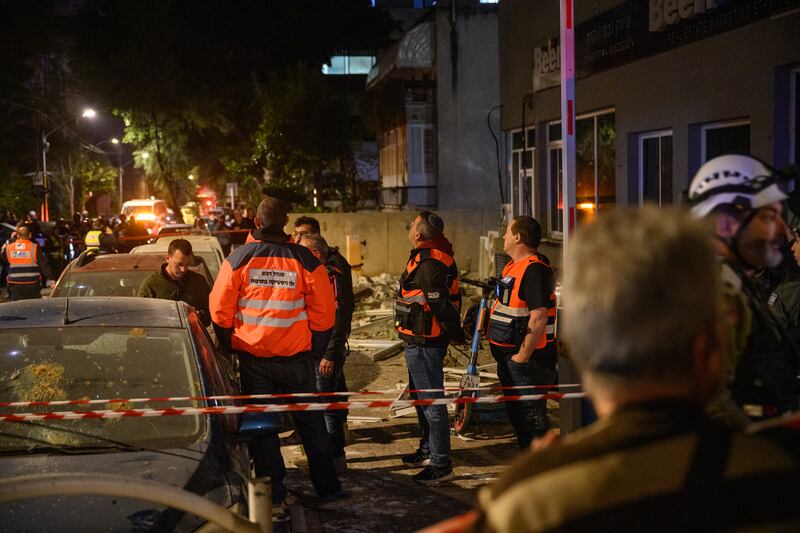
Iranian missile barrage kills two in Israel
An Iranian missile barrage killed two people in Ramat Gan, near Tel Aviv.
Israel’s national railway company said shrapnel had also disrupted train services.
Authorities reported that falling munitions had hit multiple sites in central Israel in the overnight barrage that triggered air raid sirens across the area, after another day of heavy Israeli bombardments in Iran and Lebanon.
That brings the number of deaths from missile attacks on Israel since the start of the Middle East war to 14 people.
Alerts on Dubai resident’s phones went off throughout the night and into this morning, warning them of the risk of missiles and drones and to seek shelter away from windows and open areas.
It was yet another heavy night of Iranian missiles and drones being launched over the United Arab Emirates.
Several loud booms rang out over Dubai’s popular marine area this morning, and six military helicopters were seen flying low over the bay.
Footage sent to Al Jazeera shows missiles and drones being intercepted in Dubai overnight, with debris falling down on the city’s international convention centre.
In a statement this morning, the UAE’s ministry of defence confirmed that “the sounds heard in scattered areas of the country are the result of air defence systems intercepting ballistic missiles, as well as fighter jets intercepting drones and loitering munitions”.
All air interception operations had been successful, they said.
While tens of thousands of residents and tourists fled Dubai as the conflict broke out, many people have stayed behind.
A fire on-board the USS Gerald R Ford injured sailors and destroyed 100 beds, and the carrier will reportedly set sail for Crete for repairs.
The American aircraft carrier has been at sea for almost nine months, and is stationed in the Red Sea to support the war on Iran.
Officials did not say how long the $13 billion vessel was expected to remain in Crete.
One of the officials said nearly 200 sailors were treated for smoke-related injuries when the fire broke out in the ship’s main laundry area. The fire took hours to bring under control and had an impact on roughly 100 sleeping berths.
US targets Iran coastline with ‘bunker buster’ bombs near Strait of Hormuz
The United States military said it has targeted sites along Iran’s coastline near the Strait of Hormuz with powerful “bunker buster” bombs because Iranian anti-ship missiles posed a risk to international shipping there.
The strait, a transit point for a fifth of the global oil trade, remains largely closed as Iran threatens to attack tankers linked to the US and Israel. Oil prices have soared.
Call for ex-counter-terror chief to face Congress after resigning over Iran
A senior Democrat has called on Joe Kent, director of the US National Counterterrorism Center and a far-right political figure, to testify to Congress about why he resigned from his job over the war on Iran.
California representative Ro Khanna’s call came after Kent, a supporter of Trump, wrote on X that “I cannot in good conscience support the ongoing war in Iran. Iran posed no imminent threat to our nation” before blaming Israel.
“The American people deserve to know why this Administration dragged us into war in Iran,” Khanna wrote on social media. “Joe Kent should come before Congress. If even officials like Joe Kent do not believe Iran posed an imminent threat, why are we sending more Americans to die in this war?”
Iran attacks Israel and Gulf countries after security chief killed
Iran launched strikes towards Israel and neighbouring Gulf countries early on Wednesday, with explosions heard in the United Arab Emirates and Qatar, and interceptions reported in Saudi Arabia.
The attacks came hours after Iranian state media confirmed Israel’s military killed top Iranian security official Ali Larijani in an overnight strike, as well as gen Gholam Reza Soleimani, the head of the Revolutionary Guard’s Basij force, known for its role in suppressing protests.
Meanwhile, an Israeli air strike struck an apartment building in Bachoura, central Beirut, flattening it as day broke.