
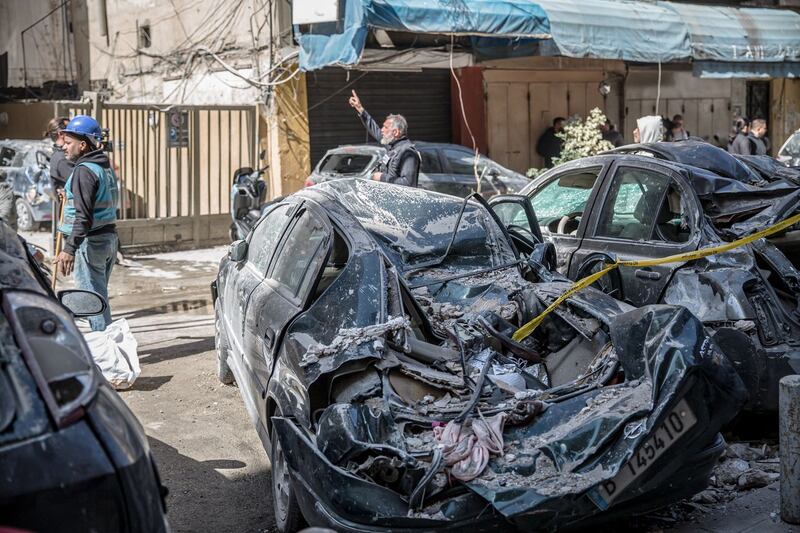
Hours after an Israeli air strike hit central Beirut without warning, shards of glass were still raining on to the street below, settling on a line of mangled, dust‑coated cars.
Locals stared upwards at the damage, some still in shock that their neighbourhood had been hit. This area, Aisha Bakkar, is outside of the evacuation zones which now cover huge swathes of greater Beirut.
The attack on Wednesday seemingly targeted one or two apartments in a residential building in a strike which injured four people, said Lebanon’s health ministry. Locals said they did not know who was targeted. The Israeli military did not respond to a request for comment.
The strike once again underlines fears that, anywhere in Lebanon, air attack can come at any time and without warning.
READ MORE


According to figures released by Lebanon’s ministry of public health, by Tuesday, at least 570 people had been killed since the return to all-out war between Israel and Hizbullah, including 86 children and 45 women. More than 1,400 have been injured, including hundreds of women and children.
Lebanese authorities say at least 780,000 have registered as displaced. The United Nations says that it includes about 200,000 children, meaning one in every ten children in Lebanon has now been forced away from their home.
There are more than 500 open shelters, with nearly 120,000 people staying in them, according to figures shared by the World Health Organisation. Only 12 shelters are equipped to receive people with disabilities, it said.
A famous Beirut sports stadium is among the many properties being converted into a shelter for displaced people.
The Camille Chamoun Sports City Stadium was built in 1957. It has held events including the first Arab Football Cup in 1963, the 1997 eighth Pan Arab Games and a 1999 concert by Italian tenor Luciano Pavarotti.
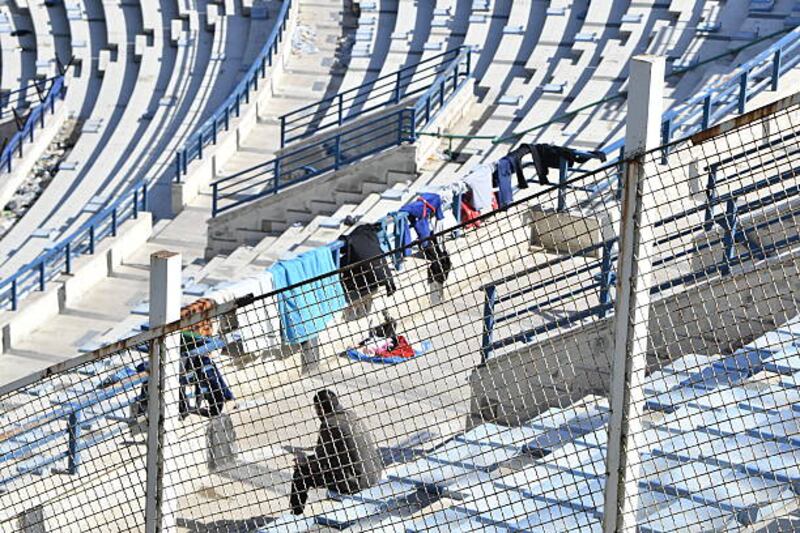
It was bombed during Lebanon’s civil war, which lasted between 1975 and 1990, and badly damaged during the Beirut port explosion in 2020, when it temporarily became a field hospital for injured people, and then a wheat and flour storage facility.
In February 2025, the stadium was the site of the funeral of Hizbullah secretary general Hassan Nasrallah, who had been assassinated by Israeli forces the previous year.
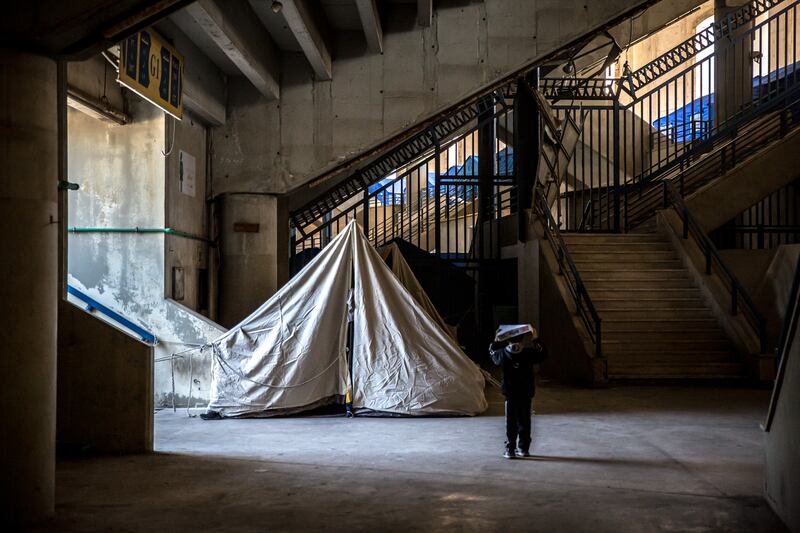
Now, non-governmental organisations are helping set up tents there and attempting to provide water, electricity and hygiene facilities.
“At the end we don’t have any more spaces, we need to be creative,” says Malak Elhout, food security lead for the Makhzoumi Foundation, a Lebanese non-governmental organisation working in the stadium.
Every person who wants to stay there has to be vetted, adds Samer Safeh, Makhzoumi Foundation’s general manager – a process that others said can take up to 48 hours. Those admitted so far come from southern Lebanon and Beirut’s southern suburbs.

Safeh has worked with the foundation for 30 years. He says there are huge differences this time compared to the last all-out war between Israel and Hizbullah in 2024. That took place before the global crisis in humanitarian donations, and in a context when many other countries were not involved in regional warfare, too, diverting attention.
“We’re working with the resources we have at hand,” he says.
Elhout says there is great need, including: more varied and nutritious meals; baby milk; snacks for children; nappies; and hygiene kits for women.
“We’ve provided for today, but the need is so large,” she says. They are also struggling to get enough water; when they bring in a tank, it lasts only two hours, says Elhout.
The stadium only had 750 people staying in it by Tuesday, but thousands are expected to eventually move in. They will sleep in tents under the seating areas, rather than on the exposed and unprotected main pitch.
Parts of the stadium’s grounds are included in the area covered by mass Israeli evacuation warnings, though local officials say they have marked it as a safe zone and believe it will not be targeted. The daily bombing of Beirut’s southern suburbs is still loud, which is psychologically difficult for people, says Elhout.
It is important to recognise that there are “a lot of innocent people” affected by war in Lebanon now, she adds.
“Not everybody has political, let us say, views. People want to continue living. That’s what they want.”


On Tuesday, Dr Abdinasir Abubakar, the World Health Organisation representative in Lebanon, said the expansion of Israeli evacuation orders had “triggered large-scale displacement and increased pressure on already fragile services and communities”.
Hospitals and frontline responders are under “extraordinary strain” and there are “severe humanitarian and public health consequences” to the conflict. He said 56 health facilities have been affected; five hospitals are out of service, four of which are damaged.
The European Union says it has mobilised enough aid for 190,000 people – to be delivered through the World Food Programme and Unicef, though it did not specify how long the aid would last.
That same day, the Republic’s Minister for Foreign Affairs Helen McEntee and Minister for International Development Neale Richmond announced €3 million in humanitarian funding to go towards displaced people in Lebanon, €2 million of which will go to the UN Lebanon Humanitarian Fund and €1 million for the UN Refugee Agency.
In response, Lebanese minister of foreign affairs Youssef Raggi posted on X that he has “expressed our gratitude to Ireland and the Irish people”. He said he reaffirms the Lebanese government’s commitment “to pursuing all avenues to halt the Israeli escalation and to ensure that Hizbullah’s weapons are placed under the authority of the state and that its military and security activities are banned”.


