
Main Points
- Donald Trump says US military operations in Iran are “ahead of schedule” as he says nine Iranian navy ships have been destroyed.
- It comes as three US service members have been killed in action and five seriously injured.
- In Iran, the death toll from a missile strike on a girls’ school yesterday has risen to almost 165, state media reported.
- Nine people have reportedly been killed in a strike in central Israel.
- Iran’s supreme leader Ayatollah Ali Khamenei has been confirmed dead following joint US-Israeli strikes.
- The attack has prompted retaliation from Tehran, with missiles reported to have targeted Israel and countries across the Middle East.
- Israel launched another wave of strikes on Iran on Sunday, with a massive explosion reported in Tehran.
- Irish citizens in Gulf region are urged to register with Department of Foreign Affairs.
Our live coverage for today of the developments in the Middle East is coming to an end.
Thank you for reading.
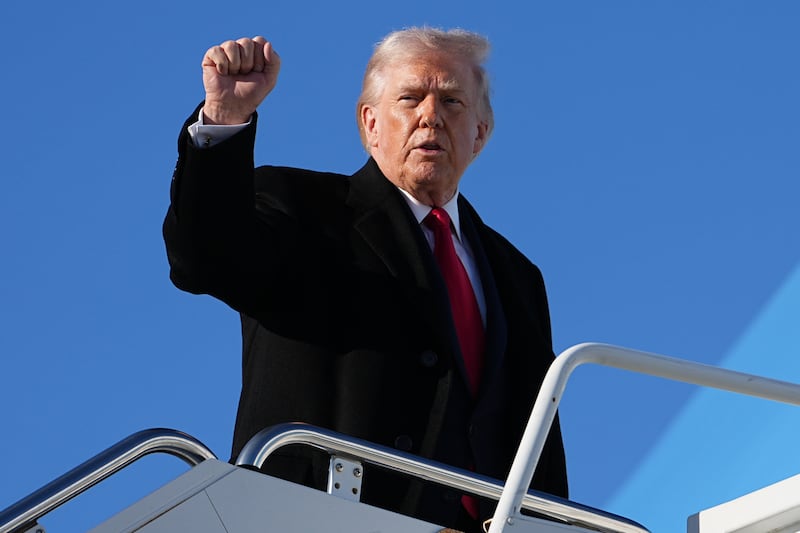
US attacks on Iran ‘will continue until all objectives achieved’ - Trump
US president Donald Trump has said that combat operations against Iran were carrying on “in full force” would continue until objectives were achieved.
“They will continue until all all our objectives are achieved. We have very strong objectives,” he said.
‘America will avenge’ three US service members killed in action - Trump
US president Donald Trump has said the US would avenge the deaths of three service members who were killed in action.
“America will avenge their deaths and deliver the most punishing blow to the terrorists who have waged war against, basically, civilisation,” Trump said in a video on Truth Social.
“Sadly, there will likely be more, before it ends, that is the way it is,” he said.

UK will not join offensive action in Iran, Starmer says
UK prime minister Keir Starmer said the UK “will not join offensive action” in Iran.
He added: “I want to be very clear, we all remember the mistakes of Iraq and we have learned those lessons.”
“We were not involved on those initial strikes on Iran and we will not join offensive action now.”

UK will allow US to use bases to attack missile sites in Iran - Starmer
UK prime minister Keir Starmer said he has accepted a request from US to use British bases for defensive strikes against Iranian missiles in storage depots or launchers.
“The only way to stop the threat is to destroy the missiles at source, in their storage depots or the launchers which are used to fire the missiles,” Starmer said.
“The basis of our decision is the collective self-defence of long-standing friends and allies and protecting British lives.”
Death toll from strike on girls’ school in Iran rises to 165, state media reports
The death toll from a missile strike on a girls’ school in southern Iran has risen to 165, according to state media.
The IRNA news agency also cited a local prosecutor as saying that 96 people had been wounded in Saturday’s strike in Minab.
The strike on school appears to be the worst mass casualty event of the US-Israeli-led bombing campaign on Iran so far.
Footage of the aftermath, which has been verified, shows hundreds of people gathered around the partially collapsed building, with rubble strewn across the street and men searching for victims.
Capt Tim Hawkins, the spokesperson for US Central Command, said the US was “aware of reports concerning civilian harm resulting from ongoing military operations. We take these reports seriously and are looking into them”.

Trump says attack on Iran could last four weeks
US president Donald Trump suggested the conflict with Iran could go on for the next four weeks, the Daily Mail newspaper reported on Sunday.
“It’s always been a four-week process. We figured it will be four weeks or so. It’s always been about a four-week process so - as strong as it is, it’s a big country, it’ll take four weeks - or less,” the British newspaper quoted Trump as saying.
Trump told the newspaper he remained open to more talks with the Iranians, but did not say if that would happen “soon”.
“I don’t know,” Trump said, according to the report. “They want to talk, but I said you should have talked last week, not this week,” he added.

US carried out strikes on ‘more than 1,000 targets’
The US military has carried out strikes against more than 1,000 Iranian targets so far since starting its campaign on Saturday, US Central Command said on Sunday.
In a fact sheet, Central Command listed these items under “Types of Targets”:
- Command and Control Centers
- IRGC Joint Headquarters
- IRGC Aerospace Forces Headquarters
- Integrated Air Defense Systems
- Ballistic Missile Sites
- Iranian Navy Ships
- Iranian Navy Submarines
- Anti-ship Missile Sites
- Military Communication Capabilities
Are you Irish and in the Middle East?
How are you being affected by the aftermath of the US-Israeli strikes on Iran and the retaliatory action by Tehran? Maybe you are an Irish person in Dubai, Abu Dhabi or Kuwait or other surrounding areas?
We’d like to hear your story. Tell us how your daily life is being impacted.
You can get in touch via our contact form found here or by emailing abroad@irishtimes.com.
Door to diplomacy still open despite attacks - Oman foreign minister
Oman’s foreign minister said on Sunday that the door to diplomacy between the US and Iran remains open, as regional tensions between the two countries continue.
“I still believe in the power of diplomacy to resolve this conflict. The sooner talks are resumed the better it is for everyone,” Oman’s foreign minister Badr Albusaidi said in a post on X.
Oman has been acting as a mediator in nuclear talks between the US and Iran.

Death toll rises as attacks continue in Middle East
Waves of Israeli and US air strikes hit Iran on Sunday, a day after the killing of supreme leader Ali Khamenei.
Israelis spent the day running to protected spaces as Iran responded with missile barrages and sirens sounded every few hours across the country.
Iran also targeted pro-American Gulf Arab states with missile and drone attacks.
Sunday’s attacks on Iran focused on headquarters and compounds of the Islamic Revolutionary Guard Corps and the Basij paramilitary force, the bodies primarily responsible for the recent brutal suppression of anti-regime protesters.
Read the full story by Mark Weiss here.

Strikes on Tehran ‘will only increase’, Netanyahu says
Israeli prime minister Binyamin Netanyahu said strikes on Tehran “will only increase” in the coming days.
He said he has “given instructions for the continuation of the campaign” against Iran during a meeting with his defense minister, chief of staff, and the head of the Mossad security service.
In a video statement shot on the roof of the Israeli military headquarters in Tel Aviv, Netanyahu added that Israeli “forces are now striking the heart of Tehran with increasing strength, and this will only increase even more in the coming days”.

EU calls for ‘maximum restraint’ in Iran conflict
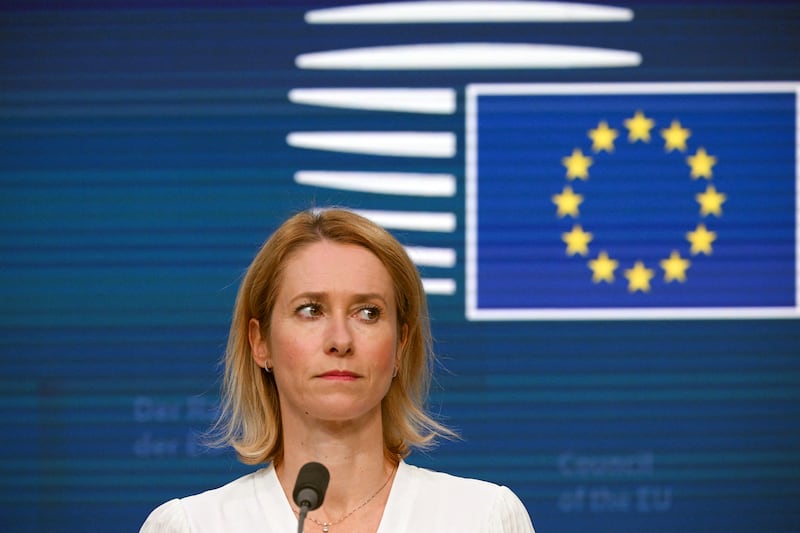
The European Union’s 27 nations on Sunday called for “maximum restraint” and full respect for international law in the Iran conflict and across the Middle East, the EU’s foreign policy chief Kaja Kallas said.
“We call for maximum restraint, protection of civilians and full respect of international law, including the principles of the United Nations Charter, and international humanitarian law,” said Kallas’ statement on behalf of EU nations.
At least 22 dead after pro-Iran protests in Pakistan and Iraq
At least 22 people have died following pro-Iran demonstrations in Pakistan that have seen hundreds of people march on the US consulate in Karachi.
Security forces in Iraq have also fired teargas at protesters who tried to storm the US embassy in Baghdad.
As anger boiled over after US-Israeli strikes killed Iran’s supreme leader, Ayatollah Ali Khamenei, a crowd of demonstrators in Karachi chanted against the offensive before entering the reception hall of the consulate building and lighting a small fire. - Guardian

Oil jumps 10% on Iran conflict and could spike to $100 a barrel
Brent crude jumped 10 per cent to about $80 (€68) a barrel over the counter on Sunday, oil traders have said.
It comes as analysts predict prices could climb as high as $100 after US and Israeli strikes on Iran plunged the Middle East into fresh conflict.
The global oil benchmark has rallied this year and reached $73 a barrel on Friday for its highest since July, buoyed by growing concern over the potential attacks that arrived a day later. Future trading is closed over the weekend.
Read more on the story here.
Irish racing stars in Dubai waiting to find out when they can fly home
Johnny Murtagh is among the Irish and other high-profile European racing figures awaiting news of when they will be able to travel home from Dubai having attended Meydan’s Super Saturday fixture at the weekend.
On Sunday, the Curragh trainer was one of a large group of racing professionals urged to stay inside the Meydan Hotel, which overlooks the racecourse, roughly 12km from downtown Dubai.
Iranian attacks have caused some damage to Dubai International Airport in the continuing conflict between the US, Israel and Iran.
Read more on the story by Brian O’Connor here.
Nato following Iran and Middle East developments, spokesman says
Nato is continuing to closely follow developments in Iran and the surrounding region, a spokesperson for the alliance’s military headquarters said on Sunday.
Nato’s supreme allied commander Europe, US general Alexus Grynkewich, “continues to speak actively and regularly with military leaders on both sides of the Atlantic, and with Nato’s secretary general,” colonel Martin O’Donnell, spokesperson for the Supreme Headquarters Allied Powers Europe, said.
The top commander “has and will continue to adjust Nato’s very strong force posture to ensure the security of its 32 member nations and to defend the Alliance from potential threats, such as ballistic missiles or unmanned aerial vehicles, emanating from this or other regions,” he added.

French naval base warehouse in Abu Dhabi hit by drone strike
A warehouse at a French naval base was hit in a drone attack that targeted the port of Abu Dhabi.
Catherine Vautrin, the French armed forces minister, confirmed the strike in a social media post, writing: “A hangar at our naval base, adjacent to that of the Emiratis, was struck in a drone attack that targeted the port of Abu Dhabi.”
She added: “The damage is purely material and limited. No injuries are to be regretted. The vigilance of our forces is at a maximum in the face of a situation that is evolving hour by hour.”
Contact travel agents and follow Department advice, advises Irish Travel Agents Association
Irish people who had plans to travel, or are currently on holiday in the Gulf states, should contact their travel agent immediately and follow the advice of the Department of Foreign Affairs, according to the Irish Travel Agents Association (ITAA).
Tom Randles, the president of the ITAA, said for those with travel plans, when the Department of Foreign Affairs advises ‘Avoid Essential Travel’ to a country, UAE in this instance, “it usually means that the travel insurance policy will not cover travel to that country”.
“Our advice to anyone in any of the Gulf states is to maintain contact with the airline you travelled on, maintain contact with your travel agent or tour operator, keep your mobile phone charged, and follow closely local media reports and advice,” he said.
“As of now, there are no evacuation routes recommended for Gulf countries and so the advice is to shelter in place. Remain where you are until instructed otherwise,” he said.

What is the status of Ireland’s embassy in Tehran?
At present Ireland does not have diplomatic staff on the ground in Iran, Europe Correspondent Jack Power writes.
Last year Ireland’s ambassador to Iran, Laoise Moore, and three other staff were temporarily evacuated from Tehran, during the 12-day war between Israel and Iran, which also saw the US strike several facilities involved in the Iranian regime’s nuclear programme.
“Consular assistance is being provided to Irish citizens in Iran by departmental and embassy staff at headquarters and in the region,” a Department of Foreign Affairs spokesman said on Sunday.
The Government had only re-established a permanent diplomatic presence in the country in recent years, with Moore posted to take up the role of ambassador in 2024. The embassy had been shut in 2012, as part of a cost cutting plan that saw a number of embassies closed.
The Irish embassy in the Iranian capital is based in a premise provided by the German embassy.
US has destroyed nine Iranian navy ships, Trump says
US president Donald Trump has said the US has destroyed nine Iranian navy ships and largely destroyed Iran‘s naval headquarters.
“I have just been informed that we have destroyed and sunk 9 Iranian Naval Ships, some of them relatively large and important,” Trump said in a post on Truth Social.
“We are going after the rest — They will soon be floating at the bottom of the sea, also! In a different attack, we largely destroyed their Naval Headquarters.”
Irish troops in Middle East forced to take shelter as strikes continue
Irish troops stationed in the Middle East have been forced to take shelter in bunkers as Iran steps up retaliation against Israel and the US for the assassination of their supreme leader.
There are approximately 380 Irish troops in various bases in the Middle East.
This includes 12 troops with United Nations Truce Supervision Organisation (UNTSO) stationed in Syria, Jordan, Lebanon and Israel as peace monitors.
Read the story by Conor Gallagher here.

Iranian foreign minister says military capability has not changed
Iran’s foreign minister Abbas Araghchi said on Sunday that despite the attacks on his country, “nothing has changed in our … military capability”.
He told ABC’s This Week that hours after Iran was struck, Tehran retaliated against Israeli targets and American bases “and we have continued to do so. So, our military is in place. They are capable enough to defend our country”.
When asked whether a diplomatic deal with the Trump administration was still possible, he said: “We negotiated with the United States twice in the past 12 months. And in both cases, they attacked us in the middle of negotiation. And that has become a very bitter experience for us.”

Khamenei is gone – but Iran’s system is built to endure
Decapitation does not necessarily ensure regime change.
The death in a US-Israeli air strike of Iranian supreme leader Ali Khamenei on Saturday means a change in personnel and, perhaps, policy adjustments at the top of the regime – but not major change.
Unless there is a breakdown in security or a power struggle between potential replacement individuals and factions, succession should be smooth.
Read analysis on the killing of Iran’s supreme leader here.
Germany’s chancellor calls for plan for ‘day after’ in Iran
German chancellor Friedrich Merz has called on the US and European partners to start planning for the future of Iran and the region. He said the people of Iran deserved a better future after US and Israeli strikes killed its supreme leader.
Merz said his government agreed with US goals to end Tehran’s nuclear armament and finish a “destructive game” being played by Iran, but he warned of possible dangers ahead.
“This is not without risk. We do not know how far the region will be drawn into escalation by Iran’s harsh counterstrikes,” Merz told reporters.
“We want to work with our partners in the US, Israel, the region, and Europe to develop an agenda for the day after,” he said.

Why is the US attacking Iran?
The US and Israel launched their most ambitious attacks on Iran in decades on Saturday in an operation that killed the country’s supreme leader Ayatollah Ali Khamenei.
The biggest foreign policy gamble of Donald Trump’s presidency comes after he campaigned for re-election as a “peace president” and after saying he preferred a diplomatic solution to the standoff with Iran.
Trump did not make a sustained case to the American people before acting, but addressed the issue briefly in his state of the union speech last Tuesday and then in a video message released on Saturday.
Read what Trump said were his key objectives here.
‘It’s a scary place right now’: Irish in Middle East told to shelter
Limerick man John Hayes was watching the warheads zip over his head in Dubai as Iran fired missiles on Saturday.
What followed was a cacophony of booming explosions in the sky as the city’s air-defence missile system began taking out missile after missile, drone after drone.
“We thought we would be safe but then we started spotting projectiles above us, and they were being intercepted by the air defence system in place here,” said Hayes.
Read the full story by Jade Wilson and David Raleigh here.

I have agreed to talk to Iran’s new leadership, Trump tells press
US president Donald Trump said on Sunday that Iran’s new leadership wants to talk to him and that he has agreed, according to an interview with The Atlantic.
“They want to talk, and I have agreed to talk, so I will be talking to them. They should have done it sooner. They should have given what was very practical and easy to do sooner. They waited too long,” Trump said in an interview from his Florida residence, the magazine reported.
The president added that some of the Iranians involved in the previous negotiations were no longer alive.
“Most of those people are gone,” he said. “Some of the people we were dealing with are gone, because that was a big - that was a big hit.”
Trump says 48 leaders ‘gone’ in strikes on Iran
Donald Trump has told Fox News that 48 leaders have been killed in US and Israeli strikes on Iran.
“It’s moving along. It’s moving along rapidly. This has been this way for 47 years,” he is quoted as saying in an interview with Fox News.
“Nobody can believe the success we’re having, 48 leaders are gone in one shot. And it’s moving along rapidly.”
Trump also told CNBC that US military operations in Iran were “ahead of schedule”.

Khamenei’s death sparks contrasting emotions in Iran
Clusters of celebration and mourning have broken out across Iran in response to the death of the supreme leader, Ayatollah Ali Khamenei, in an extraordinary public response to the end of nearly four decades of the top cleric’s rule.
In the squares of Tehran, crowds gathered to mourn the leader, chanting and holding placards with his image.
But videos shared widely on social media also showed people celebrating, dancing, honking car horns and setting off fireworks as news of the leader’s death broke. - Guardian

EU officials co-ordinate possible emergency consular help
Diplomats and other officials from the EU’s 27 states in Brussels are co-ordinating possible emergency consular assistance for citizens in Iran and the wider region.
It is understood an EU-level meeting between officials on Sunday, discussed an agreed approach of advising citizens to shelter in place for the moment, and there were no immediate plans to arrange evacuations.
However, Cyprus, an EU member state geographically close to Lebanon and Israel, has begun making preparations to facilitate airlifts evacuating European citizens out of the region, should they be required if the conflict continues to escalate.
“With Khamenei gone, there is renewed hope for the people of Iran.” European Commission president Ursula von der Leyen said on Sunday.
“At the same time, this moment carries a real risk of instability that could push the region into a spiral of violence,” she said.
Read the full story from Jack Power here.

Iran’s former president reportedly killed in strikes
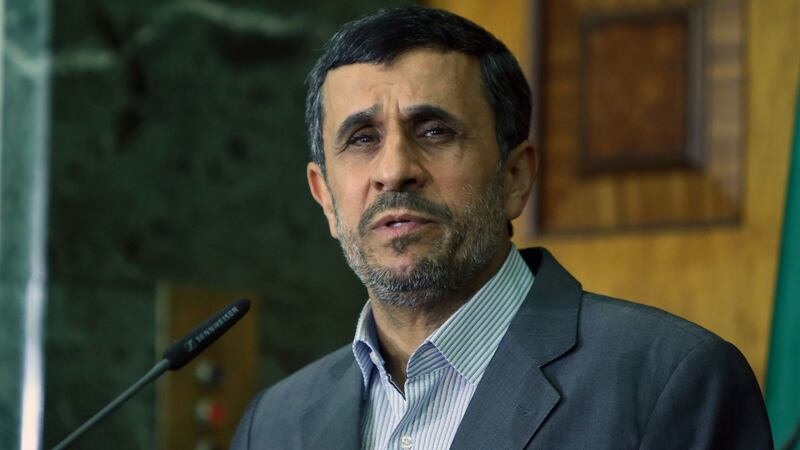
Mahmoud Ahmadinejad, the former Iranian president, who gained international notoriety by calling for Israel’s erasure and denying the Holocaust, appears to have been killed in Saturday’s military strikes, according to local media.
Several Iranian outlets ran reports confirming Ahmadinejad’s death on Sunday after it had initially been reported as confirmed by ILNA, a semi-official news agency.
ILNA later retreated somewhat from its original report in a later post that was headlined “Is Mahmoud Ahmadinejad martyred?”
The later report cited an unnamed source who the agency said had denied Ahmadinejad’s death “without providing further information”. The original report, which ILNA said was based on “informed sources”, said the former president had been killed in strikes on his home in the Narmak district of Tehran.
Ahmadinejad was a dominant and highly controversial figure in Iranian politics during his eight-year presidency.
What rights do travellers have if plans are thrown into disarray?
At least 13 flights between Ireland and the Middle East on Sunday were cancelled, with the DAA, the authority that runs Dublin Airport, warning of further disruption in the days ahead.
The Department of Foreign Affairs has upgraded its travel advisories for the region and it is advising against non-essential travel to Bahrain, the UAE, Kuwait, Qatar and Saudi Arabia. This is the department’s second-highest warning level.
It is also warning Irish citizens not to travel to either Israel or Iran, the highest alert level it has.
Minister for Foreign Affairs Helen McEntee has encouraged Irish citizens in the region or transiting through it to register on the Citizen Registration platform and said she “strongly urged citizens not to pursue anything other than a shelter-in-place strategy for now”.
Read the full story from Conor Pope here.

US tracked Iran’s supreme leader before strikes
Shortly before the United States and Israel were poised to launch an attack on Iran, the CIA zeroed in on the location of perhaps the most important target: Ayatollah Ali Khamenei, the country’s supreme leader.
The CIA had been tracking Khamenei for months, gaining more confidence about his locations and his patterns, according to people familiar with the operation.
Then the agency learned that a meeting of top Iranian officials would take place Saturday morning at a leadership compound in the heart of Tehran.
Most critically, the CIA learned that the supreme leader would be at the site.
Read the full story here.

Iran missiles ‘didn’t even come close’ to US aircraft carrier - US Central Command
The US military has said its aircraft carrier USS Abraham Lincoln has not been hit by missiles fired by Iran.
Earlier, Iranian state media said the attack on the carrier involved four ballistic missiles.
US Central Command (Centcom) said in a post on X: “The Lincoln was not hit. The missiles launched didn’t even come close.”
USS Abraham Lincoln carries F-35 stealth jets, capable of evading enemy radar as well as three destroyers loaded with Tomahawk land attack cruise missiles.

US claims it has sunk Iranian ship
In an earlier update, the US Central Command (Centcom) said an “Iranian Jamaran-class corvette” (ship) was hit by US forces and is “currently sinking to the bottom of the Gulf of Oman”.
“As the President said, members of Iran’s armed forces, IRGC and police ‘must lay down your weapons.’ Abandon ship,” it said in a post on X.
Ellen Coyne reports that the Minister for Foreign Affairs, Helen McEntee, has said the US and Israel must follow international law, but declined to describe the strikes on Iran as an illegal war.
McEntee was speaking ahead of an emergency meeting with other EU foreign affairs ministers on Sunday, in response to the US and Israel strikes on Iran.
In his statement responding to the stark escalation in the Middle East, United Nations secretary general António Guterres condemned the joint military operation by the US and Israel and the retaliatory strikes by Iran as a grave threat to international peace and security.
When asked on RTÉ Radio 1’s This Week programme if she also condemned the bombing of Iran, McEntee said the military action was an “extremely, extremely difficult situation” and she was concerned that the escalation could “increase violence within the region and could escalate things beyond repair”.
“However, we are all very aware and very clear that the regime in Iran is an absolutely brutal regime that has quite literally, in the last number of weeks, slaughtered tens of thousands of their own citizens, and they have cut off all communication for their citizens, to their citizens, and that has not changed,” McEntee said.
“So we need to make sure that everything that we do, from Ireland’s perspective, the focus is on de-escalating the situation, but also trying to protect those in Iran, trying to protect those who have been put in prison, who have been brutally slotted over the last number of weeks.”
She added that any military intervention had to be done in line with international law.
“Whether it’s this conflict, whether it’s what happened in the last few days, or anything that’s been happening in the region, it has to align with international law.”
Asked if the actions of the US and Israel were an illegal war, McEntee said “I can’t say that”.
“As far as I’m concerned, whatever is happening, whatever actions are being taken, they have to, and they must comply with international law. But this is a very complex and a very difficult situation, and I’m extremely concerned. I’m extremely concerned that this, as we’ve seen already, just in the last 24 hours, has escalated further into the UAE. That, in itself, is what we’ve been trying to avoid. This is what everybody is trying to avoid.”
She said her discussion with other foreign leaders will be focused on how Europe can “de-escalate the situation”.
Three US service members have been killed in action as part of military operations against Iran, the US Central Command has said. Five others were seriously wounded as part of what it is calling Operation Epic Fury.
Minister for Foreign Affairs and Trade Helen McEntee and United Arab Emirates (UAE) deputy prime minister and foreign minister Sheikh Abdullah Bin Zayed Al Nahyan spoke by phone this afternoon.
During the call, McEntee expressed her deep concern about the outbreak of conflict in the region and its impact on the UAE and partners in the Gulf.
She thanked Bin Zayed Al Nahyan for the support and information provided to the large Irish population in the UAE, and discussed the security situation.
McEntee emphasised the Government’s continued advice to all Irish citizens in the UAE to shelter in place and follow local Government advice.
“I welcome the opportunity to engage with the deputy prime minister during such a challenging time for his country,” she said after the call. “The UAE is an important and valued partner and many Irish people call the UAE home.
“I expressed Ireland’s condolences to the victims of attacks on the UAE over the last 36 hours.
“In this uncertain time, the safety of Irish citizens in the UAE and wider region is my utmost priority and I deeply appreciate the efforts of the UAE Government to keep all residents safe and informed.
“I continue to call on all sides to de-escalate. And I hope that other States in the region will continue to exercise restraint - a wider conflict will increase regional instability.”
As US and Israeli bombs fell on Iran this weekend, people gambling on Polymarket — where $529 million was traded on contracts tied to the timing of the strikes — were cashing in.
Almost immediately, blockchain sleuths began hunting for unusual patterns in recent bets, Bloomberg is reporting.
Six accounts on Polymarket made around $1 million in profit by betting on the US to strike Iran by February 28, according to analytics firm Bubblemaps SA.
The accounts were all freshly created in February and had only ever placed bets on when US strikes might occur. Some of their shares were purchased, in some cases at roughly a dime apiece, hours before the first explosions were reported in Tehran.
These are the hallmarks that blockchain analysts associate with insider trading in prediction markets, an industry without widespread oversight and no agreed-upon methodology for distinguishing luck from leaks — and they’re far from conclusive on their own.
Similar patterns suggested that an insider made a big profit betting on the ouster of Venezuela’s Nicolás Maduro in January, and have also been used to identify several other cases of alleged insider trading.
By the time the February 28th contract resolved on Saturday, it had attracted around $90 million in trading volume since its creation — making it by far the most popular date for a strike on the platform.
The next most traded was a contract for an attack by January 31st, which had drawn $42 million.
Polymarket, one of the largest prediction markets platforms, has become a sprawling, largely unregulated clearinghouse for geopolitical speculation, where the line between informed conviction and privileged knowledge is increasingly hard to draw. Polymarket didn’t immediately respond to a request for comment on Saturday.
Russia’s foreign ministry said this afternoon that the closure of the Strait of Hormuz to shipping could lead to significant imbalances on the global oil and gas markets.
It also said the news of the killing of Ayatollah Ali Khamenei, members of his family and some high-ranking Iranian officials, was met with resentment and deep regret in Russia.
Iran’s Islamic Revolutionary Guards Corp has launched a ballistic missile attack on the USS Abraham Lincoln.
It is one of two aircraft carriers deployed to the region in recent weeks and the only one relatively close to Iranian shores.
The attack involved four ballistic missiles, Iranian state media has said.
The aircraft carrier carries F-35 stealth jets, capable of evading enemy radar as well as three destroyers loaded with Tomahawk land attack cruise missiles.
At the time of writing, the US had yet to respond to the claims.
Conor Gallagher reports there are approximately 380 Irish troops in various theatres in the Middle East but military officials believe there is no specific risk to their safety from Iranian or Israeli-American attacks.
The largest contingent of Irish troops is 362 peacekeepers in south Lebanon near the border with Israel which forms part of the United Nations Interim Force Lebanon (Unifil).
Immediately before launching strikes on Iran, Israeli forces targeted several areas in Lebanon with air strikes. The Israel Defence Forces said it was targeting “Hizbullah terrorist infrastructure in southern Lebanon”.
These strikes occurred well north of the Irish area of operations and outside of the Unifil mission area. Irish troops were not required to take shelter.
Hizbullah is considered one of Iran’s proxy forces in the region, meaning it could seek to strike Israeli targets on its behalf. Israel counterattacks would almost certainly follow, including on Hizbullah infrastructure in the Irish area.
This would raise the possibility of munitions falling on Irish positions. In October 2024, during the last Israel-Hizbullah war, a suspected Hizbullah rocket fell on the main Irish camp, Post 2-45.
Irish military officials are monitoring the situation and, according to sources, do not believe the Irish contingent is in any specific danger.
Another 12 Irish peace monitors from the Defence Forces are stationed in Syria, Jordan, Lebanon and Israel as part of the United Nations Truce Supervision Organisation while a smaller number are stationed with the headquarters staff of the United Nations Disengagement Observer Force (Undof) on the Golan Heights in Syria. These areas have not been targeted to date and all troops are safe and accounted for.
Kuwait’s air force has intercepted and destroyed 97 missiles and 283 drones since Iran launched strikes against the country, yesterday according to the official Kuwait News Agency. It said one person has been killed and 32 have been injured.
The UAE ministry of defence (MoD) , meanwhile, has said three people have died as a result of Iranian attacks since yesterday. It said it had dealt with 167 missiles and 541 Iranian drones.
Brent crude jumped 10 per cent to about $80 a barrel over the counter today, oil traders said, while analysts predicted that prices could climb as high as $100 after US and Israeli strikes on Iran plunged the Middle East into a new war.
“While the military attacks are themselves supportive for oil prices, the key factor here is the closing of the Strait of Hormuz,” said Ajay Parmar, director of energy and refining at ICIS.
Most tanker owners, oil majors and trading houses have suspended crude oil, fuel and liquefied natural gas shipments via the Strait of Hormuz, trade sources said, after Tehran warned ships against moving through the waterway. More than 20 per cent of global oil is moved through the Strait of Hormuz.
“We expect prices to open (after the weekend) much closer to $100 a barrel and perhaps exceed that level if we see a prolonged outage of the strait,” Parmar said.

The number of people said to have been killed in a strike in central Israel after Iran vowed to step-up its retaliation for the killing of its supreme leader in the surprise US and Israeli attack that launched the widening war has climbed to eight.
Israel’s Magen David Adom rescue service said searches are continuing for additional victims following the explosion today and elsewhere loud explosions caused by missile impacts or interceptions could be heard in Tel Aviv.
Meanwhile, a massive explosion rocked Iran’s capital as Israel said it would carry out “non-stop strikes” against its leaders and military.
The blasts in Tehran – whose target was not immediately clear – sent a huge plume of smoke into the sky.
It happened in the area of the national police headquarters and Iranian state television, as well as Tehran’s Revolutionary Court and a defence ministry building.

Before the statement from Minister for Foreign Affairs Helen McEntee, Independent Ireland TD for Cork North Central Ken O’Flynn had called for more clarity for Irish citizens in the region.
Minister for Foreign Affairs Helen McEntee has said on RTE’s lunchtime news that there could be up to 20,000 Irish citizens either living in the region impacted by the conflict or currently transiting through it and she has stressed that people should shelter in place.
Minister for Foreign Affairs Helen McEntee has released an update on the situation in the Gulf and the implications for Irish citizens there.
“A large number of Irish citizens, in particular in the UAE, are already on our Citizen Registration platform, with several hundred registering yesterday. I would encourage anyone in the region either resident or transiting to register,” she said in a statement.
“I am also aware of suggestions of consideration of land routes to neighbouring countries, such as Oman. However, I strongly urge citizens not to pursue anything other than a shelter in place strategy for now.”
McEntee said that following “co-ordination across all EU member states, this remains the common approach at the moment.
“This is a unique consular situation, with a large number of citizens located in UAE in particular, and with local and regional airports shut and in some cases under attack. As of now, there are no evacuation routes recommended for Gulf countries and so the advice is to shelter in place.”
She said the Government is “maintaining close touch with the airlines of those citizens who were in transit when the conflict began. We also remain in very close contact with EU partners as this situation evolves.
“Citizens with queries or concerns can continue to contact the Department of Foreign Affairs and Trade consular team in Dublin at +353 1 4082000. Please note that we are receiving a high volume of calls. To register please go online to https://citizensregistration.dfa.ie/"
Jack Power in Brussels reports that the authorities in Cyprus, the small Mediterranean island and EU member state geographically close to the Middle East, are “monitoring developments” closely, according to its president Nikos Christodoulides.
The Irish Times understands senior figures in the Cyprus government had recently expressed private concerns, before the strikes on Iran this weekend, that Cyprus could become a secondary target in any escalating military conflict in the Middle East region, because it hosts two sovereign British air bases on its territory, under an agreement that dates back to 1960.
UK prime minister Keir Starmer assured Christodoulides “clearly and unequivocally that Cyprus was not a target” in Iran’s retaliation, in a call between the two leaders today.
In a post on X, a spokesman for the Cypriot government said: “In relation to statements and media reports referring to the launch of missiles in the direction of Cyprus, it is clarified that this is not the case and there is no indication whatsoever that any threat to the country has occurred.”
Irish citizens who are in the UAE, Kuwait or Qatar have been asked by the Minister for Finance Simon Harris to make their presence known to the DFA via its registration website.
The death toll from a missile strike on a girls’ school in southern Iran has risen to almost 150, according to Iranian state media.
The Guardian is reporting that the Mizan News Agency, the official news outlet of Iran’s judiciary, has said the number killed in Saturday’s strike on a girls’ elementary school in Minab in southern Iran has risen to 148 killed, with 95 others wounded.
The news agency cited Ebrahim Taheri, a prosecutor in Minab.
The school, which was struck on Saturday morning, appears to be the worst mass casualty event of the US-Israeli-led bombing campaign on Iran so far.
Video and photographs from the aftermath of the strike, which have been verified as authentic and geolocated to the site, show hundreds of people gathered around the partially collapsed, smoking building, with rubble strewn across the street and men digging through it for victims.
Screams can be heard in the background. In some of the images, schoolbags and textbooks are being pulled from the debris.
Capt Tim Hawkins, the spokesperson for US Central Command, said the US was “aware of reports concerning civilian harm resulting from ongoing military operations. We take these reports seriously and are looking into them.”
According to The Guardian, the school building appears to be adjacent to an Islamic Revolutionary Guard Corps barracks.
At least 13 flights to and from Dublin from airports in the Middle East have been cancelled today with the airport warning that the disruption is likely to continue into next week.
The DAA spokesman Graeme McQueen said it was “another day of disruption for passengers due to fly between Ireland and the Middle East, and some cancellations have already been confirmed for tomorrow.”
He said Emirates has cancelled its full schedule of flights between Dubai and Dublin Airport today (three inbound/three outbound), as well as its early morning inbound and outbound flights tomorrow.
Qatar has cancelled all flights to/from Doha today (two inbound/two outbound).
Etihad has cancelled three of its four Abu Dhabi flights today two inbound/one outbound). A decision will be made later on its last outbound flight of the day (EY048).
“Further disruption over the coming days is possible, McQueen said. ”As always, passengers are advised to contact their airline directly for the latest updates on the status of their flight.”
Saudi Arabia and the United Arab Emirates stepped up their criticism of Iran’s strikes across the Gulf.
“Return to your senses, to your surroundings, and deal with your neighbors with reason and responsibility before the circle of isolation and escalation widens,” Anwar Gargash, a senior foreign policy advisor to the UAE’s president, Mohammed bin Zayed, said on X.
“Your war is not with your neighbors, and through this escalation, you confirm the narrative of those who see Iran as the region’s primary source of danger,” Gargash said.
Saudi Arabia’s foreign ministry said Iran’s attacks — a response to US-Israeli strikes that started on Saturday — needed a “firm” international response. Qatar described an Iranian attack on the port of Duqm in Oman as “cowardly.”
The statements on Sunday signal Iran’s growing isolation as it lashes out against the American and Israeli bombardment by striking targets in Israel and neighboring Arab states.
The UAE’s main cities of Dubai and Abu Dhabi have faced hundreds of missiles and drone attacks from Iran since Saturday morning.
Most have been intercepted and there are few reports of casualties. But they are causing panic among residents and pose a huge threat to the UAE’s economy and status as a stable financial, logistics and tourism hub.
Sunni Arab states in the Gulf have long had tense relations with Iran, a Shia-majority country. Still, in recent years the likes of Saudi Arabia and the UAE had sought to improve relations and were keen for Iran to agree a diplomatic deal with the US to avert the conflict now raging.
Reaction to the killing of the Ayatollah has been coming in all morning.
EUROPEAN UNION FOREIGN POLICY CHIEF KAJA KALLAS
“The death of Ali Khamenei is a defining moment in Iran’s history. What comes next is uncertain. But there is now an open path to a different Iran, one that its people may have greater freedom to shape.”
RUSSIAN PRESIDENT VLADIMIR PUTIN
“Please accept my deep condolences in connection with the murder of the Supreme Leader of the Islamic Republic of Iran, Seyed Ali Khamenei, and members of his family, committed in cynical violation of all norms of human morality and international law.”
SWEDISH FOREIGN MINISTER MARIA STENERGARD
“Ayatollah Ali Khamenei has been confirmed dead. This could open a window of opportunities. But there are still many uncertainties remaining.
“Iran’s future must belong to the people. But the road there is long. The risk of a spiral of violence in the Middle East remains great.”
INDONESIA’S ULEMA MUSLIM CLERICAL COUNCIL
“The Indonesian Ulema Council (MUI) expressed its deepest condolences for the death of Iran’s supreme leader, Ali Khamenei, as a result of the Israeli-American attack on February 28.
“The United States, which is playing a central role in managing the Palestinian conflict through the BoP (Board of Peace), faces a major question: is this strategy truly aimed at a just peace, or is it actually strengthening an unequal security architecture and burying Palestinian independence? Therefore, the MUI urges the Indonesian government to revoke its membership from the BoP.”
EUROPEAN COMMISSIONER URSULA VON DER LEYEN
“With Khamenei gone, there is renewed hope for the people of Iran. We must ensure that the future is theirs to claim and shape. At the same time, this moment carries a real risk of instability that could push the region into a spiral of violence.”
ITALIAN FOREIGN MINISTER ANTONIO TAJANI
“For the moment, Iran is in a transitional phase, and it remains to be seen how long it will last and what impact the war will have. What is certain is that a leader who had guided Iran for decades is gone, and that is bound to have consequences — including the loss of Khamenei’s personal authority over the population.”
FRENCH GOVERNMENT SPOKESPERSON MAUD BREGEON
“He was responsible for the deaths of thousands of civilians in his country and in the region, so one can only welcome his disappearance. It is now up to the Iranian people to choose their own destiny.”
At least 150 tankers including crude and liquefied natural gas vessels dropped anchor in open Gulf waters beyond the Strait of Hormuz and dozens more were stationary on the other side of the chokepoint, shipping data showed on Sunday.
The move comes in the wake of the US and Israeli attack on Iran plunged the region into a new war.
The tankers were clustered in open waters off the coasts of major Gulf oil producers including Iraq and Saudi Arabia as well as LNG giant Qatar, according to Reuters estimates based on ship-tracking data from the MarineTraffic platform.
Meanwhile, German shipping group Hapag-Lloyd has suspended all vessel transit through the strait until further notice because of the evolving security situation in the region, it has said this morning.
Best- and worst-case scenarios outlined
An “all-out war” seems unlikely after the US-Israeli strikes in Iran, but “destabilisation” in the region is likely, the head of a foreign affairs think tank based in the UK has told the BBC.
Asked on the Sunday With Laura Kuenssberg programme for her “best-case scenario” after the killing of Ayatollah Ali Khamenei, Chatham House chief executive Bronwen Maddox said: “Best case is that the protesters begin to come out again on the streets.
“They find that they are not shot down, they begin to produce leaders or a leader, and realise that they can actually change the whole regime.”
Asked for a worst-case scenario, she said: “That the Revolutionary Guard are still… show themselves to be very much in control of the country, that they continue to hit other countries… which not only destabilises the region, but it encourages our country to pull away from the US and pull away from any talks about stabilising Gaza and the West Bank.”
She added: “I don’t think it’s realistic to see an all-out war, because so many countries don’t want it but a destabilisation and the Gulf and Saudi Arabia pulling away from the US – I think that is likely.”
If you have been caught up in the deepening crisis in the Middle East precipitated by the US and Israeli attack on Iran on Saturday morning and wish to share your experience, you can get in touch with us via newsdesk@irishtimes.com
Putin condemns ‘cynical’ killing of Ayatollah
The Russian president Vladimir Putin has described the killing of Iranian supreme leader Ayatollah Ali Khamenei and members of his family as a “cynical” murder that violated all the norms of human morality and international law.
The full text of the note reads:
“Please accept my deep condolences in connection with the murder of the Supreme Leader of the Islamic Republic of Iran, Seyed Ali Khamenei, and members of his family, committed in cynical violation of all norms of human morality and international law.
“In our country, Ayatollah Khamenei will be remembered as an outstanding statesman who made a huge personal contribution to the development of friendly Russian-Iranian relations and bringing them to the level of a comprehensive strategic partnership.
“I ask you to convey my most sincere sympathy and support to the family and friends of the Supreme Leader, the government and the entire people of Iran.”
Putin was joined by North Korea in condemning the killing. Its foreign ministry spokesperson said Israel’s attacks on Iran and the US military operation were “illegal aggression” as well as a violation of national sovereignty.
Share
The leader of Britain’s Green Party, Zack Polanski, has said he has seen “no evidence” the UK took the process of diplomacy and negotiation with Iran seriously before it was attacked.
“The moment you’ve ruled out negotiation, you’ve accepted that you’re going to war, and I don’t think the British people want to see another war in that region,” he said.
“The question becomes: how do you make diplomacy and negotiation work? What I know is negotiation was happening, whether it was working or not is a legitimate question, but I don’t think the answer can be, it’s not working, so we’re going to bomb and kill them, the answer has to be: how do we work harder to make it work, including third countries to use to de-escalate?
“I’ve seen no evidence that the UK was really taking that process seriously, because part of the start of that would be to call out Donald Trump and Israel. There is only one region in that area with a nuclear weapon, and that’s Israel.”
Alireza Arafi has been appointed as the jurist member of Iran’s leadership council, a body tasked with fulfilling the supreme leader’s role until the Assembly of Experts elects a new leader, Iranian state media has reported.
A cleric member of the Guardian Council, Arafi will be part of the temporary Leadership Council alongside president Masoud Pezeshkian and chief justice Gholamhossein Mohseni Ejei.
It is worth noting that the Department of Foreign Affairs has updated is travel advisories for the region and it is advising against non-essential travel to Bahrain, the UAE, Kuwait, Qatar and Saudi Arabia.
This is the second-highest warning level it has.
It is warning Irish citizens not to travel to either Israel or Iran, the highest alert level it has.
The updating of the warnings is significant for travellers because if flights and holidays have to be cancelled as a result of the conflict and the subsequent changes to official advice, it will make claiming money back from travel agents and airlines easier.
Not the most important detail, when the world is in such turmoil, but hardly inconsequential for many people either.
The Iranian president Masoud Pezeshkian has described the killing of Ayatollah Ali Khamenei as a “declaration of war against Muslims”.
“The Islamic Republic of Iran considers it its legitimate duty and right to avenge the perpetrators and masterminds of this historic crime,” he said in a statement carried by state TV.
Irish NGO calls for US Congress to act
ActionAid Ireland has condemned the US and Israeli military strikes on Iran and said the Trump administration’s “openly declared foreign policy of ‘might makes right’ is a clear threat to global peace and security”.
ActionAid Ireland CEO Karol Balfe warned that in addition to recent attacks and threats on other countries, the United States is re-investing in nuclear weapons, deploying heavily militarised federal police forces against people living within its own borders, and aggressively militarising advances in artificial intelligence.
“The US Congress must immediately assert its authority to stop the Trump administration’s undeclared, illegal wars,” Balfe said. “In the past two months, the United States has launched unprovoked attacks against Nigeria, Venezuela, and now Iran, and is imposing a life-threatening blockade against Cuba. This comes in the wake of its murders of at least 150 people in the Caribbean; bombings of Somalia, Iraq, Yemen, and Syria; threats against Greenland; and, of course, political and material support for genocide in Gaza.”
The Irish embassy in Riyadh is encouraging citizens living in the region to register with it and to follow DFA travel advice.
Fresh plumes of smoke are visible across the Iranian capital of Tehran this morning.


Conflict could see cyberattacks on US assets
A senior US intelligence official told Reuters that while the largest threat stemming from the attack was against US military personnel in the region, cyberattacks could also target critical US infrastructure.
Major Middle Eastern airports, including Dubai, the world’s busiest international travel hub, were shut following the strikes on Iran’s missile retaliation unleashed one of global aviation’s most severe disruptions in years.
On Saturday, Tehran warned that it had closed the Strait of Hormuz, the narrow conduit for about a fifth of global oil consumption, raising expectations of a sharp jump in oil prices.
‘Few people will mourn’ death of Khamenei
Britain’s defence secretary John Healey has said “few people will mourn” the Ayatollah Ali Khamenei following his death in joint US-Israeli strikes on Saturday.
Giving the first UK government response to the killing, Healey told Sky News’s Sunday Morning With Trevor Phillips: “I think few people will mourn the Ayatollah’s death, not least the family and friends of those thousands of young protesters murdered on the streets of Iranian cities.
“Iran and the regime he’s led for so long, it’s a source of evil, murdering its own citizens and sponsoring and exporting terror, including to countries like Britain.
“The concern now, of course, is this regime is lashing out.
“It’s lashing out in an increasingly indiscriminate and widespread way, and people will be really concerned that it’s not just military targets, but civilian airports like Kuwait, hotels in Dubai and Bahrain are being hit, and so that’s why we’ve strengthened the UK defences in the region.”
Who was Iran’s supreme leader, Ayatollah Ali Khamenei, the man targeted and killed in the wave of strikes launched by the US and Israel on Saturday morning.
The Israel Defense Forces has launched a fresh wave of strikes against targets linked to the Iranian regime in Tehran.
“Over the past day, the Israeli Air Force conducted large-scale strikes in order to establish aerial superiority and to pave the path to Tehran,” a statement says.
Iranian media has been reporting multiple explosions in the capital.
Israel army’s Home Front Command also announced it had mobilised around 20,000 reservists to assist civilians following the missile attacks on the country.
In a sign of what might be to come, Oman’s maritime security centre has just said a Palau-flagged oil tanker was attacked about five nautical miles off Oman’s Musandam. Four people were injured and the whole crew of 20 people was evacuated.
At the time of writing there was no confirmation as to who attacked the vessel but Iran has been threatening ships traveling the Strait of Hormuz, which is a vital access route for oil transit from the region.
Dubai International Airport has been targeted by Iranian missiles for a second day, suggesting air travel through the world’s busiest international hub is unlikely to resume in the near future.
Keith Duggan in the US has a must-read article on the perplexing nature of the strikes on Iran and on events as they continue to unfold.
“Khamenei’s death is the coup de grace of what was a second precise and audacious Israeli-US military strike on Iran inside a year.
“The erasure of a figure who was the last of the original cast of the 47-year-old Islamic Republic regime instantly thrusts Iran, and the Middle East, on to a different trajectory.
“But as international governments and Middle East authorities struggled to catch up the speed of events, there was general agreement that nobody can forecast with any accuracy as to where the new dispensation will bring the region – or why the Trump administration has decided to act now."
Reports on the news wires suggest eight people have been killed in a pro-Iran rally at the US consulate in Pakistan’s port city of Karachi.
“We have moved at least eight dead bodies to Karachi’s civil hospitals, while 20 others were injured in the consulate incident,” a spokesman for the Edhi Foundation rescue service, told AFP.
The New York Times has published an account of the build-up to the launch of the attack on Iran by the US and Israel.
It says that shortly before the bombing, the CIA had zeroed in on the location of Khamenei.
“The CIA had been tracking Khamenei for months, gaining more confidence about his locations and his patterns, according to people familiar with the operation,” the report says.
“Then the agency learned that a meeting of top Iranian officials would take place Saturday morning at a leadership compound in the heart of Tehran. Most critically, the CIA learned that the supreme leader would be at the site.”
It goes on to say that the US and Israel decided to adjust the timing of their attack, in part to take advantage of the new intelligence, according to officials with knowledge of the decisions.
“The information provided a window of opportunity for the two countries to achieve a critical and early victory: the elimination of top Iranian officials and the killing of Khamenei.”
According to the Times, “the remarkably swift removal of Iran’s supreme leader reflected the close coordination and intelligence sharing between the United States and Israel in the run-up to the attack, and the deep intelligence the countries had developed on Iranian leadership, especially in the wake of last year’s 12-day war. The operation also showed the failure of Iran’s leaders to take adequate precautions to avoid exposing themselves at a time where both Israel and the US sent clear signals that they were preparing for war.
“The CIA passed its intelligence, which offered “high fidelity” on Khamenei’s position, to Israel, according to people briefed on the intelligence. They and others who shared details about the operation spoke on the condition of anonymity to discuss sensitive intelligence and military planning.
“Israel, using US intelligence and its own, would execute an operation it had been planning for months: the targeted killing of Iran’s senior leaders. The United States and Israeli governments, which had originally planned to launch a strike at night under the cover of darkness, made the decision to adjust the timing to take advantage of the information about the gathering at the government compound in Tehran on Saturday morning.
“The leaders were set to meet where the offices of the Iranian presidency, the supreme leader and Iran’s national security council are located.
“Israel had determined that the gathering would include top Iranian defence officials, including Mohammad Pakpour, the commander in chief of the Revolutionary Guard; Aziz Nasirzadeh, the minister of defence; Adm Ali Shamkhani, the head of the military council; Seyyed Majid Mousavi, the commander of the Revolutionary Guard Aerospace Force; Mohammad Shirazi, the deputy intelligence minister; and others.
“The operation began around 6am in Israel, as fighter jets took off from their bases. The strike required relatively few aircraft, but they were armed with long-range and highly accurate munitions.
“Two hours and five minutes after the jets took off, at around 9:40 am in Tehran, the long-range missiles struck the compound. At the time of the strike, senior Iranian national security officials were in one building at the compound. Khamenei was in another nearby building.”
Iran’s first vice-president, Mohammad Reza Aref, has issued a statement via Iranian state media outlet IRNA saying that while the country is grieving, it is not passive.
“Today, Islamic Iran is in mourning; but this mourning is not a mourning of passivity,” he said.
In the statement he said the US And Israel thought they would be able to “shake the soul of a nation” by killing Khamenei but he warned that the Islamic revolution “becomes more alive and rooted through martyrdom”.
He said the strategy now would be to protect national stability and internal cohesion.

Minister for Foreign Affairs Helen McEntee will meet her counterparts in the EU to discuss the crisis in the Middle East later today and her department has issued advice to people in the region and those hoping to travel from and through it in the hours ahead.
As we have been reporting, Iran fired missiles at targets in Israel and Gulf Arab states overnight and this morning and has vowed massive retaliation for the killing of Khamenei by the US and Israel.
The 86-year-old’s death “showed that he consistently stood among the people and at the forefront of his responsibilities, confronting what officials call global arrogance”, Iranian state TV said.
Iran’s cabinet vowed this “great crime will never go unanswered” and the paramilitary Revolutionary Guard threatened to launch its “most intense offensive operation” ever, targeting Israeli and American bases.
“You have crossed our red line and must pay the price,” Iran’s parliamentary speaker, Mohammad Bagher Qalibaf, said in a televised address earlier today. “We will deliver such devastating blows that you yourselves will be driven to beg.”
Hundreds of civilians were killed and injured in the US and Israeli strikes, Iran’s ambassador to the United Nations, Amir Saeid Iravani, told an emergency meeting of the UN Security Council late last night.
Iravani called Iran’s retaliatory attacks a matter of self defence, describing the bases of hostile forces as legitimate military targets.
In his remarks, UN secretary general António Guterres, who urged an immediate cessation of hostilities, said he deeply regretted that an opportunity for diplomacy had been “squandered”.
Envoys from Russia and China criticised both the US and Israel for launching the strikes while Tehran was negotiating with Washington.
Iran had been “stabbed in the back”, said Russian UN envoy Vasily Nebenzya, disputing the US justification of the attacks as preventing Iran from acquiring a nuclear weapon.
China called for an immediate ceasefire, urging all sides to avoid escalation and resume talks, while the official Xinhua news agency criticised the attacks on Sunday as “brazen aggression against a sovereign nation”.
Senior US officials said the latest talks showed Iran was unwilling to give up its ability to enrich uranium, saying it was wanted for nuclear energy, although US officials said it would enable the country to build a nuclear bomb.
Smoke plumes hang over Dubai following Iranian strikes overnight and this morning.

Thousands of flights have been disrupted in the wake of the escalating conflict engulfing the Middle East, with Dubai’s main airport — the world’s busiest aviation hub — effectively shut down after it was hit by a suspected aerial strike.
There have been more than 2,300 flight cancellations in the region, from Bahrain to Tel Aviv, in the past day, with more than 90 per cent of departures from Dubai being scrapped, according to FlightAware data.
Emirates has cancelled 87 per cent of its scheduled flights while FlyDubai canceling 89 per cent. The cancellation rate at Etihad, Gulf Air and Qatar Airways were 67 per cent, 79 per cent and 36 per cent respectively, according to the data.
Hundreds of thousands of people have been stranded as the region functions as a global super-connector, linking any two points on the planet with one single stop in airports like Dubai, Doha or Abu Dhabi.
That’s helped carriers including Emirates, Qatar Airways and Etihad to create massive fleets that funnel passengers through their hubs, turning the Middle East into a vital artery for global air-traffic flows.
Though the Persian Gulf has become accustomed to disruptions as the skies over large swaths of the Middle East suffered restrictions several times during the past two years, an outright suspension for many hours on a massive regional scale is unprecedented, highlighting the stakes in the conflict that’s pitting Iran against Israel and the US.
Emirates extended flight cancellations into Sunday morning, while Qatar Airways said operations are suspended until further notice, with updates planned for later. Etihad Airways said on Saturday it will maintain the suspension at least until Sunday afternoon.
Khamenei’s death raises the question of who will rule Iran next, as he had not publicly designated a successor. The Assembly of Experts, the clerical body responsible for selecting the supreme leader, is required to appoint a new leader. In the interim, a council comprising the president, the head of the judiciary and a jurist from the Guardian Council assumes the leader’s duties.

Israel has launched another wave of strikes on Iran this morning, as Iranians wake up to the news that the ayatollah is dead.
Shortly after 6am local time (2am Irish time) air-raid sirens repeatedly sounded across Israel, warning residents of an incoming attack. In Tel Aviv, a series of explosions were heard as Israel’s sophisticated air defense system sought to intercept the latest Iranian offensive. There was no immediate report of any damage or injuries.
Witnesses in the Gulf cities of Dubai and Doha heard several loud blasts.
Iranian TV has just reported that the country’s armed forces chief of staff, Abdolrahim Mousavi, was also killed in the US and Israeli air strikes on Saturday.
Iran’s supreme leader, Ayatollah Ali Khamenei, was killed in the wave of strikes launched by the US and Israel on Saturday morning, the country’s state media confirmed overnight.
In a statement issued in the early hours of Sunday, the Islamic Revolutionary Guard Corps said it would soon retaliate for the death of the 86-year-old, who had been in charge in Iran since 1989, with their biggest offensive against US bases in the region and Israel.
And in response, US president Donald Trump said Iran would be hit “with a force that has never been seen before”, if the threat is acted upon.
“Iran just stated that they are going to hit very hard today, harder than they have ever been hit before,” Trump said in a post on Truth Social, adding that: “THEY BETTER NOT DO THAT, HOWEVER, BECAUSE IF THEY DO, WE WILL HIT THEM WITH A FORCE THAT HAS NEVER BEEN SEEN BEFORE!”
There have been reports of some Iranians taking to the streets in Tehran, the nearby city of Karaj and the central city of Isfahan to celebrate after the reports of Khamenei’s death emerged.
Videos posted on social media also showed celebrations elsewhere.
Israel and the United States timed the attacks to coincide with a meeting of Khamenei and his top aides, said US sources.
He was working in his office at the time of Saturday’s attack, state media said, and his daughter, grandchild, daughter-in-law and son-in-law were also killed.
In a statement, the Revolutionary Guards mourned the loss of “a great leader”.
Trump and Israeli prime minister Binyamin Netanyahu called on Iranians to rise up and overthrow their government after the attacks, which took out at least seven senior military commanders, Israel’s military said.
“This is not only Justice for the people of Iran, but for all Great Americans, and those people from many Countries throughout the World, that have been killed or mutilated by Khamenei and his gang of bloodthirsty THUGS,” Trump wrote on Truth Social after Khamenei’s body was found.
Experts said that while the deaths of Khamenei and other Iranian leaders will have dealt the country a major blow, it would not necessarily spell the end of Iran’s entrenched clerical rule or the Revolutionary Guards’ sway over the population.


