
As Volodymyr Zelenskiy met US envoys in Dublin to discuss Russia’s war on his country, three other Ukrainians were touching down in Dublin for a different type of mission.
The Mighty Convoy charity group has been driving 4x4s and ambulances for casualty evacuations on the front lines of the war since shortly after Russia’s invasion in 2022.
The vehicles are driven from London to the city of Lviv in western Ukraine.
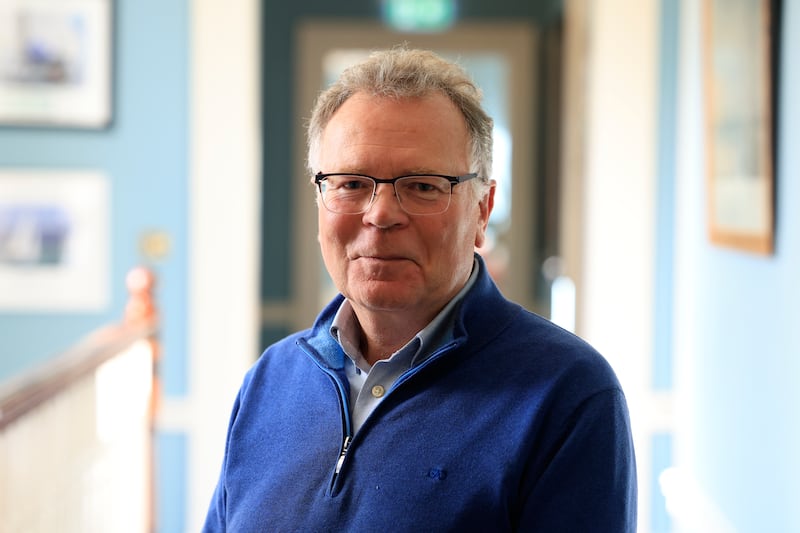
David Williams, a retired solicitor, set up an Irish arm of the charity, which regularly drives vehicles to Ukraine with the help of volunteers, mostly members of Dún Laoghaire waterfront sailing clubs. The Irish volunteers have raised some €120,000, with more than 30 drivers delivering 15 vehicles.
READ MORE


Dmytro Fedoruk, deputy commander of the First Separate Medical Battalion of Ukraine; Uliana Kovalyshyn, Ukraine operations co-ordinator at Mighty Convoy; and Alina Deineka, a senior liaison officer at the Christian Medical Association (CMA), have directly experienced what this type of support means to Ukrainians on the frontline.
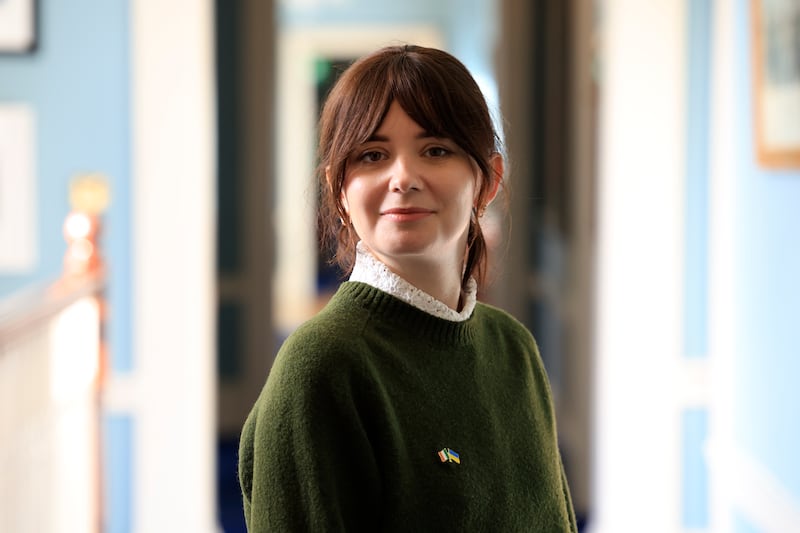
They visited Dún Laoghaire for a fundraising dinner on Friday, where they gave a presentation on what the funds raised are used for, and how the vehicles help to save the lives of soldiers, many of whom were injured in Russian held-territory.
Aged just 30, Fedoruk carries huge responsibility as second in command of a unit responsible for evacuating badly injured soldiers from enemy territory, and treating others hurt on duty.
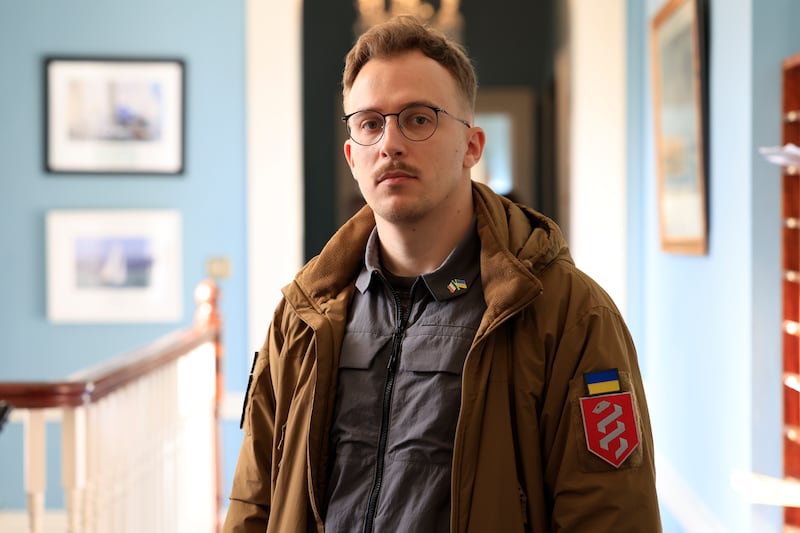
The battalion has carried out hundreds of missions using Maul unmanned ground vehicles (UGVs), with a 51.9 per cent success rate, according to Ukrainian military statistics.
“The battalion works around 30km from the front line – we are the first facilities which have surgeons, anaesthesiologists, operation rooms,” he told The Irish Times.
[ Wicklow volunteers deliver on ‘gruesome’ aid plea for soldiers in UkraineOpens in new window ]
“It’s tough. We treat military people and civilians in our area. Even military hostages ... sometimes Russians that have become hostages.
“The unmanned vehicles are a lifeline for people who physically can’t leave the battlefield on their feet.”
The battalion last year rescued a wounded soldier who had been trapped behind Russian lines for 33 days. While the missions are not always this complex, Fedoruk said they carry out at least two per day.
Williams explained that the average cost of the four-wheel-drive vehicles and ambulances driven to Ukraine is €8,000, so two drivers each aim to raise €4,000 before every trip. The next group from Ireland is leaving in December, with another planned for early February.
Asked whether the Irish drivers fear for their personal safety, Derek Ryan, who has been to Lviv on three occasions, said it is not something they worry about, having heard personal accounts of what goes on at the front lines.
“We’re just trying to do our bit ... and we’re always looking for new drivers.”
Williams said his only moment of hesitation over their activities was when he wondered whether the vehicles being delivered were really of value, but the appreciation from the Ukrainian side was clear to see.
One of the sobering moments the group had was when Ukrainians explained to them that even the ambulances have to be camouflaged – as Russian drones target anything they see.
Kovalyshyn (35) and Deineka (27) said the help afforded by the Irish volunteers brings them hope.
“They make a huge impact,” said Fedoruk. “Vehicles are probably one of the first priorities in the supply of our battalion. The three main priorities are vehicles, medical equipment and medical supplies.”
The CMA supports Ukraine’s healthcare system, with Deineka saying they constantly train medics and doctors for work in the field.
“The Irish people we’re meeting today are a huge support,” she added. “The ambulances and vehicles they bring support our medics and the first medical battalion.”
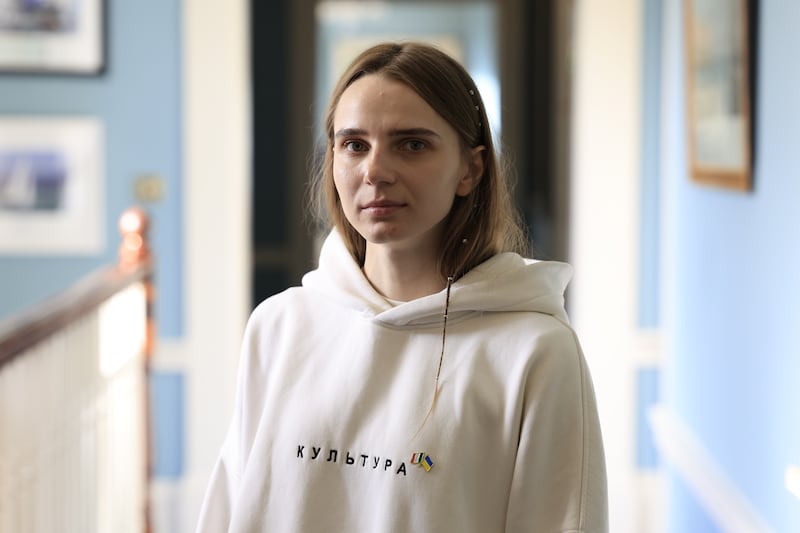
“For me the support is humbling,” Kovalyshyn said. “It shows the people of Ireland and Europe, we saw that here too with Zelenskiy, support us and are not listening to the Russian propaganda that we should just ‘give Russia’ large parts of our country.”
All born in western Ukraine, the trio have spent large parts of their adult lives in wartime. They were due to be back serving near the front lines within days of their Dublin visit.
[ Zelenskiy meeting with US envoys overshadows EPC summit in DublinOpens in new window ]
Despite all they have been through, they remain hopeful, with Fedoruk keen to make a final point. “The three of us were born in independent Ukraine, so we never knew the Soviet Union. It’s only in the history books for us. It’s our duty to do what we can to make sure independent Ukraine doesn’t fall.”
Deineka said: “You don’t need to be a medic or a soldier to help Ukraine. Those who drive over to support us ... those who listen to our stories – it all helps. I’m young, but I want my children to grow up in a peaceful time.”