Almost 30 years ago I inter-railed across Europe for a month, sleeping on night trains that traversed the length of Italy, hopping on ferries to Greece and backtracking to northern Spain to run with the bulls. Coming from Ireland, the lure of the Mediterranean countries was strong, and my trip concluded without any forays farther north than France.
In the intervening years my gaze has been drawn to the countries I missed out on. Scandinavia, in particular, has stepped into the limelight amid all the chatter about Copenhagen’s cycling culture and Noma (its world-beating restaurant), Denmark’s much exported art of cosiness (hygge) the Swedish love of Fika (endless coffee and cake breaks) and Norway’s Northern Lights.
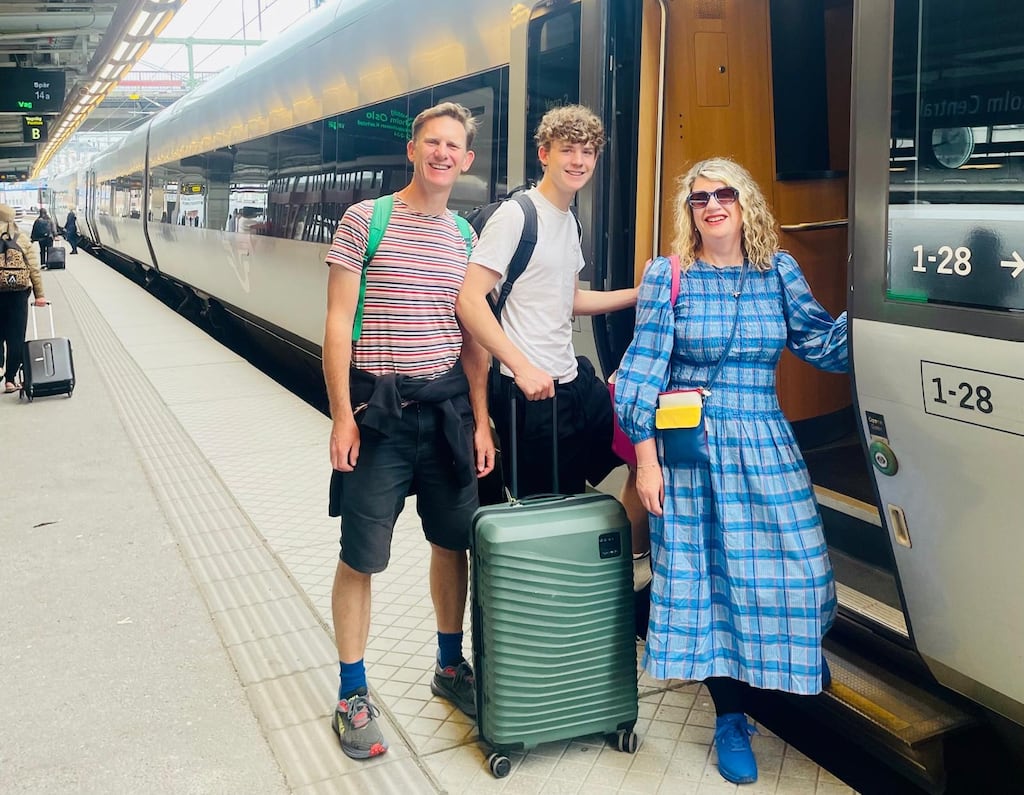
I realised that the time had come to dust off my backpack. My Australian wife had missed out on the Interrail rite of passage in her own youth and happily signed up for a two-week break across these three countries along with our 17-year old-son, who jumped at the chance of a dress-rehearsal for his own railway adventures to come.
Denmark
The metro trip from Copenhagen Airport offered our first set of rails of the holiday. Within half an hour we were strolling the streets of Nordhavn, the former industrial harbour district, newly transformed into a design-led neighbourhood hugging the waterfront.
READ MORE


Copenhagen has spent decades cleaning up its waterways In recent years multiple floating swimming baths have appeared across the city. A quick look at the map led us to nearby Sandkaj Harbour Bath, and before long we were swimming lengths with the locals, discussing where to get the best coffee nearby.
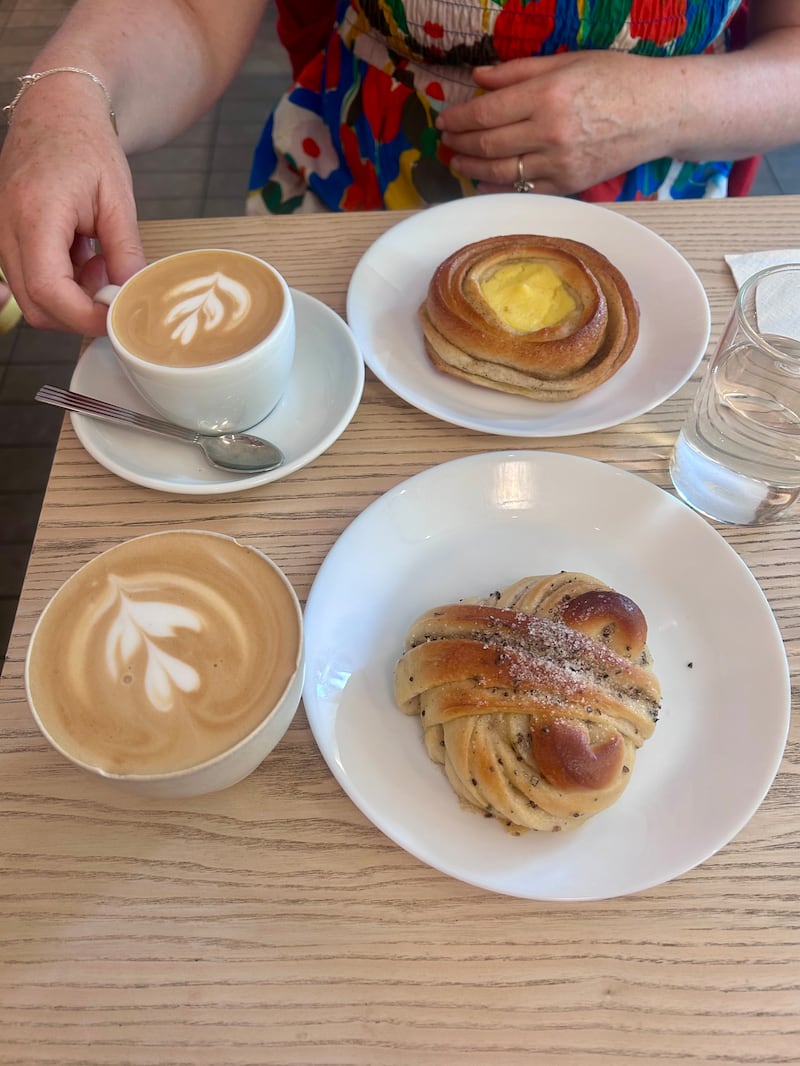
A five-minute bike ride to the adjoining Østerbro neighbourhood brought us to Prolog, where coffee making is taken to dizzying heights, but the real draw was the view of the street, as a parade of beautifully dressed people cycled past the window in 20-second intervals. The Danes are among the world’s top coffee drinkers, which ties into their hygge culture, with their delicious pastries high on the national agenda.
To tick this cultural box, our barista directed us to Juno the Bakery, just up the street, where a former Noma pastry chef turns out arguably the best cardamom buns in the city. We arrived in advance of the queues, and one bite of this pastry synonymous with Denmark was enough to explain why the bakery has a hardcover book devoted to its craft.
Our rental bikes brought us to the Little Mermaid, the Design Museum, Nyhavn and across the bike bridge to Copenhagen Contemporary before another coffee and cake break at Noma. Often ranked as the best restaurant in the world, our budget didn’t allow for lunch, but Noma welcomes passersby to drop in to its adjoining cafe and food laboratories housed in a line of glasshouses within its beautiful, canal-side garden.
The Danish store Flying Tiger, known for affordable Scandinavian design, has popped up in cities across the globe in recent years. Its founder, Lennart Lajboschitz, has turned his attention to combating loneliness and bringing people together through food. Every night at 6pm, a communal dinner is served at his two venues in the city. We grabbed the last available seats at Absalon in the Vesterbro area and soon found ourselves chatting with three German students and a Colombian doctor over bowls of tomato soup.
A similarly convivial approach has been taken by the owners of Nordhus, our apartment rental in Nordhavn. Long tables are set up for shared meals in the voluminous space on the ground floor, with an ongoing roster of cultural activities and community events.
An early train the next morning followed the coast north for 40 minutes to Louisiana, one of the most scenically located art museums in the world, with views across the Øresund Strait to Sweden. The train continued past multiple beaches and wooden jetties leading to Kronborg Castle, the setting for Shakespeare’s Hamlet. A brilliantly playful exhibit re-creates the weeklong parties the castle was known for in the 16th century.
Our last hop on the train deposited us at Hornbæk, a beautiful beach town on the north coast of Zealand, where we walked along a long, leafy lane before arriving at our hotel for the night. Hornbækhus is straight out of the pages of Kinfolk Magazine and also owned by Lennart Lajboschitz. Dinner is communal and we chatted with a couple from Copenhagen about how the weight-loss drug Ozempic now accounts for 10 per cent of the Danish economy. Later we followed the sound of live music to a nearby beach bar where a swarm of blond Danish youth in white jeans flashed their cards to order buckets of white wine.
Sweden
An early morning swim had us primed and fully awake for the long train journey ahead. We passed through Copenhagen again before speeding across the 16km Øresund Bridge to Malmo, followed by a further five hours traversing Sweden’s forests and farmlands to Stockholm. I couldn’t concentrate on my book; the passing landscape was too much of a distraction. Every farmhouse seemed to be painted the same perfect shade of oxblood. For a brief moment I remembered what it was like to be in my early 20s, looking out of a train window for hours and the sense that brings of being at one with the world.
A similar feeling came over me as a tray of cocktails was delivered to our table in the rooftop bar of the Downtown Camper by Scandic, our Stockholm hotel. The view of Gamla Stan, the city’s magical old town, with the Royal Palace and the baroque spires of Stockholm Cathedral, was the perfect reward for the long journey we had taken to get here.
A friend who sails urged us to visit the Vasa Museum, his favourite attraction in Stockholm. An enormous, perfectly preserved 17th-century wooden ship awaited us, a vessel that spent 300 years underwater just downriver from here after a design flaw forced by the king scuppered its launch.
Almost next door, the Abba Museum served up another type of magic, and my wife lived out her childhood fantasies as she sang along to Dancing Queen onstage accompanied by hologram versions of the band.
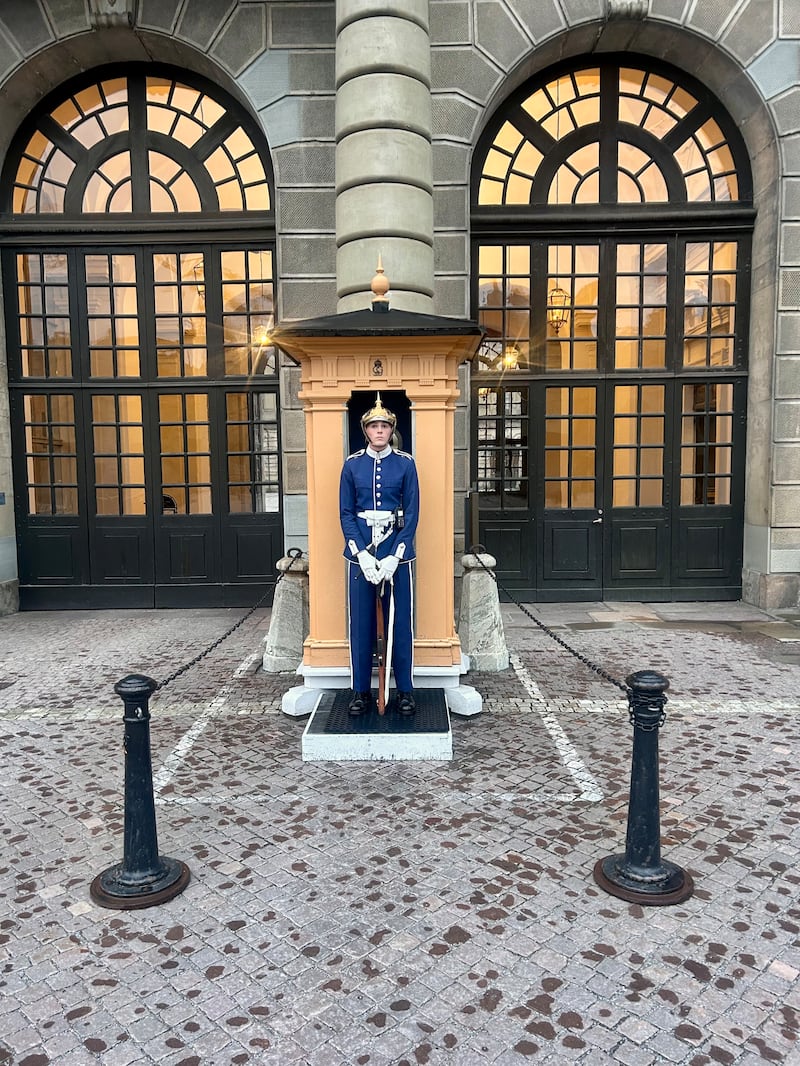
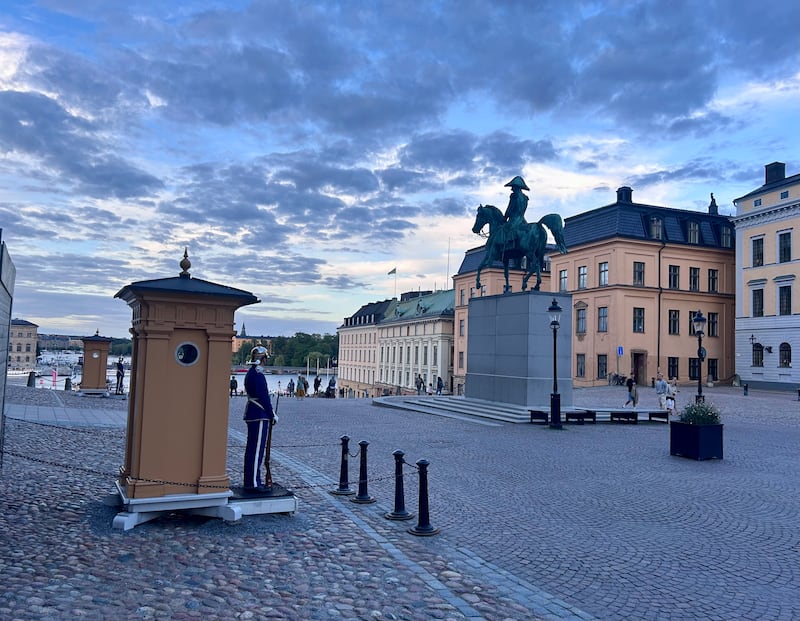
Later that evening, we wandered the cobbled streets of Gamla Stan almost by ourselves, passing the Nobel Prize Museum and crossing Stortorget (the main square) in time for the changing of the palace guard. We passed on dinner in one of the restaurants in the tall, narrow 17th-century houses that crowd this neighbourhood, and decided a plate of meatballs with lingonberry jam at a nearby Ikea was an equally Swedish experience.
Stockholm lies at the beginning of a vast archipelago of thousands of wooded islands. A two-hour early-morning trip on the Stromma Ferry brought us to Sandhamn, one of the last islands at the opening to the Baltic Sea. Swedish friends joined us for the day and led us through the island’s pine forests to collect wild blueberries before a swim at a nearby beach. Dill is my favourite herb, and I was excited to see it liberally sprinkled over my smoked salmon and potato salad during lunch at Sandhamns Värdshus, a picture-perfect restaurant, open since 1672.
Norway
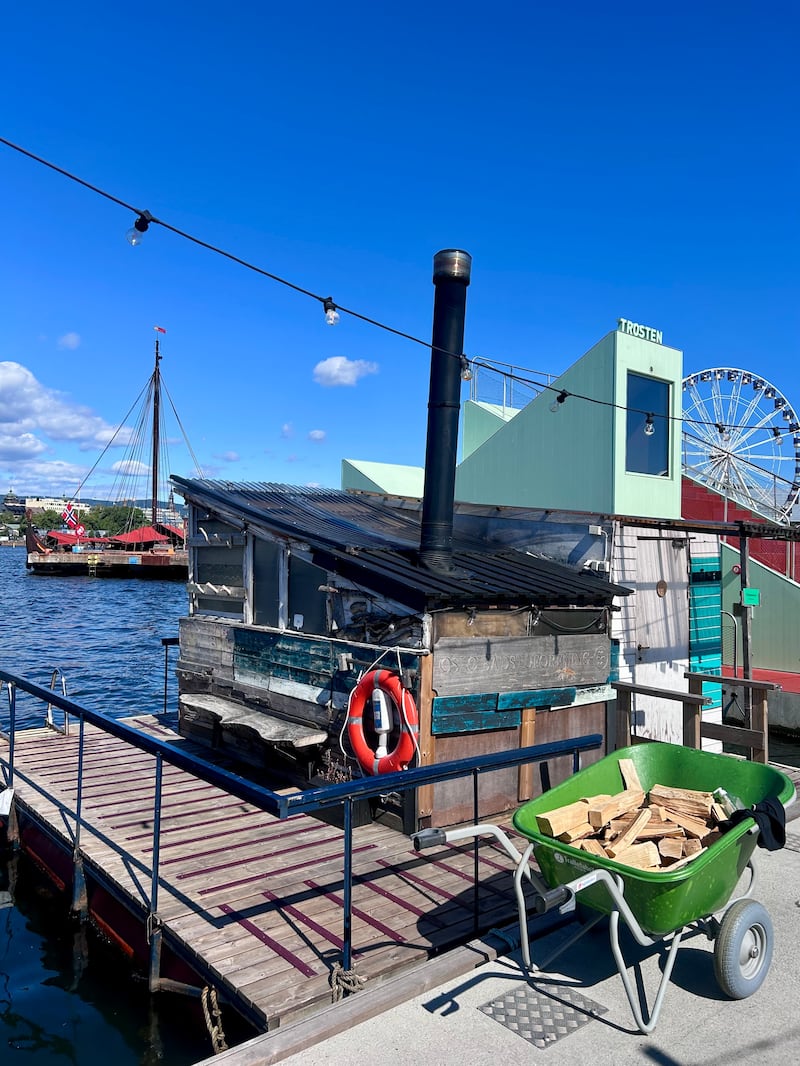
Norway beckoned the following day. Another reverie-inducing six-hour train trip transported us across a landscape of lakes and farms, until the border was crossed and Oslo came into view. The white marble of the city’s famed opera house sparkled in the sun before us, resembling a giant glacier sliding into the fjord. A floating sauna complex bobbed at an opposite jetty and within minutes we booked a session at Oslo Badstuforening, washing off the journey in the clean waters of the harbour, followed by an hour at 100 degrees watching the ferries coming and going.
One of my sauna friends pointed out the Vision of the Fjords, an electric tour boat, silently cutting across the water with a zigzagging deck resembling a mountain path. We joined the next departure for a two-hour cruise around the city and on to the outer reaches of the fjord, passing islands and dozens of sailboats and marinas. Norway has the second longest coastline in the world, a fact that explains the high rate of boat ownership in this country.
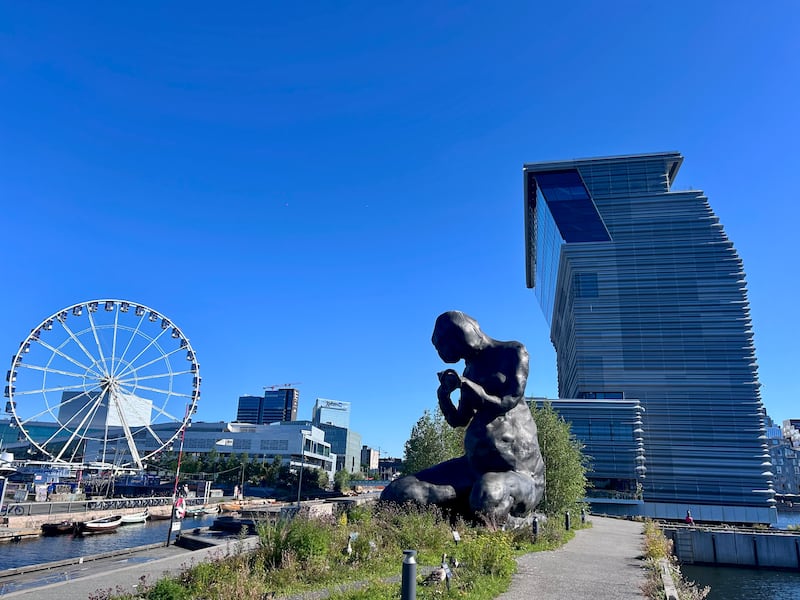
Our sky-high room at Clarion Hotel The Hub overlooked the fjord we had just sailed around. A full moon cinematically appeared, casting a yellow path across the navy waters. This exact scene reappeared in multiple paintings at the extraordinary Munch Museum the next morning. There are four versions of Edvard Munch’s most famous work, the Scream. We found one here, and another at the National Museum.
The Norwegian playwright Ibsen controversially missed out on a Nobel Prize, instead he was awarded his own museum, which we discovered by following a trail of his words embedded into the footpaths. Ibsen lived in the apartment upstairs, every day he would walk up the street to the nearby Grand Cafe for lunch at precisely 11.30am.
Returning to the waterfront for our own lunch, a glass cube housed the appropriately named restaurant Fish Me. It became hard to concentrate on the sublime view as platters of crab claws were followed by mountain trout and Norwegian Cod.

As time was limited, we booked Norway in a Nutshell®, a daylong tour from Oslo promising several must-see highlights of this extraordinary country. Our early-morning departure on the Bergen Line (considered one of the most beautiful train trips in the world) soon offered glimpses of the mountains before climbing to Finse at 1222m where a quick stop at the station allowed us marvel at the glaciers flowing into the lake opposite. Scenes from Star Wars were shot here in 1979. At Myrdal we transferred to the famous Flåm Railway, an hour-long descent through a glacial valley featuring multiple waterfalls and sheer cliff faces.
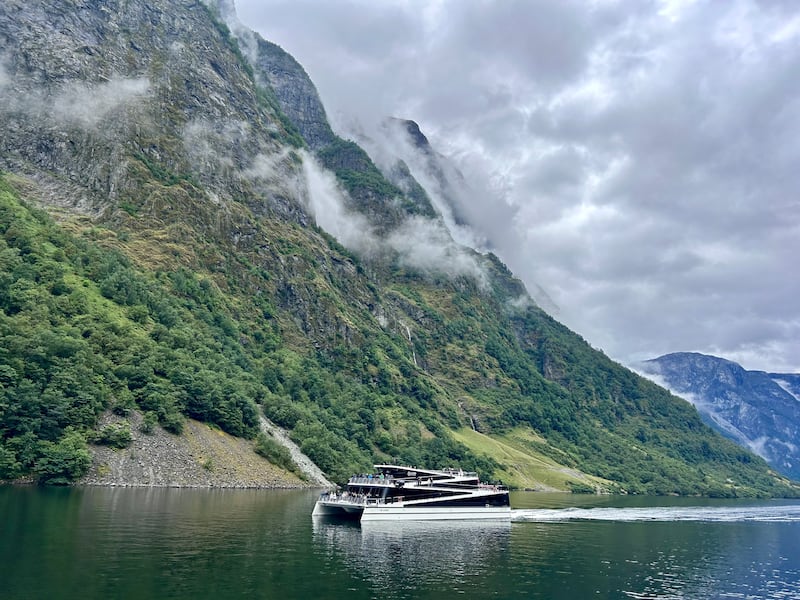
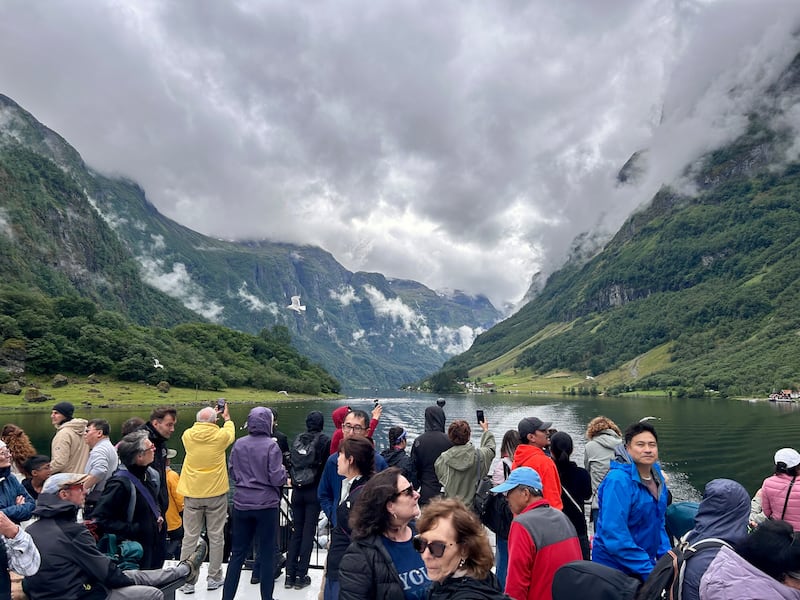
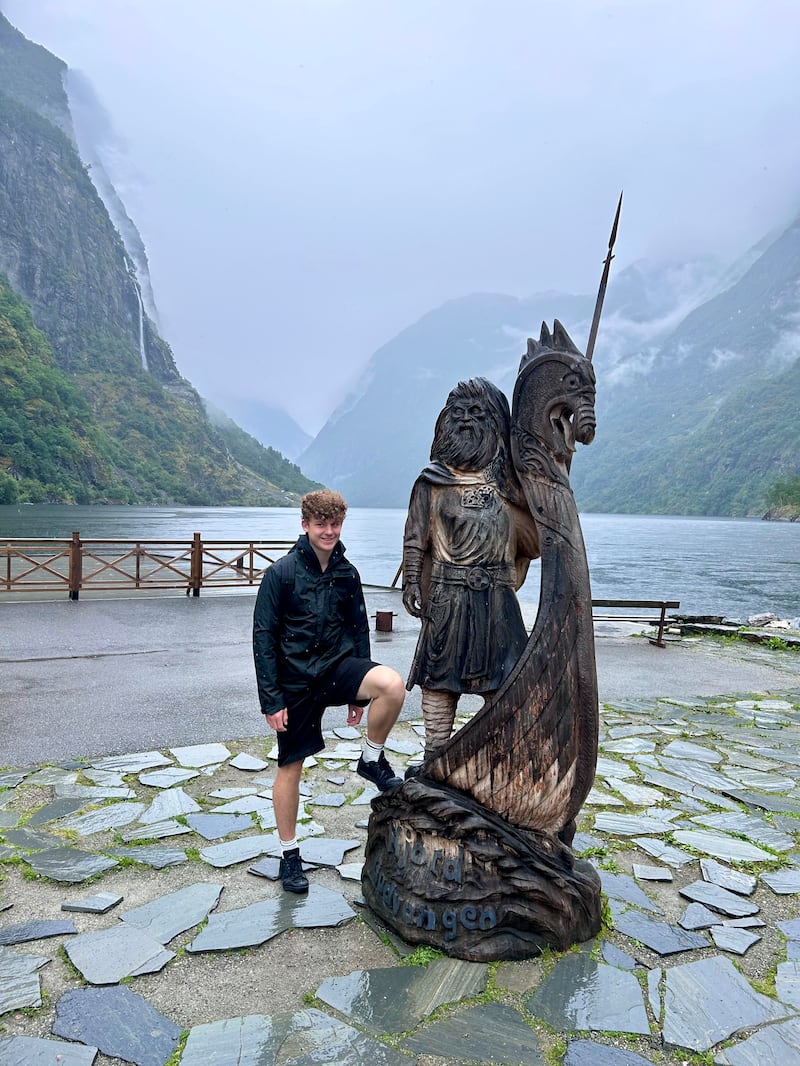
Nærøyfjord lay before us and an awaiting electric boat that chugged silently between towering mountains along this 17km long arm of Sognefjord, Norway’s longest fjord. Then we travelled by bus and train onward to Bergen, soundtracked by Greig’s Peer Gynt suites on our headphones until the lights of the city came into view.
Lying at the gateway to Norway’s western fjords, with medieval wooden houses lining the quays and a backdrop of seven hills, Bergen is jaw-droppingly beautiful. A breakfast of local smoked salmon and eggs at Thon Hotel Orion soon had us fuelled for a hike at Fløyen, where a soft mist straight out of a folk tale hung over the hilltop forests and lakes.
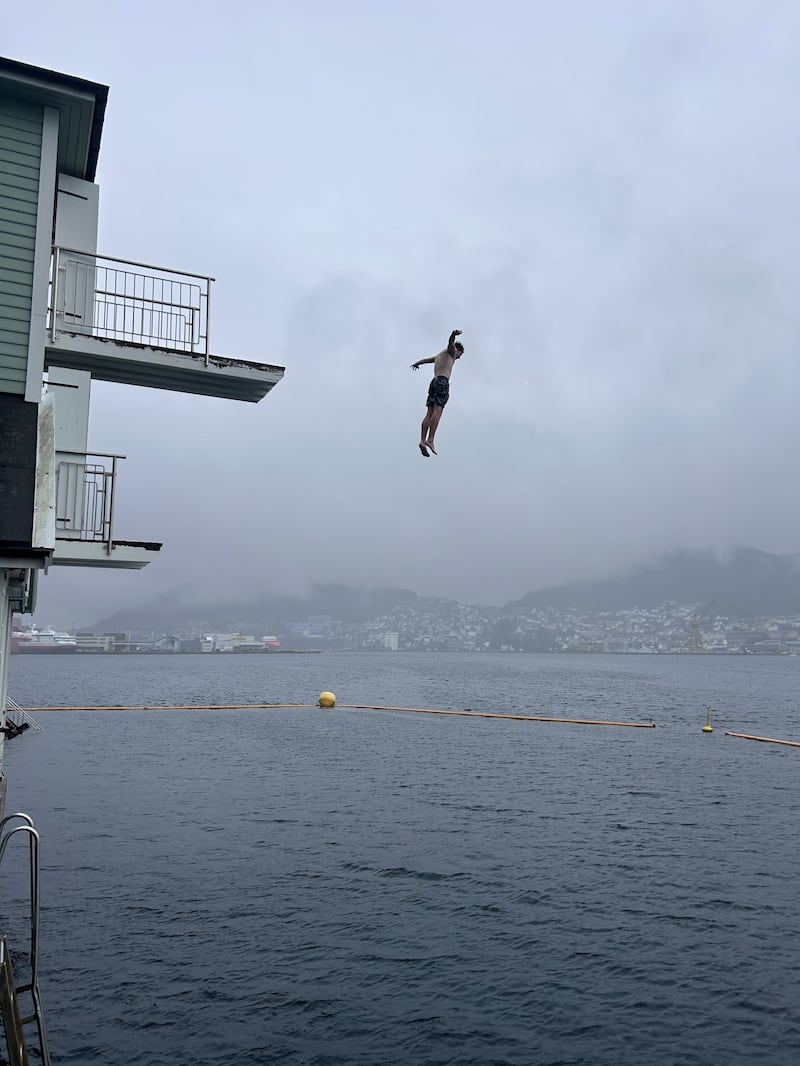
A funicular returned us to the city where we strolled the lanes of the Skansen neighbourhood before following the harbour to the tip of the Nordnes Peninsula. A heated outdoor pool clung to the cliffside and within minutes we were ascending their towering diving boards to plunge into the fjord. After an epic trip across the beautiful Scandinavian region, we had finally run out of track.
Fergal McCarthy travelled as a guest of interrail.eu, VisitCopenhagen.com, Downtown Camper by Scandic, VisitOslo.com, Norway in a Nutshell and VisitBergen.com. A seven-day Interrail Global Pass costs from €381