
Main Points
- US president Donald Trump to be briefed on possible further strikes against Iran
- Iran’s new supreme leader gives a rare statement vowing not to give up the country’s nuclear technologies and signalling Tehran would keep control of Strait of Hormuz.
- Oil prices hit highest point since 2022
- Trump administration seeks new coalition to get ships moving in Strait of Hormuz
- US may cut the number of troops in Germany, amid tensions with Friedrich Merz
- Euro zone inflation surged further in April driven by soaring energy costs, new data shows
Best Reads
- Hegseth denies Iran war is a “quagmire” as costs to US hit $25bn
- Finn McRedmond: Trump likes King Charles but “soft power” means nothing in Washington now
- Oil surges past $125 as fears of prolonged supply disruption grow
Iran will play World Cup matches in US this summer, says FIFA president
Iran will play their World Cup matches in the United States this summer, FIFA president Gianni Infantino has insisted.
Iran’s participation has been the subject of uncertainty since the US and Israel launched airstrikes on the Asian nation on February 28th.
The country’s football association officials were the only one of FIFA’s 211 member nations absent from Thursday’s FIFA Congress in Vancouver.
It is understood two delegates who had been granted visas by the Canadian authorities to attend chose not to after another member of their group was denied entry in Toronto.
However, Infantino opened his Congress address by insisting the Iranian team would participate at the finals in North America.
“Let me start at the outset by confirming straight away, for those who maybe want to say something else or write something else, that of course Iran will be participating at the FIFA World Cup 2026,” the Swiss said, to cheers from the assembled delegates.
“And of course, Iran will play in the United States of America. The reason for that is simple, because we have to unite. We have to bring people together.”
Iran will kick off their campaign against New Zealand in Los Angeles on June 15th. If they and the US finish second in their respective groups, the sides will meet in the last 32.
US president Donald Trump has previously stated it would be “inappropriate” for Iran to compete “for their own life and safety”.
Infantino added: “There are enough problems around the world. There are enough people who try to divide all over the world. If nobody tries to unite, what will happen to our world? We have to do it, and we have this opportunity.”

Hegseth has failed to give Trump accurate picture of war, says Democrat
Pete Hegseth has failed to give Donald Trump an accurate picture of the war on Iran while resorting to “dangerously exaggerated” statements to create an inaccurate picture of a US military triumph, a senior Democrat told a Capitol Hill hearing on Thursday.
Jack Reed, the ranking Democrat on the Senate armed services committee, told Hegseth, the defence secretary, that far from victory, US citizens were having to bear the cost of a war they did not support in the form of increased fuel prices.
“American families are bearing the cost of a war they wanted nothing to do with and have gained nothing from and yet, Secretary Hegseth, you declared victory a month ago,” said Reed, a senator from Rhode Island.
The comments came at the opening of the second successive day of congressional testimony from Hegseth and Dan Caine, the chairman of the US armed forces’ joint chiefs of staff, who are testifying over the Pentagon’s record $1.45tn military budget submission.
As with the previous day’s appearance before the equivalent committee in the House of Representatives, the hearing quickly devolved into confrontation over the war with Iran, which has become stalemated after eight weeks of fighting and seen the regime in Tehran close the strategically vital strait of Hormuz.
Protesters briefly interrupted the hearing as Hegseth made an opening statement. Shouts of “war criminal” and “despicable” were heard before the protesters were expelled and proceedings resumed.
Reed immediately went on the offensive, accusing Trump of going to war without a “coherent strategy” while declining to “make a case to the American people or consult Congress”.
But his statement reserved the fiercest personal criticism for Hegseth, who stood accused of failing to give Trump essential information or advice, while pursuing a personal agenda as service personnel were injured or killed in battle.
“The problem with your statements, Mr Secretary, is they are dangerously exaggerated,” Reed said. “Iran’s hard line regime remains in place. It still retains stockpiles of enriched uranium, and its nuclear program remains viable.
“I am concerned that you have been telling the President what he wants to hear instead of what he needs to hear. Bold assurances of success are a disservice to both the commander in chief and the troops who risked their lives based on them. Our military has performed heroically, but military force without a sound strategy is a path to long-term defeat.”

A growing rift between top Lebanese officials has thrown a wrench into Saudi efforts to help Lebanon’s leaders forge a united position over historic negotiations with Israel, Lebanese sources and foreign officials told Reuters on Thursday.
Saudi Arabia, which sponsored the 1990 agreement that ended Lebanon’s 15-year civil war, has deepened its engagement in recent days with Lebanon, where a shaky US-brokered ceasefire has failed to fully halt the nearly two-month war between Israel and Iran-backed armed group Hezbollah.
Ties between Riyadh and Beirut had been strained for years due to Hezbollah’s power over Lebanese politics and security, but the Sunni kingdom sees an opening after the group was severely weakened by war with Israel in 2024.
The US intended for the April 16th truce between Israel and Lebanon to allow for direct talks on a peace deal, potentially shaking up Lebanon’s internal dynamics and its role in the region. But Lebanese leaders remain at odds over the negotiation format and ultimate goal.
Lebanon’s president Joseph Aoun has defended face-to-face talks with Israel in Washington, and has said the ceasefire should be transformed into “permanent agreements.”
Although he has stopped short of explicitly calling for a peace deal, two sources familiar with Aoun’s position told Reuters he had privately expressed his readiness to normalise ties with Israel to stop the war.
Speaker of parliament Nabih Berri, a Hezbollah ally, is opposed to direct talks, reflecting the Shi’ite militant group’s position. Berri believes Lebanon should seek a non-aggression pact with Israel but not a full peace deal, two Lebanese sources familiar with his position told Reuters.
Iran war ‘supercharging’ world’s shift to renewable energy, says UN climate secretary
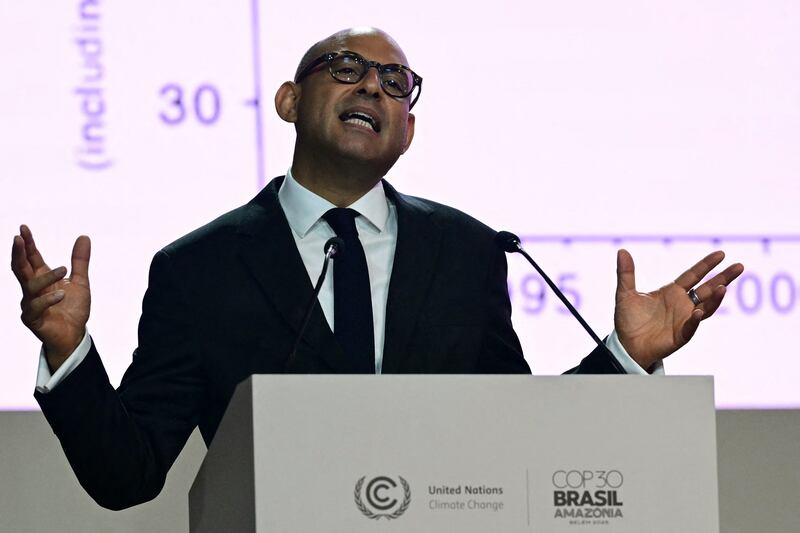
The Iran war is “supercharging” the world’s shift to renewable energy, as countries scramble to reduce their exposure to volatile oil and gas markets, the UN climate secretary said on Thursday.
The war has upended oil and gas supplies, prompting some countries to ration fuel and others to roll out subsidies and tax cuts to shield consumers from surging prices.
Early signs indicate the war, which began two months ago, is speeding up some countries’ low-carbon transition. Demand for rooftop solar systems across Europe has surged, while countries including Pakistan have reported a jump in electric vehicle sales.
Chinese President Xi Jinping called this month to speed up the construction of a new energy system to safeguard energy security, emphasising hydropower development and the expansion of nuclear power.
“Those who’ve fought to keep the world hooked on fossil fuels are inadvertently supercharging the global renewables boom,” said Simon Stiell, executive secretary of the UN’s climate secretariat UNFCCC.
“Renewables offer safer, cheaper, cleaner energy that can’t be held captive by narrow shipping straits, or global conflicts,” Stiell told a meeting of government officials at the International Energy Agency in Paris.
However, the war has also prompted some nations to increase the use of highly polluting coal or furnace oil-based power generation as they struggle to replace gas from the Middle East.
Turkey’s climate minister Murat Kurum - who will preside over the UN’s COP31 climate summit this year - said fossil fuel dependency now topped the global political agenda.
“The best way to protect citizens from the violent convulsions of global energy markets is to accelerate the clean-energy transition,” he said in a statement after the IEA event.
Around 60 governments including Brazil, Germany, Canada and Nigeria, met in Colombia this week for a summit to discuss how to phase out fossil fuels.
Trump criticises German chancellor on Truth Social for ‘interfering’ with Iran war
US president Donald Trump criticised German chancellor Friedrich Merz on Thursday, saying he should focus on trying to end the Russia-Ukraine war and spend “less time on interfering” with the effort to tackle “the Iran nuclear threat”.
Trump has been sparring with Merz over the war in Iran in recent days. On Tuesday, he said Merz didn’t know what he was talking about after the German leader said the Iranians were humiliating the US in talks to end the two-month-old war.
Trump made his comments in a Truth Social post.
“The Chancellor of Germany should spend more time on ending the war with Russia/Ukraine (Where he has been totally ineffective!), and fixing his broken Country, especially Immigration and Energy, and less time on interfering with those that are getting rid of the Iran Nuclear threat, thereby making the World, including Germany, a safer place!” Trump said. - Reuters
Thursday afternoon recap

Ukraine peace process in limbo as focus turns to war in Iran
Ukraine is in limbo waiting for a resumption of peace talks that might end the war with Russia, with the distraction caused by the conflict in Iran a key obstacle, according to president Volodymyr Zelenskiy.
Ukraine has yet to receive any new signals from either Russia or the US on when the negotiations might pick up again, while American envoys Steve Witkoff and Jared Kushner are still considering a visit to Kyiv, Zelenskiy told Bloomberg News in a phone interview on Thursday.
The upshot is there have been no fresh indications on when or where the talks brokered by US president Donald Trump’s administration may take place, he said.
“I think it all depends on how the situation in the Middle East unfolds,” Zelenskiy said.
With Russia’s full-scale invasion of Ukraine now in its fifth year, peace talks between the sides – which have yielded little progress – stalled in mid-February after the last round in Geneva. The process was later derailed by the US-Israeli attacks on Iran.
Kyiv and Moscow have continued with prisoner swaps, while Zelenskiy’s top aide, Kyrylo Budanov, told Bloomberg this month that he sees progress in the talks and doesn’t expect the war to last much longer. Yet the overall situation hasn’t improved.
At the North Korean unveiling of a towering bronze sculpture of North Korean and Russian soldiers in combat, Kim Jong-un praised troops who chose death over capture while fighting in Ukraine.
It was a striking and unusually explicit acknowledgment of Pyongyang’s long-suspected battlefield doctrine.
According to a transcript published by North Korean state media KCNA, Kim declared that those who “unhesitatingly opted for self-blasting” and suicide attacks had shown the highest form of loyalty, a reference to soldiers throwing themselves on grenades or detonating explosives rather than risk being taken prisoner. – Bloomberg/CNN
Iran’s supreme leader vows not to give up nuclear technologies
Iran’s new supreme leader gave a rare statement on Thursday vowing not to give up the country’s nuclear or missile technologies and signalling Tehran would keep control of the Strait of Hormuz.
The Islamic Republic will “guard” its “advanced technologies” like it does its own borders, Mojtaba Khamenei said in a written statement. It will “secure the Gulf region and dismantle the hostile enemy’s exploitation of this waterway,” he added, referring to the vital strait.
Khamenei replaced his father Ali, who was killed on the first day of the US-Israel war against Iran on February 28th. He’s not been seen or heard in public since his appointment, with several reports saying he was badly injured in the same air strike on his father.
The US and Iran show little sign of breaking an impasse and agreeing to another round of peace talks, with Trump insisting that his navy’s blockade is working.
Trump told news site Axios that the blockade of Iran’s ports is “somewhat more effective than the bombing” and “choking” the country by restricting its oil exports. The US wants Iran to agree to severe restrictions on nuclear enrichment and to hand over stockpiles of highly-processed uranium.
At the same time, US military commanders are set to brief Trump on options on Thursday, Axios reported, citing unnamed sources. Centcom, which oversees American forces in the Middle East, has prepared a plan for a short wave of strikes to break the negotiating deadlock, Axios said.
Oil fluctuated significantly on Thursday. Brent futures initially rose to a wartime high of around $126 a barrel, before easing to $114.
“Trump wants to end the Iran war, but not on the terms proposed by Tehran,” said Becca Wasser and Chris Kennedy, analysts at Bloomberg Economics. “That suggests the question is no longer whether he escalates to push for a better offer, but when and how. We think the most likely window for action is within the next two weeks, and that renewed US strikes are the most likely course.”
Iran has said it won’t reopen the strait to commercial vessels until the US lifts its blockade. It’s unclear how long Iran has left before it runs out of oil storage and is forced to cut production.
Signs of strain on the Iranian economy have emerged in recent days, with the currency weakening to a fresh low.
Trump told reporters that talks are continuing “telephonically” between the two sides, on Wednesday, after an abortive effort to meet in Pakistan last weekend.
Defence supplier posts substantial profits from missiles, rockets and other armaments
US defence supplier L3Harris Technologies lifted its 2026 profit forecast after beating first-quarter revenue estimates on Thursday, as it benefited from strong demand from the Pentagon for its weapons and military intelligence systems.
A series of conflicts, including the US-Israel war with Iran, have depleted the Pentagon’s supplies and prompted fresh orders for missiles and munitions, benefiting defence contractors such as L3Harris.
The US government has already invested $1 billion in the company to ramp up production of solid rocket motors, used in a wide range of missiles such as Tomahawks and Patriot interceptors.
L3Harris’ space and mission systems business, which focuses on satellite capabilities and missile defence systems, posted a 24 per cent rise in first-quarter sales.
The Melbourne, Florida-based company said total quarterly revenue was $5.74 billion, compared with expectations of $5.42 billion.
Resources conglomerate Glencore also made bumper profits from its Oil and Gas business as the surge in energy prices helped to put the firm on course for one of its best-ever trading results.
Based on its first-quarter performance, full-year core earnings from the company’s trading unit would “comfortably” exceed the top end of its long-term guidance, which is set at $3.5 billion, Glencore said in a trading update on Thursday. The unit made $2.9 billion last year.
Inflation surges in the Eurozone on energy prices spiked by worries of a longer-term war
Euro zone inflation surged further in April driven by soaring energy costs, Eurostat data showed on Thursday. Analysts ascribed much of the cause to the US-Israeli war with Iran.
Inflation in the 21 countries sharing the euro currency jumped to 3 per cent this month from 2.6 per cent in March, moving further above the European Central Bank’s 2 per cent target, with energy costs accounting for the vast majority of the increase.
Worries the war could worsen caused risk aversion to sweep global equity and bond markets on Thursday, as oil prices surged to a four-year high.
The rise of global oil benchmark Brent crude futures to more than $126 before falling back, and an early drop in European stocks, reflected concerns that a prolonged conflict in the Middle East could choke oil supplies for months.
A hawkish shift in tone from the US Federal Reserve as it left rates on hold on Wednesday, meant bond market borrowing costs were still higher in Europe as investors there readied for the European Central Bank and the Bank of England to follow suit on Thursday.
Insurance group AXA’s chief economist, Gilles Moec, said everything centred on worries about the US-Israeli war against Iran.
News site Axios quoted unspecified sources as saying US president Donald Trump would on Thursday receive a briefing from the leader of the US Central Command, Brad Cooper, on new plans for potential military action against Iran.
Negotiations have stalled and Axios said Washington hopes to make Iran more flexible at the negotiating table on nuclear issues.
Add us as a preferred source in Google search

US seeking forfeiture of captured oil tankers
The US is seeking forfeiture of two Iran-linked oil tankers seized by naval forces enforcing a blockade against Iran, according to a senior administration official.
The US department of justice has initiated the forfeiture process, the official said, without elaborating on what that entails or whether it signals an intent to seize the crude on board. The official, who requested anonymity to discuss sensitive operations, declined to detail what will ultimately happen to the vessels or comment on their current routes, citing operational security.
US forces boarded the vessels Tifani and Phoenix – the latter also known as the Majestic X – last week in the general vicinity of Sri Lanka, according to the Pentagon. The tankers continued to sail across the Indian Ocean in the following days, and appeared to make several course reversals.
The US and Iran have been enforcing dual blockades in and around the Strait of Hormuz as president Donald Trump ratchets up economic pressure on Tehran and the Islamic Republic seeks to counter American pressure.
In several cases where ship captains have attempted to test the US blockade, naval forces have directed intercepted vessels back to the Gulf ports. Confiscating oil cargoes aboard Iran-linked vessels would represent an escalation of Trump’s economic offensive – and dovetail with the administration’s strategy toward Venezuelan crude after the January ouster of strongman Nicolás Maduro.
As recently as late February, the justice department filed a forfeiture claim in US district court in Washington, seeking possession of 1.8 million barrels of Venezuelan crude aboard a tanker linked to Iran’s Islamic Revolutionary Guard Corps.
The US justice department uses asset forfeiture as a legal tool to seize property suspected of being connected to criminal activity, often through proceedings against the asset itself rather than an individual.
The US also took such action in 2023, when it ordered a tanker carrying China-bound Iranian crude to divert to the US, following similar measures in 2021. A year earlier, the Trump administration also ordered the seizure of four tankers carrying Iranian gasoline bound for Venezuela. – Bloomberg
Message from the Editor

Iran says it ‘will not tolerate’ an extended blockade
Iranian supreme leader Mojtaba Khamenei’s top military adviser has said Iran “will not tolerate” an extension of the US naval blockade, according to Iranian state media.
“If the blockade continues, Iran will respond,” Mohsen Rezaei said in an interview with Iranian state broadcaster IRIB on Thursday.
“Such a blockade has essentially achieved nothing and they have not been able to enforce it. The Indian Ocean is extremely vast, and we can easily pass through it, we have already done so,” Rezaei added.
His comments came as US president Donald Trump considers an extended blockade of Iranian ports.
Rezaei also urged the public not to listen to rumours about status of Khamenei, who has not been seen or heard from since he was announced as Iran’s new supreme leader more than six weeks ago.
“The supreme leader is young, healthy and energetic, and is managing the affairs of the country,” Rezaei said, according to IRIB.
The Wall Street Journal reported president Trump has instructed aides to prepare for an extended blockade of Iran, targeting the regime’s coffers in a high-risk bid to compel a nuclear capitulation Tehran has long refused.
In recent meetings, Trump opted to continue squeezing Iran’s economy and oil exports by preventing shipping to and from its ports. He assessed that his other options – resume bombing or walk away from the conflict – carried more risk than maintaining the blockade, officials said.
On Wednesday Trump said Iran “better get smart soon” and in a meeting oil executives discussed what steps could be taken to “continue the current blockade for months if needed”, according to a White House official. – Additional reporting: CNN
Further bad news for airline industry
Air France-KLM reported a smaller first-quarter loss than expected on Thursday, but downgraded its capacity outlook on the basis of uncertainty tied to the US -Israeli war with Iran and rising jet fuel costs.
European airlines, including EasyJet and TUI, have revised their outlooks as their jet fuel hedges shrink over time. They expect to feel the impact of the closure of the Strait of Hormuz more acutely in the coming months. “While fuel price increases are not yet reflected in the results we present today, they are expected to weigh on the coming quarters,” Air France-KLM chief executive Ben Smith said in a statement.
The company said its group capacity was now set to increase by 2 per cent to 4 per cent this year over 2025. It previously expected an increase of 3 per cent to 5 per cent. It also said it expects a €2.4 billion increase in its fuel bill in 2026 compared with 2025.
Air France-KLM reported an initial boost after the Iran war broke out as more travellers booked on European carriers for flights to Asia, but was planning to expand its long-haul capacity in a more muted way as people were postponing travel plans or booking closer to the date of travel, concerned by the financial risk tied to long-haul trips. – Reuters
US seeks new coalition to get ships moving in Hormuz
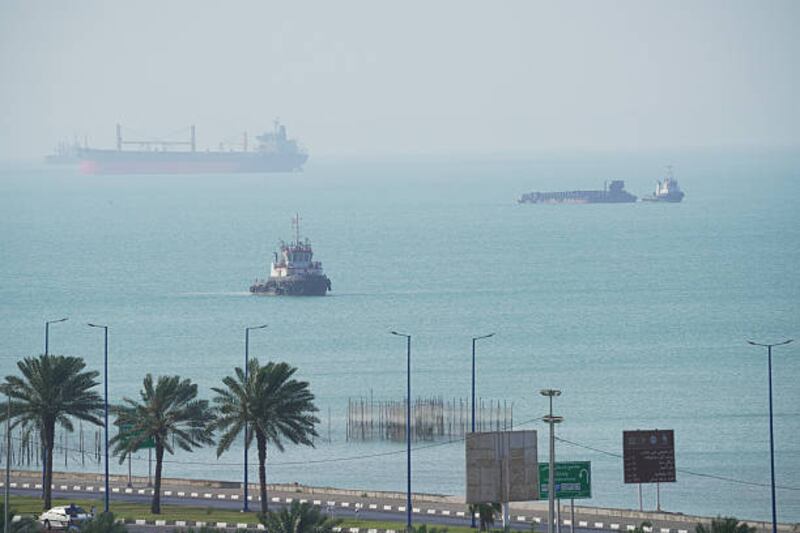
The Trump administration is seeking the participation of other countries to form an international coalition to restore freedom of navigation in the Strait of Hormuz, according to a state department cable.
US secretary of state Marco Rubio approved the creation of the “Maritime Freedom construct” (MFC), the cable dated April 28th said, which it described as a joint initiative by the state department and the Pentagon.
“The MFC constitutes a critical first step in the establishment of a post-conflict maritime security architecture for the Middle East. This framework is essential to ensuring long-term energy security, protecting critical maritime infrastructure, and maintaining navigational rights and freedoms in vital sea lanes,” the cable said.
The component of the initiative led by the state department would serve as the diplomatic hub between partner countries and the shipping industry, while the Pentagon component operating out of US Central Command headquarters in Florida would co-ordinate real-time maritime traffic and communicate directly with vessels transiting the strait, the cable said.
The story was first reported by the Wall Street Journal on Wednesday.
US may cut number of troops in Germany

The US may reduce its number of troops deployed in Germany, Trump has announced, days after the country’s chancellor said United States was being “humiliated” by Iran.
In a post on his Truth Social platform, the US president said his administration was “studying and reviewing the possible reduction of troops in Germany, with a determination to be made over the next short period of time”.
On Monday, Friedrich Merz suggested the Trump team was being outplayed in its negotiations with Iran to secure an end to the ongoing war and a reopening of the of Hormuz.
“The Iranians are obviously very skilled at negotiating, or rather, very skilful at not negotiating, letting the Americans travel to Islamabad and then leave again without any result,” the German chancellor said.
Merz reiterated his criticisms on Wednesday, saying Europe was “suffering” from the consequences of the closure of the strait.
Trump cancelled a second trip by US negotiators to Islamabad last week. Since then, discussions over Iran’s nuclear programme and the strait of Hormuz have hit an impasse.
Trump on Tuesday accused Merz of thinking it’s “OK for Iran to have a nuclear weapon” and said the chancellor “doesn’t know what he’s talking about!”
Earlier on Wednesday Merz brushed off those comments, saying his relationship with Trump remains “as good as ever”, but the president’s threat to withdraw US troops is likely to cause concern in Berlin and across Europe, coming amid a period of heightened tensions between the US and its traditional allies in Europe that has seen Trump step up his threats to withdraw from the Nato alliance. – The Guardian
Oil prices hit highest point since 2022
The price of Brent oil soared above $126 a barrel on Wednesday, its highest level since 2022, after Donald Trump warned the US blockade of Iranian ports could last months and peace talks remained stalled.
Surging more than 13 per cent in 24 hours, Brent crude hit a record price since the war began on February 28th. Not since Russia’s 2022 invasion of Ukraine has Brent topped $120, with the price then peaking at $139.
US oil prices were 2.3 per cent higher at $109.32 a barrel on Thursday, after a 7 per cent jump on Wednesday.
Oil markets have been spooked this week as Trump appeared willing to maintain the US navy blockade of Iranian ports, with Iran responding by keeping the of Hormuz all but shut to other oil tankers.
US-Iran talks set for Islamabad in Pakistan over the weekend failed to materialise, so the stalemate grinds on.
Trump said on Wednesday that Iran “better get smart soon” and in a meeting oil executives, discussed what steps could be taken to “continue the current blockade for months if needed,” according to a White House official. – Financial Times/Reuters
Trump to be briefed on new Iran military strikes

US president Donald Trump is reportedly set to receive a briefing on Thursday from the leader of the US Central Command, Brad Cooper, on new plans for potential military action against Iran.
The military has prepared a plan for a “short and powerful” wave of strikes on Iran, likely including infrastructure targets, Axios reported, citing sources.
The White House and the US Central Command did not immediately respond to a request for comment.
A fragile ceasefire in the Iran war began three weeks ago. The war began when the US and Israel attacked Iran on February 28th.
Iran responded with its own strikes on Israel and Gulf states with US bases. US-Israeli strikes on Iran and Israeli attacks in Lebanon have killed thousands and displaced millions.
Trump has previously threatened to destroy Iran’s civilian infrastructure. International law experts say such strikes may amount to war crimes. The 1949 Geneva conventions on humanitarian conduct in war prohibit attacks on sites considered essential for civilians.
Another plan expected to be shared with Trump is focused on taking over part of the Strait of Hormuz to reopen it to commercial shipping, the report added, saying such an operation may involve ground forces.
The Iran war, which remains unpopular in the US, has shaken markets and raised oil prices. – Reuters


