
Monday 27 April: Main Points
- Iran has reportedly given the US a new proposal to reopen the Strait of Hormuz and end the war
- Iranian foreign minister Abbas Aragchi has arrived in Russia following talks with other nations over the weekend
- Donald Trump will meet national security officials today after cancelling plans to send a delegation to Pakistan for talks with Iran
- The Israeli military has begun carrying out strikes in Lebanon’s east, expanding the scope of its bombing campaign during a ceasefire
- Hizbullah has declared will keep weapons, as Lebanon says Israeli strikes killed 14
- European Commission president Ursula von der Leyen says it’s too early to lift sanctions on Iran
- Germany’s Friedrich Merz says Iran is “humiliating” US as peace talks stall
- Putin tells Iran he hopes peace will prevail
Best Reads
- Mediators try to bridge US-Iran disagreements after Trump calls off envoy trip
- Trump’s God complex reflects belief in his absolute power
- Trump briefly felt spiritually close to the media. Then Musk tweeted
- How to demine the Strait of Hormuz? It is not easy
Oil rises as peace efforts stall
World markets fell and the price of oil rose again on Monday amid fresh concerns for hopes of peace in the Middle East, writes Colin Gleeson.
Dealing a new blow to peace prospects, US president Donald Trump cancelled a visit by two US envoys to Pakistan, where talks with Iranian counterparts were expected to take place.
Stocks have climbed to fresh highs in recent days on earnings optimism even as back-and-forth headlines on the US-Iran war swayed sentiment.
Brent oil traded at $108.92 (€92.85) a barrel on Monday afternoon, higher compared with $105.78 at the time of the equities close in London on Friday.
US president Donald Trump discussed a new Iranian proposal on resolving the war with Tehran with his top national security aides on Monday, White House press secretary Karoline Leavitt told reporters.
She said the president has made his red lines on Iran “very clear”. The public will hear from Trump on this topic soon, she said.
European shares edge lower as US-Iran talks stall
European shares started the week on a subdued note as investors braced for a packed scheduleof central bank meetings, and worries over stalled US-Iran peace talks pushed up crude prices, curbing risk-appetite.
With technology-led moves aiding US stocks to all-time highs, energy-dependent Europe has lagged with several companies flagging the impact of the Iran war on earnings.
The pan-European STOXX 600 closed 0.3 per cent lower at 608.84 points. The index snapped a four-week streak of gains last week, ending 2.5 per cent lower.
Major regional bourses mirrored losses with Britain’s FTSE 100 declining 0.6 per cent and Germany’s DAX falling 0.2 per cent. Both indexes posted their sixth straight session in the red.
The oil and gas index reversed earlier gains and edged 1.1 per cent lower.
With oil prices pinned at above $100 a barrel, markets will pay close attention to policy meetings at the European Central Bank and the Bank of England this week for any signs they could hike rates to curb price pressures. — Reuters
Hizbullah will keep weapons, as Lebanon says Israeli strikes killed 14

The Lebanese militant group Hizbullah has declared it would not lay down its weapons, a day after the authorities in Lebanon said 14 people had been killed in Israeli attacks in one of the deadliest days since a truce was declared this month.
Naim Kassem, the leader of Hizbullah, an Iranian-backed group, said in a written statement that it would not “relinquish its weapons or its defenses”. Israel has demanded Hizbullah’s disarmament as a precondition for ending its invasion of southern Lebanon.
But it is still far from clear whether the Lebanese government can rein in Hizbullah, whose devoted Shiite Muslim supporters and battalions of fighters have long made it Lebanon’s dominant military power.
Though US president Donald Trump has declared a ceasefire in Lebanon through mid-May, Israel and Hizbullah have continued to trade attacks almost daily. Hizbullah has fired rockets and drones at Israeli communities while Israeli forces have bombarded southern Lebanon and seized territory there.
The terms of the US-backed truce permit Israel to continue defensive military operations. Israeli officials say that includes continuing to raze Lebanese border towns that Israel has seized.
Lebanon’s health ministry said the 14 people killed Sunday included two women and two children, but did not give many other details, state media reported. — New York Times
Iran-linked tankers sailing west after US forces interdiction
Two Iran-linked oil tankers that US forces interdicted near Sri Lanka last week are now sailing west.
US forces carried out “maritime interdiction and right-of-visit boarding” of two oil supertankers, the Tifani and the Phonix on April 21 and 23 respectively, the Pentagon said last week, without elaborating what would happen next to the vessels. The latter ship is also known as the Majestic X.
Both appear to be crossing the Indian Ocean westbound in quite close proximity to one another, digital signals from the two carriers indicate.
The US has given no formal indication of what it intends to do with either. They are still signaling the same destinations in Asia as they were when the interdictions happened, adding to the confusion about where they’re going now. — Reuters
Iran’s foreign minister Abbas Araqchi has said Tehran was looking into US president Donald Trump’s request for negotiations, according to a post on the minister’s Telegram account.
He told reporters in Russia that Trump requested negotiations because the US has not achieved any of its objectives.
Trump scrapped a visit to Islamabad by his envoys Steve Witkoff and Jared Kushner for talks on ending the conflict, and said Iran could telephone if it wanted to negotiate. — Reuters
Putin tells Iran he hopes peace will prevail
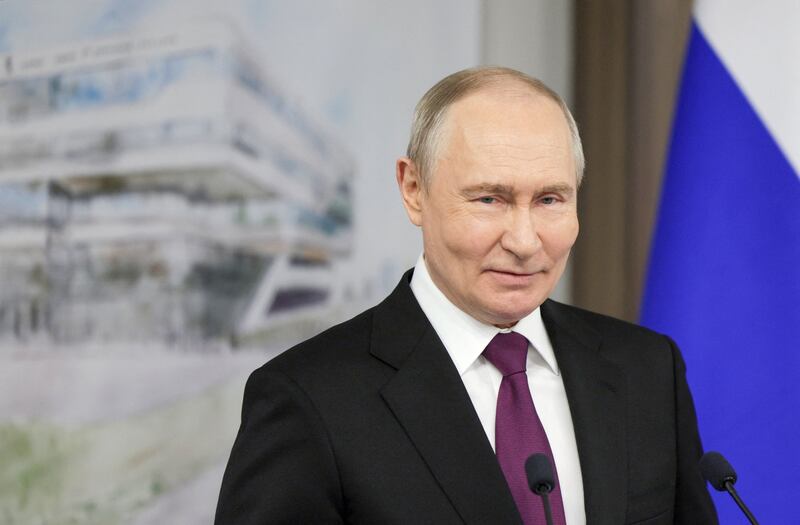
Russian president Vladimir Putin held talks with Iranian foreign minister Abbas Araqchi in St Petersburg on Monday and told him he hoped peace would soon prevail.
The Russian president told the minister he hoped the Iranian people would weather what he described as a “difficult period”.
Russia has offered to mediate to try to help restore calm to the Middle East following US and Israeli strikes on Iran, which Moscow has condemned. It has also repeatedly offered to store Iran’s enriched uranium as a way of defusing tensions, an offer the United States has not taken up.
“For our part, we will do everything that serves your interests and the interests of all the peoples of the region to ensure that peace is achieved as quickly as possible,” Putin told Araqchi, according to Russian state media.
“Last week I received a message from Iran’s Supreme Leader. I would like to ask you to convey my most sincere thanks for this and to confirm that Russia, like Iran, intends to continue our strategic relationship,” Putin added.
Iran last year sealed a 20-year strategic partnership agreement with Moscow. Russia is building two new nuclear units at Bushehr, the site of Iran’s only nuclear power plant, and Iran supplied Russia with Shahed drones for use against Ukraine. — Reuters
Companies’ cost expectations add to ECB inflation concerns
Euro zone companies expect substantially higher selling prices and input costs due to the Iran war, adding to inflation concerns at the European Central Bank (ECB).
Firms anticipate a 3.5 per cent increase in selling prices over the next 12 months, according to the ECB’s most recent survey on the access to finance of enterprises, or SAFE. That’s up from 2.9 per cent in the previous round, an increase the ECB called significant.
Russian superyacht crosses blockaded Strait of Hormuz

A superyacht linked to sanctioned Russian billionaire Alexey Mordashov sailed through the Strait of Hormuz on Saturday, shipping data showed, one of very few vessels to transit the blockaded shipping lane at the heart of the US-Iran conflict.
Nord, a 142-meter (465-foot) yacht worth over $500 million, left a Dubai marina at about 2pm GMT on Friday, crossed the strait on Saturday morning, and arrived in Muscat early on Sunday, according to data on the MarineTraffic platform.
It is not clear how the multi-deck pleasure vessel gained permission to use the route. Since February, Iran has severely restricted traffic through the strait, which typically handles around one-fifth of the world’s oil supply.
A representative of steel magnate Mordashov declined to comment on Monday.
Just a few, mainly merchant vessels, have been passing daily through the crucial waterway at the entrance to the Gulf as Washington and Tehran maintain an uneasy ceasefire. This represents a fraction of the average 125 to 140 daily passages before the Iran war began on February 28th.
In a countermeasure, the US has imposed a blockade of Iranian ports.
Russia and Iran are longstanding allies and have become closer in recent years, including via a 2025 treaty that strengthened intelligence and security cooperation.
Iranian Foreign Minister Abbas Araqchi arrived in Russia to meet President Vladimir Putin on Monday after discussions with mediators in Pakistan and Oman over the weekend.
Mordashov, known to be close to Putin, is not officially listed as the owner of Nord. But shipping data and Russian corporate records from 2025 show the vessel was registered to a Russian firm owned by his wife in 2022. This firm is registered in the Russian town of Cherepovets, where Mordashov’s steelmaker Severstal is also registered.
Mordashov was among a number of Russians sanctioned by the United States and European Union after Russia’s invasion of Ukraine for their links to Putin.
One of the largest yachts in the world, Nord has 20 staterooms, a swimming pool, a helipad and a submarine, according to industry publisher Superyacht Times. — Reuters
Governments meet about phasing out fossil fuels as war upends oil and gas markets
About 60 governments, including Brazil, Germany, Canada and Nigeria, will hold the first international meeting this week to discuss phasing out fossil fuels, as the Iran war upends global oil and gas markets and sends prices soaring.
The gathering of ministers and officials in Santa Marta, Colombia, which starts on Tuesday, will focus on practical steps to shift economies away from fossil fuels, rather than setting new global targets of the kind agreed at United Nations climate summits.
“We’re not negotiating ambitions, we’re not negotiating commitments. This really is about sharing how you do this,” said Stientje van Veldhoven, climate minister for the Netherlands, which is co-organising the meeting with Colombia.
Governments will discuss “what kind of financial instruments, what kind of regulatory incentives, what kind of planning instruments” are needed to kickstart a phase-out, she said.
Talks will also address how to create investment conditions for industries to switch from gas to electricity, and how to reform fossil fuel subsidies.
The meeting brings together a coalition of willing nations, with the world’s top two polluters — China and the United States — notably absent. Saudi Arabia and other major Middle Eastern oil and gas producers are also not attending. The Iran war has exposed many countries’ heavy dependency on oil and gas imports, with Asian economies hit by fuel shortages, and European countries facing surging energy costs. — Reuters
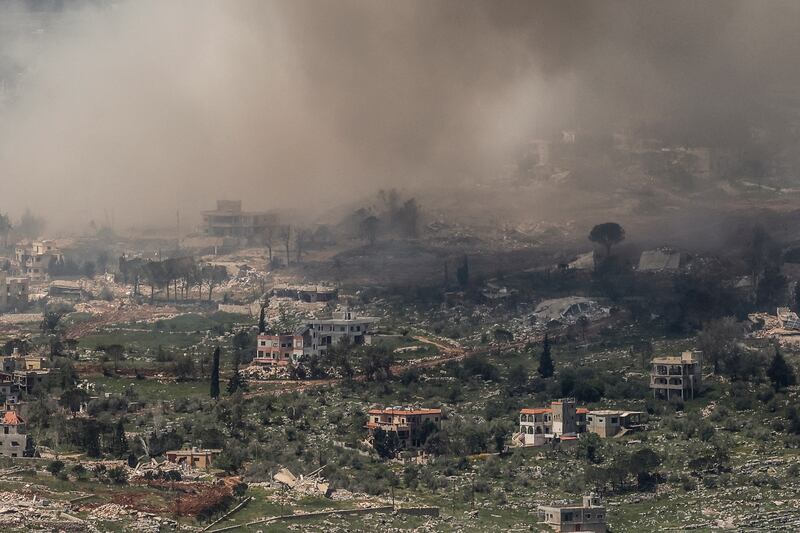
The Israeli military began carrying out strikes in Lebanon’s east on Monday, expanding the scope of its bombing campaign during a ceasefire that has failed to fully halt hostilities with Lebanese armed group Hizbullah.
A spokesperson for the Israeli military said it was beginning to strike Hizbullah infrastructure in Lebanon’s eastern Bekaa Valley as well as areas in southern Lebanon. Security sources told Reuters strikes had hit near the town of Nabi Chit, near Lebanon’s eastern border with Syria. — Reuters
Germany’s Merz says Iran is ‘humiliating’ US as talks stall
German chancellor Friedrich Merz said on Monday Iran’s leadership was humiliating the United States and getting US officials to travel to Pakistan and then leave without results, in an unusually abrupt rebuke over the conflict.
Merz also said he could not see what exit strategy the US was pursuing in the Iran war – comments that underlined deep divisions between Washington and its European Nato allies, which had already been festering over Ukraine and other issues.
“The Iranians are obviously very skilled at negotiating, or rather, very skilful at not negotiating, letting the Americans travel to Islamabad and then leave again without any result,” he said during a talk to students in the town of Marsberg.
“An entire nation is being humiliated by the Iranian leadership, especially by these so-called Revolutionary Guards. And so I hope that this ends as quickly as possible,” he added at the venue in the state of North Rhine-Westphalia. – Reuters

Lebanese president Joseph Aoun says he will not accept reaching a “humiliating agreement” in his efforts to bring about an end to the war with Israel.
In a statement, he says he has informed the US from the very beginning of the negotiations that “a ceasefire is a necessary first step”.
He adds that Lebanon’s south continues to “pay the price of others’ war on our land”.
The ceasefire agreed between Israel and Lebanon has been extended by three weeks, though strikes between Israel and Iran-backed group Hizbullah have continued in recent days. Hizbullah was not a part of the negotiations to bring about peace in the region.
Aoun says if the war was happening “for the sake of Lebanon” then he would support it, But, he says, “when the goal of the war is to achieve the interests of others, I completely reject the war”.
In what appears to be an attack on the militia group Hizbullah, who says it has the right to retaliate to Israeli threats, Aoun says: “What we are doing is not treason; rather, treason is committed by those who take their country to war to achieve foreign interests.
Von der Leyen rules out lifting sanctions on Iran
European Commission president Ursula von der Leyen says it’s too early to stop sanctions on Iran.
She said sanctions were imposed due to Iran’s suppression of its own population.
“We think the dropping of sanctions would be too early”, she said in Berlin at a meeting of the conservative CDU party and its CSU Bavarian sister party.
“We first have to see a change, a fundamental change in Iran for the dropping of sanctions,” von der Leyen added.
Israel kills three Hizbullah members
The Israeli military says it killed three Hizbullah members during operations in southern Lebanon yesterday.
In an update on Telegram, the Israel Defence Forces (IDF) says three Hizbullah fighters were identified approaching Israeli soldiers “south of the forward defence line”.
Israel has what it calls a “buffer zone” extending around 10 kilometres into Lebanese territory, needed, it says, to reduce the threat from Hizbullah.
It means around 5 per cent of Lebanon is now under Israeli military occupation.

“Following the identification, the Israeli Air Force struck and eliminated the terrorists in order to remove the threat,” the IDF says.
A ceasefire is currently in place between Lebanon and Israel. Hizbullah is not a signatory to the agreement, but the deal is intended to end fighting between Israel and the group.
Despite this, Israeli Prime Minister Benjamin Netanyahu has ordered his troops to attack Hizbullah targets in Lebanon after suggesting the group’s actions are “disintegrating the ceasefire”.
Netanyahu set to face difficult elections after rivals join forces
Israeli prime minister Binyamin Netanyahu is facing the prospect of running against a right-wing-centrist super coalition in elections later this year after two of his most formidable political rivals combined forces in an attempt to oust him, inviting a third party leader to join them.
In a move that some analysts compared to the centre-right coalition that removed Viktor Orbán from power in Hungary, the former prime ministers – right-wing Naftali Bennett and centrist Yair Lapid – issued statements announcing the merger of their parties, Bennett 2026 and Yesh Atid (There is a Future).
The move came as Netanyahu disclosed he had recently had a malignant tumour removed from his prostate, leading to questions about the timing of a disclosure that was vague on details and his wider health, with the latter now likely to be an election issue.
“We are standing here together for the sake of our children. The state of Israel must change direction,” Lapid said standing alongside Bennett at a joint news conference on Sunday.
Bennett said the new party would be called Together and that he would be its leader. “After 30 years, it is time to part with Netanyahu and open a new chapter for Israel,” he said.

Iran ‘offers to end chokehold on Strait of Hormuz’
Iran is offering to end its chokehold on the strait of Hormuz without addressing its nuclear program, two regional officials with knowledge of the proposal said Monday.
It comes as the country’s foreign minister made a visit to Russia he said was an opportunity to consult with Moscow regarding the war against Israel and the United States.
Iran also wants the US to end its blockade of the country as part of its proposal, said the two officials, who spoke on condition of anonymity to discuss the closed-door negotiations.
The new proposal, passed to the United States by Pakistan, likely won’t be supported by US president Donald Trump, who wants to end Iran’s atomic program as part of an overall deal to reopen the strait of Hormuz and make the ceasefire permanent.
“We have all the cards. If they want to talk, they can come to us, or they can call us,” Trump said Sunday to Fox News Channel.

Hizbullah leader Naim Qassem on Monday rejected Lebanon’s planned direct talks with Israel, calling them a “grave sin” that will destabilise Lebanon.
“We categorically reject direct negotiations with Israel, and those in power should know that their actions will not benefit Lebanon or themselves,” Qassem said in a statement, calling on authorities to “back down from their grave sin that is putting Lebanon in a spiral of instability”.
“These direct negotiations and their outcomes are as if they do not exist for us, and they do not concern us in the slightest,” he added, saying “we will continue our defensive resistance for Lebanon and its people”.
“No matter how much the enemy threatens, we will not back down, we will not bow down, and we will not be defeated.”
Iranian minister blames US for breakdown of Islamabad talks
Iranian foreign minister Abbas Araghchi has reiterated that excessive demands by the United States were the cause of the breakdown of talks in Islamabad.
Araghchi has arrived in St Petersburg ahead of talks with the Russian president Vladimir Putin.
Iran has been one of Russia’s few allies following its invasion of Ukraine.
His trip over the weekend has included two stops in Pakistan and a visit to Oman, which shares the strait with Iran.
Araghchi’s visit comes as a stand-off between Iran and the US in the crucial Strait of Hormuz persists despite a ceasefire, keeping oil prices high.
“It is a good opportunity for us to consult with our Russian friends about the developments that have occurred in relation to the war during this period and what is happening now,” Araghchi said in a video interview posted by IRNA.
Pakistan has been seeking to revive stalled talks between Iran and America, and negotiations had been expected in Islamabad over the weekend. But US president Donald Trump has suggested the talks could take place by phone instead.
Araghchi said it was America’s approach that “caused the negotiations to be delayed.
“The previous one, despite the progress that had been made, could not achieve its goals,” he said, blaming what he called Washington’s “excessive demands”.
Iran’s foreign minister in Russia for more talks
Iranian foreign minister Abbas Aragchi has arrived in Russia following talks with other nations over the weekend.
He is set to meet Russian president Vladimir Putin. Iran has been one of Russia’s only reliable allies in the latter’s war against Ukraine.
Araghchi’s visit comes after a trip to Oman, where he says talks focused on “ways to ensure safe transit that is to benefit of all dear neighbours and the world” in the Strait of Hormuz.
Over the weekend, the foreign minister also said he had a “very fruitful” visit to Islamabad, where he “shared Iran’s position concerning workable framework to permanently end the war”.
“Have yet to see if the U.S. is truly serious about diplomacy,” he wrote on social media on Saturday.
Aragchi’s comments were followed by news that Donald Trump had cancelled plans for US envoys Steve Witkoff and Jared Kushner to visit Islamabad for peace discussions with Iran.
Lebanon says Israeli strikes killed 14 people on Sunday
Lebanon’s health ministry said Israeli strikes on the country’s south killed 14 people on Sunday, the deadliest day since a ceasefire between Israel and Hizbullah came into force over a week ago.
The health ministry said the dead on Sunday included two women and two children, adding that 37 other people were wounded. Israel said one of its soldiers was also killed.
The US-mediated ceasefire – which started on April 16th and has been extended to mid-May – has brought a significant reduction in hostilities between Israel and Hizbullah, though both sides have continued to fire at each other, trading blame over breaches.
“Hizbullah’s violations are, in practice, dismantling the ceasefire,” Israeli prime minister Binyamin Netanyahu told a cabinet meeting on Sunday, adding “we act vigorously according to the rules we agreed upon with the United States, and also, by the way, with Lebanon.”
Hizbullah said it would not cease its attacks on Israeli troops inside Lebanon and on towns in northern Israel as long as Israel continued its “ceasefire violations”.
Israeli troops are operating inside what they have labelled a “yellow line”, which demarcates a ribbon of Lebanese territory around 10km deep along the length of the border, where residents have been warned not to return.
Hizbullah drew Lebanon into the Middle East war on March 2nd by firing rockets at Israel to avenge the death of Iran’s supreme leader Ali Khamenei in US-Israeli strikes. More than 2,500 people have been killed in Israeli strikes since then.
The toll includes 277 women, 177 children and 100 medics, according to Lebanon’s health ministry.
Hizbullah attacks have killed two civilians in Israel while 16 Israeli soldiers have died in Lebanon since March2nd, Israel says. – Reuters
Iran provides plan to reopen Strait of Hormuz
Iran has given the US a new proposal to reopen the Strait of Hormuz and end the war that includes postponing nuclear negotiations, Axios reported, citing a US official and two people with knowledge of the matter.
The plan, conveyed through mediators in Pakistan to break a stalemate with Washington, calls for extending the ceasefire so the parties can work toward a permanent end to the fighting, Axios said. Nuclear talks would come later, only after a US blockade of the Strait of Hormuz is lifted.
Pakistani mediators have given the proposal to the White House but it’s unclear whether the US wants to explore it, Axios said. Trump plans to hold a meeting in the White House Situation Room on Monday with national security and foreign policy officials, the news outlet reported.
“These are sensitive diplomatic discussions and the US will not negotiate through the press,” Olivia Wales, a White House spokesperson, said in a statement sent by email. “As the President has said, the United States holds the cards and will only make a deal that puts the American people first, never allowing Iran to have a nuclear weapon.”
Crude oil pared gains and Asian stocks extended advances in Monday trading following the Axios report, lifting sentiment after efforts to restart talks stalled. US equity-index futures erased earlier losses to rise 0.1 per cent.
Efforts to resume peace talks halted over the weekend after president Donald Trump cancelled a planned trip by his top envoys and the Islamic Republic said it won’t negotiate so long as it is being threatened.
Trump on Saturday acknowledged a new plan from Iran, saying that Iran quickly sent over a fresh proposal after he told his envoys to stand down on a trip to Pakistan for talks. - Bloomberg
The Government is exploring one-off payments toward environmentally friendly energy measures such as heat pumps and efficient cars amid the increasing political pressure of the global energy crisis, according to political correspondent Ellen Coyne.
Tánaiste Simon Harris has doubled down on a just transition from fossil fuels, even as the Government faces mounting calls to abandon its commitment to the carbon tax.
Harris has now asked officials in his department to consider payments that could be made available towards the structural costs of changing to more sustainable energy and electricity supplies.
You can read more here.


