A one-week ceasefire in Lebanon is expected to come into effect following pressure from the US as Washington continues its effort to reach a framework agreement with Iran to end the Middle East war.
The Hizbullah-affiliated Al-Mayadeen channel in Lebanon reported that the truce could begin as early as Thursday and is expected to last until the end of the ceasefire between Iran and the US on April 22nd.
The channel reported that the Lebanon truce is an Iranian demand. Tehran sees Washington as responsible for restraining Israeli prime minister Binyamin Netanyahu, who has repeatedly spoken in favour of continuing the attacks against Hizbullah.
Israel’s security cabinet was meeting on Wednesday night to discuss the possible Lebanon ceasefire and the efforts to end the Iran war.
READ MORE


The US and Israel began the war on February 28th, triggering Iranian attacks on Iran’s Gulf neighbours and reigniting a conflict between Israel and Iran-backed Hizbullah in Lebanon.
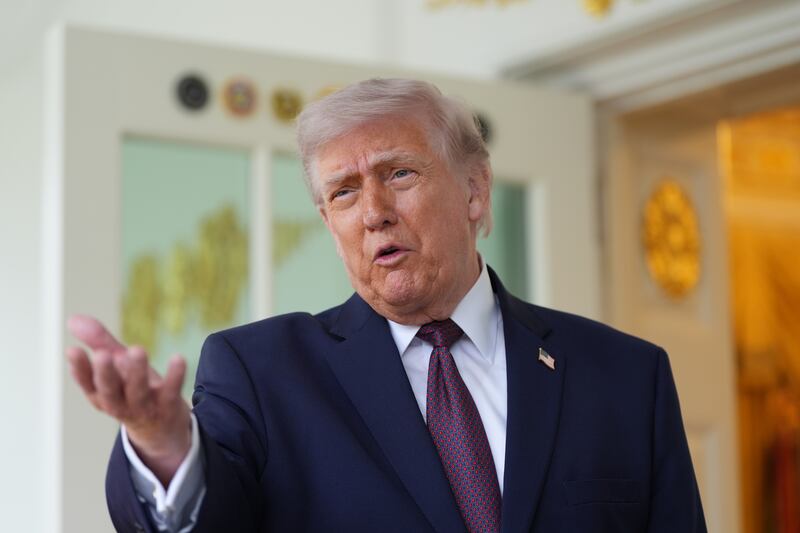
Efforts are also continuing to convene a second round of talks between the US and Iran following the breakdown of negotiations in Islamabad at the weekend. The aim is a framework agreement that would allow an extension of the two-week ceasefire for another 14 days to allow negotiations on a comprehensive deal. In an interview with Fox News, US president Donald Trump said the war was “very close to being over”.
Iran’s nuclear ambitions were a key sticking point at last weekend’s talks. However, progress has been reported the suspension of Iran’s uranium enrichment. The US proposed a 20-year suspension of all nuclear activity by Iran – an apparent concession from long-standing demands for a permanent ban – while Tehran suggested a halt of three to five years, according to people familiar with the proposals.
Washington has also pressed for any enriched nuclear material to be removed from Iran, while Tehran has demanded that international sanctions against it be lifted.
Iran’s foreign ministry said on Wednesday that Tehran’s right to enrich uranium was “indisputable” although the level of enrichment was “negotiable”.
A Pakistani delegation led by army chief Asim Munir visited Iran on Wednesday to discuss details of a potential framework agreement, after talks between the US and Pakistan and other negotiators.
Washington has continued its naval blockade on ships entering and exiting Iranian ports. The US military said it successfully stopped nine vessels from sailing out of Iranian ports during the first 48 hours of the blockade, which began on Monday.
Iran’s military warned on Wednesday it would block trade through the Red Sea, along with the Gulf and Sea of Oman, if the US naval blockade continues.
Finance ministers from more than 10 countries have called for a “swift and lasting” end to the Iran war. In a joint statement the ministers said the US-Israeli strikes and Iran’s retaliatory attacks have caused “unacceptable loss of life and significant disruption to the global economy and financial markets”.

Fierce fighting continued in south Lebanon on Wednesday. Israeli strikes killed 43 people, according to the Lebanese health ministry, while Hizbullah fired dozens of rockets and drones into northern Israel.
The war has killed more than 2,000 people in Lebanon and forced 1.2 million from their homes, Lebanese authorities say. Hizbullah attacks have killed two Israeli civilians while 13 soldiers have died in Lebanon since March 2nd, Israel says.
Israel’s military chief Eyal Zamir said he had ordered the area south of the Litani river to be turned into a Hizbullah “kill zone” as the Israeli offensive continued.
Jewish Israelis are dissatisfied with the government’s handling of the war with Iran and are divided over whether it has improved Israel’s overall security, according to a survey by the Israel Democracy Institute.
According to the survey, just 38 per cent of Jewish Israeli respondents rated the government’s management of the war as “good” or “excellent.” After the ceasefire was declared last week, 72 per cent of Jewish Israelis said that the US and Iran were unlikely to reach an agreement that takes Israel’s security into account.
On the question of Lebanon, the survey found broad support among Israelis for continuing the fighting against Hizbullah, even in the face of US opposition, with 80 per cent of Jewish respondents in favour. – Additional reporting: Reuters