There is as much to admire in honest toil as there is in razzle-dazzle from time to time. It sprang to mind when looking to bundle the collective impact of Ireland’s frontrow in the victory over Fiji. Hardworking men doing much of the heavy lifting to secure the win.
In the past, the denizens of the frontrow brotherhood didn’t get much of a mention when it came to rugby’s artistry – well, perhaps outside of South Africa, Georgia and France – the descriptive tones that captured their contributions were more prosaic as a rule, almost as if they might have their heads turned by ornate expressions of praise.
The rinky-dinky stuff, the fluffy touches, the sleight of hand, the goose-stepping, that was the preserve of the backs, with occasional latitude afforded to a member of the back five in the pack. Or it was in a bygone era. Tadhg Furlong has a highlights reel with footwork that would make an Irish dancer puff out a chest.
There was none of that on display in the Fiji match, but there were oodles of hard-nosed work, fetching and carrying, clearing rucks to complement their basic set-piece chores of scrum and lineout. Ireland’s starting frontrow, loosehead prop Andrew Porter, hooker Rónan Kelleher and tighthead Furlong were diligent in their work, and it reaped tangible rewards for the team.
READ MORE



They won three scrum penalties, and their replacements, Tom O’Toole, Tom Stewart and Sam Illo, squeezed out another one.
Fiji are not noted for their scrummaging, but in the shortest of time former Ireland forwards coach – the highly regarded and respected Gert Smal – has brought a level of technical solidity to augment sheer size. Luke Tagi’s fondness for dropping his bind and finishing a scrum bolt upright was a conspicuous weakness on a couple of occasions. It’s hard to hide a 150kg meerkat in plain sight of the referee.
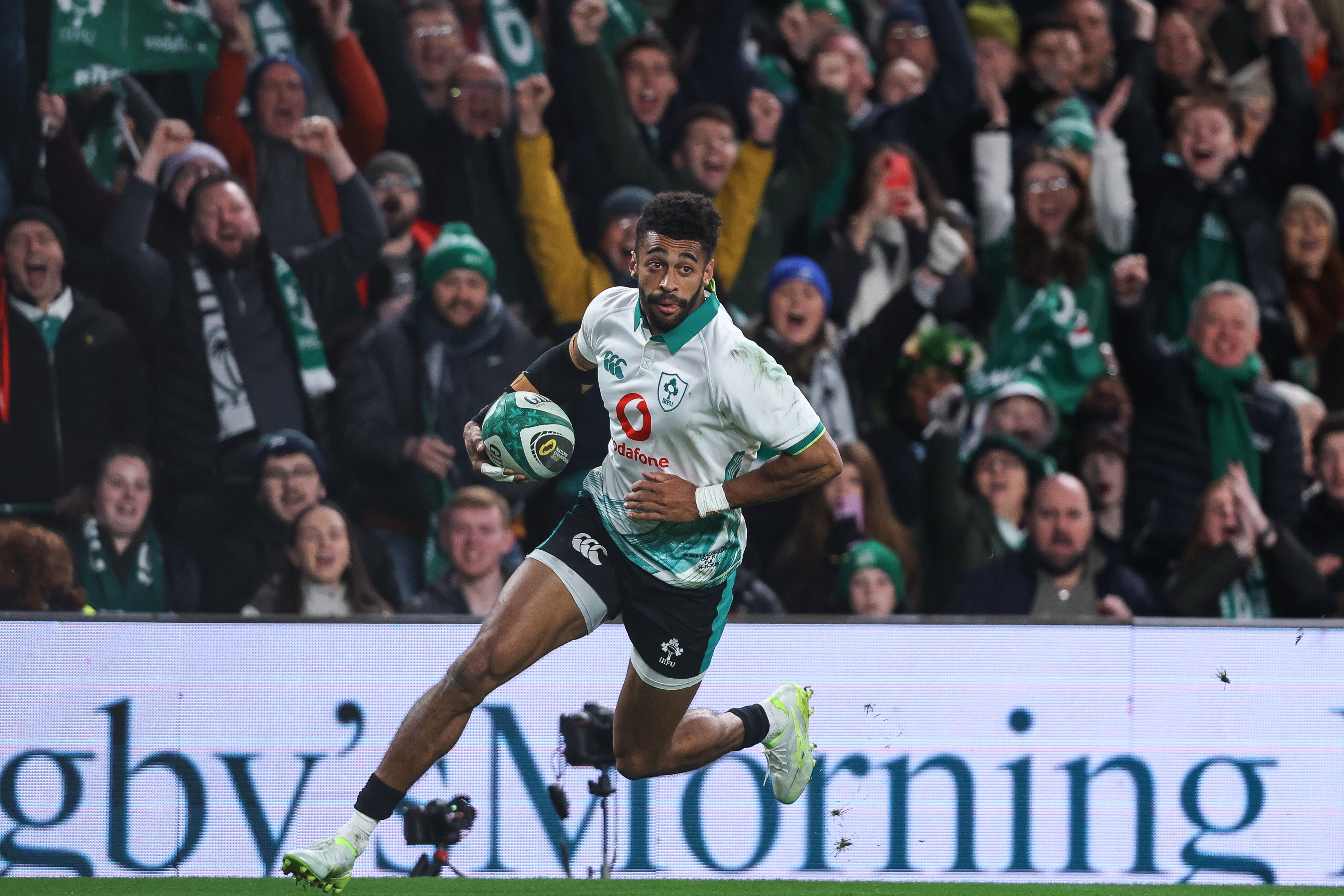
Porter and Kelleher scored a try apiece, underscored by sharp thinking and a practical application of power. Porter was arguably Ireland’s best player in his 62 minutes on the pitch, the consistent quality of his contribution visible to the naked eye without having to peer into the dark recesses.
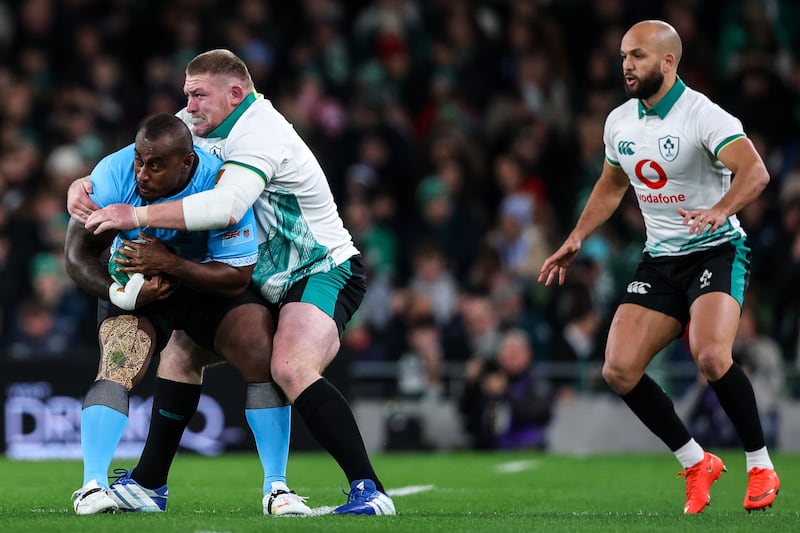
His first significant contribution came in the third minute after Ireland had ceded possession to their opponents. Fiji drove into the heart of the Irish 22, but Porter averted the danger several metres from his try-line with a turnover at a ruck. He followed it up by forcing Tagi into an uncomfortable enough position to cough up a scrum penalty.
Kelleher was pinpoint in his throwing to middle and back initially, while Furlong fulfilled his usual remit with trademark pivot or pop passes. Porter turned the slow ball into something usable by nudging his way over the gain line.
Their impact was grouped in clusters, in quantity as well as quality, and it came on both sides of the ball. In a 60-second passage of play just after the first quarter, all three made important tackles before Porter pounced on a loose ball. It’s in his job title.
[ South Africa won’t let Ireland off like Fiji did, Jake White saysOpens in new window ]
It wasn’t just in the close-quarter skirmishes that he was visible, but further afield, near the touchlines. Ireland were caught out by Fiji’s counter-rucking on two or three occasions, something that won’t have escaped the notice of South Africa head coach Rassie Erasmus and his coaching team.
There were a couple of times that one of Porter, Kelleher and Furlong managed to survive attempted clearouts against superior numbers. Their output was the bedrock of an Irish performance that was generally fitful in quality, albeit slightly better calibrated in the second half.
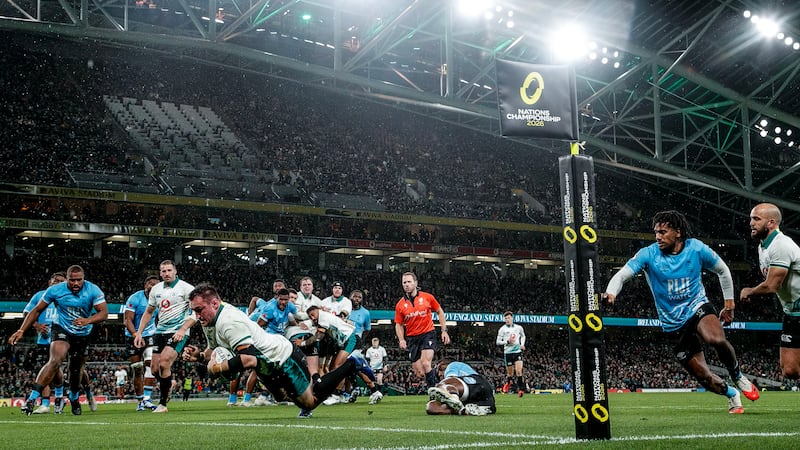
The frontrow benefited in a practical way. Kelleher was first. At the back of a lineout maul inching towards the Fiji line, he got a tap on the back from Jamison Gibson-Park, whose wider arc towards the touchline separated the two Fijian defenders close to the touchline and allowed Kelleher to power through the tackle of Frank Lomani and over for a try.
Furlong had departed when Porter scored his try, a one-metre plunge. On 62 minutes, Ireland’s shadow frontrow was introduced, although Furlong did return after Sam Illo, prominent in his cameo, went off for a HIA from which he didn’t return.
The big, bad Boks scrum is next on the agenda. The moniker is well deserved. There’s no need to trawl through the carnage that the South African scrum visited upon their French hosts on Friday night. Ireland have enough first-hand evidence from 12 months ago when the Springboks eviscerated the Irish scrum en route to victory.
[ What can Andy Farrell learn from South Africa’s defeat in Paris?Opens in new window ]
It’s not just the scrum; Fiji got traction in the maul at the weekend, walking their hosts backwards, especially in the build-up to the first try, and South Africa scored two tries from their maul in Paris.
Being able to do something about it is the challenge that Ireland must prepare for this week. It’s not a three-man job. As Erasmus demonstrated by flipping his frontrows in advance of the French game, it’s a job for six people. And that’s where the spotlight falls during Irish training this week.