
Whenever film or stage directors take on Shakespeare’s Hamlet, they must choose between three different versions of the play: the so-called “bad” first quarto of 1603; the better second quarto of 1604; and the folio version from the first edition of Shakespeare’s complete works in 1623.
There is no definitive original – or if there was, it’s lost. A presumed “Ur-Hamlet”, written by either Thomas Kyd (1558–1594) or by Shakespeare himself, has been dated back to 1587, but no text survives.
Resolving the mystery of the play’s origins might have been the crowning achievement of a Belfast-born theatre critic and author, William John Lawrence (1862-1940), who was considered by TS Eliot to be greatest of all Shakespearean scholars.
In his last years, Lawrence wrote a book called Shakespeare’s Lost Hamlet, which he himself believed to be the best of his many works on The Bard.
READ MORE

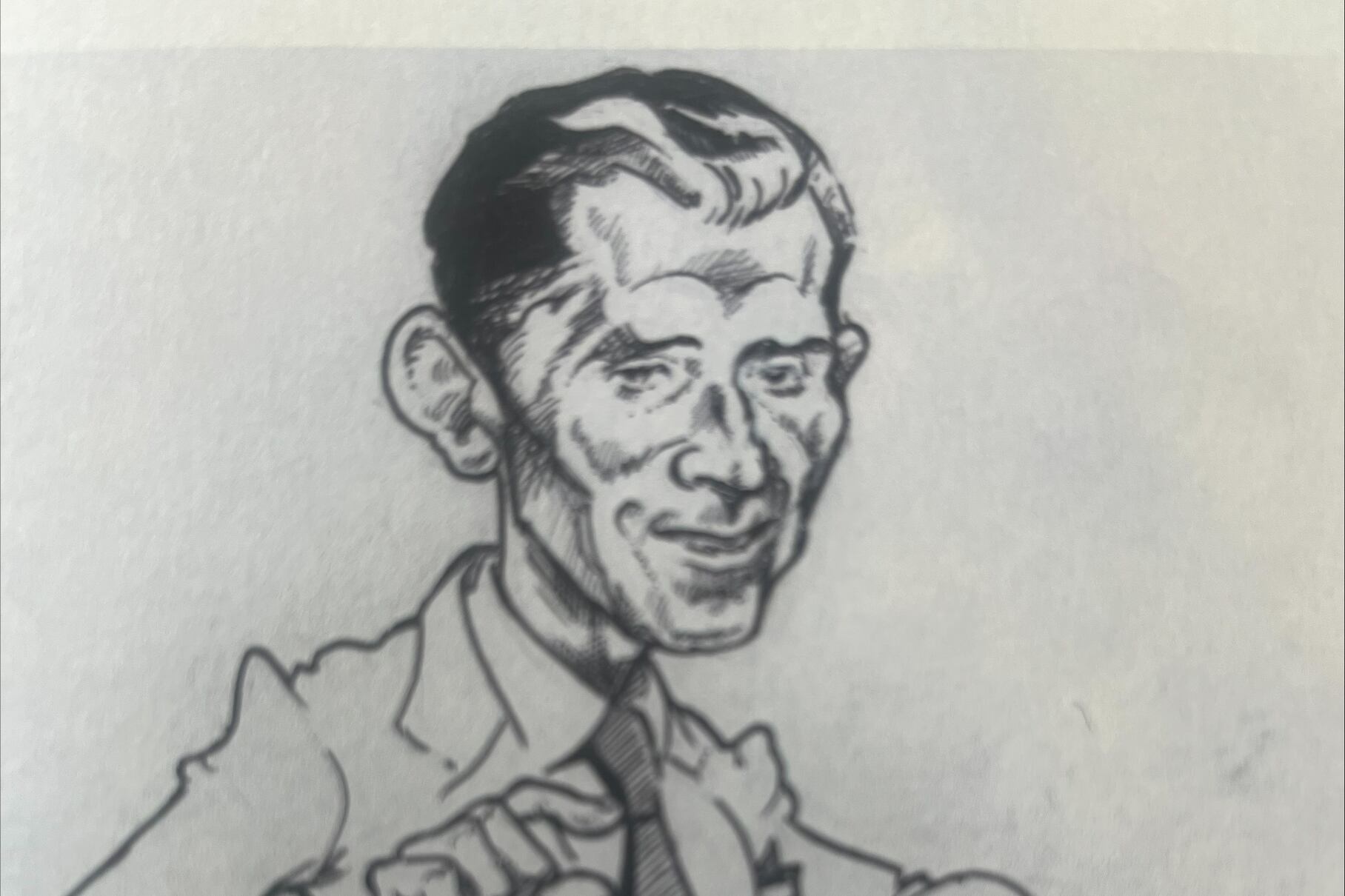


Alas, in a bitter irony, when the Belfast man died in penurious English exile at the start of the second World War, his manuscript was lost too. Insofar as it was ever known, it has since been forgotten, like the man himself.
For my occasional correspondent Eric Villiers, this is a sadly apt postscript to Lawrence’s life, which had been blighted by academic snobbery in Dublin and elsewhere. His lack of formal education was held against him, it seems, as were such other social handicaps as a “harsh Belfast accent”.
Villiers discovered Lawrence while researching Mary Connolly, the Armagh-born “Dublin Street Singer”, whose extraordinary rise and fall we wrote about here recently (An Irish Diary, February 5th). And so taken was he with Lawrence’s story that he has written a book about him. The task now is to find a publisher for it, which may require overcoming the myopia, deliberate and otherwise, that surrounded its subject even during his own lifetime.
An Irish nationalist despite his Belfast Protestant upbringing, Lawrence should have fitted in better in Dublin, which indeed became his home for many years.
It didn’t help, however, that he earned the lasting enmity there of WB Yeats, with whom he had a long-running feud. Not only did Lawrence dislike JM Synge’s Playboy of the Western World, he was a vociferous contributor to the protests that greeted its opening at the Abbey in 1907.
He survived on money orders from his old friend, the Dublin poet and businessman Thomas Keller, who had once helped fund James Joyce
And he didn’t stop there. According to the Dictionary of Irish Biography, “his rather puritanical sensibility” frequently found offence in Abbey plays, so that: “He continued until 1915 his habit of disrupting various performances with hissing and booing.”
Lawrence left Ireland for a time after the 1916 Rising. By 1917, says Villiers, he was “down on his luck ... in America when quite by chance a world-renowned intellectual found him washing dishes in a New Jersey hotel to survive and grabbed the opportunity to make him a visiting professor at Harvard”.
He spent the next three years lecturing there and at the other Ivy League colleges, where his reputation as a self-taught Shakespearean scholar was celebrated and helped command big fees.
But when he returned to his beloved Dublin, Villiers writes, the “academic purdah” resumed. His wife was by then in poor health. So for a combination of reasons, the couple eventually moved to England, where Lawrence spent the 1930s “dodging bailiffs, almost blind, and with his wife terminally ill”.
The Irish Times, at least, gave him a fond farewell. In the archive for 1928, a then new column called the Irishman’s Diary wrote as follows: “Many old Dubliners and literary circles will learn with regret that Mr W.J. Lawrence, whose new book, ‘In Shakespeare’s Workshop’, appears this week, is shortly to leave Ireland.
“Owing to his wife’s health, our Shakespearean scholar must seek a less severe climate, and the experiences of last winter have caused the change in his plans, which were to make his permanent home in Dublin.”
[ Why experts believe Shakespeare may have had an ‘Oirish’ accentOpens in new window ]
In his final years, according to the Dictionary of Irish Biography, Lawrence was “heaped with honours”, including a doctorate from Queen’s University, another from NUI, and membership of the London Critics’ Circle.
He was not, however, heaped with money. Ever the theatre man, Lawrence likened the late harvest of academic awards to “Praise from Sir Hubert”: a phrase derived from an 18th century stage character who rewarded virtue with compliments rather than cash.
He survived on money orders from his old friend, the Dublin poet and businessman Thomas Keller, who had once helped fund James Joyce.
His benefactor also kept him updated on literary life in Dublin, then headquartered in the back room of the Palace Bar. This was bittersweet, suggests Villiers: “Keller’s letters to him about the Palace Bar sessions were a heartbreaking read for a man who’d thrived on literary events where he’d held the floor so often.”
Lawrence died, as Villiers concludes grimly, “blind, broke, and suicidal in a damp Dulwich basement”. His definitive work on Hamlet then somehow followed him into obscurity. And yet, even without it, he had amassed an extraordinary body of work. As the Dictionary of Irish Biography sums up: “His achievements, given his rudimentary education, were spectacular.”