I walk into Yakiniku Matsukawa on the edge of the Dublin Docklands – though “walk into” overstates it. First, there’s Matsukawa Matcha at street level, lights on, a staff member stationed by the counter. A door opens. My name is confirmed. I am guided up a narrow flight of stairs, as if arriving for a covert assignation.
By the time I sit down, I am already doing mental maths. The Irish wagyu omakase is €100. The A5 Japanese is €150. A reconnaissance mission rather than full-scale engagement feels prudent. A la carte offers control – the chance to assemble my own tasting.
This is the sister operation to Matsukawa’s eight-seater omakase counter in Smithfield, Dublin 7, where fish arrives in serene succession and you do nothing except eat and murmur appreciation. Here, the serenity is replaced with hardware.
The grills sit in polished brass rings that gleam with Bond-villain intent. Extraction hums overhead. The walls are lined with panels that resemble shoji, but the paper edges are visible where they double back. At these prices, the finish should be exact.
READ MORE


Yakiniku – Japanese barbecue – is precision engineering in miniature. Beef sliced thin enough to react the moment it meets the metal grid. Heat fierce enough to liquefy fat in seconds. Each slice is placed, flipped once, eaten immediately. Timing is everything.
Fuel arrives in the form of hot sake (€36), poured from a small flask into neat cups that warm the hands as much as the throat. It is more comforting than complex. In a room where you are expected to control the flare-ups, a little liquid reassurance feels necessary. We drink it steadily before handling precision equipment.
To start, we pick at a banchan trio of kimchi, cucumber and marinated radishes (€8), and a choregi salad (€14) of frisée and red cabbage dressed in sesame and strewn with toasted nori.
Then come the tweezers.
Not tongs. Tweezers. About a foot long. Stainless steel. The sort of implement designed to keep you at a respectful distance from catastrophe. They suggest that what lies before you is not merely dinner, but a device that could detonate if mishandled.
Staff outline the cuts and timing, then step back. With immaculate produce, tweezers and a glowing coil, we are expected to grill with yakiniku precision.
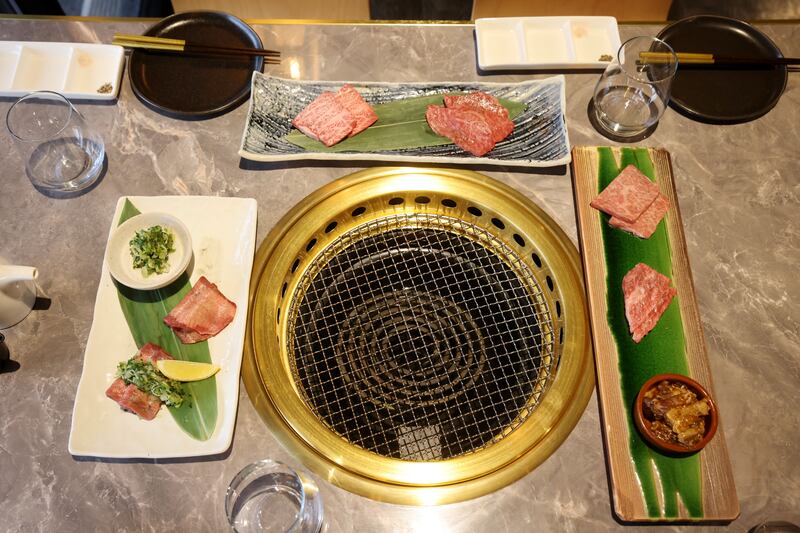

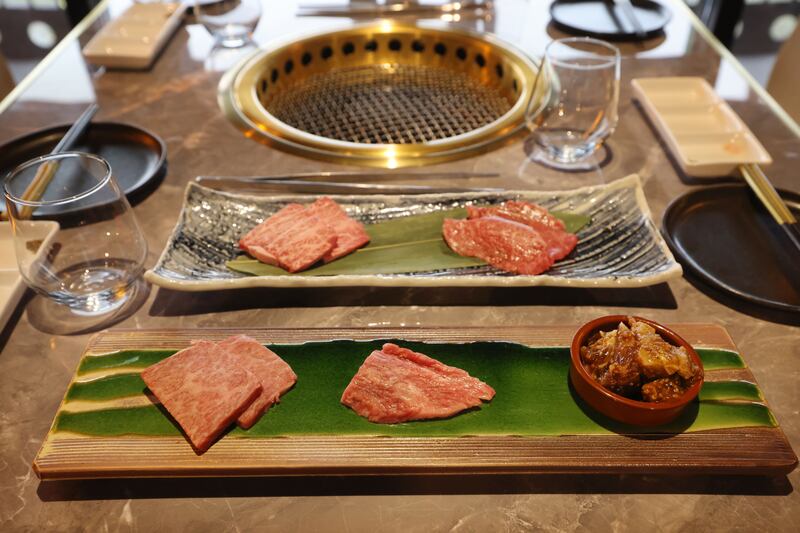
The Japanese A5 wagyu tenderloin (€92) arrives in four immaculate slices. Two each. The marbling is intricate and even, fat threaded delicately through pink flesh. It hits the grill and begins to change immediately. Fat beads and shimmers. The surface tightens, then relaxes. There is little room for error. It is rich, silken and utterly refined.
I have eaten A5 before – in shabu shabu, swished briefly through kombu broth, and at teppanyaki counters. In those settings, someone else manages the heat. Here, you do. At €23 a slice it’s quite a responsibility. We order Japanese rice (€5) to catch the rendered fat. The grains absorb everything dutifully.
Next, the Irish wagyu tenderloin (€30). Same cut. Less marbling. Darker and firmer. It takes longer. It asks to be cooked rather than merely introduced to the heat. It tastes good. Firm, beefy, unadorned. But placed side by side, the difference is clear. The A5 yields. The Irish wagyu chews.
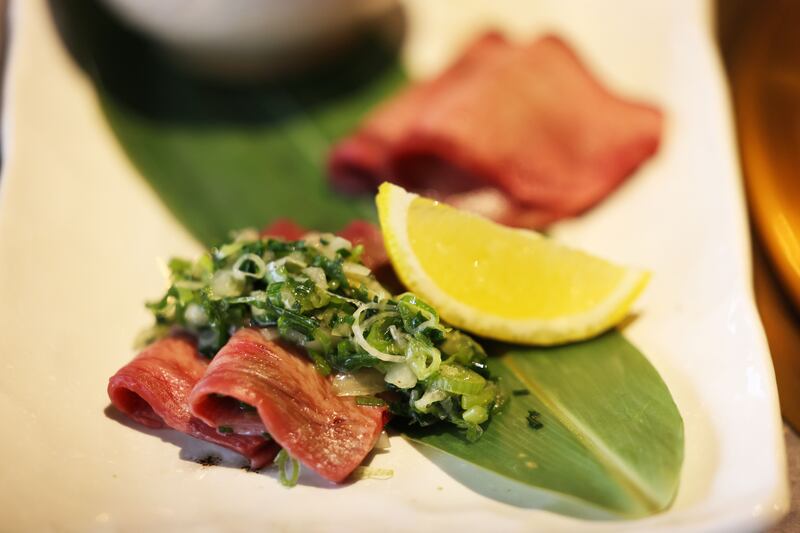
Chicken thigh shio-koji (€12) is the least stressful plate of the evening. The skin tightens and blisters, the fat basting the thigh meat. The pork shoulder (€11) lands closer to a thick, uncured rasher.
All evening, we monitor heat. Adjust placement. Rescue edges. I begin recalculating like a henchman eyeing the escape helicopter fuel gauge. The omakase menus hover in my peripheral vision like the red button marked Do Not Press. Commit, and perhaps the evening takes on the flow of a ceremony. Decline, and you are assembling your own Bond plot from side dishes, hoping you haven’t fatally underfunded the mission.

Dessert is a single scoop of raspberry and blueberry sorbet (€6.50), dense and cold, tart enough to reset the mouth.
I’m left wondering if I should have committed to the A5 omakase. But it is a serious spend. At €150 per head, Matsukawa sits at the upper end of Tokyo yakiniku pricing, in the territory of places like Yoroniku. Add sake and service and dinner for two moves north of €400. In Tokyo, that level of outlay usually secures a chef-directed sequence and a room to match. Here, the wagyu quality is strong, but the pacing and execution remain diner-managed, even on the omakase.
Dinner for two with a flask of sake was €214.50.
The verdict: A5 wagyu, foot-long tweezers and omakase pricing
Food provenance: Japanese A5 wagyu from Hida Wagyu, Irish wagyu from Kingsbury Wagyu, seafood from Glenmar, chicken (free-range) and pork (not free-range) from Corrigan’s butchers
Vegetarian options: Kimchi, choregi salad, Korean-style cold udon noodles, vegetable combo
Wheelchair access: No accessible room or toilet
Music: Japanese, in background