

A close reader from Cork, George Harding, writes to point out my recent two-column series A History of Ireland in Descriptions of Rain included “only one actual death” from precipitation. This, he implies, underrepresented the risk.
My sole fatality was Charles Stewart Parnell, whose demise from pneumonia may have been at least hastened by making election speeches in downpours during the autumn of 1891, then sitting in wet clothes afterwards.
But as George points out, there is another notable death of the same era can also be attributed to rain. And although the victim there may not have been of Irish origin, the rain that did for him certainly was.
George Boole (1815 – 64) is today remembered as the mathematician and philosopher who gave his name to Boolean Logic. Alas, there was little logical about the manner of his passing.
READ MORE


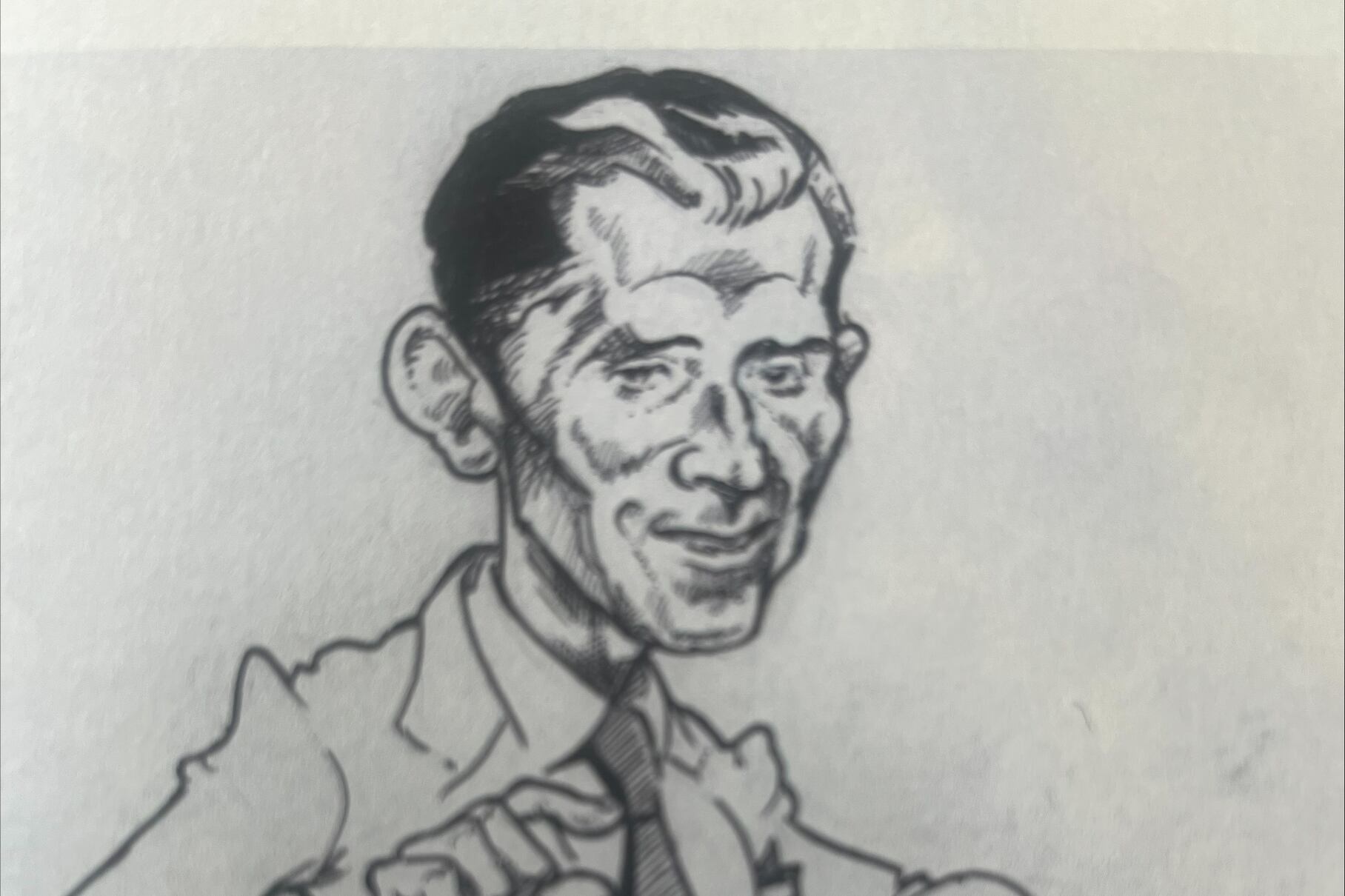

For piling calamity on calamity, that rivalled some of the fictional fatalities of the rain-soaked Gaels in Corkdorghera, as documented in Myles na gCopaleen’s An Béal Bocht, that did feature in my series.
English-born and of fragile constitution anyway, Boole may as well have been handed a death sentence when made a professor of Maths at Queen’s College Cork in 1849.
His wife Mary would later record that he had a “hereditary disease of the lungs, aggravated by residence in a damp climate, with a nervous system sensitive in the highest degree.”
[ ‘O, the drenching grey weather’: Irish rain in 40 wonderful phrasesOpens in new window ]
Despite which, we’re told that on November 24th, 1864, he walked the three miles from home to university during a downpour, and then delivered a lecture in drenched clothes.
Afterwards, he developed a fever, followed by a serious lung infection. But he might still have survived had it not been for the added misfortune that his spouse, although herself a gifted mathematician, was also an enthusiast for the then embryonic pseudoscience of homeopathy.
A cornerstone of that is treating like with like: the hair-of-the-dog-that-bit-you principle. In poor Boole’s case, it involved his wife pouring buckets of water onto his bedsheets, to keep him permanently wet pending recovery.
George Boole died at Ballintemple on 8th December 1864, and is buried at the nearby St Michael’s Church of Ireland. So English as he may have been, there is a part of Cork that is now forever Boolean.
Even before marrying him, Mary Boole had a name that would become famous. She was the daughter of a Reverend Thomas Everest, brother of another George, the surveyor and geographer after whom Mount Everest is named.
Raised in France, she met her future husband while visiting an uncle in Cork. The couple bonded over a mutual love of maths and married when she was 23 and he 40.
Although she moved back to England after his death, she would later boast that she had never learned to think in English. This she thought crucial to her development as a mathematician and educator: “The English language contains no terminology in which it would be possible to express my kind of thought.”
Having accidentally hastened her husband’s end, she spent much of the 52 years by which she outlived him promoting his name and ideas, working as a librarian and teacher and writing a series of educational books.
In later years, she also studied spiritualism and the occult, something she believed all post-menopausal women could channel.
“My father believed (and so do I) that every woman becomes at fifty potentially a medium, more or less,” she wrote. “The temporary illness from which so many women suffer at this age is the effort of the mediumship to assert itself.”
Approaching her own death, a student to the last, she is said to have remarked to a family member: “Oh this is interesting, I have never died before.”
[ The Irish Times view on The Gadfly: Ireland’s little-known best-sellerOpens in new window ]
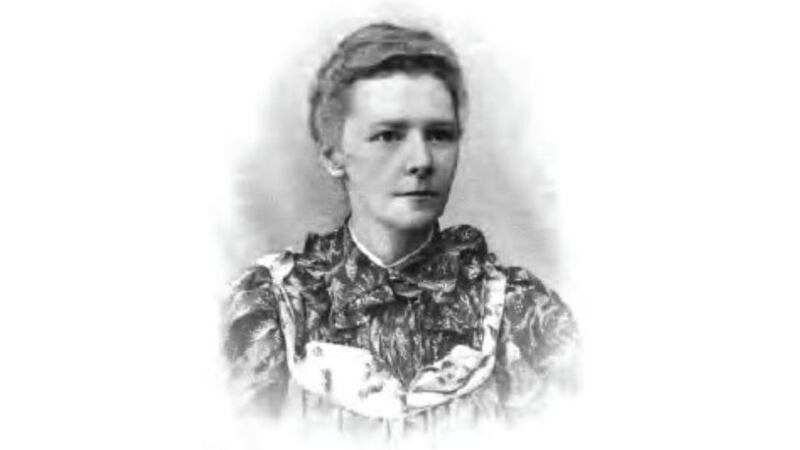
Not the least important result of the Booles’ time in Cork was that it produced the most successful Irish writer most Irish people have never heard of.
Ethel Boole was born at Ballintemple in May 1864, only months before the rain would wash her father away. She went to England soon afterwards with her widowed mother and later, as a young adult, moved in Russian revolutionary circles, meeting and marrying a Polish escapee from Siberia.
It was as Ethel Voynich that she wrote The Gadfly in 1897. Describing the adventures of an idealistic young Englishman during the Italian Risorgimento, the novel became required reading for many 20th century revolutionaries, selling millions in the Soviet Union alone.
According to Peadar O’Donnell, it was enjoyed by anti-Treaty republicans in Mountjoy Prison during the Civil War.
Farther afield, it would also become popular in Iran and China. When Micheál Martin visited Beijing earlier this year, the well-briefed Chinese leader Xi Jinping spoke of having been inspired by The Gadfly as a teenager. Naturally, the Cork-born Taoiseach had read it too.
[ Getting our oar in: Frank McNally on the perils of linguistic imperialismOpens in new window ]


