
The 14-storey concrete skeleton of the Sentinel building stands watch over the south Dublin suburb of Sandyford, as it has done for the last two decades, an unwholesome reminder of the excesses and follies of the Celtic Tiger era.
With a panorama stretching from Howth to the Wicklow Mountains, the monolithic unfinished tower has seen the city move from boom to bust, and back to boom, remaining unmoved by the tectonic changes in fortunes of the capital.
Promises of its development, first as offices, then “office suites” and latterly as apartments have come and gone, but according to its current custodian Barry Comer, managing director of the Comer Group, by the end of next year the Sentinel will be completed – and occupied, finally.
The origins of the building date to the late 1990s when a consortium led by Treasury Holdings bought the former Allegro industrial site on Blackthorn Drive in the Sandyford Industrial Estate for about £12.5 million, just shy of €16 million.
READ MORE


In 2005, weeks after securing planning permission for a residential, retail and commercial scheme including 850 apartments and a 14-storey office block, the consortium achieved an astonishing tenfold mark-up when it sold the eight-acre site to Cork-based developer John Fleming for €165 million.
Fleming was quick out of the traps, with his company Tivway starting work on the apartments in the new Rockbrook development the following year. In 2007 construction began on the landmark building, the 14-storey Sentinel tower, then among the tallest office blocks under construction in the city.
The following year came the property crash and development of the Sentinel ground to a halt, leaving just its concrete skeleton built. It has stood like this ever since.
An examiner was appointed to Tivway, but following the rejection by the Supreme Court of a rescue plan for the company, it eventually collapsed in 2010 owing the banks more than €1 billion.
The Comer brothers stepped in. The Galway-born developers Luke and Brian bought the Sentinel in 2011 for a knock-down price of €850,000. Separately, investment company Ires Reit, now the State’s largest private landlord, bought the rest of the Rockbrook lands, including several hundred finished apartments as well as apartment sites.

Although the Comers’ purchase of the Sentinel raised hopes for its completion, with the economy still in the grip of recession the appetite for a 14-storey showpiece office scheme seemed slight.
In 2012, the Comers started discussions with Dún Laoghaire-Rathdown County Council about the possibility of converting the block to apartments. Despite the economic conditions, the rental market for apartments surrounding the Sentinel was strong.
The Comers’ Dante Property Company applied to the council late the following year to convert the building, not quite into apartments, but to 294 “office suites”. Each suite would measure 28sq m, and come with a kitchenette, bathroom and “overnight stay” facility, including “fold-out bed” to facilitate “flexible working arrangements”.
The council granted permission in 2014, but with the proviso that construction had to start before planning permission for the Sentinel expired in 2016. The Comers didn’t make this deadline. In 2017, Dante submitted a similar office suites application. Again, it was approved, and again, didn’t progress.
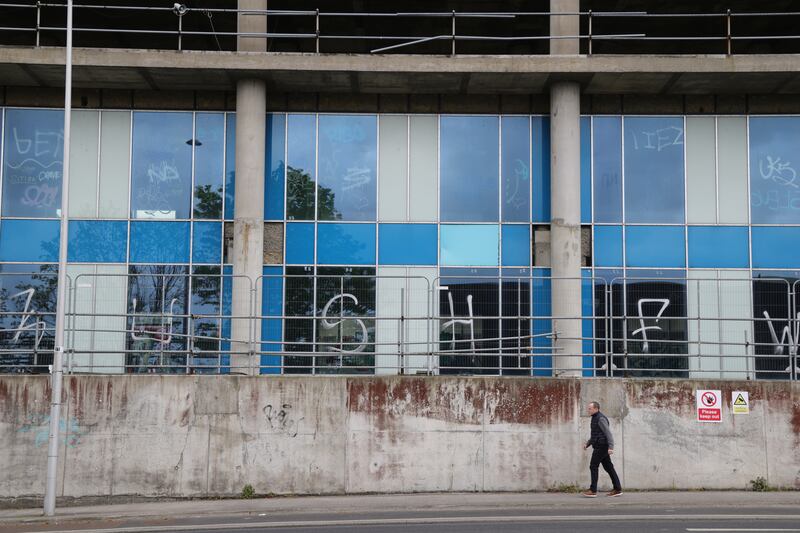
Partly, this was down to ownership and access issues related to the basement car park, which was shared by the adjoining, not yet completed apartment blocks, with the access ramp remaining in the ownership of Ires.
For some years afterwards the project to revive the Sentinel seemed to have been shelved. The exposed shell remained, although, as sites progressed around it, its skeletal form became a less stark and oppressive presence in the skyline, and more of an oddity, in what was a burgeoning post-crash construction market.
Although there was no construction, the Comers were working away in the background, petitioning the council to change the parameters of what was allowable on the site, to remove the necessity for offices in the Sentinel.
[ Five homes on view this week in Dublin from €375,000Opens in new window ]
The idea that there was a market for a large live-work/office suite scheme had always seemed a bit of a stretch and by the end of the decade had become associated in the public mind with co-living schemes, promoted by then minister for housing Eoghan Murphy as a “very trendy” and “exciting” choice for young workers.
Both types of development, similar largely in that the personal living spaces were smaller than standard apartment sizes, had aroused suspicion of a race to the bottom in housing standards. Legislation allowing living spaces below minimum apartment sizes was reversed, and while that did not necessarily outlaw office suites, the concept never found favour.
In 2022 the council voted to rezone the Sentinel site, removing the requirement for an office element. Instead, the new county development plan included a “specific local objective” to “facilitate completion of the unfinished block and allow consideration of a maximum of 110 residential units”.
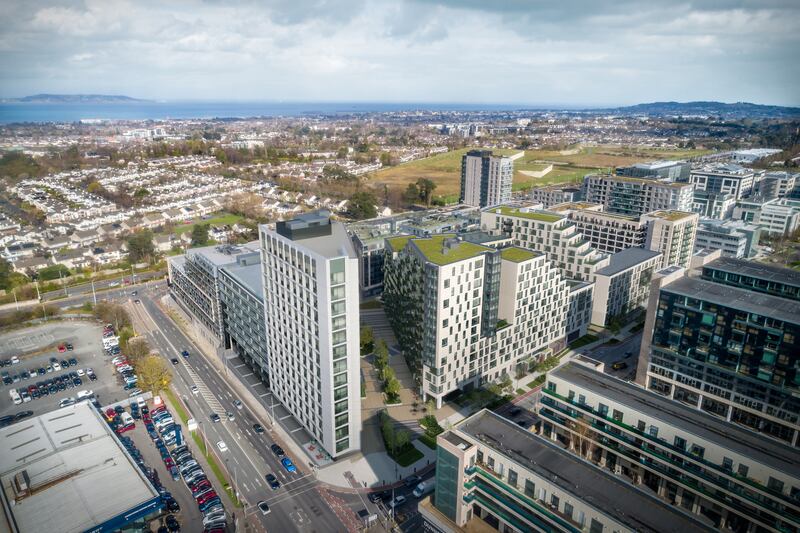
In early 2023 the Comers bought the adjoining RB Central site from Ires, ending the car park impasse, as well as gaining permission for the construction of 428 apartments.
Later that year they submitted plans to convert the Sentinel to 110 apartments. Sixty would be two-beds with 22 one-beds and 28 three-beds.
The council granted permission for the development but with a condition requiring the number of three-bed apartments be increased to a minimum of 40 per cent.
It’ll be starting pretty early next year and be completed by the end of next year, I hope
— Barry Comer
The Comers appealed this condition to An Bord Pleanála on the grounds it would make the scheme unviable, but in early 2024 the board upheld the council’s decision.
The fact that the Sentinel stands, largely as it did 20 years ago, might be seen as an indication this was a fatal blow to development and the Comers had decided not progress the scheme.
Not so, says Barry Comer, Luke’s son.
“We’re actually on site for probably two years already. All in all, it’s going to be a four-year development. Unfortunately, the way it’s phased, the Sentinel was always going to be last because of the way the basement had to be finished,” he says.
The former Ires apartment scheme is closer to the basement access, Comer explains, and had to be completed before work on the Sentinel could start.
“Sentinel is the last phase of the development. It’ll be starting pretty early next year and be completed by the end of next year, I hope,” he says.
The fact the Sentinel’s concrete skeleton has been left exposed to the elements for 20 years does not pose challenges for its development, he adds.
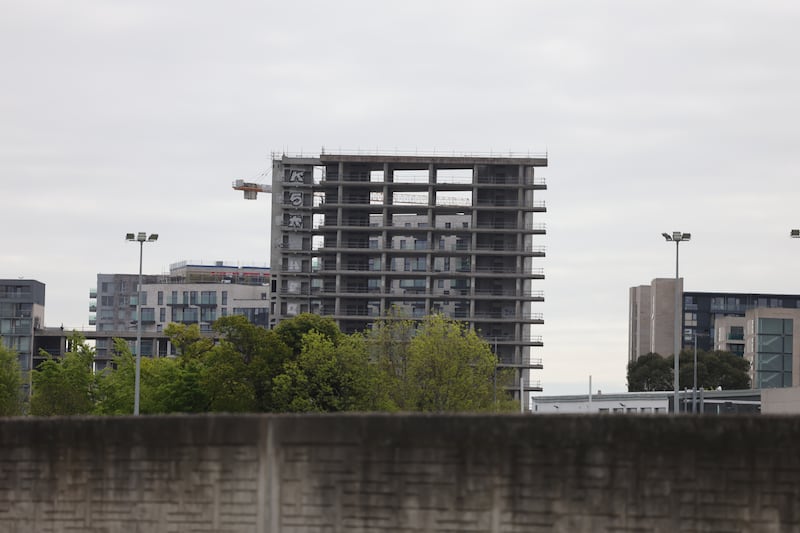
“We’ve got everything sampled and tested. Concrete gets stronger with age. We’re working with the same engineers that were originally involved in the development, so they’re happy out with everything as well.”
Comer is confident that by the end of 2027 people will finally be living in the Sentinel.
“The whole idea was always to try and get residential in it, because Sandyford is awash with office space and it’s a cracking location for apartments,” he says.
“It will be a fantastic lift for the whole area in terms of removing this hole in the ground for the last 20 years. It will be nice to get everything wrapped in a bow and finished now.”
Local councillors are also eager to see completion.
“It’s absolutely vital that it happens this time. It’s a site that would deliver much-needed homes,” Pierce Dargan, Fine Gael councillor on Dún Laoghaire-Rathdown County Council, says.
Green Party councillor Oisín O’Connor hopes the conclusion of the Sentinel saga will allow attention to move to the need for improved local community and transport facilities.
“I would like it to be finished, so this stops being the main focus of all conversations around Sandyford,” says O’Connor.


