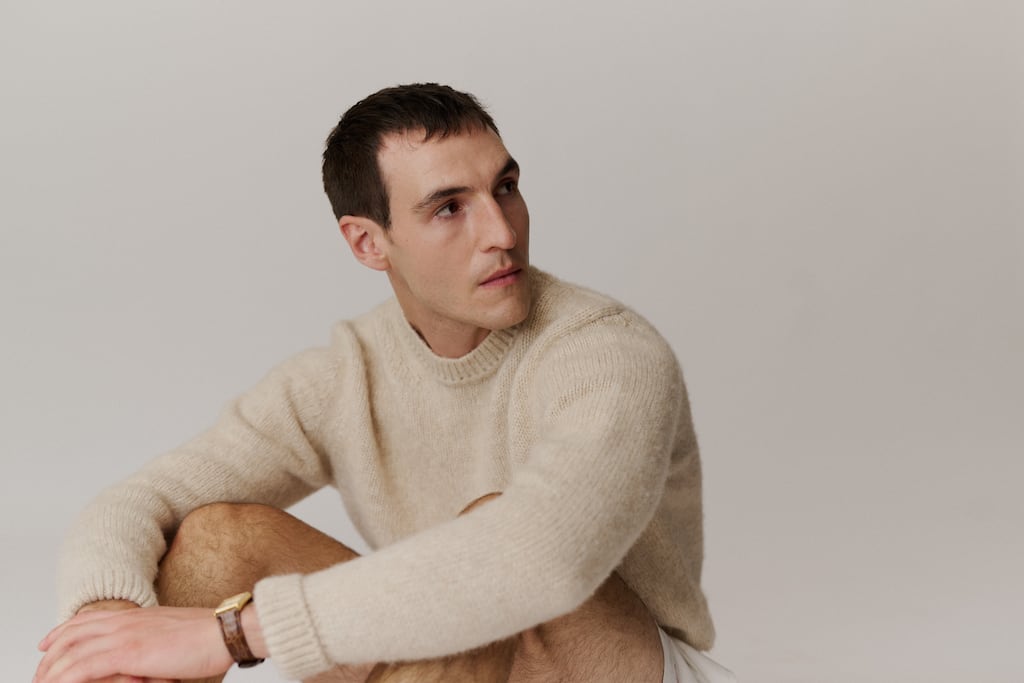

I don’t suppose Éanna Hardwicke, currently Cork’s busiest actor, is old enough to remember much about the 2002 World Cup and that famous falling out between Roy Keane and Mick McCarthy. Born in late 1996, he would still have been getting Lego pieces stuck in his nostrils.
“I remember something happened, but not knowing quite what it was,” he says. “I remember a woman my parents’ age, a lovely woman, coaching me to say: ‘That man’s a disgrace to his country!’”
Which man was that?
“Roy.”
READ MORE


Wait? What? In Cork? I don’t wish to stereotype, but I did assume the Rebel County inclined towards support for their bellicose homeboy. McCarthy, manager of Ireland, was the introverted avatar of unexcited reserve. Keane, inspired midfielder, was a stout yeoman of unflinching determination.
“I remember not knowing why I was being told who he was or why I was supposed to refer to him that way,” he says. “But I knew the sense of it being a crisis. It is one of my earliest memories.”
It’s like the moon landing to my generation.
“Ha ha! It’s my version of the moon landing. It’s Cork’s version of the moon landing.”
And now Hardwicke is part of the legend. The night before we speak, he was back at the Everyman Theatre for the Irish premiere of Glenn Leyburn and Lisa Barros D’Sa’s rollicking, profane Saipan. Starring Hardwicke as Roy Keane and Steve Coogan as Mick McCarthy, the film unearths the famous differences of emphasis (is that polite enough?) between player and manager on that eponymous island during preparations for the tournament in Japan and South Korea.
The screening, which opened the Cork International Film Festival, had particular significance for Hardwicke. The last time he played the Everyman stage was in a National Youth Theatre production of Gulliver’s Travels. “I tell a bit of a lie,” he corrects. “During Covid we recorded a radio version there of one of Cónal Creedon’s plays, which was a joy. We recorded that on the stage. But the first time in front of an audience was Gulliver’s Travels – and then last night.”
[ Saipan: Will World Cup movie open old wounds for Irish football fans?Opens in new window ]
A lot of life has happened in the decade and a bit between those two Everyman bookends. Hardwicke studied at the The Lir Academy in Trinity College Dublin. He made his senior film debut in the unsettling Irish horror flick Vivarium. He was among the many actors – they count as a generation to themselves – who profited from an appearance in the pandemic sensation that was Normal People. A Bafta nomination came his way for the unsettling 2023 BBC series The Sixth Commandment. He appeared opposite Nina Hoss in a hugely acclaimed production of Chekhov’s The Cherry Orchard in the West End of London.
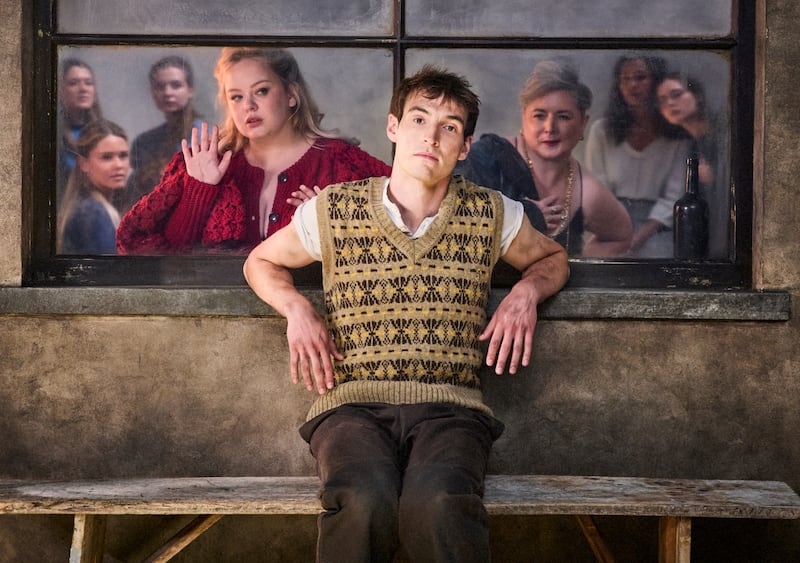
He has not, however, yet had an annus so mirabilis as the one he is currently enjoying. Saipan lands in cinemas in early January. He is currently playing Christy Mahon, one of the great Irish roles, in Caitríona McLaughlin’s production of John Millington Synge’s The Playboy of the Western World for the Royal National Theatre on London’s South Bank.
The very notion of entering that famous hulk by Waterloo Station sounds intimidating. The National was launched by Laurence Oliver at the Old Vic in 1963 and moved to its present looming dominant spot in 1976.
“No, it’s not intimidating at all,” he says. “Because the building is so brilliantly brutalist. I love it. Were it to have more grandeur it might feel a bit imperial. But because it’s this act of socialist Britain – building a national theatre – when I am walking into the building it feels like both a theatre and an office.”
I imagine rehearsing a production of that size and significance hangs over your whole life. You have to stay in shape. You can’t go on the tear. You have to keep your voice intact.
“No, actually, rehearsals are kind of anti-stress, because you do all of that between 10 and six,” he says airily. “You go in in the morning and you have this whole room that’s dedicated to all of your mad ideas.”
An interesting argument. Some actors do find theatre more stressful than film, but it doesn’t sound as if Hardwicke is one of them.
“On a film set, often it’s all arranged. You need to arrive super-early in the morning and be prepared, under the assumption that you then need to know exactly what you’re doing. Because there’s no time to waste. Whereas rehearsals for theatre is a very cathartic, healthy place to be. Because you get the time to work it all out.”
Hardwicke seems impressively relaxed about where he finds himself. A lanky fellow with a lugubrious line in discourse, he gives no impression of being trapped in the headlights. Mind you, he has been at this lark for quite some time. Raised in central Cork and later in Glanmire, to the northeast of the city, he was educated at Ashton School before making his way to the Lir in Dublin. As long ago as 2009, he had a juvenile role opposite Ciarán Hinds and Aidan Quinn in Conor McPherson’s spooky film The Eclipse. Was that just a happy accident, or he did he already have ambitions to become an actor?
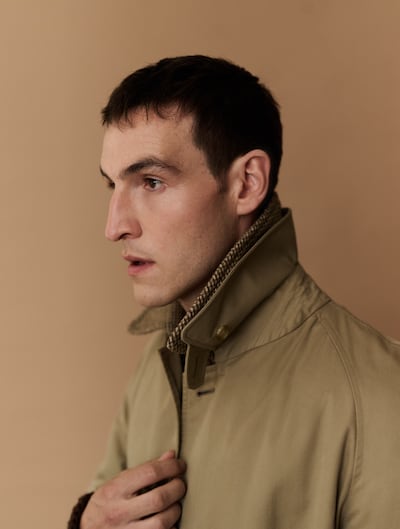
“A bit of both,” he says. “I had joined a few acting classes, and I loved it. I really felt like it was the thing I wanted – the way I wanted to spend my weekend. I was probably realising at that point that I wasn’t going to be a footballer anytime soon. Ha ha! It’s that age of 11 or 12 when you come up against the fact that talent is a thing. And I was no athlete. I was no footballer. I just loved the people who were in youth theatre. It’s such a hilarious thing to do – to go in and make believe for two hours. I had that instinct from age 11 – and it doesn’t really change.”
[ I’ve just seen Saipan, The Movie. Spoiler alert: it doesn’t end wellOpens in new window ]
You could not do better than have an early job with Ciarán Hinds: one of the nicest and smartest fellows in the business.
“Exactly. A phenomenal actor and a really generous, generous actor to work with. He probably indulged me a lot in my questions as an annoying kid.”
Hardwicke seems like the sort of intelligent fellow who could have done all kinds of things at university. Rather than pretending to be Christy Mahon or Roy Keane he could be – I’m guessing here – removing gall bladders or designing suspension bridges. I wonder how relaxed his parents were about him going to drama school instead. Who knew he would score so many good roles so quickly?
“Funny you should ask that, because I had hang-ups about that that my parents didn’t,” he says. “My mum is a really wonderful guidance counsellor, and she’s always just said: ‘Whatever ye love doing, go off and do it.’ Which I think is an incredible privilege. If you’re told that from a young age, you actually start to believe it. And I felt incredibly lucky, because people don’t always say: ‘Just go for it with both hands.’ And she did. I went to the Lir and I found everything I wanted.”
That drama school has become a powerful force in launching the current generation of young Irish actors. Paul Mescal, Alison Oliver, Alex Murphy and Agnes Casey are just a few near-contemporaries who landed successfully after graduation.
“I think, at 18, it was the first time I had that feeling: this acting is a deep thing,” he says. “Speaking Shakespeare can do strange things to you. Working on Chekhov can bring brilliant things. And I sound like a lovey when I talk about it. Ha ha! But, yeah, I completely drank – and drink – the Kool Aid.”
I had first heard of Hardwicke when, in early 2020, I featured him in this newspaper among “five to watch” in film and TV for the coming year. His role in Lorcan Finnegan’s Vivarium was distinctly, uniquely unsettling. By the time the film premiered at Cannes he was already signed up for a much-anticipated TV adaptation of Sally Rooney’s second novel. In Normal People, he played Rob, one of the school’s jokers, who ended up taking his own life. Speaking to me in 2023, Hardwicke acknowledged he had met people who identified with the character’s troubling journey.
‘You always think, as a general rule, anything that feels like a challenge – anything that feels like it requires something you haven’t done before – has to be a good thing’
— Éanna Hardwicke on his acting projects
Lenny Abrahamson, the Oscar-nominated director of Normal People, remembers the impact Hardwicke had over the strange locked-in summer of 2020.
“I loved working with him on Normal People,” he tells me. “It’s the sign of a great actor that you can look at them in a supporting role and think: I’d watch a film centred on that character.”
Abrahamson acknowledges the contrasting energies Hardwicke has at his disposal. He conveyed concealed sadness as Rob. He was deeply sinister as a devious murderer in The Sixth Commandment.
“Éanna is a brilliant talent,” the director continues. “He is versatile, skilful, intelligent and deeply committed to his work. He is capable of astonishing vulnerability as well as menace and, always, underneath, there’s that intelligence.”
Was Hardwicke surprised at the success of Normal People?
“In one way, it wasn’t a surprise, because the material was there,” he says. “I think, also, there never really had been anything like it in our TV landscape. There had never been anything like that with money, with a budget behind it – something telling a character-driven story that, on paper, is a hard sell. It’s not about a war. It’s not about gangland crime. It’s not about sci-fi.”
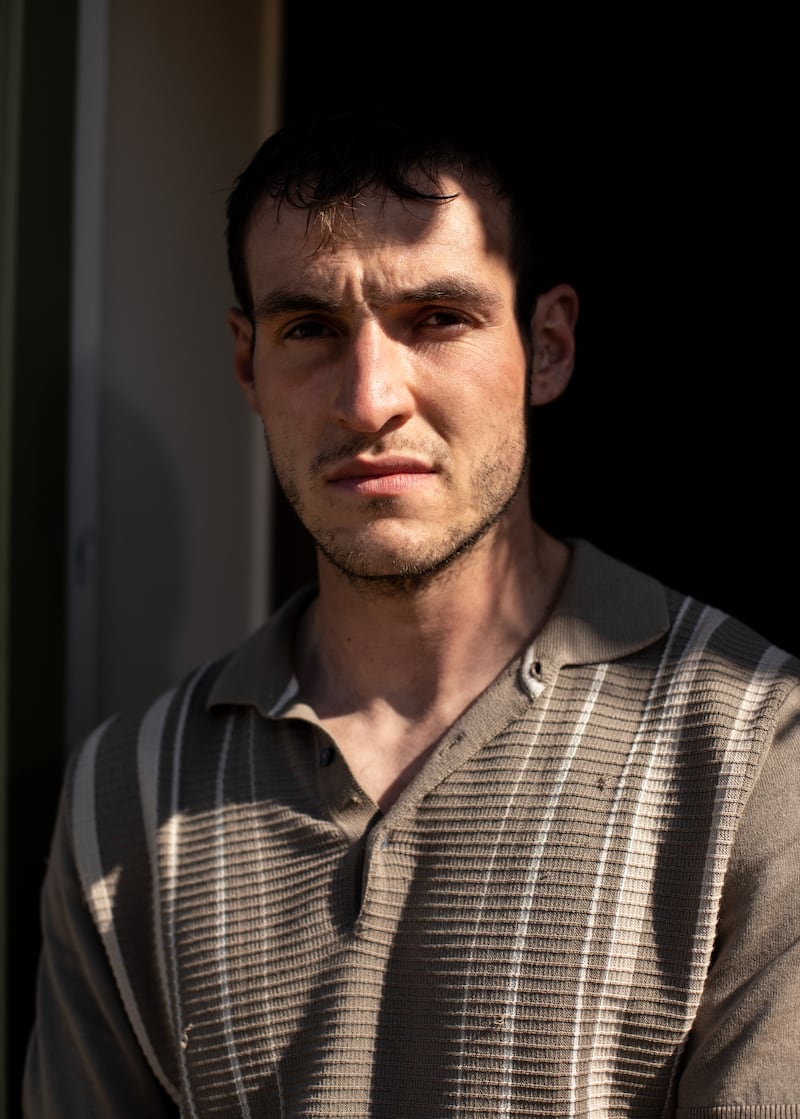
Like so many of his contemporaries in the business, Hardwicke eventually hopped on a plane to London. That is currently his base, but we are no longer in the era where – as it was in the 1980s or 1990s – that move feels like a life-changing operation. Communication with home is so easy. Travel is cheap.
“We probably have this conversation every six weeks, eight weeks, where we talk about the feeling of being in a brilliant city and really enjoying it, but also about the inevitability of when you’ll move home. I feel that there is an inevitability that I will.”
At any rate, he makes sure to get home for interesting domestic projects. He spent a fair bit of last autumn in windier parts of north Co Dublin shooting the intriguing Ancestors with no less a star than Christina Hendricks. David Turpin’s film follows a troubled young man adrift in London during the Aids years. Hendricks, late of Mad Men, looks to be playing a fantasy figure conjured from the mists of Hollywood’s golden age. An exciting prospect.
“When I read David’s script and then met him, I was lost for words about what I felt he was doing on the page and how he spoke about the story,” Hardwicke says. “And the other side of that coin is, you always think, as a general rule, anything that feels like a challenge – anything that feels like it requires something you haven’t done before – has to be a good thing.”
[ Cork actor Éanna Hardwicke: ‘There is a shift. Young men are more open’Opens in new window ]
Well, he hasn’t played an iconic footballer or the trigger for an early 20th century art riot before. Let’s ponder the meaning of Playboy of the Western World for a spell. First performed at the Abbey Theatre in 1907, Synge’s subversive comedy follows an archetypal rogue who gains fatal glamour by claiming – erroneously, as it transpires – that he has murdered his own father. Digging through the Abbey files, Hardwicke discovered Playboy is one of the two most-performed plays in the theatre’s history – Sean O’Casey’s The Plough and the Stars is the other – but its first outing gave few pointers to that longevity. The resulting riots apparently spread beyond the auditorium and into wider Dublin. Objections to patricide? To the coarseness of the language?
‘I enjoy the feeling of each job being the one and only. You might never do another one again’
— Éanna Hardwicke on his acting career
“Interestingly, the riots apparently started on opening night, when the word ‘shift’ was mentioned,” Hardwicke says with a shake of the head. “There’s a mention of Christy saying – I’m paraphrasing now – ‘But what would I care if there was 1,000 women all in their shifts, lined up and walking towards me?’ There had been some stirrings up to that point. But that was the moment where people rose up. The idea was of being exposed. What they objected to was the presentation of women in rural Ireland as asexual – as pure maidens with no sexuality.”
The current production at the Royal National Theatre features some distinguished Derry Girls alumni: Nicola Coughlan is Pegeen Mike; Siobhán McSweeney is Widow Quin. The legendary Lorcan Cranitch is on board as Michael Flaherty. Caitríona McLaughlin, current artistic director of the Abbey, looks to have been running a congenial rehearsal room in London.
“I would say Caitríona is intensely collaborative,” Hardwicke says. “She doesn’t want to impose anything on the text. She wants everything to be revealed word by word – moment by moment. I think, for me, that is what great plays allow you to do. You can actually approach them with a beginner’s mind – as if they’ve never been done before. You realise the play will guide you, rather than any concept being imposed on the play. So, I find that really satisfying.”
What do we make of Synge’s heightened language? Do we see a bit of that in contemporary work from Martin McDonagh?
“I think his language is the language of McDonagh’s plays,” Hardwicke says. “I see a through line. I don’t know whether it’s intentional or not, but I do see it. Synge was a musician. I think he was aware of the music of language. He was aware of creating something other than just reality on stage.”

There are no survivors of the riots at the opening of Playboy of the Western World to post angrily about the current production on social media. Most of the controversies have been tidied away in a century of academic discourse and theatrical reinterpretation. The argy-bargy addressed in Saipan, despite occurring more than two decades ago, is, however, still eerily fresh in a great many angry minds.
You either know the story already or don’t much care. At the training camp on Saipan, Roy Keane, captain of the team, became irritated at a range of perceived inadequacies: poor catering, unsatisfactory travel arrangements, missing equipment. Chatter and debate in print and broadcast media built to a showdown (a story in this newspaper was a particular tipping point), during which Keane launched a legendary tirade against his Yorkshire-born manager. “You’re a f**king wa**er. I didn’t rate you as a player, I don’t rate you as a manager, and I don’t rate you as a person,” the skipper allegedly bellowed. Keane ultimately ended up leaving the camp. Ireland got as far as the round of 16.
Paul Fraser’s cunning script for the new film keeps a tight focus on the two antagonists. Steve Coogan is phlegmatic as McCarthy. Hardwicke, at least initially, makes Keane a tad less abrasive than he is normally described as. That late rant seems, therefore, all the more shocking.
“It was clear from the outset we were not doing a documentary or a biopic,” Hardwicke says. “At the same time, you don’t just take licence. Paul Fraser has rigorously investigated this. The way he talks about it is really interesting. I’ve heard him speak about how you know, when you’re telling true stories, that you have flags in the sand – things that actually need to happen. You can’t undo them. And you then fill in the emotional gaps.”
I wonder whether he has a stand on the controversy. There is a half-consensus out there that Keane was right to point out perceived inadequacies at the camp, but wrong to abuse McCarthy as he eventually did.
“As far as our story was concerned – and how that team meeting played out – they were not nice things to say,” he says. “I’m half-English. My grandparents moved in the ’70s and decided to essentially adopt Ireland and become Irish. So, it’s the same way Mick is. They were actually very upsetting things to say in a way. I wasn’t expecting that. But they felt true to the arc of the story. I don’t think those opinions are necessarily sincerely held.”
You might reasonably suspect that Hardwicke now feels secure in his profession: a much-discussed film, a lead at the National Theatre, further fascinating films in production. But I have yet to meet the actor who feels that way. Even Oscar-winners suspect it might all end tomorrow.
“Oh, I don’t feel any kind of security,” he says. “I enjoy the feeling of each job being the one and only. You might never do another one again. I’m sure it’s hard to keep that. I’m sure it leaves after a while. But I enjoy feeling like what I’m doing now is the be all and end all.”
Saipan opens in cinemas on January 1st. The Playboy of the Western World runs at the National Theatre in London until February 28th. nationaltheatre.org.uk