

Ukrainian president Volodymyr Zelenskiy has actually sat in on more European Council summits, which bring together leaders of the European Union’s 27 states, than several of the bloc’s prime ministers and presidents.
The top-level meetings of heads of state and government are meant to tackle the big questions facing the EU. Zelenskiy hopes to become a permanent fixture around the table rather than an invited guest, and is pushing for Ukraine to join the political and economic union much sooner than anyone would have said was possible a short time ago.
Ukraine’s future entry into the EU has become an important point in negotiations between Kyiv, Moscow and Washington, to broker some kind of peace.
Zelenskiy believes the promise of EU membership will be crucial to sell any deal to the Ukrainian people, particularly as a settlement would likely involve giving up eastern territory to Russia.
READ MORE


A 20-point plan revised by Ukraine and the Trump administration at the end of last year, talked about Ukraine joining the EU “within a specifically defined period of time” as one condition of a settlement. An earlier draft mentioned 2027 as a possible date.
Everything is subject to change and change again if any deal is struck between Ukraine and Russia to stop the fighting.
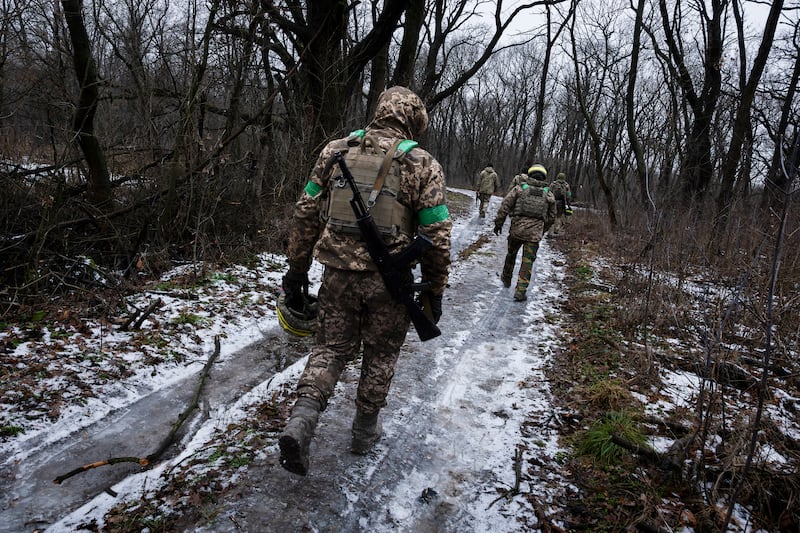
For European leaders though, it means they must mull a tricky question: how far are they willing to go to bend the rules for Ukraine’s entry into the EU club?
European Commission president Ursula von der Leyen has been toying with the concept of staggering Ukraine’s accession into the bloc.
The proposal, which has not been floated publicly, would see Ukraine rushed into the EU, but with limited voting rights and other initial restrictions. A sort of EU membership-lite, flipping the accession process back to front.
Kyiv would then progress towards full status after completing the vast range of reforms overhauling its economy and state institutions, which are usually a precondition of membership.
Ukraine applied to start the merit-based process of negotiating entry into the EU in the days after Russia’s full-scale invasion in 2022.
Zelenskiy recently said he believed his country would “technically” be ready to join by next year. The support of all 27 EU states is needed to accept a new member.
Multiple current and former Brussels-based diplomats from several EU states, as well as senior political figures who were involved in the 2004 enlargement of the bloc, say a timeline where Ukraine joined in the next two or three years is unworkable, both politically and practically.
There is broad support for Ukraine’s aspirations to become an EU member. However, European capitals have major concerns with the idea of shortcutting accession negotiations and the internal reforms that take a decade at the best of times. “I don’t see much appetite among member states to do so,” one diplomat said this week.
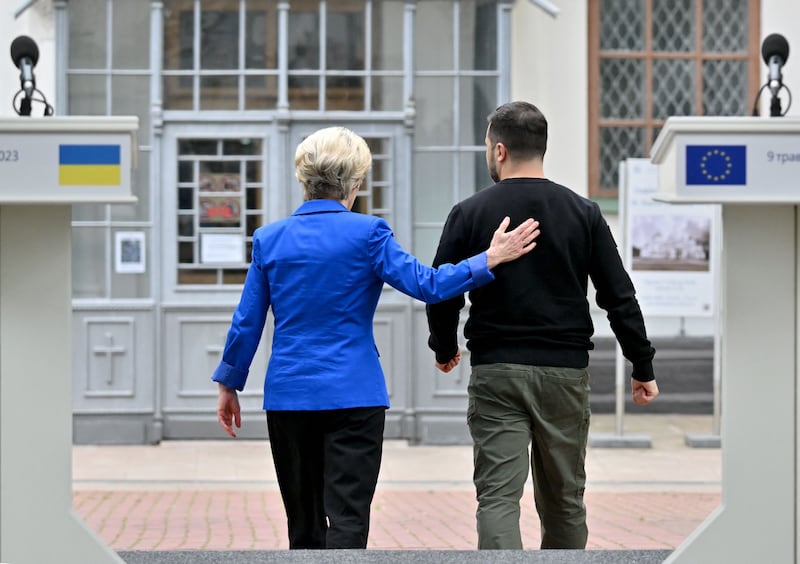
France, Poland and the Netherlands are among those who have serious reservations, while recognising the need to offer Zelenskiy a path towards membership. The Baltic states are more keen on letting Ukraine into the union sooner rather than later.
Amanda Paul, a senior analyst at the European Policy Centre think tank, said Ukraine was looking for a clear signal that the EU was genuine about taking Kyiv in. Offering “false hope” and failing to deliver would do serious damage to the bloc’s credibility, she said.
There is an acceptance that Ukraine’s entry would have a huge impact on Common Agricultural Policy subsidies for farmers, the single market, and the EU’s €2 trillion budget.
Rebuilding the country after four or more years of brutal war and bombardment would also be a massive reconstruction project.
Poland, a country with a similar population and large agricultural base, spent a decade working towards membership, from its application in 1994 to the point it entered the EU in 2004, along with nine other states primarily from central Europe.
Proponents of caution say embedding respect for the rule of law, democratic norms and a zero tolerance for corruption takes a long time. “We’re asking accession countries to catch up on 70 years of reforms,” one EU diplomat said.
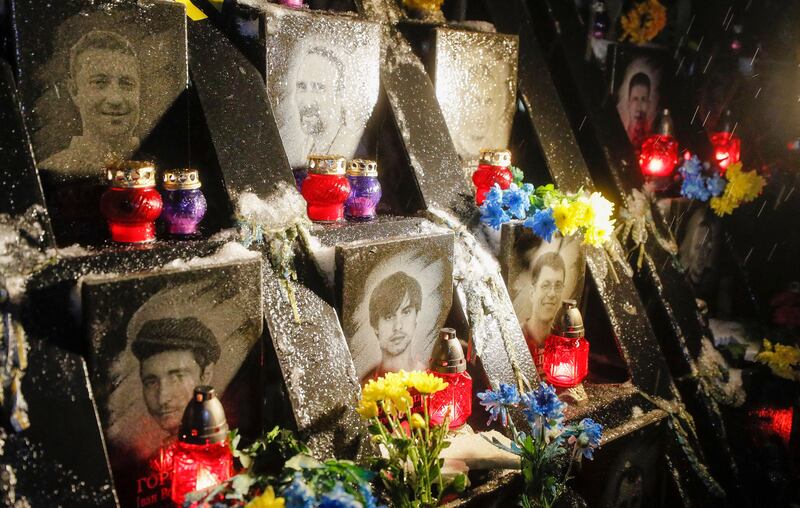
The Ukraine war has some roots in the question of whether Kyiv would gravitate closer to Moscow or Brussels.
The Maidan protests erupted in 2013 after Russian-backed president Viktor Yanukovych scuppered a landmark trade and political pact between Ukraine and the EU.
Mass demonstrations that ousted Yanukovych, taken as a sign Ukrainians saw their future lying west rather than east, were soon followed by Russian leader Vladimir Putin’s annexation of Crimea and the arming of Russian separatists who seized parts of the eastern Donbas.
Dick Roche, Ireland’s junior minister for European affairs in the run-up to the 2004 enlargement, said structurally Ukraine was nowhere near ready to join the EU.
“There is no way the economy, whether you are talking about agriculture or any other part of the economy, would be able to meet the requirements of EU regulations,” he said.
“The idea of fast-tracking anybody into the EU is not doing anybody a favour ... Like everybody in Ireland, naturally I have huge sympathy for Ukraine, but the reality of it is sympathy shouldn’t overrule common sense,” he said.
EU officials and national diplomats know Ukraine has a way to go in rooting out corruption from its state institutions. A recent scandal forcing the resignation of Andriy Yermak, the president’s chief of staff and close ally, further fuelled those concerns.
The latest European Commission assessment said good progress was being made on internal reforms, particularly given its circumstances as a country at war.
The report, published in November, tempered its encouragement in parts, though.
It said the prosecutor general remained a politicised role and it criticised attempts to dilute the independence of anti-corruption agencies. Those proposed changes were walked back by Zelenskiy following public protests.
A commission spokesman said technical work on Ukraine’s bid was advancing well. “We will continue to work side by side with Ukraine,” he said.
Ukraine’s accession would be on a par with the EU’s last major enlargement, when 10 new states joined in 2004.
At the time Denmark’s then prime minister Anders Fogh Rasmussen said the moment marked the “end of the Cold War” and the “beginning of a new phase in European history”.
Enlargement stalled in the years after Croatia joined the union in 2013, due to disagreements within the EU. Russia’s invasion of Ukraine reignited the debate about broadening membership.
The Balkan states of Montenegro and Albania are front-runners to complete the 33 “chapters” of internal reforms, to tee up their possible entry by the end of this decade.
Kyiv should not be allowed to skip the transformative reforms that were the current bar to clear for EU membership, according to Giuliana Laschi, a professor specialising in European integration at the University of Bologna.
Rushing the country into the fold could undermine its economy, which would be incredibly fragile in a postwar scenario, by exposing its industry to intense economic competition.
“A gradual, phased integration could be a viable solution, provided it is carefully planned, broadly shared, and implemented transparently,” said Laschi.
The failure of the EU to overhaul its own decision-making structures to accommodate an expanded tent contributed to the current dilemma, the academic said.

A populist government in Hungary, and the former right-wing nationalist Law and Justice administration in Poland, rolled back on the rule of law and used national veto powers to jam up the European policymaking machine.
A lot of EU decisions on foreign policy that require unanimous agreement are blocked by Hungarian prime minister Viktor Orban’s far-right government.
Orban, who objects to the EU sending aid to Ukraine, is holding up early-stage accession talks between Brussels and Kyiv. Technical discussions have continued in the background.
Commission officials are privately crossing their fingers Orban’s government will lose parliamentary elections this April, removing that political block. Budapest is not the only capital with concerns though, just the most vocal.
“We’re very far away from EU leaders really communicating to their electorates the benefits of Ukraine joining, which is a mistake,” Amanda Paul said.
The analyst said adding Ukraine into the 27-state bloc could be “like winning the lottery”. It was a large country, rich in sought-after raw materials and energy supply, as well as a serious military power.
“The Ukrainians want to see some tangible evidence that the EU will be able to deliver and not leave them outside in the end,” she said.
‘Membership-lite’: How provisional EU membership for Ukraine might work
The idea of upending the long established process governing entry into the European Union, to fast-track Ukraine’s bid for membership, is controversial.
While nothing has been publicly proposed, one concept being debated by Brussels officials envisages a new provisional membership status.
The current system requires prospective member states to undertake sweeping reforms to bring their political, legal and administrative systems and economies into line with EU standards.
Instead of proceeding through that process Ukraine could be permitted into the union without voting rights. It would be able to work towards full status at a later date, by completing all the necessary reforms.
Other rights and entitlements, such as freedom of movement for Ukrainians, full single-market access and CAP farm subsidies, could initially be withheld or severely limited.
The idea looks a lot like EU membership in name only, but would be a political signal to Ukraine about its European future in the event of a peace deal.


