You don’t need to follow any Instagram reels or TikTok trends to realise we’re currently experiencing another running boom. Judging by last Sunday’s Dublin City Half Marathon, for example, the chances of meeting someone who has recently bought into this running phenomenon has more than quadrupled in the last year alone.
They know who they are, so we won’t name names. But these are a new breed of runners, and not just from Gen Z. Some are the same people who not long ago would have laughed out loud at the notion of getting up at the crack of dawn on a bank holiday weekend to run 13.1 miles around the city. Especially if being asked to fork out €75 for that honour.
Still, the demand far outstripped the supply, so like most big running events these days, entry for the Dublin City Half Marathon was decided on a lottery-based ballot. Given it was only the second staging of the event, the organisers were wary of growing the event too fast and capped the entry at 13,200 runners, compared to 12,500 in 2025.
Plans are now in place to grow this number again for 2027. For last Sunday’s event, the pre-race baggage drop was moved to Custom House Quay, utilising about one-third of the space available. You do the maths on that one. With the backing of Dublin City Council they also have an ally on street closures.
READ MORE


Even with three different wave starts, some runners did tell me the first mile or so after the start on O’Connell Street was annoyingly narrow in parts, so that might need addressing. Still, the running numbers for this event are going in one direction. Now that more people are buying into this running boom it appears there’s no turning back. At least not for now.
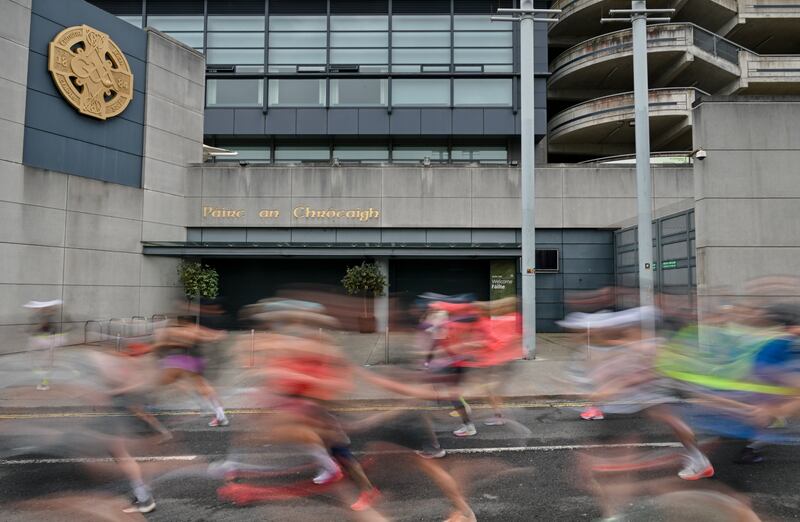
That’s not all good news, because this always runs the risk of placing quantity ahead of quality. Plenty of other mass events have learned a harsh lesson after growing too big, too fast. Not just Woodstock ’99. Despite the obvious potential for further expansion, the Dublin City Half Marathon might want to hold fire, as growth may ultimately come at a cost to the actual running experience. Sometimes less equals more – or runners might start looking elsewhere.
Organised by the same team behind the Dublin Marathon, on the October bank holiday weekend, it also cost €5 just to enter the half marathon ballot, although this was refunded for anyone unsuccessful. The Dublin Marathon caused some considerable grief last November when it announced a record 47,000 ballot applications for the 22,500 places in this October’s event, all of which were charged a non-refundable €5.
All these numbers are dwarfed by the announcement this week there were 1,338,544 applications for next year’s London Marathon. Of these, 1,008,091 entries came from the UK – which accounts for around 1.8 per cent of the UK adult population – with the remaining 330,463 ballot entries coming from 200 countries around the world. The ballot was only open for one week, and the results will be announced in July. This overall number was also up by more than 200,000 compared to last year – and more than double the ballot entry for 2024.
These are world record numbers too, suitably enough, given last month’s London Marathon produced a men’s world record by Sabastian Sawe from Kenya – as well as a world record number of finishers. With 59,830 crossing the line on The Mall, London just about eclipsed the previous world record of 59,226 which finished the New York Marathon last November.
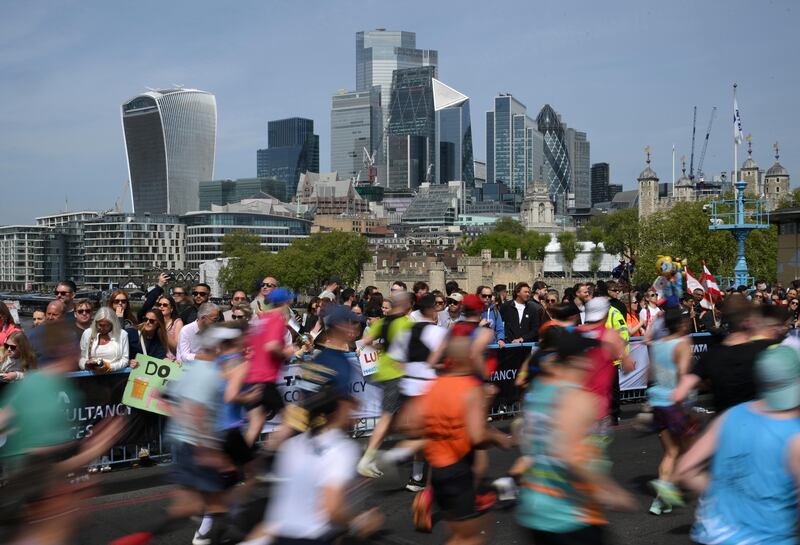
London also proved the biggest annual one-day fundraising event in the world, bringing in around £90 million (€104 million) for various charitable organisations.
There was no charge to enter the London ballot – not sure they would have got away with that – but you could pay £49.99 (€57.80) upfront to double your chances in a second ballot. If successful, that would be set against the standard UK entry fee of £79.99 (€92.50), or £225 (€260) for international entries.
Ballot entries were effectively split 50-50 male-female, though going on age categories, the largest number of applications came from women aged 20-29 (more than 179,000 in that age group applying), further reflecting the popularity of running among Gen Z.
This year, only around 20,000 of the London entries were decided on the ballot, the rest going to charity groups, international partners, sponsors, and so on. This means a success rate in the ballot of between 1.3-1.5 per cent, depending on the actual numbers. It was suggested runners might have a better chance of being struck by lightning, which may be a slight exaggeration.

London hasn’t yet put a cap on final entries for 2027, because according to their race director Hugh Brasher, they’re still toying with the idea of making it a two-day event for 2027. Which might well be the first sign this latest running boom is at risk of overheating.
“It would be a one-off, we’re not there yet, but I’m positive it’s the right thing to do,” Brasher said this week, adding that the two-day event would nearly double the number of overall runners to around 100,000. The elite women would also focus on the Saturday, then the elite men on the Sunday.
[ All pools lead to LA as Mona McSharry confirms aim to compete at 2028 OlympicsOpens in new window ]
“The idea was overwhelmingly positively received. But you have to bear in mind that the London Marathon has been going for 45 years and it’s got to a position of love … You can lose that love, and we have to be mindful of that."
Whether or not Brasher admits it now, if the two-day London Marathon does prove successful next year, it could be hard to revert to Sunday only. It might then be only a matter of time before other big city marathons such as New York follow suit, given they’ve been in a race with London the last few years to produce the most finishers.
Such numbers may not be sustainable in the long run, although they’d never get away with a two-day marathon in Dublin, would they?