
The way we holiday is changing. Last-minute bookings are up, with holiday-makers increasingly choosing destinations for their ease, speed and convenience, as concerns over extreme weather and unreliable flight routes loom larger.
Here our writers suggest some of their favourite spots in England.
Avebury
Lovers of megalithic marvels may already know Avebury, but if you’re new to the standing stone scene, the Wiltshire village might just be one of the most astonishing places on Earth. Two stone circles, built around 2800 BC, are ringed by a henge (a bank and ditch), and what is the largest prehistoric stone circle in Britain, possibly the world. So far, so good, but the brilliantly strangest thing about Avebury is that at some point in the Middle Ages, they decided to build a village, slap bang in the middle.
This means you can have a pint in the Red Lion, in an old 16th century farmhouse, that claims to be the only pub in the world to be within a stone circle. You can also amble about a village that has a pleasing atmosphere of the uncanny. Unfortunately, that does mean it is populated with shops selling crystals, scented candles, dream catchers, incense and what have you. And you’re almost guaranteed to be within striking – or should that be smiting? – distance of a Wiccan, but that can also be part of the charm.
READ MORE


Silbury Hill, a prehistoric artificial chalk mound, is within walking distance, and about half an hour’s drive away is the much more visited Stonehenge, where you buy your tickets and follow a path that will keep you a safe distance from the famous standing stones.

Given its village layout, Avebury’s stones are right there, close and personal. While you’re there, visit the National Trust Museum, and Avebury Manor and Gardens. Longstones, just outside Avebury but still within walking distance, is a collection of six self-catering purpose built barns, sleeping between two and four, longstonesavebury.com. Gemma Tipton
Cliveden
There are stately homes, and then there is Cliveden. So gloriously grand you could imagine fitting many of Ireland’s own Great Houses into its capacious pockets, Cliveden sits just above the river Thames, and is a half an hour drive from Heathrow airport or well over an hour from Gatwick airport. It has been home to a prince of Wales (the lesser known Frederick), a brace of dukes, an earl, and then the fabulously wealthy American William Waldorf Astor.
Astor trawled Europe for souvenirs, only these were souvenirs of a different ilk: instead of perhaps buying some ceramics, he went the whole hog, and brought an entire diningroom, wall hangings and plaster mouldings from the Château d’Asnieres, added the balustrade from the Villa Borghese in Rome to the gardens, and nabbed a pagoda from the Paris Exhibition of 1867 for his water gardens.
When his eldest son, Waldorf, married Nancy Langhorne, he gave them Cliveden as a wedding gift. Nancy would go on to be the first woman to sit as an MP in Westminster – only achieving that claim to fame because Constance Markievicz had declined to take her own seat. During their tenure at Cliveden, the Astors entertained everyone from Winston Churchill to George Bernard Shaw, and Gandhi to Charlie Chaplin.

With a maze, a topiary avenue, woodlands and formal gardens, Cliveden is run by the National Trust, with tickets costing £23 (€26). Splash out in the region of £700 a night however, and you can stay in one of its 47 fabulous rooms, giving you the run of the house and grounds. clivedenhouse.co.uk. Gemma Tipton
Shaw’s Corner
If you’re the type to imagine that literary genius might seep into the stones and the woodwork, England has book-loads of places to go. Jane Austen, the Brontës, Rudyard Kipling, William Wordsworth, Beatrix Potter, Thomas Hardy, Charles Dickens ... you can visit the homes of them all. One of the most inventive must have been George Bernard Shaw. Born in Portobello, Dublin, Shaw went to London in his 20s to become a serious writer, and succeeded, winning both an Academy Award and the Nobel Prize for Literature.
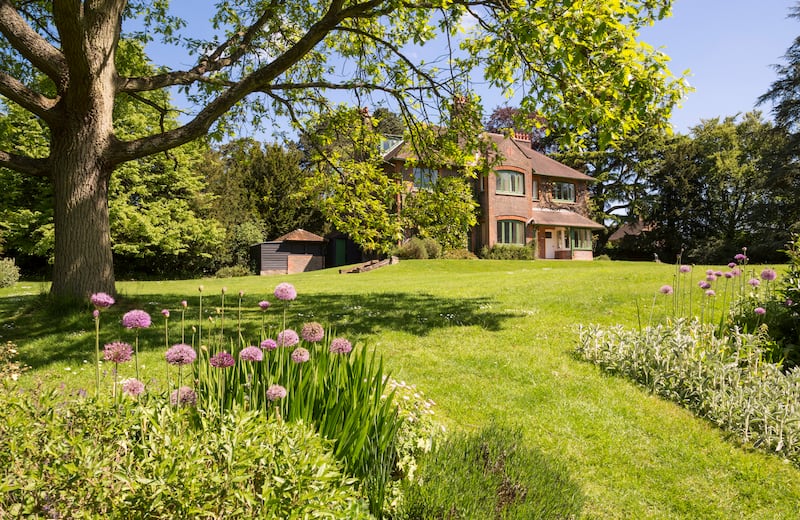
At Shaw’s Corner in Hertfordshire, where the writer lived for almost a half century, he built a small wooden hut, but had it put on a steel frame with a circular track, so it could be rotated to catch the best of the sun throughout the day. He called his writing shed “London”, so that if visitors came to call, they could be told he was “visiting the capital”. These days, you can just peer through the windows, but there’s nothing to stop you stealing the idea.
The house itself is more or less as Shaw and his wife Charlotte Payne-Townshend left it, and the gardens have been kept as they would have been in the writer’s time. There is a programme of outdoor theatre in the summertime and a second-hand bookshop. A 12km circular walk takes in Lamer Park (home of Shaw’s pal, Antarctic explorer Apsley Cherry-Garrard) and Ayot St Lawrence, a village so picture perfect, you could almost imagine Miss Marple, or the cast of Midsomer Murders, popping up behind a hedge.

When Shaw and his wife died, their ashes were mixed and scattered in the gardens. You may not be able to lick it off a stone, but you could still possibly suck it off a blade of grass? The property is now National Trust, so that sort of carry on is certainly discouraged. nationaltrust.org.uk Gemma Tipton
Yorkshire
Climbing the famous 199 stone steps to the cliffside ruins of Whitby Abbey in north Yorkshire might feel like a big ask on a hot day, but when you get to the top, you’ll see why Bram Stoker chose this as Dracula’s arrival point in England. Whitby itself is full of seaside jollity – whipped ice cream and amateur crab fishing galore – but the cliff view is as dramatic as it is beautiful, with the remains of the Gothic abbey fittingly spooky. It’s just one of the delights on offer in England’s largest county, with easy flights to Leeds from Dublin or Belfast putting it all on our doorstep.
The nearby historic city of York is the perfect base for a Yorkshire trip and could easily fill a couple of days on its own, between sights such as huge seventh-century York Minster cathedral, preserved medieval street The Shambles, and the National Railway Museum. Treat yourself to an early-evening drink in buzzy food court Spark right in the city centre, and finish with dinner in one of the city’s many Nepalese restaurants, their credentials flowing from the Gurkha regiments of soldiers historically based in the area.
[ How to enjoy your holiday this summer: An expert guide to taking a proper breakOpens in new window ]
From York, take a spin (or the train) to Harrogate for a touch of 18th century spa town elegance, or to Haworth to see the Parsonage home of the Brontë sisters and the moors backdrop that famously inspired Emily’s Wuthering Heights.
On the way back to Leeds for the plane, stop in Victorian model village Saltaire and see the Salt Mill – fascinating from a social and architectural perspective and also a great spot for lunch after you’ve taken in the exhibition rooms filled with art by proud Yorkshireman, the late David Hockney. Úna McCaffrey
Bath, Somerset
I visited Bath a week after being in Rome, and while walking among the statues of Minerva and around centuries-old columns at the Roman Baths, the city’s namesake, it felt like I had never left the Italian capital.
Bath is full of treasures, from its preserved cobblestone streets, bustling food markets, cosy afternoon tea hideaways and the renowned Pulteney Bridge, spanning the river Avon, tying it all together. From there, you can easily explore landmarks such as Bath Abbey and the Royal Crescent, which avid Bridgerton fans will recognise as the filming location of the Featherington family household.
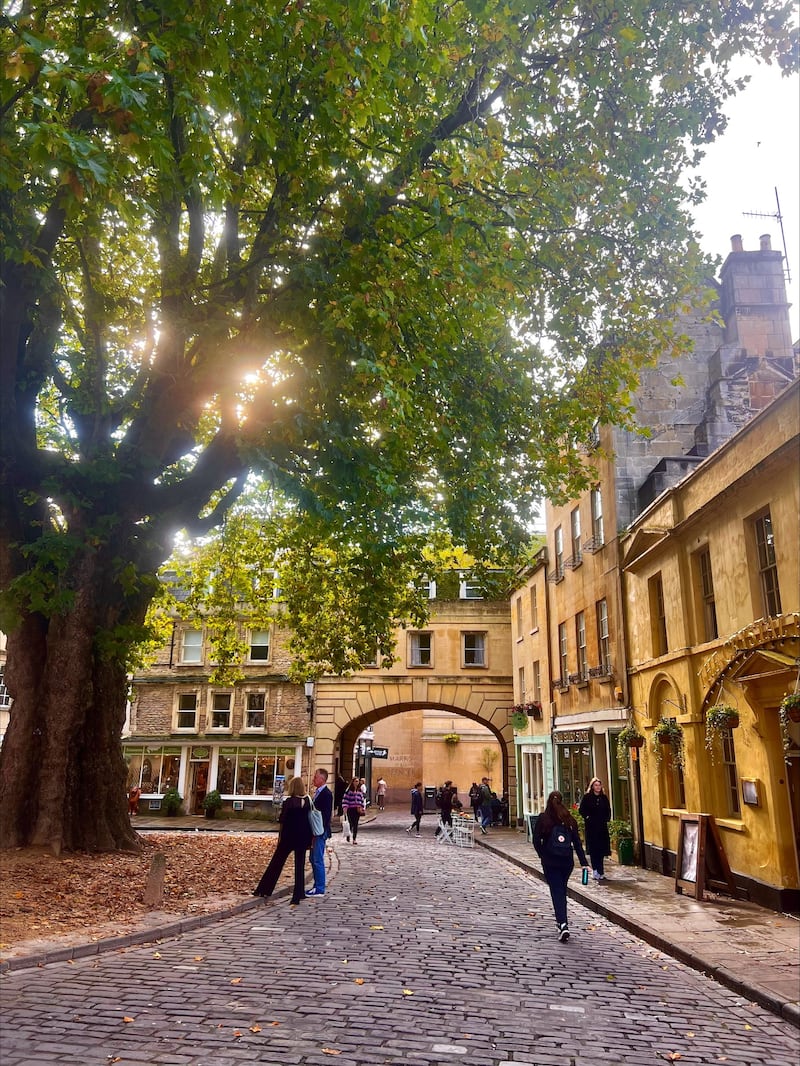
Bath is an ideal location to explore the rest of Somerset. A 10-minute bus journey will take you to Prior Park Landscape Garden. The 18th-century sanctuary, which features a vast estate, rolling hills, and one of four remaining Palladian bridges, will make you feel as though you have opened a page of a Jane Austen novel – I found myself purchasing my own copy of Emma for the journey home. John O’Connor
Cambridge
You don’t have to be an academic to appreciate Cambridge’s allure. For a weekend getaway, it’s accessible in terms of size and proximity to Stansted airport, while its setting on the river Cam is romantic. Key sights such as the Wren Library, King’s College Chapel and the famous Bridge of Sighs (resembling the one in Venice) impress, but there are other lesser known marvels too.
Book a house and gallery tour of Kettle’s Yard, the former home of Tate curator Jim Ede, who believed in art’s ability to transform lives and the importance of found and natural objects, such as pebbles and shells. Also remarkable is the Arts and Crafts David Parr House with its hand-painted interior, and the Fitzwilliam Museum, which always has interesting exhibitions, such as the upcoming Call to Art: William Morris & the Pre-Raphaelites.
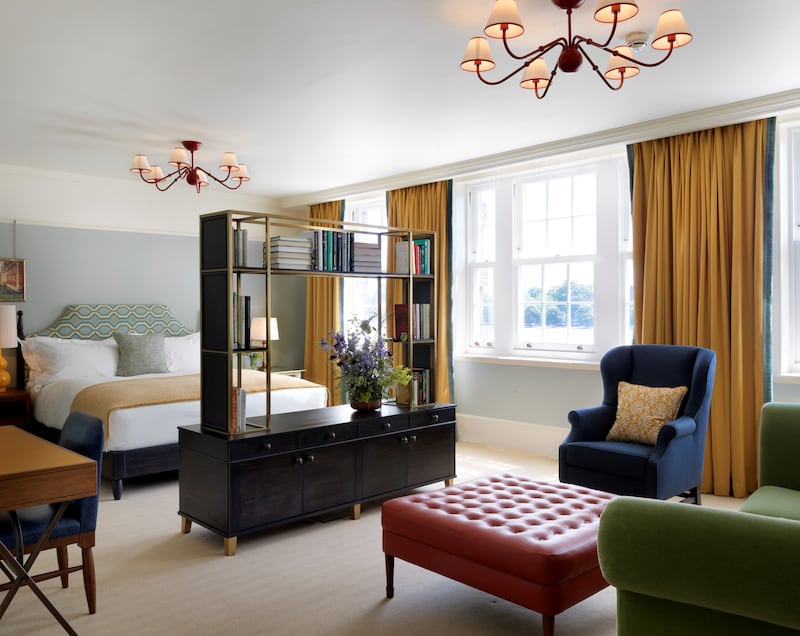
A stay at the University Arms encapsulates the literary spirit of the town where rooms are named after writers such as Virginia Woolf and A A Milne. There’s even a book butler on hand to provide personalised reading lists. Another quirky touch is a recording of Alan Bennett reading Wind in the Willows in the hotel’s loos. End the day in The Punter, a cosy pub with mismatched paintings and a bohemian atmosphere, or enjoy the views from one of the town’s rooftop terraces – De Luca and Novi are popular, as is the terrace of The Varsity Hotel. As a former student, my favourite haunt was Clare College Bridge, particularly stunning when the gardens are in full bloom. Penny McCormick
Newcastle
Buoyed by an influx of students into Newcastle University and Northumbria University, the youthful population of Newcastle has inspired an explosion in microbreweries, street food and nightlife. Famous, sprawling clubs, including Digital and the footballer-favoured Tup Tup Palace, coexist with the pay-what-you-feel shows of Alphabetti Theatre and The Cluny. This laid-back indie haven has hosted everyone from Thurston Moore to RZA.
Take the 21 bus to see the Angel of the North, Antony Gormley’s 20-metre, rust-coloured sculpture, built on the site of a former pit in tribute to the miners who laboured there. Visitors invariably end up posing, arms outstretched, mimicking the Angel’s 54-metre wingspan. Wander into nearby woodland and find a forest of trinkets, letters and decorations left to mark the loss of loved ones, an entirely unofficial communal mausoleum.
Newcastle is a flaneur’s dream. There’s a lovely loop that will bring you from the leper’s squint of the 12th-century St John the Baptist Church into Blackfriars Monastery (founded 1215), then Chinatown and on to St James’ Park, the home of Newcastle FC. Non-Magpies will still enjoy the stadium tour. A photo with the statue of Bobby Robson is mandatory. Order the mapo tofu at The Muddler and the crispy artichoke at Victors. Fans of traditional pubs should look out for the Duke of Wellington, featuring historical pictures of that Irishman on every wall.
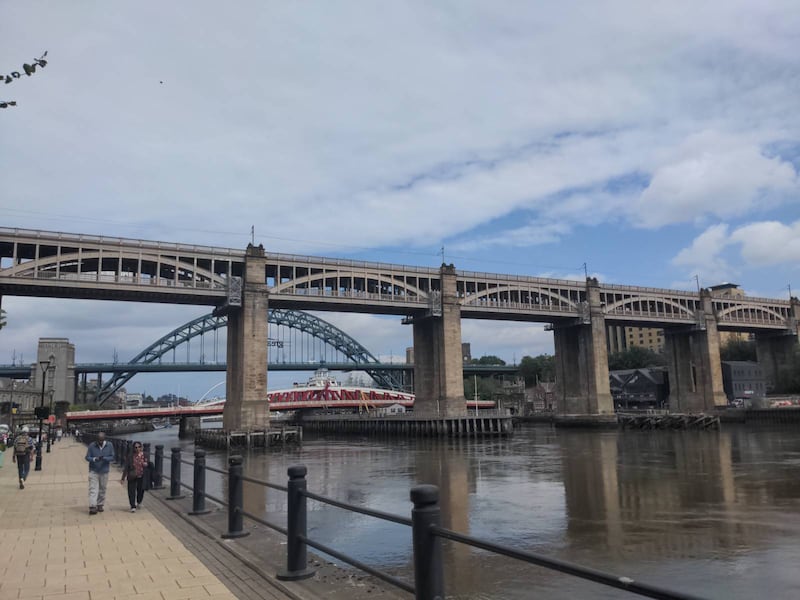
The Quayside is an epic stroll that allows for detours to Newcastle Castle, the Baltic Centre for Contemporary Art, and the Discovery Museum. Keep going and you’ll eventually get to Ouseburn Farm, a working farm within the city limits. The National Centre for Children’s Books is another nearby family attraction. From here, wander in any direction for a gallimaufry of artist hubs, galleries and hip foodie spots.
Tired of walking? Hop on the train for a 10-minute ride to Wallsend to visit the Segedunum Roman Fort, Baths and Museum and the opening stretch of Hadrian’s Wall. Or get the number 28 bus to Beamish Museum, an open-air museum preserving lived experiences from urban and rural northeast England during the early 20th century.
There are, famously, seven bridges over the river Tyne, over just 2km. Of those, the iconic Tyne and Swing Bridges are essential for your Instagram feed. Tara Brady
Chatsworth, Peak District
Set jetting is trending and Chatsworth, the showboat 35,000-acre estate in England’s Peak District, has undisputed cinematic clout, having been the backdrop to films such as The Duchess and Pride & Prejudice. It’s widely believed Jane Austen drew inspiration from Chatsworth when imagining Pemberley, Mr Darcy’s home. Like Jane, I found much to swoon over.
Built in the style of a French chateau in 1549, Chatsworth comprises some 300 rooms of which 30 are open to the public. Ticket options range from £10 to £55 for guided tours. Visitors definitely need a full day to absorb its cultural riches, spectacular gardens as well as sample its superb food and shopping outlets (book afternoon tea at The Stables).

The baroque interiors also serve as the home of the Cavendish family and the dukes of Devonshire, whose pied-à-terre in Ireland is Lismore Castle, Co Waterford.
Present heirs William and Laura Burlington were involved in the recent renovation of The Cavendish Hotel, where I stayed – fresh, unfussy and a short stroll from the big house, overlooking the rolling landscape created by Capability Brown. The surrounding villages and scenery are the definition of a pastoral idyll providing endless scope for hiking, biking and star gazing, due to the Dark Sky Discovery sites.

I especially enjoyed visiting the Farm Shop, created by Debo, duchess of Devonshire and retracing the steps of president John F Kennedy who flew from Shannon to Chatsworth in 1963. His poignant mission – to visit the grave of his sister Kathleen “Kick” Kennedy. It’s simply marked with the message, “Joy she gave; Joy she had found”. I definitely found joy in the Peak District and hope to return. Penny McCormick
Deal, Kent
Offbeat, nostalgic and bustling with delis (Arno & Co), great restaurants (The Blue Pelican, 81 Beach Street), galleries (Linden Hall Studios) and vintage shops (La Petite Brocante, Mileage), Deal on the Kent coast was once a thriving port and former smuggling haunt. It now possesses a cool, cultural vibe – as beguiling in winter as it is in summer. It provides an alternative to popular seaside spots such as Brighton and the edgier Margate, home to the Turner Contemporary and artist Tracey Emin.

Direct trains from London St Pancras mean you can be there in just over an hour.
Pivotal to Deal’s appeal is its pebbly beach, offering views over the English Channel and the white cliffs of Broadstairs. Deal Pier (one of three piers) is the best place to take in this changing seascape and the historic buildings lining the shore. Quaint candy floss-painted fishermen’s cottages rub shoulders with well-preserved Georgian town houses and Victorian villas.
[ Belfast in three days: black taxi sandwiches, beauty queues and a beacon of hopeOpens in new window ]
Don’t miss brunch at the Deal Pier Kitchen (order the crayfish Benedict and lobster specials) or Deal Castle, built in the 1500s, one of the finest Tudor artillery castles in England. Stay at The Rose, owned by Alex Bagner, the former editor of design bible Wallpaper, and her husband, Chris Hicks. Its bar, restaurant and eight, colour-drenched bedrooms were redesigned by Nicola Harding. The head chef David Gadd and executive chef Nuno Mendes, formerly of A-list London favourite Chiltern Firehouse, ensure the menu aces modern British food.
For fish and chips try Middle Street Fish Bar, and for home-made ice cream head to Dunkerleys (also a restaurant and hotel). You’ll find Deal serves up plenty of quintessential coastal treats, just more stylishly. Penny McCormick
Southern England
On a family road trip around southern England, we sold Oxford to our young children as chance to see the spectacular Christ Church dining hall (which inspired the Great Hall from Harry Potter). A trip around the university offered much more. Their eyes gazed at elaborate carvings on the Divinity school’s vaulted stone ceiling, their minds filled with dreams of someday learning here. The city’s congestion charge makes it calm with little alleyways hiding charming cafes and shops.
Next stop was back 3,000 years, to Stonehenge. The traffic slows along the Wiltshire road as drivers stare at the standing stones, popping up alien-like from a field. Walking around, I was struck by the engineering achievement, but also overcome with a connection to something bigger.
The incredible thing about this part of England (aside from its beauty and friendliness) is the clusters of historic sites. Within an hour you can be in Bath or at stately homes including Blenheim Palace. Our trip diverted us to Windsor, with a day at Legoland.
Back on the road we drove through the rolling Cotswolds countryside, before a literary pit stop in Shakespeare’s home town of Stratford-upon-Avon. We ended our journey at Warwick Castle, where medieval times come alive with battle reenactments and bird shows. This area is easily reached from Birmingham airport or London Heathrow. Genevieve Carbery
This article was amended on July 8, at 12.08pm


