The Dunnes Stores strike of 1984–87 led directly to an Irish government ban on the importation of South African fruit and vegetables. Now a cause celebre, the initial industrial circumstances of the strike are mostly unknown, and popular memory of the episode obscures the challenging afterlives of the mainly women strikers, who faced unemployment, uncertainty and emigration.
The late Nell McCafferty was one of the few Irish journalists to chart the evolution of the original dispute. Initially, writing in the Irish Press in October 1984, McCafferty clearly framed the industrial background as one that was being exploited by John Mitchell, chief of the Irish Distributive and Administration Trade Union (IDATU, present-day Mandate), with the strikers unfortunate bystanders in an overarching spat beyond their control. She reported that Mitchell was getting Dunnes women strikers to do something he would not ask of his male members, and it seemed, to her, to be a power struggle between “a young man who just started running a union and an old man who has always run the store by ignoring the union”. Mitchell vs. Dunne, labour vs. capital, old battles. ‘Three Years Later’, the title of a follow-up column, their stand had captured the imagination of the world. As McCafferty noted, “People expect teenage females to have other things on their minds, like boys and clothes and sex and the diamond ring that will eventually lead to marriage. The 11 strikers changed these expectations. They have upheld not just the dignity of black people, but the dignity of half of the human race who have long been dismissed as frivolous.”
Bad blood between Dunnes and the IDATU had been brewing for well over a year before the showdown in Henry Street. The IDATU had called a national strike on behalf of part-time workers including sales assistants and clerks involving 1,500 workers in January 1983. Mitchell claimed that Dunnes management was sending ‘flying squads’ to stores around the country. One hundred and fifty Dunnes Stores employees were on strike in the Cork branch, and at the end of February 1983, the staff of Dunnes Stores in Killarney in Co Kerry voted to strike and a picket was placed on the premises. Though some of the eventual strikers had been involved, Karen Gearon avoided this previous industrial action. Elected shop steward on the shop floor in October 1983, she regarded her previous crossing of the picket as a turning point towards her later resolve.
[ How 11 striking Irish workers helped to fight apartheidOpens in new window ]
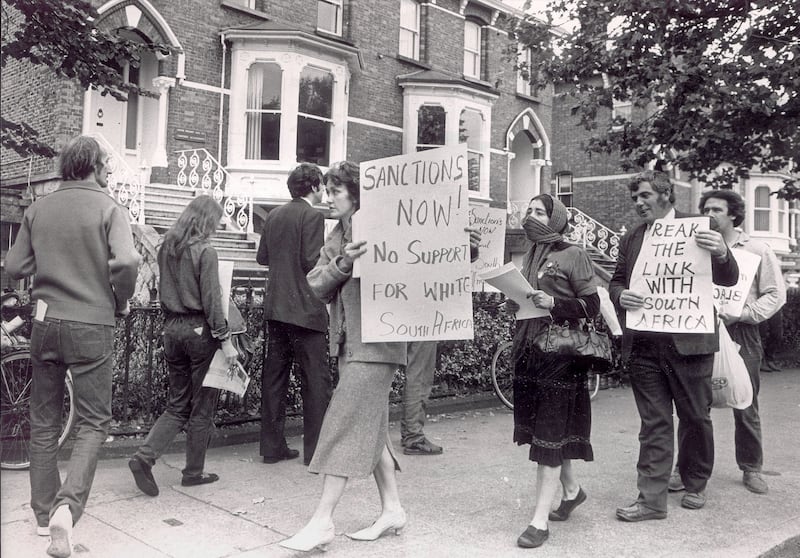
A Boycott Committee had existed in Dublin as far back as 1960, several years before the Irish Anti-Apartheid Movement (IAAM) was founded, and though Ireland was a small country, the argument ran that a ban on South African imports could serve as an example to other countries and pre-empt the economic pressure that larger nations would eventually impose on South Africa. Consumer boycotts against Apartheid were prominent in the 1970s and 1980s in Europe, confirming a continental zeitgeist. The IAAM, founded by Kader and Louise Asmal in April 1964, knew of imports of South African clothes, furniture, and fruits into Ireland, writing to Dunnes in the autumn of 1982 to tackle them. Dunnes and MFI Furniture Centres (based in Dublin) were both importing furniture, while Dunnes stocked South African fruits and tinned fruits.
READ MORE


The early 1980s saw a further rise in Irish trade with South Africa. In 1981, a contract worth IR£18 million was finalised by Slaney Meats, of Wexford, to supply frozen beef to South Africa. More than doubling Irish exports to Apartheid, the meat was also routed through Namibia, where it was processed by South African factories there (operating under the name Karoo Meat Packers). This would supply the South African Defence Forces in the north of that country, increasing the moral dubiousness of the deal.
On July 19th 1984, 21-year-old checkout worker Mary Manning refused to handle two grapefruits brought to her till by a woman customer in the Henry Street branch of Dunnes Stores in Dublin. She was suspended by the company, leading all workers on the premises, around 25 in total, to walk out in protest, beginning the strike. Manning and the other strikers have always attributed the wider industrial impetus of the protest, specifically an instruction passed at IDATU’s annual conference in the Easter of 1984 drafted by an official from Limerick.
At this point, most of the Dunnes strikers did not know each other, and its large workforce of part-time and full-time employees was a disunited place. Most of the strikers, aged between 17 and 27, lived with their parents. As part of the income of the household, Karen Gearon would give her mother half her pay, which disappeared. IR£21 strike pay (in place of their IR£91 wages) barely covered a bus fare to and from the centre of town, along with lunch, during the working week. The economic pressure felt by all the Dunnes strikers was countered by telegrams of solidarity the women received from the United Nations’ Special Committee Against Apartheid, as well as messages of support from anti-Apartheid groups in New Zealand, Austria, East Germany, Scotland, London, as well as Dublin Corporation.
For the women, the atmosphere on the Dunnes picket line fluctuated from life-defining self-worth to depressive doldrums. People of colour were not a common sight in Ireland in the mid-1980s, but one African stationed on the Henry Street picket line throughout the duration of the protest was Nimrod Sejake (1920–2004). Born in Evaton, south of Johannesburg, Sejake was a trade union organiser and former building site clerk, who had trained as a teacher and joined the African National Congress when he later lived in the Soweto township. Sejake impressed the Dunnes women with his intelligence and dedication. He lived in Ballsbridge and walked from there, some three kilometres from the city centre to the picket every day. Like the strikers, he did not have money and lived humbly. He had holes in his shoes. Quietly authoritative, he disliked crowds and sunk back when a lot of people were present.
Sejake paced alongside the women on the picket line, informing them about Apartheid, helping them discover what the strike was really about. Sejake explained the simple facts of Apartheid and the situation for black Africans on the ground. One Christmas, the women clubbed together with their meagre funds to buy Sejake a pair of shoes. They considered him an inspirational spirit, akin to an old relative, a wise uncle, who also needed to be looked after.
The road to the Dunnes Stores strike’s resolution was complicated. Beyond the daily grind of the picket line, developments were being hatched by the Department of Labour’s then minister Ruairí Quinn to try and find the legal route to a government ban. The then-attorney general Peter Sutherland pointed to provisions in the General Agreement on Tariffs and Trade (GATT) treaty to claim that a ban on South African fruits and vegetables would be unlawful. However, following diligent work by Quinn and his adviser Paul Cullen, the GATT treaty ironically also contained the key to unlocking the door. Its Article XX(e) contained a provision that any imported goods and services that were the product of prison or forced labour could be banned, as had precedence in Sweden. This conformed to Apartheid society.
[ Ministers struggled to frame response to Dunnes Stores strikeOpens in new window ]
Even after this legal argument had been secured, major departments in the Irish government including Finance, Foreign Affairs, Public Service and Agriculture were all against a ban. Also in play were lobbying groups such as the Fruit Importers of Ireland (FII), who were committed to keeping the status quo on trade relations with South Africa. The frontman of FII was Paddy McNamee, evidently closely aligned with Ben Dunne in a business capacity, who sent multiple letters to Irish ministers and the then taoiseach Garret FitzGerald pressing for no restrictions on South African trade. McNamee argued that limiting South African fruits in the Irish market would have detrimental effects to the ‘health of the nation’, cause job losses, and – in a scarifying Northern reference – lead to cross-border smuggling.
The issue also still had to be deliberated in the Fine Gael-Labour coalition government, where the vote was not a foregone conclusion. A number of Fine Gael Cabinet ministers, reflecting their departments and instincts, did not support it. Labour’s ministers were all in favour of the ban, though the party’s leader at the time Dick Spring recalls the situation being “tough. We didn’t get a lot of support for that particular stance”. John Bruton, then minister for Industry, Trade, Commerce and Tourism, had already written to Ruairí Quinn confirming his firm opposition to any ban on South African imports. Bruton was concerned about unilateral action, which could trigger economic retaliation from South Africa (“a hefty net importer”) against Irish businesses and firms.
However, several Fine Gael ministers sided with the four Labour ministers, splitting the tally, and the deciding vote fell to the taoiseach Garret FitzGerald, who held to his own anti-Apartheid ideology and went against the majority of his party colleagues. The ban carried, and the Dunnes strike appeared to end at the heart of the Irish government’s final say.
The strikers themselves faced trying circumstances after the end of the strike. Vonnie Munroe, a single parent, lost her home and had to hand it back to the mortgage provider. Others faced unemployment and financial hardship for years after. Mary Manning emigrated to Australia in November 1988, and though she returned to Ireland five years later, she avoided referencing the Dunnes strike on any of her CVs. Liz Deasy, who had been employed part-time, was out of work for a year and became convinced she too would have to emigrate (eventually she landed a post in the hospitality sector). Ostensibly welcomed back to her job in Dunnes at the start of 1987, Karen Gearon was fired for alleged poor performance in May 1988. She took Dunnes to the Dublin-based Employment Appeals Tribunal the same year and won her case, though she was exhausted by the experience and moved to Tralee, Co Kerry, to try to rebuild her life. For most of the strikers, silence became necessary.
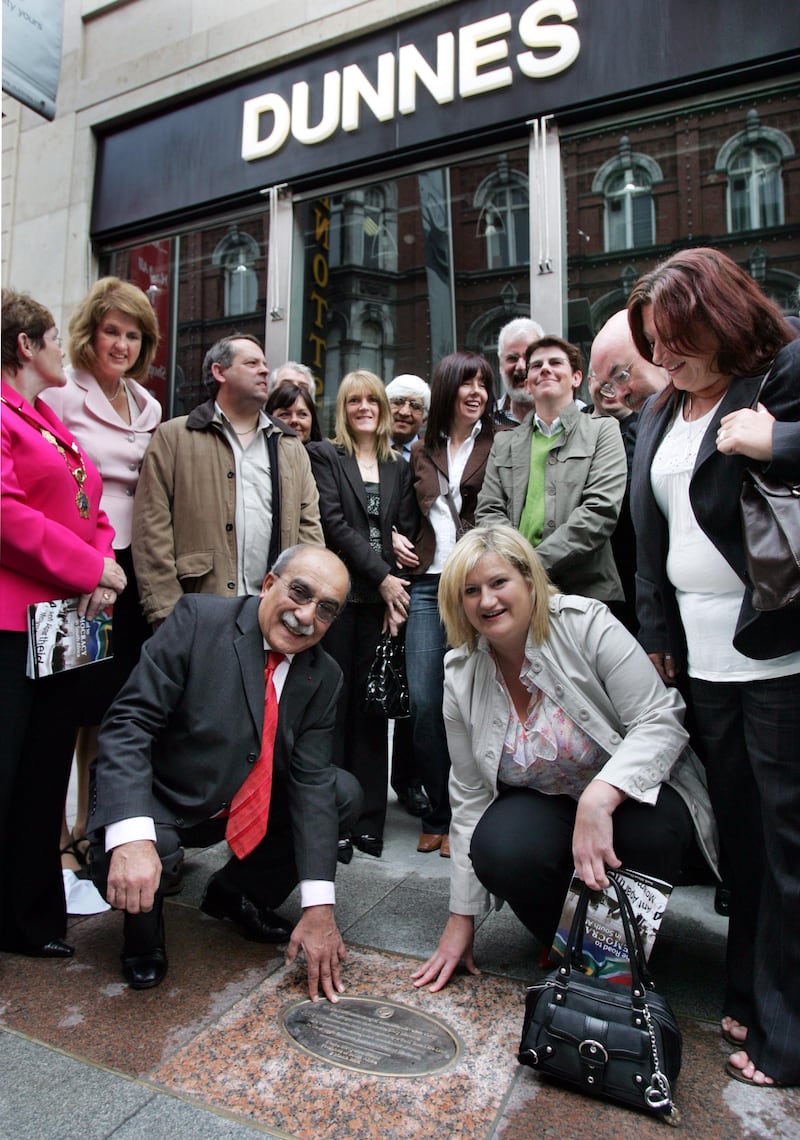
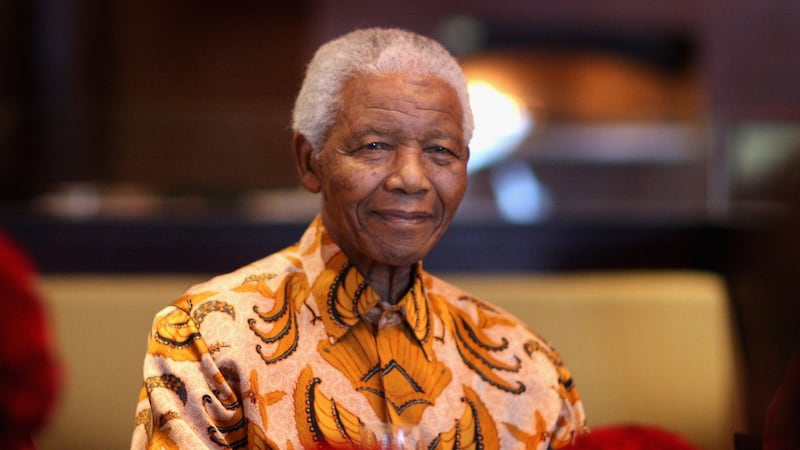
Things only began to change with Mandela’s release from prison in early 1990. The Dunnes strikers were amazed to discover he knew about them, especially when he asked to meet them on his visit to Dublin that summer. When Mandela died at the end of 2013, Gearon, Manning and Deasy attended his funeral. During the same trip, the strikers met with the family of Nimrod Sejake and were moved by seeing his son, whose face they immediately recognised. At the same time, Manning thought of the sacrifices of Sejake’s family, including one of his daughters who was visibly upset at being reminded of growing up without her father. Any sense of triumph in the struggle was tempered by loss measured on all sides.
In 2015, a plaque, one of two, to the Dunnes Stores strike was erected to honour the ‘Shop Workers Strike Against Apartheid’. The company is not named on the plaque, which is not on the building itself, but outside on Henry Street, always, amongst the tumbling footsteps of Dublin’s north inner city.
Connal Parr is Assistant Professor in History at Northumbria University. Solidarity and Pressure: The Story of the Irish Anti-Apartheid Movement is published by Oxford University Press
[ Former Dunnes Stores strikers begin ‘emotional’ journey back to South AfricaOpens in new window ]