How do you measure loss? It’s like trying to measure infinity. The only instruments available to share those deeply human faculties are through personal testimony. The most accurate way of getting close to a collective understanding of the pain of others is through songs and stories. And the best historians are those who tell their family stories.
Michael Moritz is the son of migrants who fled Nazi Germany and settled in Cardiff. He is 100 per cent Ashkenazi Jewish. He has a unique blood disorder that can be traced back to the remains of Jewish victims of pogroms in Germany and Britain during the 12th century. Many members of his family were murdered by the Nazi regime in the Holocaust. He now lives in San Francisco, and is a highly successful entrepreneur who made his fortune with a tech company called Sequoia.
At the beginning of this compelling memoir, Ausländer (foreigner), that long history of flight and terror for a minority race is linked to a new wave of anti-Semitism in what he calls the “dark age of Trump”. Racist chants at Charlottesville in North Carolina brought a new urgency to the past. This book is a shout from history that we cannot ignore right now.
It is a book that touches the reader on many levels as the story of a family broken up by forces of hatred and expulsion. A story that resonates with me in a personal way, because Moritz’s mother Doris grew up in the small Rhineland town of Kempen, from which my mother also came.
READ MORE


Here they are, the Jewish people on Ulm Strasse, no more than 100 metres away, to whom my mother was sent as a child to buy farm products until Nazi decrees prohibited such trade. The people my mother described in her diaries, who disappeared after Kristallnacht when the synagogue was burned down. The empty bench in her classroom left behind by a Jewish school friend she never saw again, taken away on a train by a regime that my mother’s family did not support.
[ Booker prize: Silicon Valley billionaire takes over as new sponsorOpens in new window ]
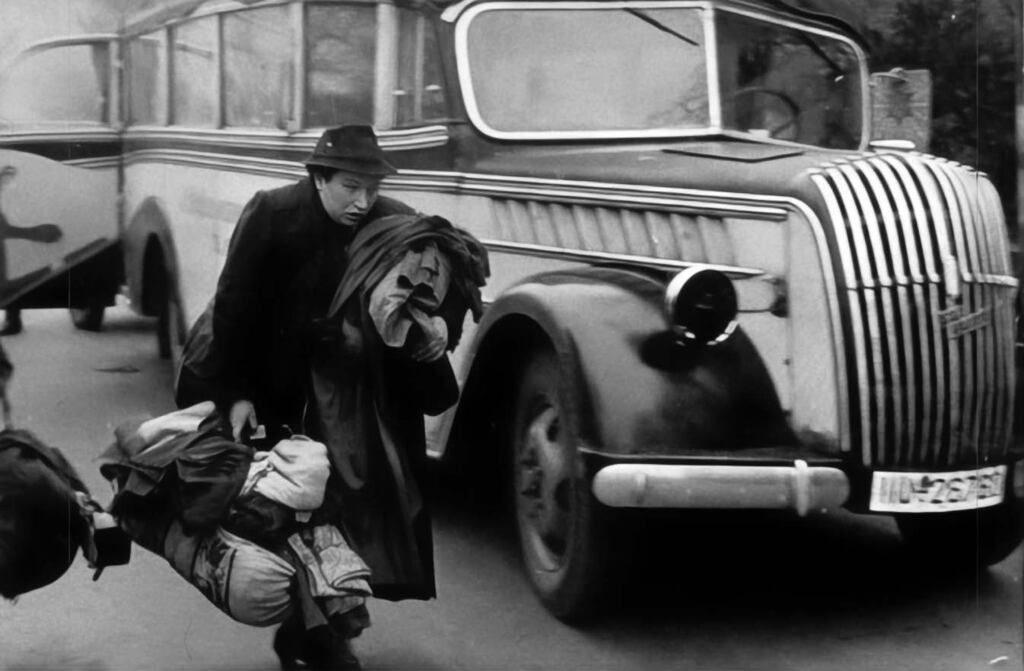
Moritz describes how his grandfather, Salli Rath, a cattle trader, was dispossessed of his farmland in the 1930s. With the help of Kempen’s mayor, he managed to convert some of his assets into cash, which he had sewn into his overcoat and which helped the family to flee to Britain.
His father, Alfred Moritz, came from the Algau region in Bavaria, not far from where the German writer WG Sebald grew up. He was sent to Britain on a Kindertransport and the departure is described in moving scenes where the train pulls out and the people on the platform run along with handkerchiefs waving until they finally get left behind. The connection is made with Sebald’s novel, Austerlitz, the story of a man who retraces that same route journey through Hook Van Holland.
The loss is described in a silence that fell over the family. His mother’s memory remains suppressed. On a return journey to Kempen in a camper van in the ‘60s, she passes the house where she grew up, and cannot get away fast enough. His father goes back to a mountainous landscape in the Algau that continues to haunt him. There is a wonderful description of how his father and brother redesigned a Monopoly board with the streets renamed after Munich. The board game was sent from Wales back to the family in Bavaria, but the “get out of jail” card was never redeemed.
Moritz himself became an emigrant when he moved to the US as a young man. Going through letters he received from his parents in Wales, he finds an emptiness in the language, an inability to grieve, an emotional security which has been destroyed. The family photographs are full of pain, showing uncles and aunts wearing the yellow star of David on the way to their deaths in various places of killing.
Moritz is left with what he calls the intergenerational “scars and residues” of that loss and double emigration. He owns two passports, British and American, but he finds it difficult to say where he belongs. Now he has applied for German citizenship, not because it might provide him with a home but because the place in San Francisco where he lives with his wife Harriet and their two boys no longer feels safe.
“Almost every day there is something that Trump does which reminds me of the past,” he says.
In a world that has become so hostile to migrants, this story has become all the more vital. Do we measure racial hatred in acts of violence or in the impact they have on their victims? Acts in which others are subjected to insecurities we feel within ourselves.
Here is a book that will awaken the faculties of empathy and uphold human rights and freedoms.
Hugo Hamilton’s latest novel is Conversation with the Sea