

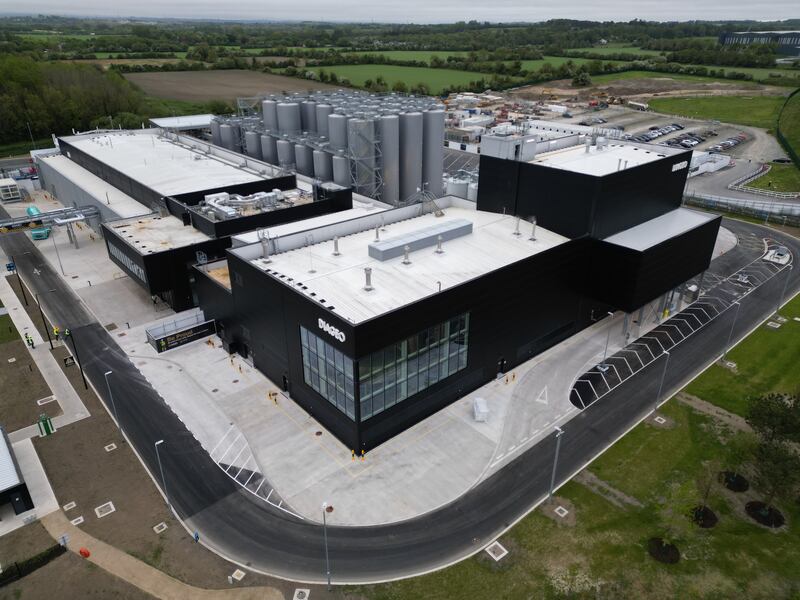
The towering grey beer tanks stacked side-by-side in the heart of Diageo’s new €300 million brewery on the outskirts of Newbridge, Co Kildare, are visible from miles away as you approach, almost dwarfing the facility itself.
The plant on the 40-acre site in Littleconnell was built in less than 18 months. It uses advanced brewing and process technologies to reduce energy and water use, and is powered by 100 per cent renewable electricity.
Its design is expected to avoid up to 15,000 tonnes of carbon emissions annually compared with a similar-scale facility.
Diageo erected a large white marquee at the front of the building for its official opening on Monday morning, which about 200 people attended. “We had to shut down production today for this,” said one of the technicians on site. “A huge amount of pre-planning went in.”
READ MORE


Most of the attendees, who included figures from political and business circles, had taken their seats by the time Taoiseach Micheál Martin and his entourage arrived at about 10.40am.
Martin is no stranger to the maxim that all politics is local, and he may have been reminded of that when Colin O’Brien, Diageo’s head of global beer supply, opened his remarks by welcoming Carmel Kelly, the chairwoman of Kildare County Council, before getting to the Taoiseach.
It got worse from there for Martin as O’Brien turned to Kerry’s eight-point win over his native Cork on Sunday to win a sixth successive Munster senior football title. “We are going to try and make sure you’re not confronted by any Kerry people,” he told him. “But we can’t guarantee it.”
The opening was attended by Diageo chief executive Dave Lewis, the former Tesco boss who took up the top job at the drinks giant towards the end of last year as it battled to rebuild investor confidence following a period of boardroom turmoil and weak performance.
Lewis ran Tesco between 2014 and 2020 and re-established it as Britain’s dominant supermarket group as he oversaw widespread price cutting, slashed its workforce, and sold off international businesses.
Before that, he spent almost 30 years at Unilever, during which he earned the moniker “drastic Dave” as he developed a reputation as a cost-cutter and turnaround specialist. But there was no sign of that on Monday, as he promised there would be more investment in Ireland.
Diageo is moving production of all its ales and lagers here from its St James’s Gate site in Dublin, and is to build a second brewery here at a cost of €400 million that will be dedicated to the production of Guinness and Guinness 0.0 amid soaring demand for the black stuff.
Guinness will still be brewed at St James’s Gate, Diageo insiders insisted on Monday, with the Dublin site to remain the global heart and primary brewing hub of the brand, with Littleconnell expected to be used to strengthen the group’s Guinness capacity for emerging markets.
Indeed, Lewis was keen to note it is the popularity of Guinness that is driving the increase in investment from Diageo to Ireland. “Guinness is growing double-digits around the world,” he said. “It’s the fastest-growing beer brand in North America.
“Just about everywhere we go, when we do it properly, we continue to grow, and that means we can invest. Guinness and Guinness 0.0 is driving that. I’m pleased with this investment and looking forward to making many more.”
For his part, the Taoiseach described the opening of the brewery as “reassuring” in terms of the “sustained investment” from Diageo between now and 2029, when the second brewery is expected to be completed.
He also described Littleconnell as “an apt location” for the new venture, rooted in the rich legacy of Arthur Guinness, born a few miles away in Celbridge.
“He was a businessman and planner ahead of his time, working in a brewery in Leixlip before, aged just 34, securing the now famous 9,000-year lease on a four-acre site in Dublin for £45 a year,” said Martin.

PrepayPower are hiking their prices - will other energy suppliers soon follow suit?
“All of these years later, Kildare is now again right at the heart of Ireland’s brewing success.”
After the speeches, Martin got a flavour of the production process during a tour of the mammoth facilities that snake around huge rooms filled with labyrinthine pipes, tubes, and tanks, all essential in putting beers in glasses.
Tiarnan O’Malley, an operations technician on site, said the most impressive element of the facility is not one isolated piece of equipment, but “the integration between the different systems” from refrigeration to waste water treatment to thermal storage capacity.
Festus Ruto, the brewery’s operations manager, said the whole process takes 10-14 days from start to finish, depending on the brand. Water is taken from boreholes, treated, and then the fermentation process begins. “Two weeks later, it is in the pubs,” he said.


