


Although United States Highway 90 is one of the more desolate stretches on the national road network, it holds an exalted place among film geeks who habitually show up seeking the remnants of the facade of Reata, the fabled rancher’s mansion where James Dean struck oil in Giant.
Seventy years have passed since the tiny west Texas town of Marfa was visited by true Hollywood royalty – Elizabeth Taylor, Rock Hudson – but since then it has acquired the sheen of celebrity in its own right.
It’s an impossible and glorious contradiction of a place. In winter, the population falls to as low as 1,700 and although Marfa now hosts award-winning restaurants, the opening hours are unpredictable.
Nothing about Marfa makes immediate sense, including its name, bequeathed in the 1880s by the wife of a railroad executive who was taken with a character of the same name in Fyodor Dostoevsky’s novel Crime and Punishment.
READ MORE


For most of the 20th century it endured as a stolid desert plains town. Then Donald Judd, the minimalist New York artist, traded the city for the far west and began using all that space, and heavenly skyline, to display his installations.
That was the 1970s. Five decades on and Marfa has a twin identity as a first-rate art destination and arts hub as well as a functioning town for 21st-century cowboys and ranchers.
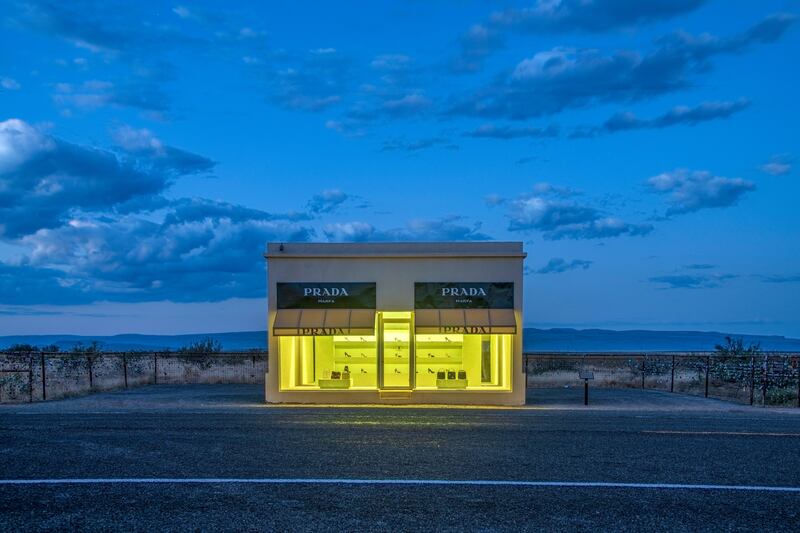
The most famous image has a bittersweet commercial sting. The Prada store installation is located on an empty roadside outside the town: whatever irony or comment was intended has long been trampled away by the endless procession who use it as a selfie prop. The joke about Marfa is it’s a cliched west Texan town with one traffic light at the four-way junction – and 14 art galleries.
Donald Judd died in 1994; the 400 acres he reimagined is now run by the Chinati Foundation and brings tens of thousands of visitors, many of whom fly to Midland or El Paso. Those using private aircraft can avail of Marfa’s tiny municipal airport.
Giant endures as a film because it uses Marfa and the parched, punishing desert plains to demonstrate how the landscape, including the oil geysers which conferred fabulous wealth on wildcatting speculators, ultimately governs the landowners.
“I’m sentimental too, Bick,” Dean’s character Jett Rink says after he is bequeathed the small piece of land which will make him filthy rich in a literal sense. “I think ... it’s good to gamble on with her. I know that land ain’t worth much, but then some day I might just put my own fence around it and call it Little Reata.”
There were few tourists in Marfa in early spring when the chief attraction is the avoidance of the belting heat of high summer. But visitors couldn’t but notice the preponderance of posters warning “No Wall in Big Bend”.
Year-round residents in Marfa and nearby towns such as Alpine and Terlingua have mounted campaigns against the US Customs and Border Protection (CBP) running a fence through Big Bend National Park, the 800,000-acre sanctuary in the Chihuahuan Desert. (Terlingua has a separate petition running against the establishment of a Dollar General store in the area.)
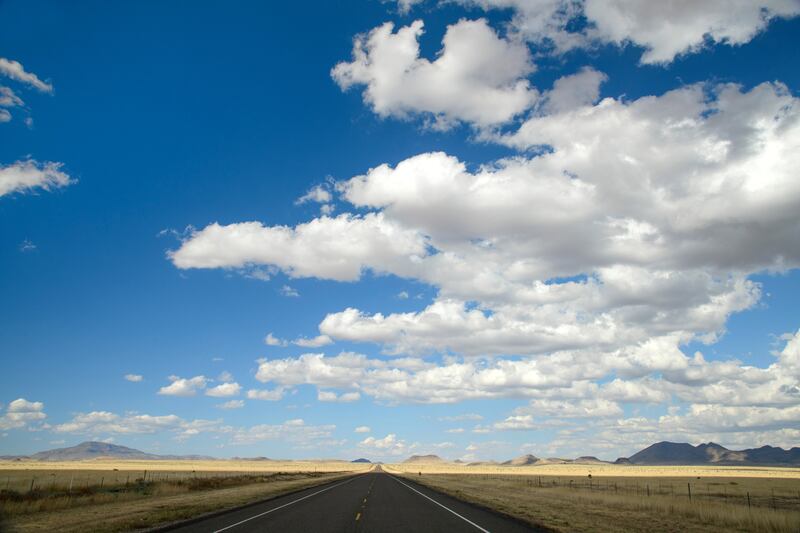
The TX-118 route from Alpine to Big Bend is arrow-straight and hot and defined by stunning natural nothingness: just sky and desert. There’s no petrol station for at least an hour, and phone signals die about 10 miles outside Alpine. The park represents true escapism and authentic wildness; at least 30 fatalities have occurred over the past decade, with heat stroke the main cause.
Locals are vigilant about protecting that wildness. Sam Karas, a Big Bend river guide and journalist with local paper the Big Bend Sentinel (which celebrates its centenary this year), chronicled her attempts to figure out what the CBP was up to in a Texas Monthly essay, which is chilling regarding the lack of information available to locals about what is going to happen next.
In the early part of this year, the Sentinel’s offices were bombarded with phone calls from worried landowners who themselves had received calls from officials from Homeland Security regarding access to their land.
“Two months passed,” she wrote. “Winter came, and an unusual number of military vehicles started rolling through the four-way stop in Marfa. Then phones started to ring – did anyone have room for three hundred to six hundred people to stay? What about a flat place to store large amounts of raw materials, no need to ask what kind? Did they have gravel deposits on the property and, if so, how many thousands of tons?”
The arguments against imposing a 40ft steel wall through the heart of a natural reserve are both environmental and practical. It’s an issue that transcends political ideologies – west Texas is deeply Republican although Presidio, the county in which Marfa is located, has returned a Democratic presidential nominee in every election since 2000. But the stubborn, low-key resistance may be yielding results.
Earlier this month, Bob Krumenaker, a former Big Bend park superintendent and now chair of the Keep Big Bend Wild committee, noted that the CBP had “quietly, with no public announcement, made a change to their map indicating that there is no longer a plan for a physical wall”.
“We support a secure border, but a wall through the Big Bend would be unnecessary and highly destructive as the number of people who cross has long been extremely low,” he posted recently.
“The remarkable public outcry over the proposed wall here, though, has been a testament to the passion Texans have for Big Bend, and the need for all to work together to ensure its permanent protection.”
[ Keith Duggan's US road trip: The farther west you go the less real Trump becomesOpens in new window ]


