

Jellyfish don’t have backbones, but does the Plaid Cymru leader, Rhun ap Iorwerth? Wales is about to find out.
It is a misty Friday morning at the Wibli Wobli nursery – called after the Welsh language nickname for jellyfish – on the outskirts of the city of Newport in the country’s more industrial south. Charismatic former BBC journalist ap Iorwerth (53) has shown up to publicise his party’s main promise to voters to expand free childcare.
The nationalist leader is poised to take over as Wales’s new first minister after crucial Senedd elections in two months, ending decades of Labour dominance. Plaid’s battle is on with Reform UK for the political soul of Wales. But there are doubters at Wibli Wobli.
A suspicious three-year old boy eyeballs ap Iorwerth across a table of Plasticine (márla in Irish, clai in Welsh). The low desk’s legs are uneven. “Ah! This must be the wibbly wobbly table,” says the politician, trying gamely to break the ice.
READ MORE


The little lad is having none of it, and resumes throttling his dinosaur. Polls suggest Welsh voters, however, may be more receptive to ap Iorwerth’s charms. The left-leaning Welsh nationalist party is pulling away from Nigel Farage’s Reform, as Labour flounders.

“If Reform is the anger, we are the hope,” ap Iorwerth tells The Irish Times. “Don’t get me wrong: I’m also angry at the injustice Wales faces from Westminster. But there is danger in allowing Farage free rein in Wales. We are the only party that can beat him here.”
Wibli Wobli is a microcosm of the vision for a new Wales, where social challenges may be more entrenched but so is national identity. Local businesswoman Natasha Baker founded it as Newport’s first Welsh-language nursery school in 2023, chiming with a Welsh government policy to turbo-boost the number of native speakers.
Months later, in January 2024, Wibli Wobli was burnt to the ground in a fire at the industrial estate where it was located. “It was a shock, to say the least,” says Baker.
By that summer it had reopened on the new site in a business park, in a building shared with a Hindu temple. Two years on from the fire, Baker has opened a second Welsh-language nursery, in Cardiff, 20km to the west. Wibli Wobli’s revival seems assured.
Plaid and Reform both promise revival for Wales. There are signs in Newport – the venue for Plaid’s spring conference – that parts of the proud Celtic nation could do with some love and attention.
Newport is to the south of the old coal-mining valleys of Wales, where deprivation soared after the industry’s demise. The city sits at the broad mouth of the river Usk – the huge old transporter bridge spanning the water points to the city’s industrial heritage.
Meanwhile, its radical political heritage is rooted in its association with the 19th-century Chartist movement that fought to expand voting rights. The Newport Rising of 1839, when Chartists fought police after democracy protests, left dozens dead and is ingrained in the city’s identity.
Newport’s city centre today retains a kind of dog-eared charm. The main shopping thoroughfare, Commercial Street, is blighted by empty units that make the cobbled avenue’s name seems incongruous in its current state.


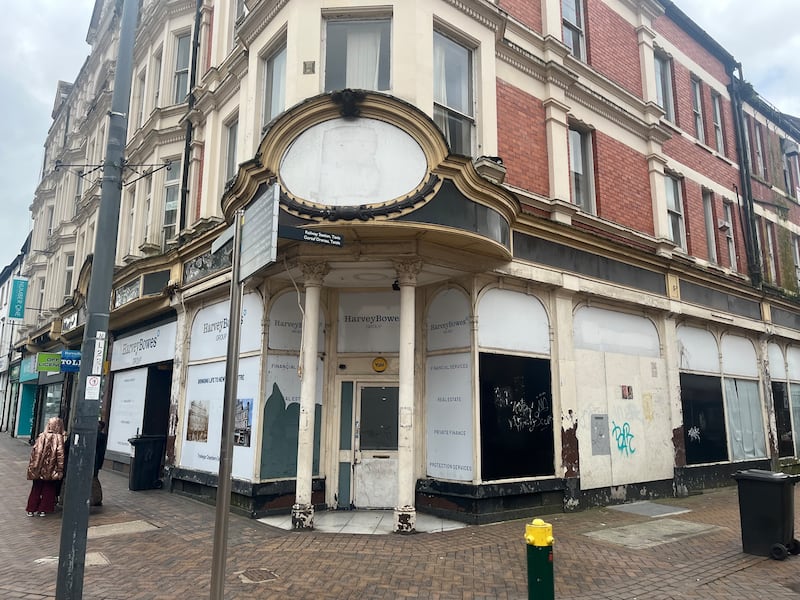
At one end, the old Westgate Hotel where the Chartists battled police is now home to a Poundstretcher discount store and a vape shop, which was shuttered last month on the orders of the local council for alleged “criminal behaviour”, according to a note in the window. The Parrot Inn, where Chartists planned their rallies, is now a pawnbrokers.
There is fresh development on the quays and in the central Kingsway and Friar’s Walk shopping centres. But social problems are also plain to see on the city’s central streets.
[ Plaid Cymru leader sees Ireland as a template for an independent WalesOpens in new window ]
On the weekend The Irish Times visits, charities set up trestle tables beneath the orange canopy of the Monmouthshire Building Society to feed the homeless in a city square. A queue of mostly men, many clearly with addiction issues, forms in front of shoppers.
Some of the men also seem to have mental health challenges. Distress can be heard in the voice of one dishevelled man as he loudly preaches about “the kingdom of God” to his fellow homeless. “You are not random. You have a purpose to your life.”
Yet there is also grit and verve in Newport. At the weekend, hundreds throng the city’s attractive wrought-iron indoors market, now a food cornucopia. Many are in running gear – a half marathon has just finished. A local samba band plays at the finish line.
At the other end of the waterfront is another drummer, Englishman Paul Midgley, who runs drumrunners.org, a professional percussion outfit. He moved to the valleys, to Ebbw Vale, two years ago and loves its post-industrial energy. He says he will vote Plaid.
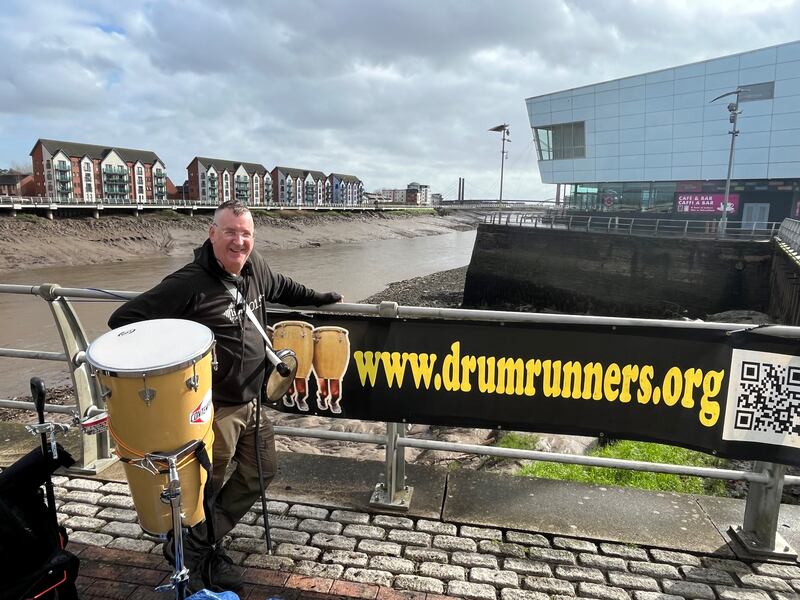
“Politics should be local. A younger generation in Wales has stopped listening to the older ones, who voted Labour, and want to make decisions for themselves,” he says.
A few years ago, Plaid’s conferences were in town halls. As it closes in on government for the first time in its 100-year history, its Newport spring gathering is at the shiny ICC conference venue beside the luxury Celtic Manor golf resort. The air is expectant.

“This election is a two-horse race with Reform,” says ap Iorwerth, as we chat on the fringes of proceedings.
“Plaid Cymru is in a stronger position because we have more potential coalition partners than Reform has. My preference is to lead a minority government. But the most important thing is that we have to be bigger than Reform. That is very important.”
The Plaid leader says the prospect of Farage leading the UK in future “fills most people in Wales with dread”. He also bemoans the deeper resources of the better-funded right-wing party, although he insists “money on its own doesn’t win elections”. His proof is Caerphilly, just north of Newport at the gateway to the valleys, where Plaid beat the more fancied Reform late last year in a Senedd byelection.

Plaid’s deputy Senedd leader, Delyth Jewell, is from Caerphilly. She invokes the famous byelection victory in a rousing conference speech: “How insulting it was to hear Farage talking about reopening the mines.” She says the industry “choked our miners’ lungs”.
Later, her party leader takes to the same stage to reveal Plaid’s plan for its first 100 days in government after the election win it hopes to pull off in nine weeks’ time.
[ Keir Starmer’s Labour suffers seismic byelection defeat to Plaid Cymru in WalesOpens in new window ]
Jewell advises The Irish Times to begin a tour of Caerphilly at Rosita’s, a new Italian cafe overlooking the town’s imposing castle, the second-biggest in Britain after Windsor. The town is abuzz in bunting as St David’s Day approaches.
Yet a residue remains from the divisive byelection campaign, which was marked by Reform’s sharp warnings about immigration, even though there are few foreigners in Caerphilly. As The Irish Times walks past the castle behind a dark-skinned man, a youth from a passing car shouts at him that he is a “c**t”.
The day after Reform’s Caerphilly byelection defeat, someone graffitied its campaign office on Cardiff Road: “Now you can f**k off home.” It has since been scrubbed off.

The Kurdish owner of the convenience store next door says he hasn’t seen anyone lift the Reform office shutters in weeks. I ask if he gets any hassle in the town. “Just from kids. Kids are kids. Caerphilly isn’t bad,” he says.
Back in Newport, a trendy young woman manning the till in a bookshop crosses her fingers in hope when I ask if she expects a Plaid victory.
Along the street, a stone monument to the Chartists points to “Downing Street – 145 miles”. It resembles a headstone – apt for Labour’s century-long dominance of Wales.


