
Main Points
- Strait of Hormuz will be “open” during Lebanon ceasefire, Iranian minister says
- US president Donald Trump says a separate US blockade of Strait of Hormuz will continue
- Oil prices tumble 10% and stocks soar after Iran reopens Strait of Hormuz
- Trump claims Iran has agreed to suspend its nuclear programme indefinitely and that a deal to end the US-Iran war is mostly complete
- Iranian official warns that keeping Strait of Hormuz open is “conditional on US adherence to the terms of ceasefire”
- Israel has violated a 10-day ceasefire, Lebanese army says
- French president Emmanuel Macron calls for return “to status quo” after meeting of 49 countries, including China, India, Turkey and Gulf states
Key Reads
- Holiday makers face possible flight cancellations from end of May
- “We know who’s losing”: Tehran residents return to ruined city amid fears truce won’t last
- Analysis: Strait of Hormuz is “completely open”, Iran says, but the devil is in the detail
That’s all for this evening.
Follow along tomorrow for more rolling coverage.
Good night.
US DOE loans more than 26 million barrels of crude oil to nine oil companies
The US department of energy (DOE) said on Friday it had loaned 26.03 million barrels of crude oil from the Strategic Petroleum Reserve to nine oil companies, the third allotment under the Trump administration’s effort to curb fuel prices that have surged since the US-Israeli war on Iran.
Companies that have been awarded SPR loans include BP Products North America, ExxonMobil Oil Corp and Marathon Petroleum, the DOE said in a statement. - Guardian
Ukraine’s Zelenskiy calls for joint efforts to set up Hormuz mission
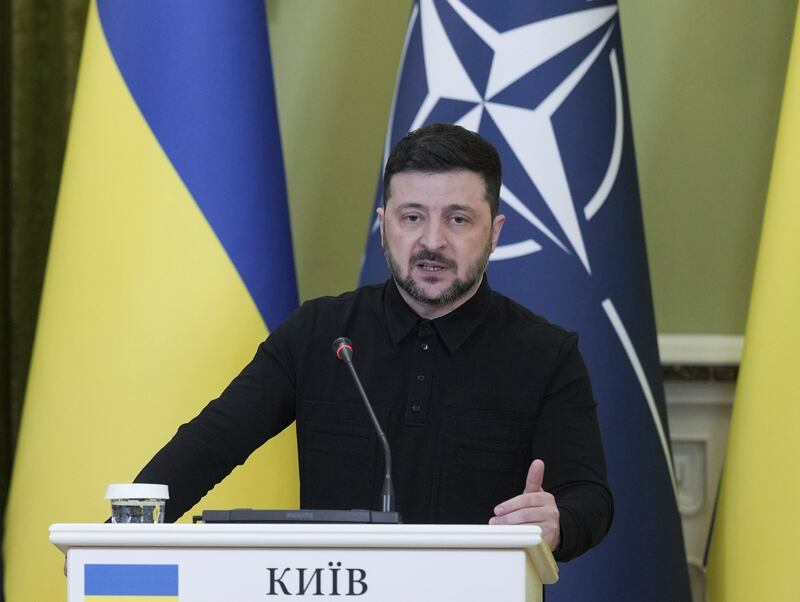
Ukrainian president Volodymyr Zelenskiy called on Friday for joint efforts for an effective mission to ensure freedom of navigation in the Strait of Hormuz and said Kyiv’s wartime experience in the Black Sea could help.
“Decisions made regarding Hormuz now will determine how other aggressive actors perceive the possibility of creating problems in other straits and on other fronts,” Zelenskiy said in remarks to a video conference attended by 50 countries and chaired by France and Britain.
“We need to be as specific and clear as possible so that in six months we don’t find ourselves in the same situation as in Gaza, where much still needs to be done.”
“In Hormuz, there are security challenges that cannot be addressed by political decisions alone,” he added, without elaborating.
Zelenskiy, said that in the course of four years of war with Russia, Ukraine had “already carried out a very similar mission in the Black Sea”.
“Russia also attempted to blockade our sea and we have experience in escorting merchant vessels, demining, defending against air attacks and the overall coordination of such operations,” he said.
Ukraine, he said, had sent specialists throughout the Middle East to help countries benefit from its experience in defending against Russian drones, many designed in Iran.
“We can also contribute to maritime security,” he said. - Reuters
20 ships seen moving towards Strait of Hormuz
A group of around 20 ships including container ships, bulk carriers and tankers was seen moving in the Gulf towards the exit via the Strait of Hormuz on Friday evening, ship tracking data showed.
Iranian Foreign Minister Abbas Araqchi said on Friday the Strait of Hormuz was open following a ceasefire agreement in Lebanon. - Reuters
Trump ‘has blockaded his friends,’ says Iranian navy commander
The commander of the Iranian navy, Shahram Irani, said on Friday that Trump “has blockaded his friends” and not Iran, as the US said its blockade will remain in place after Iran declared the Strait of Hormuz open to commercial traffic.
In a statement carried by Mizan, Iran’s official judiciary news agency, the navy chief said Trump’s blockade is just “empty words” and that no one is listening to him. - Guardian
Opening Strait of Hormuz ‘a step in the right direction,’ says UN secretary general
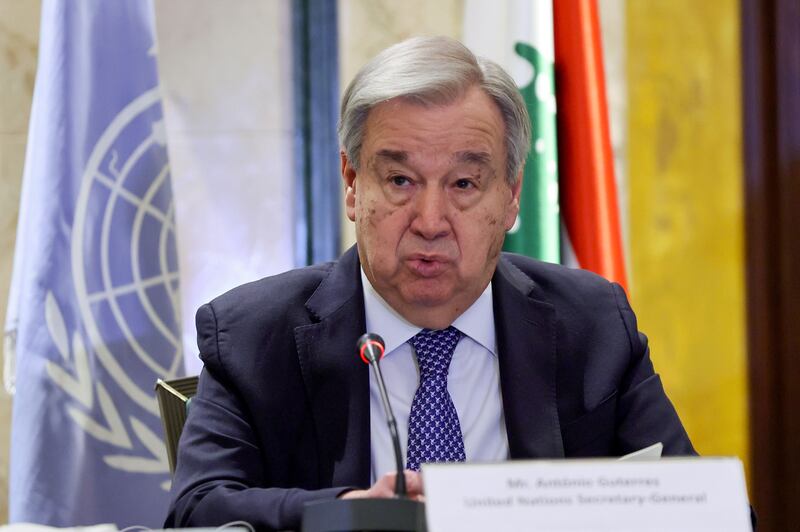
United Nations secretary general Antonio Guterres welcomed the opening of the Strait of Hormuz by Iran and said it was “a step in the right direction.”
In a statement, he said: “We need the full restoration of international navigational rights and freedoms in the Strait of Hormuz to be respected by all parties.”
The statement adds that Guterres hopes that “together with the ceasefire, this measure will contribute to creating confidence between the parties and strengthen the ongoing dialogue facilitated by Pakistan”. - Guardian
An Iranian foreign ministry spokesperson told state TV that the transfer of Iran’s enriched uranium to the US has never been an alternative for Iran. - Reuters
Saudi Arabia and US discuss keeping Strait of Hormuz open
Saudi foreign minister Prince Faisal bin Farhan and US secretary of state Marco Rubio, during a phone call, discussed efforts to ensure the continued opening of the Strait of Hormuz and consolidate the ceasefire in Lebanon, the Saudi state news agency SPA reported on Friday. - Reuters
Iran’s foreign ministry warned Tehran would take ‘necessary reciprocal measures’ if US blockade continued
After president Donald Trump said a US blockade of ships sailing to Iranian ports - announced after talks with Tehran last weekend ended without agreement - would remain until “our transaction with Iran is 100% complete”, Iran’s foreign ministry spokesperson Esmaeil Baghaei warned Tehran would take “necessary reciprocal measures” if a maritime blockade continued. - Guardian
Lebanon president says future deal will not cede territory
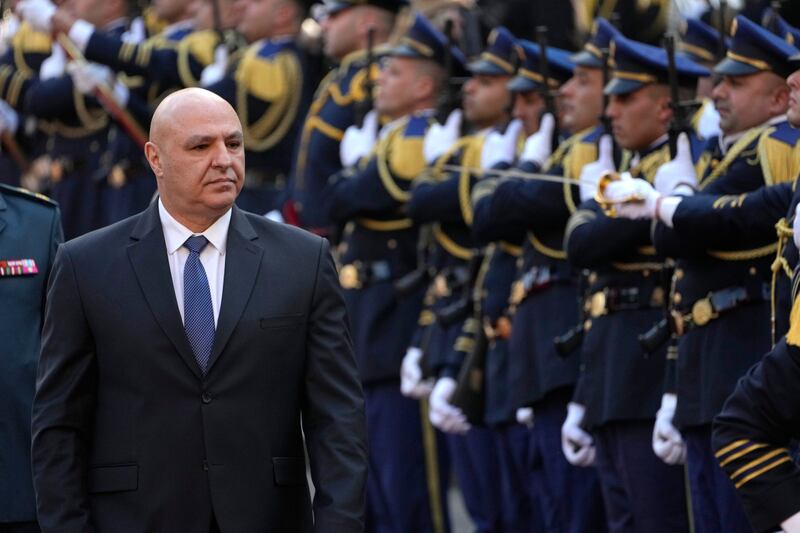
Lebanese president Joseph Aoun said on Friday that any future deal reached by the government would not cede any territory or undermine Lebanon’s national rights, without saying whether he was referring to prospective talks with Israel.
He said a ceasefire agreed to by his country should be transformed into “permanent agreements,” without saying whether he was referring to a prospective peace deal with Israel.
Aoun thanked US president Donald Trump and regional countries for helping secure the ceasefire.
The televised address was his first speech since the US brokered a ceasefire to end fighting between Israel and armed group Hizbullah on Thursday.
The text of the deal says Israel and Lebanon would hold direct talks to produce a “peace between the two countries”. - Reuters
‘Keeping Strait of Hormuz open is ‘conditional on US adherence to the terms of ceasefire,’ says Iranian official
Significant differences between Iran and the United States remain to reach a deal aimed at ending the war, a senior Iranian official told Reuters, adding that keeping the Strait of Hormuz open is “conditional on US adherence to the terms of ceasefire”.
The official said “no agreement has been reached on the details of the nuclear issues,” and serious negotiations are required to overcome differences.
He said Tehran hoped a preliminary agreement could be reached in the coming days with mediator Pakistan’s efforts, with the possibility of extending the ceasefire to “create space for more talks on lifting sanctions on Iran and securing compensation for war damages”.
“In exchange, Iran will provide assurances to the international community about the peaceful nature of its nuclear programme,” he said, adding any other “narrative about the ongoing talks is a misrepresentation of the situation”. - Guardian
At least eight tankers race towards Strait of Hormuz after opening announced
At least eight oil tankers raced toward the Strait of Hormuz in the hours after Iran’s foreign minister said the vital waterway was fully open to shipping.
Five of the carriers, which had been anchored north of Dubai, were moving into the waterway on Friday afternoon, soon after Iran’s foreign minister said it was completely open, vessel tracking data compiled by Bloomberg show.
Three more, which were waiting about 70 miles (113km) west, have also begun moving in the direction of the strait.
Hundreds of tankers have been stuck in the Persian Gulf as a result of the Middle East conflict, and the decision to transit depends on the owners, captains and crews.
Several ship owners earlier told Bloomberg they were seeking more information before they would be ready to consider transiting.
If the ships continue their voyages, their movements would be among the clearest signs yet that Hormuz might finally be opening up to shipping that isn’t connected to Iran since the war began on February 28th.
The closure of the strait has caused a surge in oil, fuel and natural gas prices as it choked off a swath of shipments and caused the region’s top producers to cut output.
The tankers moved despite reports in Iranian media that suggested the country was still seeking to impose restrictions.
The Tasnim news agency reported that ships and cargoes linked to “hostile” countries would not be allowed through.
Passage via the Strait of Hormuz will be closed if US naval blockade continues as it will be considered a violation of the ceasefire, the country’s Fars news agency reports, citing a source. - Bloomberg
Shipping companies cautious over re-opening of Strait of Hormuz
Shipping companies have reacted with cautious optimism to Iran’s announcement that the Strait of Hormuz is now open, but industry leaders insist they need further guarantees before fully resuming operations.
Maersk, the world’s second largest container shipping company, released a statement “welcoming” the reopening of the strait, but said uncertainty still remains.
“We welcome the announced ceasefire and the public statements that commercial passage through the Strait of Hormuz may again be possible – albeit for now for a limited period”, adding “the ceasefire may create transit opportunities, but it does not yet provide full maritime certainty, and we need to understand all potential conditions attached.”
German shipping group Hapag-Lloyd said it was working for its ships to sail through the strait “as soon as possible” but added that they require more clarity.
“It is good news that there appears to have been some progress in the negotiations between the US and Iran. Nevertheless, the situation around the Strait of Hormuz remains volatile. Whether the announced opening will actually hold will become clear in the coming days,” it added.
Shipping association Bimco also cautioned members on returning to the strait.
“The status of mine threats... is unclear and Bimco believes shipping companies should consider avoiding the area,” said Jakob Larsen, Bimco’s chief safety and security officer. - Guardian
Oil price drops below $90 a barrel after Iran says strait of Hormuz is open
Oil and gas prices fell sharply on Friday after Iran said the Strait of Hormuz was open to commercial shipping, potentially clearing the way for tankers holding millions of barrels of oil and gas to reach the global market.
Iran’s foreign minister said vessels would be free to transit the Strait of Hormuz for the duration of the 10-day ceasefire between Israel and Lebanon, which was struck on Thursday.
Brent crude, the international benchmark, fell more than 10 per cent to $88.8 (€75.3) a barrel. That is well below a peak of $119 (€101) last month, but still much higher than the $72 (€61) before the war. - Guardian
Trump says Iran to suspend nuclear program
President Donald Trump said Iran agreed to suspend its nuclear program indefinitely and will not receive any frozen funds from the US.
Trump said in a phone interview on Friday that a deal to end the war, which the US and Israel began with Iran in late February, is mostly complete.
Talks over a lasting agreement will “probably” be held this weekend, the president said.
“Most of the main points are finalised. It’ll go pretty quickly,” Trump said.
Iran has yet to comment on any deal beyond the Strait of Hormuz opening, nor on claims made by Trump on Thursday that Tehran had offered concessions — including over the key issue of its nuclear program. - Bloomberg
Opening of Strait of Hormuz a ‘positive step’ but with ‘much uncertainty around what it means in practice’
Thomas Kazakos, the secretary-general for the International Chamber of Shipping said in a statement to the Guardian the announcements today about the reopening of the Strait of Hormuz offer “a cautious measure of reassurance to the global maritime community”.
He continued, “While this announcement is a positive step there is still much uncertainty around what it means in practice.
“Regardless it is essential that it marks the beginning of a broader and more durable return, beyond the current ceasefire, to freedom of navigation in one of the world’s most critical maritime corridors.
“An orderly and sustained return to normal transit through the Strait will be essential. This will require close coordination between the International Maritime Organization, regional states, naval authorities, and the shipping industry to ensure that vessels can transit safely.
“Above all, it is imperative that full freedom of navigation is respected by all parties in accordance with international law,” he said. - Guardian
Iran’s enriched uranium will be brought to the US

President Donald Trump told Reuters in an interview that Washington will work with Tehran to recover Iran’s enriched uranium to bring back to the US.
“We’re going to get it together. We’re going to go in with Iran, at a nice leisurely pace and go down and start excavating with big machinery... We’ll bring it back to the United States,” Trump said.
He referred to “nuclear dust” – a reference to what he believes remains after the US and Israel bombed Iran’s nuclear installations last year – and said it would be retrieved “very soon”.
Trump has repeatedly said that a primary reason for the war was to prevent Iran from getting a nuclear weapon.
Iran has 440.9kg of uranium enriched to 60 per cent uranium-235, a level that can be quickly enriched to weapons-grade – 90 per cent, but has long maintained that its enrichment of uranium was strictly for peaceful civilian use.
When asked by Reuters about a report that the US was considering a $20bn cash for uranium deal, Trump said: “It’s totally false. No money is changing hands.” - Guardian
Hormuz situation still uncertain
Naomi O’Leary, our Europe Correspondent based in Paris, has been attending a press conference following a meeting of around 49 countries chaired by French president Emmanuel Macron and UK prime minister Keir Starmer. She writes:
It remains unclear how quickly shipping can resume on pre-war conditions, and whether restrictions such as tolls will be imposed by Iran.
This was underscored by further comments by Trump that Iran and the US would work together to remove “all sea mines”, something likely to be a slow and laborious process.
It is also unclear how much of the strait has been mined, but the possibility of mines is a disincentive to shipping companies and may drive up insurance costs.
In normal times, 20 per cent of the world’s oil supplies transit through the strait, but this had slowed to a trickle as Iran selectively allowed ships to pass through, causing soaring prices of oil, gas, and other key commodities, threatening political instability around the world.
The announcement came as the leaders of France, the UK, Italy and Germany met in Paris to coordinate an international coalition committed to re-opening transit through the Strait on the same terms as before US and Israel launched their attack on Iran last month.
“The blockage of the Strait started by Iran has grave consequences for the whole world,” French president Emmanuel Macron announced after the meeting of 49 countries attended by China, India, Turkey and Gulf countries via video call.
The “simple message” of the 49 countries was “a return to the status quo”, Macron said. “We oppose all restriction including any attempt to privatise the Strait of Hormuz or introduce a tollpaying system.”

UN agency seeking to verify Iran strait re-opening
Arsenio Dominguez, the head of the International Maritime Organization, the UN agency that oversees shipping, said it was “currently verifying the recent announcement related to the reopening of the Strait of Hormuz”.
Oil prices tumble 10% and stocks soar after Iran reopens Strait of Hormuz
Oil prices fell by 10 per cent, and stock have soared after Iran said the Strait of Hormuz is fully open, Associated Press reports.
The Dow Jones Industrial Average - which tracks the share prices of 30 large, publicly traded companies based in the United States - gained 1,020 points after Iran sad the strait was open.
Iran has pledged to allow oil tankers to exit the Gulf again and carry crude oil and gas to customers worldwide while a ceasefire holds.
The S&P 500 - a stock market index that tracks the performance of 500 of the largest publicly traded companies in the US jumped 1.3 per cent in morning trading on Friday as US stocks raced toward the finish of a third straight week of big gains.
The Nasdaq composite - a stock market index composed of thousands of stocks with a particular emphasis on technology - climbed 1.5 per cent, while stocks have rallied 12 per cent since late March on hopes that the United States and Iran can avoid a worst-case scenario for the global economy.
Ceasefire in Lebanon ‘has to hold’
The shift from Iran tying a promised reopening of the Strait of Hormuz to the shaky ceasefire in the fighting between Israel and Hizbullah militants in Lebanon raises the stakes in coming talks to extend the truce.
“It has to hold, because that’s the only way we can create space for negotiations,” one high-ranking EU diplomat told The Irish Times on Friday afternoon.
The 10-day ceasefire in Lebanon came into effect yesterday evening.
“Israel will not be bombing Lebanon any longer. They are PROHIBITED from doing so by the U.S.A. Enough is enough!!!” Trump wrote on Truth Social.
We are starting to hear from European leaders following those talks discussing how to reopen the Strait of Hormuz in the event of a lasting truce.
Kaja Kallas, the EU’s high representative on foreign affairs, said an existing EU military mission to safeguard international shipping from attacks by Houthi militants in the Red Sea “can be quickly strengthened to protect shipping” across the Middle East. “This could be the fastest way to provide support,” she said on X.
Sweden’s prime minister Ulf Kristersson said: “Free shipping is a global concern that affects us all. Sweden stands ready to contribute, following a permanent ceasefire, to secure free passage through the strait.”
European Commission president Ursula von der Leyen also referenced the possibility of expanding the EU’s joint naval mission, Operation Aspides, in the Red Sea.
The meeting involved the heads of more than 40 countries, convened by French president Emmanuel Macron and UK prime minister Keir Starmer. Some attended in person in Paris, but most tuned in virtually.
Analysis: Iran comments on Strait of Hormuz could signal significant breakthrough
The effective shutdown of the Strait of Hormuz at the outset of the war in Iran is what caused the recent surge in the price of fuel and energy that has rocked the global economy.
In retaliation for US and Israeli strikes targeting Iran, Tehran issued threats that ships passing through the vital sea route (without the regime’s go ahead) would be targeted by missiles, small boats and mines.
That had the effect of massively reducing the number of ships transiting through the strait, choking the supply of oil and gas coming from the Gulf and sending prices shooting up everywhere.
The strategy proved to be successful in applying economic pressure on Washington to curtail its military campaign on Iran.
In recent days the US established its own blockade near the strait, intended to prevent the passage of any ships that had stopped in Iranian ports from continuing on their journey.
Trump has said this will remain in place, despite the recent comments from Iran’s foreign minister that the ceasefire agreed in Lebanon meant the shipping route would be “completely open” for the period of that truce. Although the US blockade is not as restrictive as the one imposed by Iran at the start of the war.
It remains to be seen whether the flow of ships carrying oil through the narrow chokepoint will increase in the coming days. Expect shipping companies to take a pretty cautious approach to this latest development, at least initially.
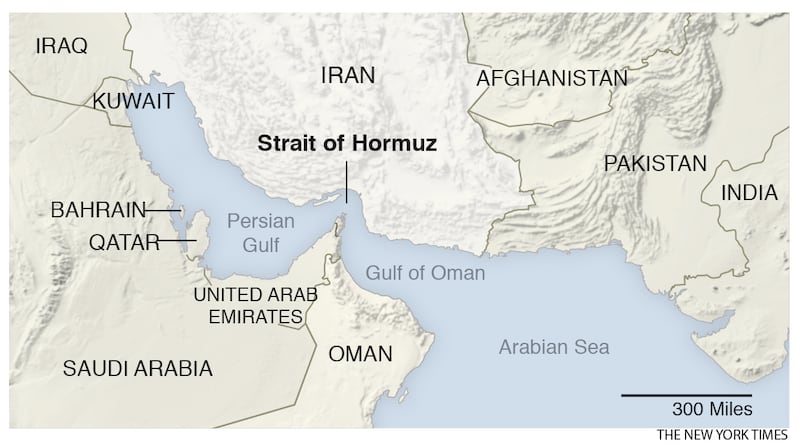
Trump says separate US blockade of Strait of Hormuz will continue
US president Donald Trump has said a US naval blockade of the Strait of Hormuz of ships coming from or heading to Iran, and those stopping at Iranian ports, will remain in force.

Strait of Hormuz ‘open’ during Lebanon ceasefire, Iran says
Iran’s foreign minister Abbas Araghchi has suggested Tehran won’t target ships passing through the Strait of Hormuz during the ceasefire in Lebanon, in a post on social media.
“In line with the ceasefire in Lebanon, the passage for all commercial vessels through Strait of Hormuz is declared completely open for the remaining period of ceasefire, on the co-ordinated route as already announced by Ports and Maritime Organisation of the Islamic Rep. of Iran,” Araghchi said.
The effective blocking of the Strait of Hormuz, first by Iran, and more recently by the United States, has closed off a key artery through which a fifth of the world’s oil and gas is shipped.
The statement by the Iranian minister will raise hopes of a breakthrough that could allow shipping to begin to transit through the narrow chokepoint.
Turkey offers to host peace talks
Turkey’s president Recep Tayyip Erdoğan has said Ankara is ready to host negotiations, including a leaders’ summit, in order to help secure a peace agreement between the US, Israel and Iran.
Pakistan has previously hosted negotiations and is expected to do so again, possibly as soon as this weekend. - Reuters
Zelenskiy says weapons supplies to Ukraine at risk due to Iran war

Ukrainian president Volodymyr Zelenskiy has said weapons supplies to Ukraine could be at risk due to the Iran war.
As we reported earlier, the United States has informed a number of countries in Europe of possible delays in the delivery of ammunition purchased from the US.
Officials told counterparts from countries across Europe, including in the Baltics and Scandinavia, that some previously contracted weapons deliveries are likely to be delayed as the Iran war draws on weapons stocks. - Reuters
Met Police investigating after ‘discarded items’ found near Israeli embassy in London
Police are investigating whether items found near the Israeli embassy in central London are connected to a video posted by an Iran-linked Islamist group claiming it was going to be attacked.
The Metropolitan Police said officers were assessing “a number of discarded items” in Kensington Gardens, and urged people to avoid the area.
A video, which appears to have been shared by the group Harakat Ashab al-Yamin al-Islamia, shows a target over an image of the Israeli embassy and people dressed in hazmat suits flying drones.
Police insisted the embassy had not been attacked, but said detectives were carrying out inquiries to determine the authenticity of the video and to identify any potential link between it and the items.
“A suspected security incident is being investigated in the park adjacent to the Embassy of Israel in London,” the embassy said in a statement.
“We wish to clarify that all embassy staff are safe and that the embassy was not attacked.” - PA
UN human rights chief urges Lebanon and Israel to stick to ceasefire
United Nations human rights chief Volker Türk has urged “all parties to ensure full and immediate implementation” of the ceasefire between Lebanon and Israel.
In a post on X, he said: “Meaningful efforts must now focus on a durable political solution that addresses the root causes of the conflict and ensures long-term protection on all sides for civilians, who have borne the brunt of weeks of unrelenting violence, destruction and displacement.”
Death toll
More than 3,600 people have been killed in Iran since the US and Israel launched airstrikes there at the end of February, according to the US-based group Human Rights Activists in Iran.
More than 2,100 people have been killed in Lebanon since Israel’s bombing campaign and ground invasion began. About 1.2 million people have been displaced in Lebanon, according to the United Nations.
Israel defence minister says army ‘holds all territories’ it occupies in Lebanon
Israel’s defence minister, Israel Katz, said the Israeli military “holds and will continue to hold” all positions it has “cleared and captured” in Lebanon.
In a statement from his office on the first day of the temporary ceasefire in Lebanon, Katz said Israel’s defence forces (IDF) maintains a strip of land up to 10km deep along the border in southern Lebanon, indicating that the IDF would continue demolishing homes in villages he described as having been turned into “terrorist outposts”.
He said Israel’s goals of disarming Hizbullah have not been achieved yet and that an area of southern Lebanon “has not been demilitarised”.
“This would have to be done, either diplomatically or by resuming Israeli military activities at the end of the ceasefire,” he said. - The Guardian
Lebanon president says ceasefire is ‘gateway’ to negotiations
Lebanese president Joseph Aoun has described the ceasefire with Israel as a “gateway to proceeding with negotiations”, saying he will prioritise the withdrawal of Israeli troops from occupied territories in southern Lebanon.
In a statement on social media, he said: “Direct negotiations are delicate and crucial; there must be a unified sense of national responsibility in the coming phase, as the eyes of the world are on Lebanon.
“The state’s position is to consolidate the ceasefire, ensure the withdrawal of Israeli forces from the occupied southern territories, secure the release of prisoners, and resolve outstanding border disputes.
“The ceasefire is the gateway to proceeding with negotiations and is an option that enjoys both domestic and international support.” - The Guardian
Should I be worried about my summer travel plans amid jet fuel issues?

Amid concerns about Europe potentially running out of jet fuel, Consumer Affairs Correspondent Conor Pope has taken a look at what this could mean for passengers.
Ryanair has said its suppliers could guarantee it enough jet fuel until sometime next month, adding that fuel could be in short supply after that if ships carrying fuel do not start coming into Europe from the Strait of Hormuz soon.
That doesn’t sound great but it is worth pointing out that the airline is by no means suggesting there will be no jet fuel, just that supplies might become an issue.
Read the full article here.
Iran negotiators, citing possible Israeli attack, got Pakistan escort home from peace talks
Pakistan’s air force escorted Iranian negotiators home from inconclusive peace talks with the US last weekend, launching a major operation after the Iranians said Israel might seek to kill them, three sources told Reuters.
Pakistan deployed some two dozen jets in the escort, as well as the force’s Airborne Warning and Control System for aerial surveillance to ensure the safety of the delegation back from Islamabad, said two Pakistani sources with knowledge of the operation.
One said similar security protection would be provided for subsequent talks if the Iranians ask for it, “otherwise Pakistani aircraft would receive them in Pakistan airspace”.
A third source involved in the talks said measures were already in the works ahead of an expected further round of talks as soon as this weekend.
A regional diplomat briefed by Tehran, however, said Pakistan insisted on the escort after Iranian delegates raised the “hypothetical” possibility of a threat.
The discussions with the Iranian delegation about a potential threat while travelling and the presence of a Pakistani air escort into Iran have not previously been reported. - Reuters
Europe faces summer flight cancellations from jet fuel shortage, Walsh says
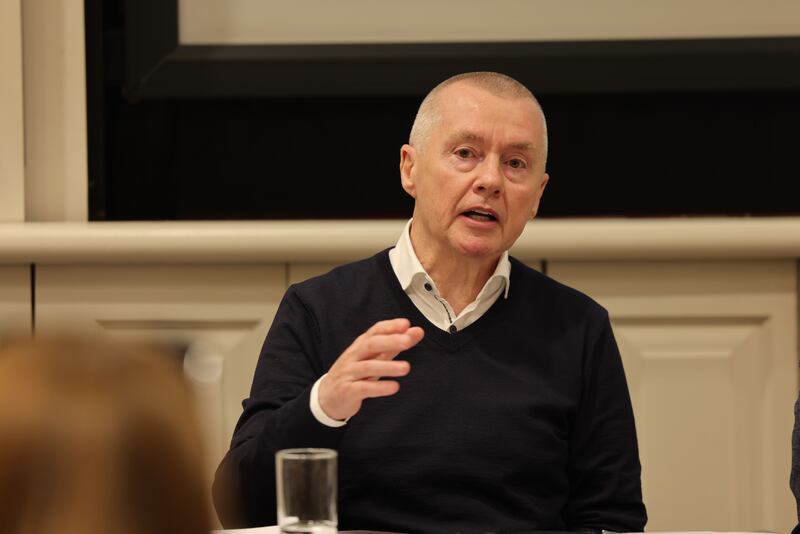
Flights in Europe could start to be cancelled from the end of May due to a lack of jet fuel, the International Air Transport Association’s director general Willie Walsh said on Friday, highlighting the risk of disruption to the busy summer travel season.
“Along with doing everything possible to secure alternative supply lines, it’s important that authorities have well-communicated and well-coordinated plans in place in case rationing becomes necessary, including for slot relief,” he said.
Walsh is Irish and previously served as the CEO of Aer Lingus and British Airways.
Some European airlines have warned of jet fuel shortages within weeks as a result of the Iran war which has blocked the main supply route through the Strait of Hormuz. Europe is particularly vulnerable as it relies more on imports of jet fuel than on any other transport fuel, with some 75 per cent of its supply from the Middle East.
Global jet fuel and kerosene demand averaged 7.8 million barrels per day in 2025, with the Gulf the largest supplier to the global market, providing nearly 400,000 barrels per day, according to a report by the International Energy Agency. - Reuters
Wall St poised for weekly gain amid hopes of peace deal
US stock index futures rose on Friday and were set for a strong weekly close as investors welcomed signs of easing Middle East tensions.
Sentiment improved after US president Donald Trump said Washington could soon secure a peace agreement to end the war with Iran, while urging the Tehran-backed Hizbullah group to respect a 10-day truce that had taken effect between Lebanon and Israel.
The prospect of de-escalation encouraged investors to buy risk assets, including battered technology and software stocks. Analysts said a broader risk-on move could persist even without an immediate peace deal, provided investors remain confident that a resolution is ultimately within reach.
“A resolution is more likely than not over the coming weeks even if the path is unlikely to be a straight line,” analysts at Deutsche Bank wrote.
Shortly before midday Irish time, Dow E-minis were up 157 points, or 0.32 per cent, S&P 500 E-minis were up 13.25 points, or 0.19 per cent, and Nasdaq 100 E-minis were up 26.75 points, or 0.1 per cent. - Reuters
Starmer pledges to do ‘everything I can’ to reopen Strait of Hormuz
UK prime minister Keir Starmer has arrived in Paris for talks with fellow world leaders aimed at reopening the Strait of Hormuz.
Ahead of the meeting, hosted by French president Emmanuel Macron, Starmer pledged to do “everything I can” to reopen the vital shipping lane.
The strait has been blockaded by Iran since the joint US-Israeli strikes on the country began at the end of February, threatening world oil supplies.
Friday’s meeting at the Elysee Palace brings together 40 countries and the International Maritime Organisation to formulate plans for a multinational mission to protect freedom of navigation.

The US, Israel and Iran are not expected to attend.
Starmer told reporters: “It is very important that we build a coalition of countries around the principle that the ceasefire should be permanent, there should be a deal, and that the Strait of Hormuz is open.
“Emmanuel Macron and I are clear in our commitment to establish a multinational initiative to protect freedom of navigation.
“We must reassure commercial shipping and support mine clearance operations to ensure a return to global stability and security,” he said. - PA
Oil prices fall on back of peace talks hopes
Oil prices fell on Friday on the back of possible further talks between the US and Iran at the weekend and the agreement of a ceasefire in Lebanon.
International oil benchmark Brent crude fell by more than 3 per cent to $96.30. US oil indicator West Texas Intermediate crude futures tipped by more than 4 per cent to $90.68 a barrel.
Market analysts suggest oil prices are currently “sensitive” to news headlines of peace talks or any escalation of conflict in the key oil producing region of the Middle East.
Oil prices have fallen below $100 per barrel but remained elevated this week above $90, off the back of 50 per cent rises in March.
The temporary nature of the Israel-Lebanon ceasefire, Israel’s goal of significantly weakening the Iranian regime, and unlikely prospects for the Strait of Hormuz reopening immediately all provided a floor to prices, PVM analyst Tamas Varga said.
“Once the dust settles the hard work begins getting the ships in and out, and getting them into the right locations. There is no doubt a normalization is still months away and the current tightness will continue to underpin the refined product market,” Saxo Bank analyst Ole Hansen said.
Analysts from ING estimate that roughly 13 million barrels per day of oil flow has been disrupted by the closure of the Strait. - Additional reporting: Reuters

US ammunition delivery may be delayed due to Iran war, says Lithuania
The US has informed Lithuania of possible delays in the delivery of ammunition purchased from the US due to the war in the Middle East, the Baltic country’s defence ministry said on Friday.
US officials told its counterparts from countries across Europe, including in the Baltics and Scandinavia, that some previously contracted weapons deliveries are likely to be delayed as the Iran war draws on weapons stocks.
“Lithuania has been informed by Pentagon representatives about possible delays in the delivery of ammunition purchased from the US due to the conflict,” a Lithuania defence ministry spokesperson said in an email on Friday.
“We are constantly in contact with the Pentagon regarding the delivery of military equipment and ammunition purchased from the US and are guided by official information provided by our allies.”
Lithuania is one of the larger purchasers of US ammunition in Europe. It agreed to purchase ammunition from US producer Northrop Grumman in 2024. At the time, its defence ministry said it had with more than €1.3 billion worth of ammunition acquisitions in the pipeline. - Reuters/AP
Displaced Lebanese people begin to return to their villages as ceasefire takes effect
Nabih Berri, the speaker of the Lebanese parliament, has thanked the capital Beirut and northern areas of the country for opening their doors to the displaced, as people uprooted by war began to return to their homes in the south.
In a statement posted on social media, he said: “I take this opportunity, as we are on the first day of the truce coming into effect and the start of the return of residents to their villages and towns, to renew my thanks to the capital, Beirut, which has opened its doors and neighbourhoods, as have the mountains and the north, to the displaced from the south, the suburbs and the Bekaa.”
The UN said more than 1.2 million people – about a fifth of the Lebanese population – have been displaced across Lebanon, many of them from the south after repeated warnings by the Israeli military to flee their homes. - The Guardian
Countries to discuss Hormuz mission for when conflict ends
France and Britain will chair a meeting on Friday of about 40 countries aimed at signalling to the US that some of its closest allies are ready to play a role in restoring freedom of navigation in the Strait of Hormuz once conditions allow.
The initiative being discussed does not, for now, include the United States or Iran, though European diplomats said any realistic mission would ultimately need to be co-ordinated with both. Washington will be briefed on the outcome of the talks.
Iran has largely closed the strait to ships other than its own since the start of US-Israeli air strikes against it on February 28th. On Monday, Washington imposed a blockade on ships entering or leaving Iranian ports.
US president Donald Trump has called on other countries to help enforce the blockade and has criticised Nato allies for not doing so.
Britain, France and others say joining the blockade would amount to entering the war, but they have said they would be willing to help keep the strait open once there was a lasting ceasefire or the conflict ended. - Reuters
Syria-Israel talks ‘have not reached a dead end’, says Syrian president
The Syrian president, Ahmed al-Sharaa, said talks between Syria and Israel “have not reached a dead end” but were facing “great difficulty” due to what he described as Israel’s insistence on remaining in Syrian territory.
Sharaa stressed that Syria was “serious about reaching a security agreement that preserves regional stability”, in an interview with Turkey’s state-run Anadolu Agency.
“The negotiations have not reached a dead end, but they are progressing with great difficulty due to Israel’s insistence on maintaining a presence on Syrian soil,” he said.
Israeli forces have pushed into a UN-patrolled buffer zone in the occupied Golan Heights after the fall of Bashar al-Assad in December 2024 and conducted incursions deeper into southern Syria.
Israel previously said it sent troops as the Assad regime fell to protect the security of its borders.
Meanwhile, foreign ministers of Turkey, Pakistan, Egypt and Saudi Arabia will meet on the margins of a diplomacy forum in the southern Turkish province of Antalya today to discuss regional issues including the Iran war, a Turkish diplomatic source told Reuters.
“The meeting is expected to include discussions on developing regional solutions to regional issues, particularly the US-Israel-Iran war, within the framework of a regional ownership approach,” the source said.
Ministers from the four countries held meetings in March as part of efforts to broker an end to the Iran war. – The Guardian & Reuters
Add us as a preferred source in Google search

Merchant vessels warned of ‘critical’ threat in seas near Iran
The UK Maritime Trade Operations (UKMTO) operations centre has issued a warning of ‘critical’ threat status for the seas around Iran.
The critical warning represents the maritime security authority’s highest security threat level, and comes amid the enactment of the US blockade on the shipping lane and Iranian ports.
The warning is in place for the Arabian Gulf, Strait of Hormuz, and Gulf of Oman, due to “recent attack patterns, continued navigation interference, and persistent operational disruption”.
The agreed-upon ceasefire, UKMTO said, “has not restored normal traffic; transits remain very limited”.
Audio🔊of a Sailor aboard USS Michael Murphy (DDG 112), with video from the guided-missile destroyer’s embarked helicopter flying over the Gulf of Oman, as the U.S. Navy diverts a merchant vessel while enforcing the blockade on ships entering or departing Iranian ports. U.S.… pic.twitter.com/10QxlEoGkk
— U.S. Central Command (@CENTCOM) April 16, 2026
Kenya requests World Bank funds to cushion Iran war shocks
Kenya has requested rapid financial support from the World Bank to help it manage the economic shocks triggered by the Iran war, its central bank governor told Reuters.
Like other nations that are heavily reliant on energy imports, the East African country is scrambling to stave off shortages of essential commodities including petrol, while managing cost increases that could drive up inflation.
Kenya is the first larger emerging economy to publicly confirm a formal request to the World Bank, although a number of countries, such as Egypt, have said they have approached multilateral lenders.
IMF head Kristalina Georgieva said that at least 12 countries are seeking assistance from the Fund to cope with the crisis.
The request for funds was “significant”, Kenya’s central bank governor, Kamau Thugge, told Reuters on Thursday on the sidelines of the IMF World Bank spring meetings, without providing a figure. – Reuters
EU looks to restore Syria relations amid hopes for overland oil route
The European Union plans to deepen its engagement with Syria by relaunching formal political contacts and paving the way for closer economic and security ties, according to a document seen by Reuters.
The background paper, produced by the bloc’s diplomatic arm and circulated to EU member countries this week, says the EU will fully resume its 1978 co-operation agreement with Syria and begin a High-Level Political Dialogue, an EU term for formal and structured talks, with the country’s transitional authorities on May 11.
In a notable policy adjustment, the EU also said it would “reframe and adapt” its sanctions regime to maintain leverage while engaging with Syria’s leadership and targeting spoilers of the transition, according to the paper.
Syria is emerging as a critical transit point, particularly amid the energy crisis triggered by the closure of the Strait of Hormuz during the Iran war. A first tanker carrying Iraqi oil transported overland sailed from the Syrian port of Baniyas on Thursday.
Turkey, Syria and Jordan have also agreed to upgrade their railway networks to create a corridor linking southern Europe to the Gulf, Turkish transport minister Abdulkadir Uraloglu told Bloomberg on Wednesday.
Syria, which had most western sanctions lifted at the end of last year, is seeking broader integration into the international community under interim President Ahmed al-Sharaa, who headed an alliance of Islamist rebel factions to oust former leader Bashar al-Assad at the end of 2024, after a devastating 14-year war.
Europe hosts over 1 million Syrian refugees and asylum seekers, roughly half of whom are in Germany. Their return has been on top of the agenda in most discussions between European capitals and Damascus since Assad’s ouster in late 2024. – Reuters
Poland to cap fuel prices for as long as necessary
Poland will maintain measures capping fuel prices as long as needed, Polish energy minister Milosz Motyka said on Friday.
“We have the lowest prices in Europe and guaranteed security of supply, but we are cautious about the risks and predictions of conflict in the Middle East. These mechanisms will remain in place as long as needed,” he said. – Reuters

Hizbullah to keep ‘finger on the trigger’ in case ceasefire violated
Hizbullah has warned that its fighters “will keep their fingers on the trigger” if Israel violates the ceasefire in Lebanon.
“These mujahideen [fighters] will keep their hands on the trigger, ready to defend against the enemy’s treachery and betrayal,” the Iran-backed group said in a short statement carried by the Hizbullah-owned al-Manar TV.
Earlier, French president Emmanuel Macron warned the ceasefire “may already be undermined by the continuation of military operations”.
However, local media reports suggest the ceasefire is largely holding, although Lebanon’s official National News Agency reported Israeli machine gunfire at an ambulance belonging to the Hizbullah-linked Islamic Health Authority in the southern Lebanese town of Kounin. – Agencies
Israel struck Beirut neighbourhood 62 times in six weeks, official claims
A local Government official in Beirut’s southern suburb of Haret Hreik said Israel struck the neighbourhood 62 times over the past six weeks, Associated Press reports.
The deputy mayor of Haret Hreik, Sadek Slim, said 26 buildings were completely destroyed.
“We’ve been able to clear up the rubble of the partially damaged buildings, but for those totally destroyed we will need special equipment,” Slim said in a news briefing.
Thousands of people fled Haret Hreik, widely reported as a Hizbullah stronghold, in a mass displacement crisis affecting the southern suburbs of the Lebanese capital known as the Dahiyeh.
‘It’s a disaster’: Lebanon’s most vulnerable struggle to cope in overcrowded war shelters
Earlier this week, Sally Hayden spoke to people living in overcrowded shelters in Lebanon.
“Everybody is sick,” a woman said at an entrance to the Bir Hassan Technical Institute in greater Beirut.
Mattresses lined the floors of the corridors and classrooms in a series of buildings now sheltering thousands of people. The sound of chatter and coughing, laughter and despair mixed with the drum of the pouring rain outside.
“There’s a need across the board in general, and especially when it comes to people with disabilities,” said Nabil Barbir from Trócaire, which supports Lebanese organisations providing emergency assistance.
Read the full report here.
‘I feel free being back’: Lebanese people attempt to return home

News agencies have been speaking to displaced families returning to their homes in southern Lebanon, despite warnings for people to stay put due to how unstable the situation is.
Alaa Damash acknowledged the warnings “to wait a bit” but she told AFP the people’s “love for their lands and houses, and their attachment to them, pushed them to go back”.
Cars lined the coastal road linking the capital Beirut to major southern cities including Tyre. Queues formed for miles as people waited to cross the bridge over the Litani river near Qasmiyeh, which was undergoing repairs after an Israeli bombing yesterday.

In the southern village of Jibchit, the Associated Press reported people returning to flattened apartment blocks and streets littered with slabs of concrete, twisted aluminum shutters and dangling electrical wires.
“I feel free being back,” Zainab Fahas (23) said. “But look, they destroyed everything: the square, the houses, the shops, everything.” - The Guardian
European stock markets open calmly
European stock markets have opened calmly, after a 10-day ceasefire between Lebanon and Israel came into effect last night.
With Donald Trump suggesting the next US-Iran meeting might take place over the weekend, hopes of de-escalation in the Middle East are lifting shares slightly.
While Gemany’s DAX is flat, France’s CAC 40 has gained 0.15 per cent in early trading and Italy’s FTSE Mib index has risen by 0.25 per cent. This leaves the pan-European Stoxx 600 index on track to notch its fourth weekly gain in a row.
Derren Nathan, head of equity research at Hargreaves Lansdown, said: “Events in the Middle East remain the key market driver, and president Trump’s overnight comments on the potential for further peace talks between the US and Iran could boost equity markets today.” - The Guardian
Pakistani PM praises Trump for Lebanon ceasefire
Pakistani prime minister Shehbaz Sharif has welcomed the ceasefire in Lebanon, which he credited to the “bold and sagacious diplomatic efforts” led by US president Donald Trump.
In a post on X, Sharif expressed hope that the ceasefire “will pave the way for sustainable peace”.
He wrote: “Pakistan reaffirms its unwavering support for the sovereignty and territorial integrity of Lebanon, and will continue to support all efforts aimed at lasting peace in the region.”
Pakistan has facilitated talks between the US and Iran in a bid to secure an end to the wider conflict.
Macron says Lebanon-Israel ceasefire ‘may already be undermined’
French president Emmanuel Macron has expressed concern that the ceasefire announced by Lebanon and Israel “may already be undermined by the continuation of military operations”.
“I call for the safety of civilian populations on both sides of the border between Lebanon and Israel. Hizbullah must renounce its weapons. Israel must respect Lebanese sovereignty and stop the war,” Macron said in a post on X.
Local media reports suggest the ceasefire is largely holding, although Lebanon’s official National News Agency reported Israeli machine gunfire at an ambulance belonging to the Hizbullah-linked Islamic Health Authority in the southern Lebanese town of Kounin. The Lebanese army also said it arrested nine people in Beirut for firing shots into the air last night after the ceasefire went into effect. - The Guardian
Displaced people in Lebanon celebrate ceasefire
People in Lebanon have been celebrating the ceasefire amid hopes some of those who were displaced can return home.
At least 1.2 million people in Lebanon have been displaced by since the start of the war, the UN has said.
The exact details of the ceasefire, and whether or not it will last, are still unclear.


United Nations chief António Guterres has urged “all actors” to fully respect the ceasefire in Lebanon. He hoped the halt in fighting would “pave the way for negotiations”.
Message from the Editor

Specifics of Lebanon ceasefire remain unclear

Many specifics of the Lebanese ceasefire remain unclear, including whether the Israeli military will withdraw from areas it is occupying, Sally Hayden writes from Beirut.
Contacted for comment, a Hizbullah spokesman said any ceasefire “must not allow the Israeli enemy any freedom of movement”.
At least 1.2 million people in Lebanon have been displaced by the latest all-out war, according to the United Nations. It is not clear if they will all be able to return home.
Read the full article here.
Price of oil drops in early Asian trading
Oil dropped in early Asian trading amid optimism about securing a permanent ceasefire.
West Texas Intermediate crude slipped 1.6 per cent to $93.21 (€79.14), paring gains from the previous session.
US equity-index futures wavered with contracts for the S&P 500 Index edging up and those for the Nasdaq 100 little changed.
The two Wall Street gauges both closed higher Thursday, setting record highs for a second day, with technology shares outperforming. Netflix Inc. slid in after-hours trading after issuing a second-quarter forecast that missed analysts’ expectations.
Elsewhere, gold was little changed and the dollar edged lower against most of its Group-of-10 peers. - Bloomberg
Lebanon’s state-run National News Agency reported that Israeli shelling continued in the villages of Khiam and Dibbine about a half hour after the truce went into effect at midnight Friday local time (10pm Thursday Irish time).
Israel’s military said it was looking into reports of shelling and artillery fire in southern Lebanon. Hizbullah kept firing rockets at northern Israeli towns and communities right up to the start of the ceasefire. Air raid sirens went off in some often-targeted border towns less than 10 minutes before midnight. - The Guardian
Israel violates ceasefire, Lebanese army says
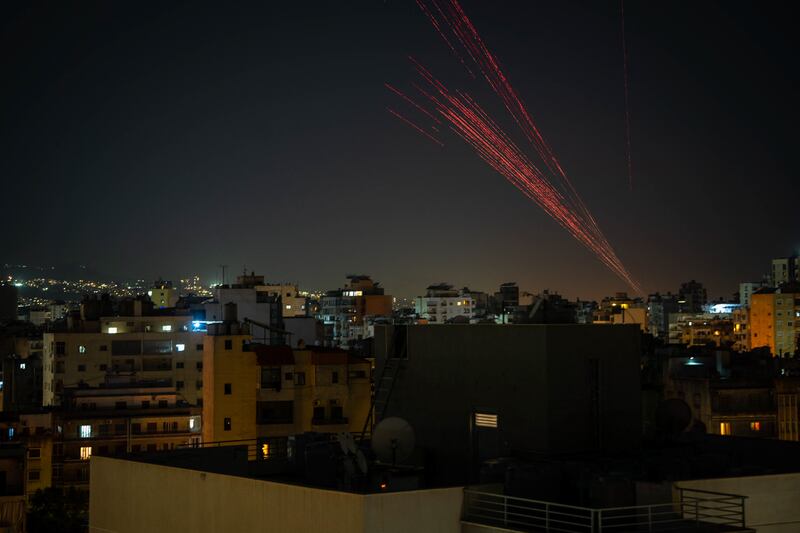
Israel has committed violations of a ceasefire in Lebanon that took effect at midnight, including intermittent shelling of several southern Lebanese villages, the Lebanese army said in the early hours of Friday morning.
In a statement, the army called on citizens to hold off on returning to southern villages and towns. There was no immediate comment from the Israeli military. - Reuters
European countries could help secure passage through Strait of Hormuz
European countries such as Belgium, the Netherlands and France have mine-clearance capacity which could help secure passage through the Strait of Hormuz, France’s defence minister has said.
“There are capabilities to provide fully supported escort services – that is to say, in no way offensive, of course – for ships to ensure safe passage through the strait; that is what will be debated today in Paris,” Catherine Vautrin told French TV station TF1 on Friday.
The UK and France are set to chair a meeting of about 40 countries on Friday aimed at signalling to the US that some of its closest allies are ready to play a role in restoring freedom of navigation in the Strait of Hormuz, which typically carries about 20 per cent of the world’s oil and liquefied natural gas flows.
Only a trickle of vessels have passed through the strait since the war started, compared to an average 130-plus each day before the conflict. - Reuters and The Guardian
Lebanon ceasefire comes into effect
The ceasefire in Lebanon went into effect on Thursday and Trump said he had spoken to Israeli Prime Minister Binyamin Netanyahu and Lebanese counterpart Joseph Aoun and planned to invite them to the White House for “meaningful talks” that could happen over the next week or two.
Iran has insisted that any peace deal should also cover the fighting in Lebanon. The ceasefire was part of an understanding reached with the US and mediated by Pakistan, Iranian media reported, citing a foreign ministry spokesperson.

“May have been a historic day for Lebanon. Good things are happening!!!,” Trump said on Truth Social late on Thursday.
In an earlier post, he urged Hizbullah to respect the ceasefire.
“It will be an GREAT moment for them if they do. No more killing. Must finally have PEACE!,” he said. - Reuters
Trump again indicates war could soon end
US president Donald Trump has indicated that an agreement could soon be reached to end the Iran war and urged the Tehran-aligned Hizbullah group to hold its fire as a 10-day truce went in to effect between Lebanon and Israel.
Trump said the next meeting between the United States and Iran could take place at the weekend and an extension of a two-week ceasefire was possible, but may not be needed as Tehran wanted a deal.
“We’re going to see what happens. But I think we’re very close to making a deal with Iran,” he told reporters outside the White House, adding if an agreement was reached and signed in the Pakistani capital Islamabad, he may go there for the occasion.
Hours later while in Las Vegas, Trump went further, saying the war “should be ending pretty soon”.
A Pakistani source involved in mediating between the US and Iran said on Friday there was progress in backdoor diplomacy and that an upcoming meeting between the two sides could result in the signing of an agreement. - Reuters


