
Main Points
- US president Donald Trump said on Tuesday that Iran had made a major energy-related concession to the United States, describing it as a positive development, although he did not give details
- Trump also claimed Iran “agreed they will never have a nuclear weapons”
- Iran’s parliamentary speaker earlier said “no negotiations have been held with the US”
- The US has sent Iran a 15-point plan aimed at ending the war, The New York Times reports
- Iran’s military will continue its response to the war until the regime has achieved “complete victory”
Key Reads
- Has Trump found a senior Iranian he can do business with?
- How much will petrol or diesel cost in Ireland from midnight?
- US claims progress in Iran talks, but it’s business as usual for Israel
That’s all for today’s live coverage. Follow along for more elsewhere on the site or app and we’ll be back with live developments on Wednesday morning.
IDF issues evacuation threats for Beirut’s southern suburbs
The Israeli military issued a fresh warning to residents in Beirut’s densely populated southern suburbs to evacuate on Tuesday night.
In a social media post, Israel Defense Forces spokesman Avichay Adraee said the military is continuing its operations and attacks on what it describes as “Hizbullah infrastructure” in the region.
Residents in seven neighbourhoods including Haret Hreik, Laylaki, Haddad and Borj el-Branjeh, must “evacuate immediately” to avoid harm, he said. - The Guardian

Death toll in war continues to rise
Authorities say Israeli strikes have killed more than 1,000 people in Lebanon and displaced more than one million.
Iran’s death toll has surpassed 1,500, its health ministry has said.
In Israel, 15 people have been killed by Iranian strikes.
At least 13 US military members have been killed, along with more than a dozen civilians in the occupied West Bank and Gulf Arab states. – AP
Lebanon orders Iran’s ambassador to leave
Lebanon declared Iran’s ambassador persona non grata and ordered him to leave by Sunday.
The dramatic move offers the latest evidence of the deterioration in relations between Lebanon and Iran.
Iranian flights have been banned from landing in Lebanon, out of fear that they would carry weapons or funding for Hizbullah, and some Lebanese government officials have been critical of Tehran’s role in the country, accusing it of dragging the country into another war with Israel.
Israel has said that some of its strikes have targeted guard officials operating in the country. – AP
US sends Iran 15-point plan aimed at ending war
The US has sent Iran a 15-point plan aimed at ending the war in the Middle East, The New York Times reports.
Citing two officials briefed on the matter, it reports the plan was “delivered by way of Pakistan”, though it is unclear how widely it has been shared among Iranian officials and whether Iran was likely to accept it as a basis for negotiations.
The officials, who spoke on the condition of anonymity, shared broad outlines of the plan, saying it addresses Iran’s ballistic missile and nuclear programmes, as well as maritime routes.
French president Emmanuel Macron said he has spoken to Iranian president Masoud Pezeshkian and asked him to put an end to attacks against countries in the region and called on the country to engage in good faith negotiations.
“I spoke again of the absolute necessity of putting a stop to these unacceptable attacks on countries in the region, of preserving energy and civilian infrastructure and of restoring freedom of navigation in the Strait of Hormuz,” Macron said in a post on X.
“I called on Iran to engage in good faith in negotiations in order to pave the way for de-escalation and provide a framework which will meet the expectations of the international community in terms of Iran’s nuclear and ballistic programme and its activities of regional destabilisation,” Macron added. – Reuters
Trump approves deployment of more than 1,000 extra soldiers to Middle East
NBC News is reporting that Donald Trump has approved the deployment of more than 1,000 soldiers from the 82nd Airborne Division to the Middle East.
The 82nd is an elite rapid response force designed and trained to deploy anywhere in the world within 18 hours. It’s light infantry troops are trained to parachute down for raids and secure high-value targets such as airfields.
Citing two sources familiar with the matter, NBC reports the deployment was approved last night and the orders are being written today for the headquarters, staff and some ground forces, but not the full brigade.
The full brigade is over 3,000 troops, while this deployment will be fewer than half that – under 1,500 soldiers. They have not left the US yet but could be sent overseas in the coming days.
Iraq arrests four suspects behind rocket attack on Syrian base
Iraq has arrested four suspects it said were behind Monday’s rocket attack on a base in northeastern Syria, the Iraqi prime minister’s office said.
Two Iraqi security sources told Reuters on Monday that at least seven rockets were launched from the Iraqi town of Rabi’a toward a US military base in northeastern Syria.
However, the Syrian army said hours after that one of its military bases in the northeastern city of Hasaka came under a rocket attack, without referring to the base being American or housing US troops. – Reuters
Pope renews appeal for ceasefire

Pope Leo XIV expressed concern on Tuesday about a rising tenor of animosity in the expanding Iran war, repeating calls for a ceasefire amid reports the US is planning to send thousands of soldiers to the Middle East in a military build-up.
Leo, the first US pope, lamented that “hatred is increasing, and the violence is getting worse and worse.”
“I want to renew the appeal for a ceasefire, to work for peace, but not with weapons – rather through dialogue, truly seeking a solution for everyone,” he told journalists as he was leaving his residence in Castel Gandolfo, Italy.
“There are more than a million displaced people and many dead,” he said. “I invite all the authorities to truly work through dialogue to resolve the problems.”
Leo, who is known for choosing his words carefully, has been ramping up calls for an end to the Iran war in recent days. On Sunday, he said the conflict was a “scandal to the whole human family.” – Reuters
The US is in the “best bargaining position” with Iran, Trump said earlier, adding: “They have no navy, and they have no air force, they have no missile protection and most of their missiles are gone.”
The International Atomic Energy Agency has reiterated a call for “maximum restraint to avoid nuclear safety risks during conflict” after reports that a projectile hit the premises of Iran’s Bushehr nuclear power plant.
Iran says ‘non-hostile’ ships can transit Strait of Hormuz, FT reports
Iran has told International Maritime Organisation (IMO) member states that “non-hostile vessels” may transit the Strait of Hormuz if they co-ordinate with Iranian authorities, the Financial Times reported on Tuesday, citing a letter.
In the letter circulated among IMO members on Tuesday, Iran’s foreign ministry said Tehran had “taken necessary and proportionate measures to prevent the aggressors and their supporters from exploiting the Strait of Hormuz to advance hostile operations against Iran,” the newspaper said.
Tehran said in the letter that vessels linked to the US and Israel, as well as “other participants in the aggression, do not qualify for innocent or non-hostile passage,” the FT said.
Reuters could not immediately verify the report.
The London-based UN shipping agency is responsible for regulating the safety and security of international shipping and preventing pollution, and comprises 176 member states. – Reuters
Iran says US and Israel attacked vicinity of Bushehr nuclear plant
Iran’s Atomic Energy Organisation has said the US and Israel attacked the vicinity of Iran’s Bushehr nuclear power plant on Tuesday evening, state media IRNA reported.
It said the attack caused no technical damage or human casualties based on initial reports. – Reuters
US to deploy thousands of troops to the Middle East, according to reports
The US is planning to deploy about 3,000 troops to the Middle East, the Wall Street Journal reported Tuesday, as the White House weighs options to ease Iran’s chokehold on the Strait of Hormuz.
A written order to dispatch a brigade combat team is expected imminently, the newspaper said, citing officials it did not identify.
Fox News reported earlier that the commander of the 82nd Airborne Division, major general Brandon Tegtmeier, has been ordered to deploy along with his command element.
Stocks fell and oil prices rose on Tuesday afternoon following the reports. A potential deployment of ground troops in the war against Iran would further escalate the conflict at a time when markets had expected the opposite after Donald Trump said Monday he was pursuing talks with Iran to end the war.
The Pentagon referred questions to the White House, which didn’t immediately respond to a request for comment. The Wall Street Journal said the administration still hasn’t made a decision to put boots on the ground in Iran.
The 82nd, stationed at Fort Bragg, North Carolina, is an elite rapid response force designed and trained to deploy anywhere in the world within 18 hours. It’s light infantry troops are trained to parachute down for raids and secure high-value targets such as airfields.
Trump hasn’t ruled out seizing the Iranian oil export hub of Kharg Island to pressure Tehran over the vital Strait of Hormuz. The US is already sending two marine expeditionary units to the region as more planes and ships continue to arrive.
While the 82nd Airborne would likely deploy via parachute jump, marines from the expeditionary units would likely arrive on helicopters, amphibious landing craft and small boats.
The moves come as pressure grows on the US to take action to reopen the Strait of Hormuz, a vital waterway for global oil and gas flows that has been effectively shut since the war began, causing energy prices to soar.
It also comes just a day after Trump said the US was engaged in talks with Iran to end the war – negotiations that Tehran has denied.
Israeli defence minister Israel Katz has said the campaign would continue “at full intensity”, while several countries in the Gulf are weighing whether to respond with military force to ongoing Iranian retaliation against their nations, according to several people with knowledge of the situation. – Bloomberg
Trump claims Iran has ‘agreed they will never have a nuclear weapon’
Trump also claimed Iran “agreed they will never have a nuclear weapons”.
Speaking to reporters at the White House while swearing in Kristi Noem’s replacement, he said Iran was “talking to us and they’re talking sense.”
“It all starts with they cannot have a nuclear weapon,” he said, adding: “I don’t want to say in advance, but they’ve agreed they will never have a nuclear weapon. They’ve agreed to that.”
US received ‘present’ worth a ‘tremendous amount of money’ from Iran, Trump claims
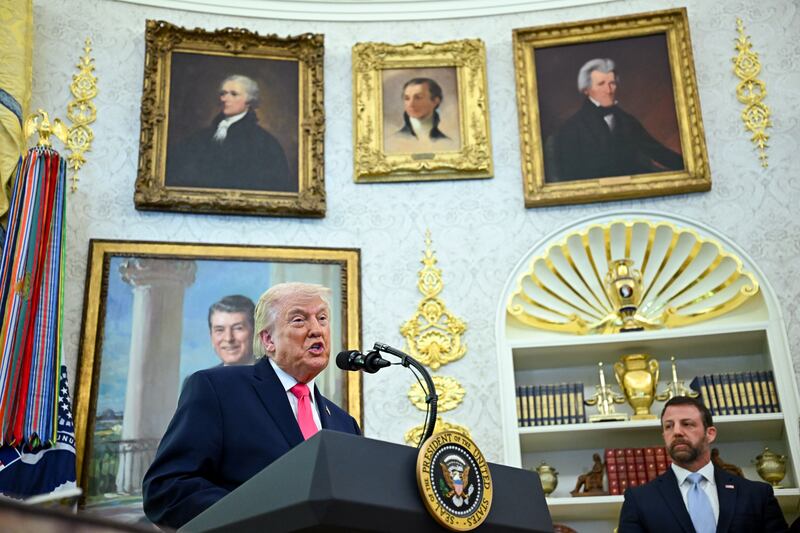
US president Donald Trump said on Tuesday that Iran had made a major energy-related concession to the United States, describing it as a positive development, although he did not give details.
Speaking to reporters while swearing in Markwayne Mullin as new homeland security secretary, Trump suggested the “present” was related to the Strait of Hormuz, and is “oil and gas related”.
“They gave us a present and the present arrived today, and it was a very big present, worth a tremendous amount of money,” Trump told reporters in the Oval Office.
“It wasn’t nuclear, it was oil and gas related, and it was a very nice thing they did,” he added.
Trump, reiterating that he felt the US had already won the war, said Iran has been “wiped out militarily”, saying: “They are dead”.
He indicated that US defence secretary Pete Hegseth was disappointed as how quickly the campaign had gone.
“Pete didn’t want it to be settled,” he said, but did not give details.
Trump said the US was talking to “the right people” in Iran in order to reach a deal to end hostilities, adding the Iranians wanted to reach a deal “so badly”.
“We’re in negotiations right now” over Iran, he said, but would not provide details, particularly on whether US envoys Steve Witkoff and Jared Kushner planned talks this week.
He said Witkoff, Kushner, vice president JD Vance and secretary of state Marco Rubio were involved in negotiations. – Reuters/The Guardian
Government retains ability to ‘respond again’, says O’Brien
Minister for Energy Darragh O’Brien has said the Government will continue to monitor developments and “retains the ability to be able to respond again” should it be necessary.
Speaking on RTÉ’s Six One News, O’Brien stressed that any interventions must be “sustainable and affordable”.
Describing the €250 million package outlined on Tuesday as a “significant intervention”, the Minister said it is an “initial response”.
“It will help,” he said. However, he added that the Government will not be able to tackle “every cost increase”.
“We’re simply not going to be able to do that, but what we want to make sure is that the most vulnerable are looked after,” he said.
He added that the situation will be reviewed on a “daily basis”.
“We have brought forward a significant package today that will help, but this Government, people can be assured, will continue to help them through these very difficult times, which is an international event,” he said.
Asked about recommendations made from various quarters regarding from home, O’Brien said:
“We’re not in a phase at this stage to be telling people what to do.”
He noted in other crises, which are coming “thick and fast at the moment”, such as the war in Ukraine, people have “already changed their behaviours”, including around electricity use.
Hizbullah describes Israel’s intention to occupy much of southern Lebanon as ‘existential threat’
Lebanese armed group Hizbullah will fight to prevent Israeli troops from occupying southern Lebanon, one of the group’s top lawmakers Hassan Fadlallah told Reuters on Tuesday, saying such an occupation would pose an “existential threat” to Lebanon as a state.
Israel’s defence minister said earlier on Tuesday that he had instructed the military to establish a “security zone” south of the Litani river, which runs about 30km north of the Israeli border. – Reuters
More organisations are responding to the Government’s €250 million package aimed at easing rising energy costs for households and businesses, Political Correspondent Cormac McQuinn reports.
Family Carers Ireland acknowledged the Government’s emergency energy package but said in a statement “we are deeply disappointed that the majority of family carers facing steep and unavoidable rises in home energy costs have been left behind.”
“While an extension of the Fuel Allowance will bring relief to some vulnerable households, the strict eligibility criteria attached to the scheme means that most full-time family carers do not qualify.”
Government Chief Whip Mary Butler has indicated that legislation to reduce the cost of diesel, petrol and green diesel by a further 2 cent per litre will be introduced to the Dáil tomorrow and will pass all stages in the Oireachtas by the end of the week.
Political Correspondent Harry McGee writes: The Bill will allow the levy applied by the National Oil Reserve Agency (Nora) on petrol and diesel products to be reduced.
Nora retains a 90-day reserve supply of fuel at all times. Early in the war, it agreed, as part of a wider international effort, to release 10 per cent of its reserves for circulation to address any imminent shortages in supply.
The Irish Creamery Milk Suppliers Association (ICMSA) has criticised the 3 cent cut in excise for green diesel, used for off-road vehicles such as tractors, as “wholly inadequate”, Political Correspondent Harry McGee reports.
ICMSA president, Denis Drennan, said the cut was like “throwing a bun at a bear” in terms of addressing soaring farm inputs like fuel and fertiliser.
He said it had come at a time where dairy and beef prices were either below production costs or slumping fast.
Drennan said an investigation was needed as to why green diesel had risen in price at a much faster pace than ordinary diesel.
“Carbon tax equivalent to 17 cents per litre on green diesel can no longer be ignored and is going to have to be addressed,” he said.
“The relief available to farmers for the increase in carbon tax on farm diesel needs to be extended to agricultural contractors and the process badly needs to be simplified.”
A further 2 cent per litre reduction in the cost of green diesel will also kick in later this week when primary legislation is passed that will reduce the levy applied by the National Oil Reserve Agency.
Lebanese being cut off from care as Israeli attacks intensify, says MSF

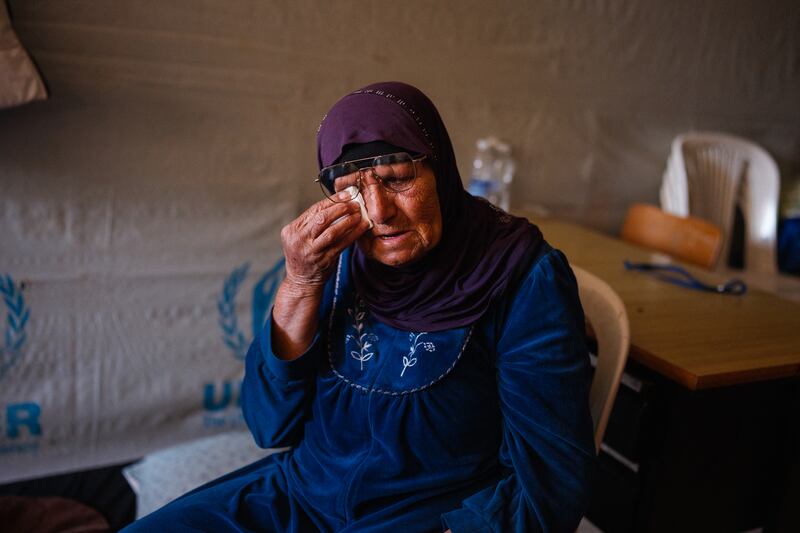
Israel’s “ongoing bombardment and the “forced displacement” of people in Lebanon is “severely” impacting lives and access to essential services, Médecins Sans Frontières (MSF) has warned.
MSF, also known as Doctors Without Borders, has called for the protection of civilians and healthcare, and “for an end to measures that force people indefinitely from their homes”.
Since March 2nd, it said civilians have faced “increasingly dire conditions, as a marked escalation of attacks by Israeli forces has forced more than one million people from their homes and disrupted their access to healthcare”.
According to Lebanon’s health ministry, at least 1,072 people have been killed and 2,966 have been wounded since March 2nd.
“We call for the protection of civilians and medical structures at all times, allowing people to continue to access healthcare and other essential services,” said Dr Tejshri Shah, MSF General Director.
MSF said evacuation orders collectively covering 14 per cent of Lebanon’s area has resulted in the displacement of one of five people in Lebanon.
“Even in places outside the marked ‘evacuation’ zones, including parts of Beirut and the southern parts of the country, people live under the immediate threats of recurrent air and drone strikes.
“Despite forced displacement orders, many people have chosen to stay, rather than abandon their homes and villages, while others have had no choice due to socio-economic and medical vulnerabilities.
“This has made it extremely difficult for them to access medical care, and similarly difficult for medical and humanitarian workers to reach them,” it said.
British troops shoot down 14 drones in single night of Iran war
UK forces shot down 14 drones overnight, the largest number downed in a single night since the start of the Middle East crisis.
British defence secretary John Healey told UK ministers on Tuesday that a counter-drone team had brought them down during an attack on a joint base in Iraq.
Using an air defence system, the one-way attack drones were gunned down from the Erbil base, which houses UK and US troops, it is understood.
The coalition base in northern Iraq has previously come under attack.
UK defence chiefs said two weeks ago that a number of unmanned aerial vehicles hit the camp, resulting in some casualties among US troops but none among British personnel.
With the war in its fourth week, the number of drones and missiles fired by Iran and its proxies was thought to be decreasing.
But Tehran’s attacks appeared to ramp up again on Monday night.
The targeting of the Erbil base came after president Donald Trump said Washington was in talks with the Islamic Republic to end the war, while Iran denied any negotiations were taking place.
According to readout from Tuesday’s British cabinet meeting, Healey told ministers the UK had defended allies in Israel, Saudi Arabia, Kuwait, Bahrain and Jordan from attacks overnight, and that more than a dozen drones had been shot down.
He told the meeting that the UK’s pilots had flown nearly 900 hours defending British interests and allies over the past four weeks. – PA
Iran’s military vows to fight until ‘complete victory’
Iran’s military will continue its response to the war launched by the US and Israel until the regime has achieved “complete victory”, the commander of the country’s armed forces has said.
In a statement issued via state media earlier on Tuesday, major general Ali Abdollahi Aliabadi didn’t elaborate on what the regime would consider “complete victory”.
However, he mocked the United States as a “hollow” nation that has been “brought down in front of the world”, with Donald Trump left “trying to escape from the war” it started.
He continued: “The American president, Trump, after realising the situation and becoming stuck in the war, has lost hope in his goals and is now seeking help from other countries to get out, which is a historic moment and a great honour for the Iranian people.
“At this sensitive time, Iran’s armed forces remain loyal to their promise, fully follow the supreme leader and commander-in-chief Mojtaba Khamenei and will continue this proud path with the support of the people until complete victory.” – The Guardian
Erdogan says Turkey working to establish peace in Iran war

Turkish president Recep Tayyip Erdogan said on Tuesday that Turkey will continue working with all its resources to establish peace in the Iran war, which he said has hit the Turkish economy and the whole world.
Erdogan said the government is considering various measures to protect the economy from the US-Israeli war on Iran, which has engulfed the region and sent energy prices soaring. – Reuters
Tuesday recap: What has happened so far today?
- As the US-Israel war on Iran nears the one-month mark, air strikes continue across the Middle East, with Israel launching a fresh wave of attacks on Tehran and Iran hitting back at Tel Aviv.
- Deaths tolls have continued to rise on Tuesday as the war continues – at least six were killed in an attack on Tel Aviv, at least 15 were killed in Iraq’s Anbar province and an Israeli strike south of Beirut killed two others.
- Lebanese authorities said 1,072 people have been killed in the country by Israeli attacks since March 2nd.
- US president Donald Trump said on Monday that the US and Iran had held “very good and productive” conversations about a “complete and total resolution of hostilities in the Middle East”.
- Contrastingly, Iran’s parliamentary speaker Mohammad Baqer Qalibaf said “no negotiations have been held with the US”.
- Pakistan offered to host diplomatic talks, but Iran remained defiant, vowing to fight “until complete victory”. The US has reportedly agreed “in principle” to join talks.
- The Strait of Hormuz remains the centre of political attention. Traffic through the Iran-controlled shipping chokepoint, which normally handles about 20 per cent of the world’s oil and gas supplies, has been heavily disrupted since the beginning of US-Israel attacks on February 28th.
- Israel’s defence minister has said the military will take control of south Lebanon all the way to the Litani river, about 30km from the border, as it continues its operation in the country against Iran-backed Hizbullah militants.
- Bahrain put forward a draft UN Security Council resolution that would authorise countries to use “all necessary means” to protect commercial shipping in and around the Strait of Hormuz.
- In Ireland, the Government has announced a range of measures aimed at reducing energy costs which have sharply increased due to the conflict in the Gulf, including cutting excise duty on petrol and diesel and extending the fuel allowance payment season by four weeks.
Israeli attacks killed more than 1,070 Lebanese since start of war
In its latest figures, Lebanon’s health ministry has said that Israel’s renewed offensive on the country has killed at least 1,072 people and wounded 2,966 others since March 2nd. – The Guardian
Air strikes continue across Gulf region
Air strikes have battered Iran’s capital and Iranian missiles and drones targeted Israel’s Tel Aviv and sites across the Middle East, even as president Donald Trump said the US was in talks with the Islamic Republic to end the war.
With thousands more US marines on their way to the Gulf, both sides firing intense barrages and Iran denying any negotiations are taking place, the war’s tempo remained high a day after Trump delayed his self-imposed deadline for Iran to reopen the Strait of Hormuz.
Tehran’s chokehold on that crucial waterway has snarled international shipping, sent fuel prices skyrocketing, and threatened the world economy.
Pakistan offered to host diplomatic talks, but Iran remained defiant, vowing to fight “until complete victory”.
Any talks between the US and Iran – which appeared at the most tentative on Tuesday – would face monumental challenges.
Many of Washington’s shifting list of objectives – particularly over Iran’s ballistic missile and nuclear programmes – remain difficult to achieve.
Meanwhile, it is not clear who in Iran’s government would have the authority to negotiate – or be willing to, particularly as Israel has vowed to continue taking out leaders after killing several.
Iran remains highly suspicious of the United States, which twice under the Trump administration has attacked during high-level diplomatic talks, including with the February 28th strikes that started the current war.
Pakistan’s prime minister Shehbaz Sharif wrote on X that his country is ready to “facilitate meaningful and conclusive talks” to end the Iran war.
The US had agreed “in principle” to join talks in Pakistan, according to three Pakistani officials, one Egyptian official and a Gulf diplomat, while mediators were still working to convince Iran. – AP
Irish motorists a ‘cash cow for the Government’, says TD
Parliamentary Correspondent Marie O’Halloran reports: Motorists in Ireland are a “cash cow for the Government like no other country in the world”, Independent Ireland leader Michael Collins has claimed as he hit out at the levels of fuel taxation.
The Cork South-West TD said the State taxes “the living daylights out of every citizen in this country with 65 per cent fuel taxes”.
It was a “a total failure of planning, leadership and responsibility” by this and previous governments, he said as he accused the Government of failing to properly plan for energy security.
“A country that imports nearly all of its energy, taxes fuel at 60 to 65 per cent, that blocks practical solutions for security is not transitioning.”
Collins claimed other countries “are securing their future. Europe and the world is planning. Ireland is panicking and being called the laggards of Europe.”
He said “a political system that refuses even to access its own resources while continue to rely on foreign fuel” represented “complete neglect by Government”.
The offshore Barryroe oilfield had not been exploited, he said. “We didn’t just leave ourselves open, we left ourselves defenceless.”
And the only offshore wind farm in existence was due to be decommissioned.
But Taoiseach Micheál Martin said Independent Ireland’s plan would create an “energy dependence on fossil fuels, which would be I think, a disaster for the country quite frankly”.
He said 41.3 per cent of electricity demand in Ireland in 2024 had been generated by renewable sources. “We are actually a renewables success story,” he insisted.
The Government has a target of 80 per cent of electricity demand to be met by renewables in the near term, he added.
Indian prime minister Narendra Modi has said that US president Donald Trump called him to discuss the Middle East war – and the importance of the Strait of Hormuz.
Modi said it was a “useful exchange of views”, adding that India “supports de-escalation and restoration of peace at the earliest”, he wrote on social media.
Maritime traffic through the Gulf chokepoint – which normally carries a fifth of the world’s seaborne crude – has come to a virtual standstill since US-Israeli strikes on Iran last month, triggering a regional conflict that has rattled global energy supply chains.
Modi said: “Ensuring that the strait of Hormuz remains open, secure and accessible is essential for the whole world.” – The Guardian
Employers should do more to facilitate remote and flexible working amid high fuel costs, says Ictu
Work Correspondent Emmet Malone writes: The Irish Congress of Trade Unions (Ictu) has welcomed the Government’s move to reduce excise duty on fuel but says employers should help their staff cope with the increased cost of travel by doing more to facilitate remote and flexible working while the war in the Middle East continues.
“The most immediate and practical thing employers can do is facilitate more work from home in jobs that can be done remotely, and offer compressed hours or flexitime for jobs that cannot,” says Ictu general secretary Owen Reidy.
“This means fewer expensive fills at the forecourt for workers, and it is a cost-free response for employers and the Exchequer.
“Government, as one of the largest employers in the State, needs to lead by example. That means facilitating remote and flexible working arrangements for civil and public servants, and paying the higher mileage rates to frontline workers using their own cars to deliver essential services in the community.
“The current crisis comes on top of long-term, ongoing cost of living pressures facing working families. These pressures are not abstract. They are felt every time a worker fills the tank or turns on the heat. Employers who do nothing risk real reductions in living standards for their workers, and heightened wage demands in response.”
82,000 civilian structures in Iran destroyed
US-Israeli attacks on Iran have damaged or destroyed more than 82,000 civilian structures across the country, according to the Iranian Red Crescent Society (IRCS).
“Since the beginning of the war up to now, 82,417 civilian units have been damaged and destroyed in airstrikes,” the head of the IRCS, Pirhossein Kolivand, said.
“During this period, 281 medical centres including hospitals, clinics and pharmacies have been targeted,” he added.

Message from the Editor

Sinn Féin accuses Government of ‘abandoning’ households that rely on heating oil
Taoiseach Micheál Martin and Sinn Féin leader Mary Lou McDonald clashed in the Dáil over the Government supports to deal with the ongoing energy crisis from war in the Middle East, Parliamentary Correspondent Marie O’Halloran reports.
McDonald claimed the Government has “literally abandoned” the 750,000 households relying on home-heating oil as she claimed the package of supports were only “half measures”.
She said the price of a home-heating oil fill had doubled “so a measly cut of 2 cent a litre is an insult”.
As the Government announced a €250 million package of supports, she said the Coalition had “sat back” for four weeks and claimed to heckling and cheers that it only acted because of relentless pressure from Sinn Féin and public anger.
But the Taoiseach insisted “the wise thing to do is to introduce measures of the kind we’ve introduced today that are targeted and that gives some degree of universal supports in terms of reduction in excise and petrol duties”.
McDonald said the four week extension in the fuel allowance would “not make a dent” and her party would introduce an amendment to the Government’s financial resolution “to deliver the maximum excise cut” for petrol, diesel and oil and “strip away carbon tax from home heating oil”.
The Taoiseach said the Government “has no intention of being reckless or irresponsible with this crisis. We want to be flexible. We want to give support to people.”
He insisted “every government, is limited in terms of what it can do in situations like this and all of the International advice” is to “target temporary, affordable measures, because we don’t quite know what’s around the corner in terms of how this unfolds”.
Outline of measures planned by Government to reduce energy costs announced
After the official announcement here are the measures planned by the Government to reduce energy costs:
Excise will be temporarily cut on motor fuels from midnight tonight until May 31st.
The rates will be reduced by 15 cent per litre on petrol; 20 cent per litre on diesel; and 3 cent per litre on marked gas oil.
Additionally, changes to the National Oil Reserve Agency (Nora) levy will mean an effective cut in Government levies of an extra 2c each on diesel and petrol for a period of two months.
The changes to the Nora levy require primary legislation, but there is an expectation it will be pushed through the Oireachtas this week.
Separately, there will be relief for haulage and bus passenger operators in the form of an increase in the maximum repayment allowable under the Diesel Rebate Scheme, from 7.5 cent up to 12 cent per litre of diesel.
This will apply to diesel purchased from January 1st, 2026, until June 30th, 2026.
Meanwhile, the fuel allowance season will be extended by an additional four weeks which means that the 470,000 households in receipt of the fuel allowance will receive additional financial support of €38 per week, totalling €152.
A Government statement said: “These measures will be in place for a defined period of time and Government reserves the option to adjust its approach as circumstances evolve.”
Opposition criticise Government’s cost of living package as ‘bare minimum’
The opposition have been lining up to criticise the cost of living package agreed by the Government on Tuesday, our Political Correspondent Jack Horgan-Jones reports.
The Social Democrats TD Jennifer Whitmore said she welcomed the cuts in excise but that the Government had done “the bare minimum” to support people, particularly the most vulnerable who were struggling with the cost of energy. She said targeted measures were needed for this cohort, adding that it was “really important” that the cuts in excise be passed on by retailers.
“We cannot wait for it to happen, for it to trickle through,” she said, adding this process was “way too slow” when equivalent measures were taken following the Ukraine invasion.
“People are still trying to recover from the aftermath of the Ukrainian crisis,” she said, pointing to high numbers of households in arrears, calling for a targeted electricity credit for 800,000 people on the lowest salaries.
Labour Party finance spokesman Ged Nash called on the Government to scrap the planned VAT cut for the hospitality sector, due to kick in later this year, and use it to fund cost of living measures instead. He said the package was “timid, anaemic, and it’s underwhelming”.
He also said the Coalition should strengthen remote working rights in light of advice from the International Energy Agency to save energy by cutting down on commuting amid the spike in fuel costs. Nash also said that increases to road tolls should be suspended.
Pearse Doherty, the Sinn Féin finance spokesman, said the Government had been “dragged kicking and screaming” to agree supports, accusing the Coalition of sitting on its hands and “dithering” while prices increased.
He said Sinn Féin would be introducing amendments in the Dáil tonight when it votes on resolutions giving effect to the measures seeking more supports for households and reducing excise on motor fuels further.
People Before Profit TD Paul Murphy said the measures announced by Government could potentially be “wiped out” by next week due to ongoing cost pressures, saying what was announced was “inadequate”.
Package worth €250 million package announced to support households and businesses amid rising energy costs
Taoiseach Micheál Martin has announced a package of measures aimed at supporting households and businesses amid rising energy costs, our Political Correspondent, Cormac McQuinn reports.
It includes a cut in excise on petrol and diesel, changes to the tax rebate scheme for hauliers and extension of the fuel allowance for four weeks.
Martin said the package will cost some €250 million and it is aimed at “cushioning the worst impacts of the price shocks” caused the war in Iran.
He said the situation is a “stark reminder how important and precious out access to energy is”.
He spoke of the importance of investing in renewables and said it is also a “reminder of the value of energy conservation”.
Martin highlighted using public transport and “being mindful of energy use”.
Tánaiste Simon Harris said the measures are “proportionate and balanced” and he said he wanted to tell people that the country “will get through this period of volatility”.
During the press conference the Taoiseach said that the Government is “not contemplating” the rationing of fuel at this time – a measure seen in Slovenia.
Minister of State for Transport Seán Canney mentioned how the speed limit on many of Ireland’s roads have been reduced from 80km/h to 60km/h and there are plans to reduce the limits in urban areas from 50km/h to 30km/h.
He said: “people driving at 60km/h are saving energy” and he said “the message is drive slowly, drive safely – you will both save yourself money and save lives.”
US-Israeli war on Iran breaches international law, German president says
German president Frank-Walter Steinmeier said the US-Israeli war on Iran was a “breach of international law” and “the trust in American power politics has been lost, not only among our allies but ... worldwide”.
Speaking at an event to mark the 75th anniversary of the German foreign ministry.
Steinmeier, a former foreign minister who now holds a largely ceremonial role, added: “Our foreign policy does not become any more convincing simply because we do not call a breach of international law a breach of international law.”
“There is little doubt that, in any case, the justification of an imminent attack on the US does not hold water,” he said.
At the start of the war, the US administration formally invoked article 51 of the UN charter – the self-defence provision – arguing that Iran’s missile arsenal and nuclear ambitions posed a direct threat to American forces in the region.
Legal experts, however, widely agree that the war on Iran is illegal as there didn’t seem to be any evidence of an imminent threat by Iran when it was launched on February 28th.
Israel says it will take ‘control’ of so-called ‘security zone’ up to Lebanon’s Litani river
Israel’s defence minister, Israel Katz, has been quoted by the AFP news agency as saying that the military will take control of south Lebanon all the way to the Litani river, which is about 30km from the Lebanon-Israel border.
“All five bridges over the Litani that were used by Hizbullah for the passage of terrorists and weapons have been blown up, and the IDF [Israeli military] will control the rest of the bridges and the security zone up to the Litani,” Katz said during a visit to a military command centre in Israel.
Katz said hundreds of thousands of south Lebanon residents who were displaced by the war this month “will not return south of the Litani river until security is guaranteed for the residents of the north” of Israel.
Israeli forces attacked the Qasmiyeh Bridge, a key crossing linking Lebanon’s south to the rest of the country, over the weekend, in what Lebanese president Joseph Aoun described as a “prelude to ground invasion”.
Many Lebanese people fear Israel is attempting to separate southern Lebanon from the rest of the country in advance of a large-scale invasion. This would mean many people displaced from their homes, following evacuation orders across large areas of southern Lebanon, would have nowhere to return to. Israel’s displacement of civilians in Lebanon is a possible war crime, according to Human Rights Watch.
Four killed by Israeli strike in Lebanon
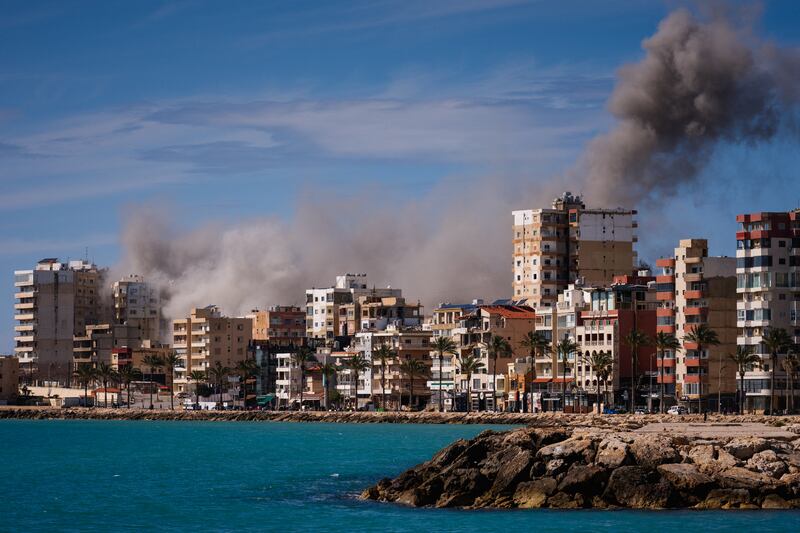
Four people have been killed and four others injured by an Israeli air strike on a house in the Lebanese town of Selaa, according to the country’s National News Agency (NNA).
The injured people were transferred to hospitals in Tyre, a city in southern Lebanon where Israel has intensified its attacks.
The Lebanese border town of Naqoura and the outskirts of the border village Alma al-Shaab were hit by artillery shelling by Israeli forces at dawn, the NNA reported.
Only some petrol stations will see reduced prices from tomorrow, chief executive of Fuels for Ireland cautions
Fuel prices will not be reduced overnight at all petrol stations, Kevin McPartland, chief executive of Fuels for Ireland has cautioned.
“They will see it in some. As we’ve been telling people since this whole crisis emerged, the prices change on the basis of when deliveries come in,” he told Newstalk’s Claire Byrne show.
“Anything which is on a forecourt at midnight tonight, the excise duty has already been paid. So that has to wash through the system. In some stations when prices were really increasing, we said that that happens within hours because some stations will have many deliveries a day”.
“But you will have some stations that get deliveries every couple of days and in a very small number of cases, even less frequently, might be a week,” he explained.
It would essentially be tanker trucks that leave terminals from midnight tonight which will have the fuel that is at the reduced excise rate and “not every garage is going to get their delivery by breakfast time tomorrow morning”.
Bigger garages are likely to see prices come down quicker as they receive deliveries more frequently, while some smaller, independent, rural forecourts could have received a delivery yesterday (with excise) so they will not have reduced excise fuel for another week, he said.
The Government’s move today to cut excise duty was to be welcomed, said McPartland.
However, he said he was “underwhelmed” from the home heating fuel perspective, especially as some people had seen a doubling of their bills.
“I think the Government is relying on the fact that coming into the summer months, there’s much less demand for it, and the people who were kind of spooked by rising prices made a purchase already.”
Efforts to protect commercial shipping in Strait of Hormuz

Bahrain put forward a draft UN Security Council resolution on Monday that would authorise countries to use “all necessary means” - diplomatic language for force - to protect commercial shipping in and around the Strait of Hormuz.
Diplomats said the draft text was backed by other Gulf Arab states and the United States, although they said it was unlikely to get through the council, where Russia and China had veto power.
France circulated a more conciliatory alternative draft resolution on Monday evening.
The move underscores mounting concern in the region that Iran could continue to threaten the Strait of Hormuz, a strategic chokepoint that carries about a fifth of global oil supplies and underpins Gulf economies.
- Reuters
Kremlin warns against Iran war spillover into Caspian Sea
Russia would view any spillover of the Iran conflict into the Caspian Sea “extremely negatively”, Kremlin spokesman Dmitry Peskov said on Tuesday.
Asked about the state of negotiations between Washington and Tehran, Peskov said the Kremlin was observing contradictory statements from both parties.
- Reuters
Eurozone growth hit by Middle East crisis
Growth across the eurozone has almost stalled this month, as the Middle East crisis drives up inflation and risks triggering an economic downturn.
The latest poll of purchasing managers across euro area companies has found that output growth has slowed due to a drop in new orders, while input cost inflation has “accelerated sharply” to a three-year high.
The latest ‘flash eurozone PMI report’, from S&P Global, also found the war has disrupted supply chains and hurt companies’ optimism over the outlook.
This pulled the Flash Eurozone PMI Composite Output Index down to 50.5, from 51.9 in February, a 10-month low, and close to the 50-point mark showing stagnation.
Chris Williamson, chief business economist at S&P Global Market Intelligence, said the survey showed eurozone economic growth slowed this month, with a rising risk of a downturn later this year.
“The flash Eurozone PMI is ringing stagflation alarm bells as the war in the Middle East drives prices sharply higher while stifling growth,” he said.
“Output growth has meanwhile slowed to near stagnation thanks to a slump in business confidence and deterioration of new orders. The drop in future output expectations was the largest recorded since Russia’s invasion of Ukraine in 2022.”
- The Guardian
Labour TD Ged Nash has called on the Government to ensure fuel price cuts make their way to consumers in the coming days, Vivienne Clarke reports.
Nash also called for a renewed focus on enabling people to work from home.
He told RTÉ radio’s Morning Ireland such a move would “ensure that we get the benefits of remote work, and that workers aren’t overly penalised for having to get into their cars or use expensive public transport on a daily basis”.
“I think Government needs to lead by example and ensure that there’s a renewed mandate now across the civil and public service to ensure that people can work from home,” Nash said.
“What we need to do is review the position when the spring economic statement is published over the next few weeks. The principal concern I have over the next period of time is what we’re reading this morning about the potential large increases in terms of grocery prices.
“We need more transparency and people need to be vigilant across the economy now for price gouging and profiteering.”
Government taking steps to assist people facing fuel hikes - Tánaiste

Arriving to the cabinet meeting on Tuesday morning, Tánaiste and Minister for Finance Simon Harris said the Government was taking steps to try and “assist people in the here and now”.
He said efforts were being made to help people facing very significant increases in petrol and diesel prices, those most in need and users of large amounts of diesel, Jack Horgan-Jones reports.
“We have to make sure that any interventions we make today are for that short, time-bound period,” Harris said.
Referring to significant drops in the market price for oil on Monday, Harris said: “We saw yesterday alone how volatile the world is and how volatile the markets are.
“The idea that you’d stitch anything in today for six months would be foolish. We have to be nimble here in our response.”
He again ruled out any delay to planned increases to carbon tax slated to come into effect in May, arguing measures going to cabinet on excise and extending the fuel allowance season would be more impactful.
However, he cautioned that “as long as this war continues, the economic challenge is real”.
“It’s bad for inflation, it’s bad for living standards, it’s bad for economic growth. And no government around the world can cushion any economy from the full effects of that.”
Harris said the immediate priority of Government was to take fiscal measures rather than encouraging behavioural changes such as increased working from home, but he said this would be considered should the conflict in the Gulf continue.
Fuel allowance
Just what is happening with the fuel allowance? Political Correspondent Jack Horgan-Jones has the latest:
There were initial indications on Monday evening that the €38 weekly payment could be doubled but Government sources say the decision going to cabinet on Tuesday is to extend the “season” that the payment is made by four weeks - meaning an additional €152 for households receiving it.
On the diesel rebate - there will be an increased refund available to eligible parties (we’re not sure quite how much yet) and that will be backdated to January 1st.
Fuel price reductions should be passed to consumers ‘as quickly as possible’

Neale Richmond, minister of state for international development and diaspora, has said the Government will work with fuel operators to make sure price reductions are passed on to consumers as soon as possible, Vivienne Clarke reports.
“What we are actually doing is addressing the very real cost caused by an energy crisis caused by the war in the Middle East in a manner that I would say is perhaps more ambitious than many other European countries,” Richmond told Newstalk Breakfast.
He defended the timing of the cut that will see excise duty on diesel cut by 20 cent and by 15 cent on petrol until the end of May.
“We’re introducing these measures tonight at midnight. Pretty much every other EU country is initiating them this week as well,” Richmond said.
“Now is the responsible and sensible time to introduce measures that will benefit individuals, that will benefit motorists, that will benefit the most vulnerable, but is also backdated to make sure hauliers who help make the economy and the society go round will also get that relief.”
When asked about comments by Fuels for Ireland chief executive Kevin McPartland - who said it may take up to a week for the price cut to come through at the pump because of fuel already being pre-bought - Richmond said the emergency measures will be passed at cabinet this morning and voted on in the Dáil this afternoon.
“From a legislative and policy point of view, it’ll be effective from midnight. They were quick enough to increase the prices when the crisis happened.
“We’ll work with them to make sure it is possible. The CCPC will have powers and responsibilities to make sure that these cuts are passed on to the consumer as quickly as possible.”
UK energy minister urges drivers not to change behaviour
The UK’s energy minister has urged motorists not to drive slower nor buy fuel differently because of the Iran oil crisis, insisting there was no need to change their behaviour.
Michael Shanks was asked by Times Radio if drivers should change their habits as a result of the oil restrictions caused by the conflict in the Middle East.
He told the broadcaster: “They should do everything as absolutely normal because there is no shortage of fuel anywhere in the country at the moment. We monitor this every single day, I look at the numbers personally. There’s no issue at all with that.”
Shanks added that people shouldn’t change their behaviour or their habits in the slightest, saying: “People should go about their business as normal... It’s really important people do that. There’s no shortage of fuel and everything is working as normal.”
In Ireland, the price of diesel and petrol will fall from 12am on Wednesday after the Government decided to cut excise duty.
- The Guardian
15 people killed in strike in Iraq
Airstrikes targeting a site belonging to Iraq’s Shi’ite Popular Mobilization Forces in the country’s Anbar province killed at least 15 people, including the PMF’s Anbar operations commander, and injured 30 others, sources said.
The PMF confirmed the death of its Anbar commander, Saad al-Baiji, and 14 others. It accused the US of being behind the attack, saying an American airstrike targeted a command headquarters while personnel were on duty.
The PMF is an umbrella group of mostly Shi’ite paramilitary factions that was formally integrated into Iraq’s state security forces and includes several groups aligned with Iran.
Tehran-backed armed groups have launched attacks on US bases in Iraq since the outbreak of the US-Israeli war on Iran in late February, raising fears of a wider regional escalation.
- Reuters
Negotiations may happen in Pakistan this week
Amid contradictory statements from the US and Iran about negotiations, a European official said that while there had been no direct negotiations between the two nations, Egypt, Pakistan and Gulf states were relaying messages.
A Pakistani official and a second source told Reuters that direct talks on ending the war could be held in Islamabad as soon as this week.
The Pakistani official said US vice-president JD Vance, as well as Trump’s special envoy Steve Witkoff and his son-in-law Jared Kushner, were expected to meet Iranian officials in Islamabad this week, following a call between Trump and Pakistan’s army chief Asim Munir. The White House confirmed Trump’s call with Munir. The Pakistani prime minister’s office did not immediately respond to requests for comment.
Iranian media reported that Iran’s president Masoud Pezeshkian and Pakistani prime minister Shehbaz Sharif discussed the impact of the war on regional and global security. “If the parties desire, Islamabad is always willing to host talks. It has consistently advocated for dialogue and diplomacy to promote peace and stability in the region," Tahir Andrabi, a spokesman for Pakistan’s foreign ministry, said.
Although there was no immediate confirmation that talks had taken place as described by Trump, Iran’s foreign ministry described initiatives to reduce tensions.
It said Iran’s Foreign Minister Abbas Araqchi had reviewed developments related to the Strait of Hormuz with his Omani counterpart and agreed to continue consultations between the two countries.
- Reuters
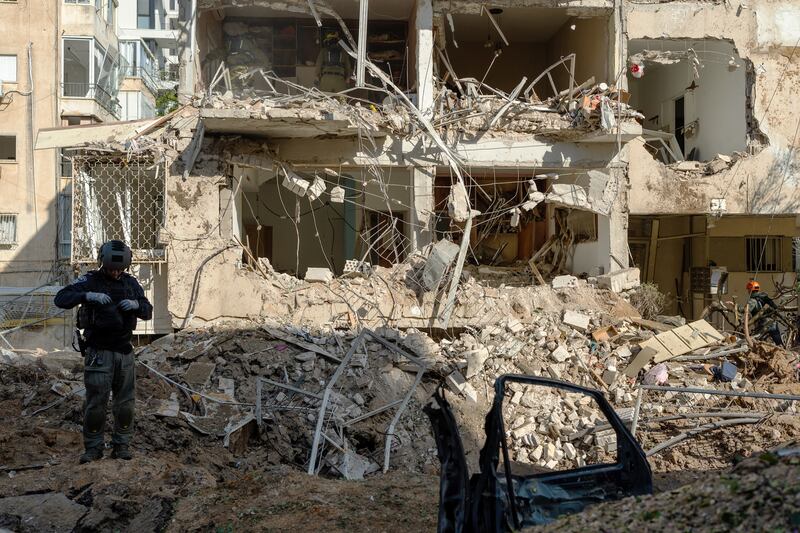
Some photos are emerging from the earlier strikes on Beirut and Tel Aviv.


Global energy situation now ‘critical’ - von der Leyen

On Tuesday, European Commission president Ursula von der Leyen said it was time for negotiations with Iran, given the global energy situation was now “critical”.
Speaking in Australia at the conclusion of a new free-trade agreement between the EU and Australia, she said: “The situation is critical for the energy supply allies worldwide. We all feel the knock-on effects on gas and oil prices, our businesses and our societies, but it is of utmost importance that we come to a solution that is negotiated, and this puts an end to the hostilities that we see in the Middle East.”
- The Guardian
High cost of using fighter planes to down cheap Iranian drones
Advanced fighter jets have been mobilised across the Gulf this month to hunt down enemies they were never designed to fight: waves of slow-moving and low-flying attack drones fired by Iran.
Fighters have been the Gulf nations’ main means of intercepting drones, analysts and western officials said. But while they have been highly effective, this round-the-clock fighter defence has come at high cost both financially and for the overworked pilots and planes.
“It is not sustainable in the long-run in any way, shape or form,” said Lauren Kahn, a former Pentagon adviser now with the Center for Security and Emerging Technologies in Washington.
The Gulf states and their allies face a stark problem: Iran’s drones are cheap, but using fighter planes to defeat them is ferociously expensive.
Read the full report here.
Price of crude oil increasing again
Oil resumed gains — paring a steep drop from Monday — amid concerns other nations may be drawn into the Middle East war.
Brent climbed toward $104 (almost €90) a barrel, after plunging by 11 per cent on Monday as US president Donald Trump delayed a threat to strike Iran’s energy infrastructure for five days, claiming there were talks with Tehran. Iran denied negotiations were taking place, while Israel kept up attacks. US crude benchmark West Texas Intermediate advanced about 4 per cent .
US allies in the Persian Gulf were inching toward contributing to the fight, the Wall Street Journal reported. Among them, Saudi Crown Prince Mohammed bin Salman is now eager to re-establish deterrence and is close to a decision to join the attacks, the newspaper said, citing people familiar with the situation.
- Bloomberg

At least six people were injured in an Iranian missile attack in Tel Aviv on Tuesday, Israeli media is reporting. Iran earlier launched a fresh wave of missiles against Israel just hours after Donald Trump hailed “very good” talks to end the war, although Tehran denied any discussions took place.
Trump’s claim came ahead of his 48-hour deadline on Iran to reopen the Strait of Hormuz shipping lane or see the US “obliterate” its power plants.
An Israeli strike south of Beirut killed two people on Tuesday, Lebanon’s health ministry said, while strikes on the capital’s southern suburbs continued throughout the night.
- The Guardian
Iran disputes Trump’s ‘fake news’ claim of talks
Trump wrote on his Truth Social platform on Monday that the US and Iran had held “very good and productive” conversations about a “complete and total resolution of hostilities in the Middle East”.
As a result, he said, he was postponing for five days a plan to hit Iran’s energy grid. His announcement sent share prices higher and oil prices sharply lower to below $100 a barrel, a sudden reversal to a market swoon caused by his weekend threats and Iran’s vows to respond.
Those gains were in jeopardy today however, after Iran’s powerful parliament speaker Mohammad Baqer Qalibaf - who an Israeli official and two other sources familiar with the matter said was the interlocutor in the talks on the Iranian side - said no negotiations had taken place.
“No negotiations have been held with the US, and fakenews [sic] is used to manipulate the financial and oil markets and escape the quagmire in which the US and Israel are trapped,” he wrote on X.
Iran’s elite Revolutionary Guards (IRGC) said they were launching fresh attacks on US targets, and described Trump’s words as “psychological operations” that were “worn out” and having no impact on Tehran’s fight.
Global markets rallied in relief overnight Monday after Trump added five days to his Saturday ultimatum for Iran to reopen the Strait of Hormuz - a conduit for about 20 per cent of the world’s oil and liquefied natural gas - within 48 hours.
- Reuters
Iran sends waves of missiles into Israel
Iran has fired fresh multiple waves of missiles at Israel, the Israeli military said, after US president Donald Trump postponed a threat to bomb the Islamic Republic’s power grid because of what he described as productive talks with Iranian officials.
The missiles triggered air raid sirens in parts of Israel, including Tel Aviv where blasts from interceptions were heard. In one attack, homes in northern Israel were damaged by falling debris following an interception. No deaths were reported.
- Reuters
Price of diesel and petrol set to fall
The Government is set to cut the price of diesel and petrol from 12am on Wednesday.
Minister for Finance Simon Harris will bring forward proposals at Tuesday’s cabinet meeting to cut excise duty on diesel by 20 cent and on petrol by 15 cent until the end of May.
These excise measures will take effect from 12am on Wednesday, subject to a financial resolution being passed in the Dáil.
Additionally, expected changes to the National Oil Reserve Agency (Nora) levy will mean an effective cut in Government levies of an extra 2c each on diesel and petrol. The timing of the changes to this levy have not yet been announced. The changes to the Nora levy require primary legislation, but Government sources have said that it will be pushed through the Oireachtas this week.


