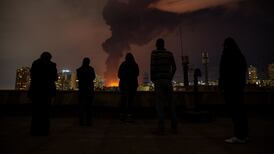
Iranian women have commanded attention across the world in recent years for their “Women, Life, Freedom” anti-regime protest movement.
Thousands – and likely tens of thousands of people – were killed in a new round of protests this year, which Israeli defence minister Israel Katz said accelerated a timeline for carrying out strikes on the country last week.
But anti-government protests have been taking place in Iran for decades.
As the war in the Middle East continues and broadens, we asked four Iranian women who have been involved in previous protests in some form for their reaction to the last week’s events and what they want to see happen next.
READ MORE


Dr Afrooz Maghzi: ‘Condemning those attacks should not mean ignoring or excusing the Islamic Republic’s own long record of repression’
Iranian lawyer Afrooz Maghzi – a researcher at the Irish Centre for Human Rights at the University of Galway – worked with a network called Follow-up Iran during the most recent protests.
The network provided pro bono legal advice to the families of detainees and to people summoned by the courts or intelligence services.

“I was receiving around 10 calls every day from families whose loved ones had been arrested, sometimes simply for posting two Instagram stories, often during night raids carried out by security agents,” she says. Some remain in unknown locations, and she heard “extremely disturbing” reports of abuse.
“Former detainees described severe torture during interrogations, including sexual assault and rape, even against injured protesters. Many detainees did not have access to independent lawyers. Instead, families were often forced to accept lawyers from a list approved by the judiciary, which in practice means lawyers closely linked to the security system.”
She has “mixed and complex feelings” on the current situation. “The Islamic Republic has brutally suppressed protests for decades, killing thousands of people in cold blood, so many people feel exhausted and completely done with the regime. At the same time, military escalation and attacks create serious risks for civilians and can make the situation inside the country even more dangerous.”
[ ‘Everyone is scared’: Panic grips Beirut as Israeli air strikes pound suburbsOpens in new window ]
Maghzi would like to see “de-escalation and accountability under international law” because “any sustainable solution must respect the will and rights of the Iranian people and avoid further harm to civilians”.
She is worried about both an escalation and a political or military settlement with the Iranian regime, which could cause it to retaliate against people inside the country.
Like other Iranians, communication with her family is difficult because of the internet shutdowns. “From the limited information coming out, I hear that people have very mixed emotions. Some feel hope that this moment could finally bring an end to the Islamic Republic, especially after the death of [supreme leader Ali] Khamenei, but at the same time there is deep fear about bombardments, instability and what may happen to the country and to ordinary people.”
She cautions people “particularly in parts of the global left” against “viewing the situation only through the lens of anti-imperialism or opposition to Israel and the United States. While criticism of foreign intervention and sanctions is important, it should not obscure the reality that Iran is governed by a deeply corrupt and repressive regime that has brutally suppressed its own population for decades.
“Iranians have repeatedly taken to the streets in nationwide protests, and many have paid with their lives. It is surprising and painful that some activists who mobilise strongly around other global injustices remained largely silent ... At the same time, we should clearly condemn military attacks that harm civilians. But condemning those attacks should not mean ignoring or excusing the Islamic Republic’s own long record of repression, torture and mass violence against its people.”
Saiedeh: 'We are worried about the safety of our family and friends back home'
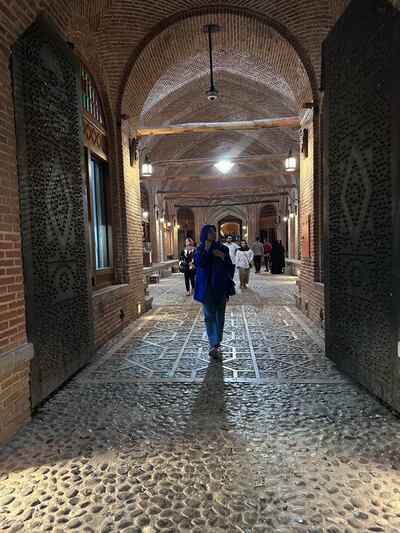
“We all knew that this war might happen any day, but I still hoped that political pressure could result in negotiations for a peaceful transition before the air strikes began,” says a researcher from Tehran, who lives in Galway and asks to be only identified as Saiedeh.
“We are worried about the safety of our family and friends back home,” she says. “Despite the 12-day war in June between Israel and Iran and the very real risk of the new war, the government did not provide any shelters or siren alarms for the sake of people’s safety.”
After Khamenei’s death, she says many people have a “complicated mix of feelings ... the emotion that only one can understand if they have lived under a brutal tyranny or authoritarian regime.”
They “see this military intervention as an opportunity that can weaken the regime that suppresses people” but “I am very concerned about the duration and severity of the escalation”. Moreover, she is worried about a crackdown against Iranians by Iranian security forces, including mass arrests, as happened last year.
The last time Saiedeh personally demonstrated inside Iran was as part of the 2009 protests known as the Green Movement. She emigrated to Europe some years ago, “but I have been involved in online platforms. I felt the responsibility to echo the voice of people inside Iran, especially during internet shutdowns, which always happen during protests or other crises like war.”
She feels that Iranians have “exhausted all peaceful means for demanding reform, change, or improvements for our country. We have suffered from UN international and US unilateral sanctions, which have made the economic status of the majority of the population fragile and helped benefit a corrupt oligarchy in government.”
She says regular Iranians were never asked whether they supported the nuclear programme or any other foreign policies of their government. “Nevertheless, we waited years for ... negotiations to make some change in our daily living standards. I do not forget the dancing of people in the streets after the Joint Comprehensive Plan of Action [Iran nuclear deal] in 2016.”
She says civil society tried to keep functioning despite limitations. “The government has brutally suppressed all nationwide peaceful protests in the past years. So every year thousands of Iranians like myself have emigrated, not just with the hope to live a normal life and access ordinary opportunities like other people, but to get away from barriers and the frustration we felt in our home country.”
Donja Hodaie: ‘Psychologically many suffer from trauma and transgenerational trauma’

“Emotionally, my feelings are mixed,” says Donja Hodaie (35), a lawyer who lives in Germany and whose family are from southern Iran.
“On one hand, some high-ranking government officials responsible for ordering executions and repressing the population have been eliminated. I understand that this doesn’t align with the rule of law or moral principles, but for the families of the victims, it still provides some sense of relief. On the other hand, I’m concerned about the military intervention, as the leadership will likely be replaced with others.”
She says air power may “weaken a government, but removing and replacing a regime usually requires more than bombing ... What’s needed now is a strategy focused on targeting other key figures and critical infrastructure of the Iranian regime while minimising harm to the civilian population. If we back off now, it will resemble [last year’s] Iran-Israel conflict, where the regime will recover and take brutal revenge on its own people.”
She says people in Iran have different opinions on military action: some support it because they see no other way to move forward; others question the point.
The sacrifices Iranians have already made are “huge”, she said: “emotionally, economically and socially. Many families are affected by executions and repression, prosecutions directly. A lot of others are suffering under the extreme economic situation ... people can’t find jobs and can’t build a life and have family. Psychologically many suffer from trauma and transgenerational trauma. Also the sexual violence used by the regime left its marks.”
Zahra Gholamvand: 'It was a strange, mixed emotion – grief, anger, and a kind of relief all at once’
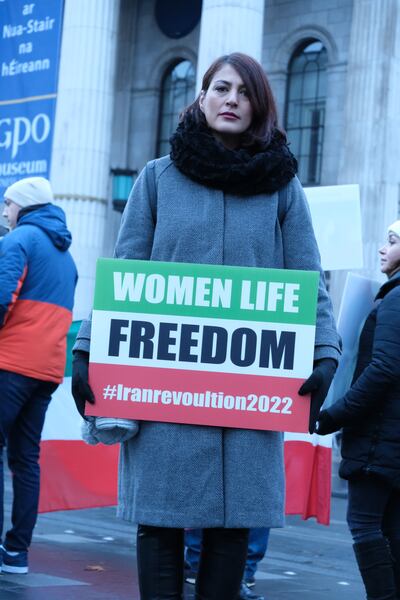
Zahra Gholamvand (42), a materials scientist from Tehran, living in Dublin, spoke to her brother on February 28th, as the bombardment began. “I told him a few days earlier, ‘When you hear the first missile, call me before internet is cut off.’ At 6am ... he called and said, ‘It seems like it’s started.’ He told me not to be scared. He said, ‘People here have no other hope. We just wish the regime could be toppled without innocent deaths ... If some of us must die for the regime to fall, I’m happy to be one of them.’”
Gholamvand’s brother is 28. “He should be full of life, but people are so desperate that all they want is for this regime to end. They dream of a democracy worthy of their dignity – where they have jobs, their currency has value, and they can travel freely.”
She said she personally found the reality of a full-scale war deeply sad. “I’ve lived my life in Tehran, and now I see her under missile fire. I worry for our families, for children enduring this trauma, and for ordinary civilians being killed.”
She says some people believe that – while the Iranian regime does not care about civilian lives – rising casualties might “be used as political leverage to pressure western governments to halt the war, ultimately to preserve the regime rather than protect the people.”
The only recent relief they’ve had was when they learned of Khamenei’s death, Gholamvand says. “It was a strange, mixed emotion – grief, anger, and a kind of relief all at once. We celebrated, but we cried, we danced, and we mourned at the same time.”
She hopes this is a step towards freedom. “But there’s also fear – fear that this will just lead to another dictatorship or that the US will cut a deal with remnants of the regime.”
[ Who is responsible for the air strike on a school in Iran?Opens in new window ]
She says many Iranians are calling on the international community to provide them with free satellite internet. “Access to communication is not a luxury in wartime – it is a lifeline. I believe this should be treated as an urgent humanitarian matter.”
She sees Iran’s ideal future as “a democratic, secular, liberal system – something in line with western parliamentary standards – where no one is beyond accountability.
“The path there may not be fully clear. Many call for Reza Pahlavi [the eldest son of the last shah] as a transitional leader, though personally, like many others, I don’t want another monarchy.”
She says the most important thing is for the opposition to unite and show they can “provide a peaceful, organised transition” so that what is left of the regime does not take power.
“Please do not reduce Iran to a battlefield or a headline,” Gholamvand says. “Behind every news update are real people – families calling each other at dawn to check if they are still alive, parents waiting for news from their children, young people trying to decide whether to stay, flee or resist. This is not abstract politics for us. It is personal, daily, and deeply painful.”
She adds: “I also want people to understand that Iranians are not asking the world to fight their battles for them. What they are asking for is to be heard – truly heard. To have their voices reflected honestly, without being filtered through geopolitical narratives or ideological positions. The Iranian people have shown, again and again, that they want dignity, accountability, and a democratic future. They have paid for that demand with prison, exile, and blood.
“And finally, I want to say that despite everything – despite fear, despite war, despite loss – there is still hope. The hope is not naive. It is not romantic. It is a hard, exhausted hope. But it exists because people inside Iran continue to care, continue to speak, continue to dream of a country where their children can live freely without fear.”