Tankers ablaze in the Gulf. Tehran warning ships to avoid a key waterway. Western nations struggling to protect commercial vessels.
As Iran’s retaliatory attacks target energy shipments in the region, the conflict has recalled memories of the 1980s “tanker war”.
With Iran and Iraq at war, both countries’ forces scattered mines across the Strait of Hormuz and in the Gulf. They fired French-made Exocets and Chinese Silkworm missiles at passing tankers. That forced Kuwaiti vessels to reflag as American and drew 35 US warships into a campaign to escort ships. The oil continued to flow.
Since the US and Israel attacked Iran on Saturday, Iranian forces have warned vessels against passing through the strait, a chokepoint for a third of the world’s seaborne oil trade and a fifth of its liquefied natural gas exports.
READ MORE


At least six tankers have been hit in the Gulf since the war began, forcing marine traffic through the strait to a virtual halt. Iran has also attacked energy infrastructure in Qatar and Saudi Arabia. Oil prices have surged.
US president Donald Trump on Tuesday said that “if necessary”, the US navy would escort tankers through the strait “as soon as possible”. The US Development Finance Corporation would also provide risk insurance and guarantees for tankers travelling in the Gulf “at a very reasonable price”.
Oil prices fell slightly after Trump’s announcement, but details of the plans and how they could be executed in time and at the necessary scale to avoid a new energy shock were scant.
Helima Croft, a former CIA analyst now at RBC Capital Markets, dismissed Trump’s proposal as “likely in the concepts-of-a-plan stage”.
Naval warfare experts said the destroyers and jets needed for the escorts would not be available immediately, given their role in the attacks on Iran.
Joshua Tallis, at the Center for Naval Analyses, said it was “unlikely” that the US navy would be able to defend commercial vessels “over the next seven to 10 days”. Escorts would come “only after the initial phase of major hostilities”, he added, and when more Iranian anti-ship capabilities had been destroyed.
An escort operation would be “hard but doable”, said Mark Montgomery, a former US aircraft carrier strike group commander. He estimated it would take up to two weeks before conditions were favourable and would “cause a reduction in the amount of strike[s] the US could carry out”.

The White House did not respond to a request for details on Trump’s plan, which he announced on Truth Social.
John Miller, a former commander of the US’s Fifth Fleet, said that while the US probably had enough ships in the region to begin escorting, they would have to contend with “anti-ship missiles, drones, and small fast boats” and any mines that Iran places.
Much of the oil shipped out of the Gulf goes to China, so Trump’s plan could also be welcome in Beijing. No other countries have yet publicly offered to join the plan.
US laws also do not allow navy ships to escort vessels that are not US-flagged or American-owned, or have no US crew members, said Miller. Vessels with formal ties to the US are scarce in the Gulf.
The EU has discussed expanding its Aspides naval mission – involving three vessels from France, Italy and Greece protecting vessels in the Red Sea and Gulf of Aden – to the Strait of Hormuz, said four people briefed on ongoing talks. But the French-led proposal has not been approved.
“There’s been a steep increase in requests for additional protection,” said one EU official briefed on the discussions. “It’s a messy situation, but there the aim is, how do we make sure that we protect our maritime economic interests?”
Unlike in the tanker wars, the US is belligerent in this conflict, not a third party. And for now, the war has made Gulf shipping extremely dangerous.
Of at least six vessels hit since Sunday, at least one attack was claimed by Iran’s Islamic Revolutionary Guard Corps (IRGC).
The US-flagged Stena Imperative was hit by two projectiles as it lay berthed in the port of Bahrain, while a Saudi Aramco-chartered ship was attacked by a drone off Muscat as it carried 500,000 barrels of fuel to a Saudi port. Ships in the waterway have reported receiving radio messages apparently from the Revolutionary Guards, telling them to turn back.
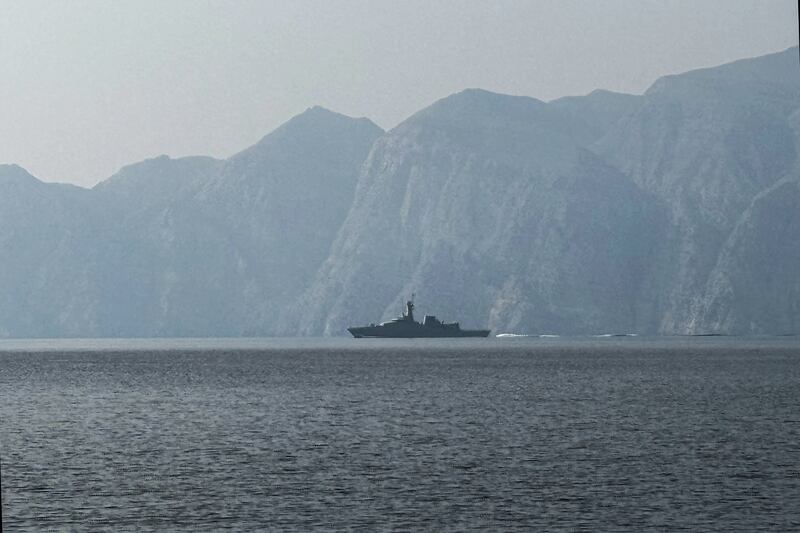
“It’s a huge deterrent for all but a few shipping companies and charterers,” said Martin Kelly, head of advisory at maritime intelligence group EOS Risk.
[ Who is Mojtaba Khamenei, the possible next leader of Iran?Opens in new window ]
The use of so-called unmanned surface vehicles (USVs) was particularly “lethal”, said Kelly. USVs hit the hulls of ships at the waterline, “causing maximum water ingress”, and typically strike vessels from behind, causing flooding in the engine room and often sinking them.
The “arrows in Iran’s quiver” for other attacks include fast inshore attack craft, speedboats armed with rockets and small missiles, said Tallis.
Iran has not yet deployed naval mines, but maintains one of the world’s largest stockpiles, ranging from old Russian contact mines to rocket-propelled devices.
Tallis said Tehran could place them using dhows – double-bowed merchant vessels that are common in the region. They could also be placed by two or three people on a Boghammar speedboat, said Montgomery, the former commander.
The US Navy’s minesweeping capabilities would probably also be limited, experts said – partly because of other operational needs and also because “minesweeping is a known weakness of the United States military”, said Montgomery.
The US has just three littoral combat ships in the region that have been converted into minesweepers. They carry MH-60 helicopters and unmanned surface vehicles equipped with minehunting sonar.
[ Trump says US-Israel attack on Iran was pre-emptiveOpens in new window ]
Skilled Estonian, French, British, Japanese and South Korean forces could be involved in mine clearing but the assets would take time to arrive.
The attacks have already made their mark on maritime insurance. Providers have started cancelling existing policies or negotiated higher rates.
Trump’s insurance backing idea is “novel”, said Tallis, but “it remains to be seen how quickly and effectively the US can create comprehensive and reliable war risk insurance”. There are no details yet on who would qualify, and which flag states and companies would want it.
London’s shipping insurance market on Tuesday expanded the zone it designates as high-risk to include Bahrain, Djibouti, Kuwait, Oman and Qatar, which could further increase prices.
Freight rates for ships carrying oil out of the Gulf soared to record highs on Monday, with the cost of hiring a Suezmax tanker rising more than twofold, according to price-reporting agency Argus.
Prices would jump again at any credible report of mine placements, meaning Iran would not need to actually lay many mines to deter companies, said Sidharth Kaushal, a sea power expert at the Royal United Services Institute think-tank.
And Tehran has more than mines. As well as armed drones, Iran has Chinese C-802 anti-ship cruise missiles and surface-to-surface missiles; a small fleet of Russian-built diesel submarines capable of firing torpedoes; and an undetermined number of North Korean mini-submarines.
[ US and Israel not on same page over war aims and this could cause difficultiesOpens in new window ]
Jim Lamson, a former CIA analyst now at the James Martin Center for Nonproliferation Studies, estimates that Iran’s navy and IRGC have in “the order of thousands of anti-ship cruise missiles and hundreds of launchers”.
The missiles, which include domestically developed munitions, have ranges of up to 1,000km. A main focus of the US military’s Iranian operation is to attack the regime’s missile infrastructure. The US has also sunk 17 Iranian ships.
But any lasting closure of the strait would damage the weak Iranian economy while compromising its relationship with China, its major oil customer.
“You will often hear the Iranians say ‘if we can’t sell our oil, then no one can’. The inverse is true – if nobody can sell oil, then Iran can’t either,” said Miller. “And they can’t sustain that loss of economic gain for any period of time.”
But as the US tries to demolish the regime, its desperation could deepen.
One aim of Iran’s strategy to disrupt tankers was to “try to provoke outrage in allied and partner capitals to try to bring diplomatic pressure on the US,” said Tallis.
But Clayton Seigle, an energy security expert at the Center for Strategic and International Studies think-tank, said that the longer the conflict went on, the more the US and Iran “are liable to play stronger energy leverage cards in order to force an outcome to their advantage”. – Copyright The Financial Times Limited 2026