Thursday night’s curtain raiser to the 2026 Six Nations is between the two countries who have dominated the championship in the last four seasons.
It is also that tricky midway point in a second World Cup cycle for both Andy Farrell and Fabien Galthié as they each embark upon a seventh Six Nations campaign. But while there is probably more pressure on the latter to deliver, in many ways this looks like the Irish head coach’s most challenging campaign.
As the British & Irish Lions head coach, Farrell ultimately brought 18 Irish players to Australia, as well as being the bulk suppliers to the coaching ticket. Ireland thus carried the heaviest load, first into the autumn and now this Six Nations, with both France and England (11 wins on the spin) having more momentum.
France vs Ireland - Six Nations preview
This being the biennial even year, France and England will both be at home to Ireland, with Les Bleus also entertaining Les Rosbifs in the tournament finale. So it’s perhaps not surprising that France have won five of the seven championships to take place the season after a Lions tour the preceding summer. On top of which Ireland are missing their three leading looseheads, with injuries to Hugo Keenan and Mack Hansen leaving Jamie Osborne as the only recognised fullback in the squad, and he hasn’t played since November.
READ MORE


As Farrell kept adding to Ireland’s record high of 15 Lions players by calling up Finlay Bealham, Thomas Clarkson and Andrew Osborne, a few thoughts occurred. One couldn’t help but think that this all reflected brilliantly on Irish rugby and especially Leinster, while rejoicing in the scarcely concealed indignation from some pundits across the water. But also that it could prove a strain on both the Leinster and Irish teams this season.
Five of that Lions contingent have been ruled out of this game (admittedly Bundee Aki’s absence is due to suspension) and there’s been a doubt about one more in Tadhg Furlong, while it would be hard to suggest any of them have returned to peak form yet this season.
Of course, history has taught us that this is usually the way. A wonderful throwback to the amateur era – both an anachronism and a moneymaking machine – but something which means so much to players, coaches and fans, the Lions is a square peg in a round hole.
As well as France having won five of the seven post-Lions championships, it’s also instructive to focus on how the bulk suppliers to the preceding summer tour in the southern hemisphere fared.

Back in 1997, England had 22 players on the Lions tour to South Africa and series win under Ian McGeechan and in the 1998 Five Nations they finished second to France when, admittedly, beating all bar Les Bleus to claim the Triple Crown.
[ France are the Six Nations team to beat despite Uini Atonio setbackOpens in new window ]
Four years later, it was a very similar story as England supplied 20 players under Graham Henry to Australia and finished second to the Grand Slam-winning French by winning four from five and another Triple Crown.
But since then the trend has been clear. In 2005, Clive Woodward brought 20 English and 11 Irish players, among them Brian O’Driscoll as captain, for the doomed tour to New Zealand. The following season, England finished fourth to France, only beating Wales at home and Italy away, while losing in Murrayfield and Paris, and also at home to Ireland.
Wales then had the most numerous contingent on the 2009 tour to South Africa with 15 players under McGeechan. In the 2010 Six Nations, Wales finished fourth to France with just two wins out of five.
Perhaps the most relevant example from this year’s Irish viewpoint is the 2013 tour. Warren Gatland took a sabbatical from his day job with Wales and made their squad the bulk suppliers with 15 players. The Lions had a successful tour, with their first series win since 1997, but Wales finished third to Ireland with three wins out of five.
Since when, the drain appears to have intensified further. Gatland again took a sabbatical from his role as the Welsh head coach for the Lions tour to New Zealand in 2017, and this time England led the way with 16 players to a dozen from Wales.
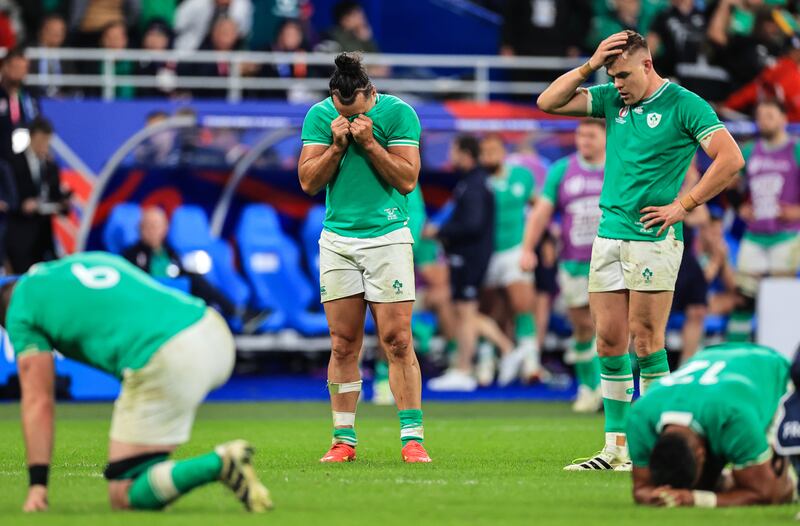
Come the 2018 Six Nations, England finished fifth with two wins out of five, beating Italy away and Wales at home before losing three successive matches away to France and Scotland, and at home to Ireland, who won the Grand Slam.
That Ireland have won the other two titles in post-Lions Six Nations is encouraging. But Gatland made England (who ultimately supplied 13 players) and Wales (11) the main providers on the pandemic-affected tour to South Africa in 2021.
[ James Ryan eyes ninth Six Nations campaign with focus on French challengeOpens in new window ]
Sure enough, in 2022, England finished third and Wales fifth with two wins and one win respectively, as France won their first Grand Slam since 2010.
And then there’s simply the evidence of our own eyes, especially since the highs of Ireland’s 17-match winning run in 2022 and 2023, and that epic World Cup quarter-final loss to New Zealand, which was also likely to represent a peak.
True with Thursday’s opener in mind, Ireland’s best performance in each of the last two championships was in round one, the 38-17 win in Marseilles two years ago en route to retaining the title, and the 22-point salvo in the second half of the 27-22 win over England.
But in neither campaign did Ireland scale those heights again, losing in round four both times, at Twickenham two years ago and more alarmingly at home to France last year. Ireland led that game 13-8 early in the second half only to be overwhelmed by a 34-point salvo before a couple of late consolation tries.
Ireland again won four out of five last season and accumulated only one match point less on 19. The attacking metrics were only marginally down on the previous two years, but with Simon Easterby doubling up as head coach as well as defence coach, Ireland conceded twice as many tries (14 as against seven).
Compounding this was the scrum-based mauling Ireland suffered against South Africa last November, and as well as the scrum, the team’s once famed discipline has also become an issue, although the defiance against the Boks was remarkable.
Still, Ireland are third favourites for this Six Nations, and for good reason, albeit players are altogether more match-hardened than in November. But even so if Farrell can again work his magic to take a tilt at the title to the final weekend, it will be some achievement.